Heads up: This post contains affiliate links. As an Amazon Associate I earn from qualifying purchases, at no extra cost to you. Learn more
Specs are compiled from manufacturer listings and verified buyer reviews and can change over time — please confirm the key details on the product page before buying.
A moist, mineral-heavy Celtic-style salt gives you a proper crunch and a deeper flavor than table salt. The catch is that unrefined salt carries whatever was in the water it came from. So the question worth asking is not “is it Celtic?” but “where did this brine come from, and who checked it?” The five salts below each name a source and a testing story you can actually look up — nothing is left implied on a pretty label.
This guide is built by comparing the manufacturers’ published specifications and the patterns across verified customer reviews, so you get each pick’s real strengths and trade-offs instead of marketing spin.
Every entry below names where the salt comes from and what testing backs it. Here is the practical shortlist for anyone hunting the best celtic salt without heavy metals.
Top Picks

How To Choose The Best Celtic Salt Without Heavy Metals
Salt is a rock that came out of water, so whatever was in that water rides along with it. That makes the source your first question, before the word “Celtic” on the front. A salt pulled from a named, protected spring or a specific marsh gives you something to look up. A bag that only says “sea salt” gives you nothing to verify.
Look for a source you can point at
A named location plus published testing is the strongest purity signal you can get. One pick here comes from a single underground spring in Türkiye, registered with a geographical indication, and posts its microplastic test and mineral analysis for anyone to read. Others rely on centuries-old French marsh harvesting with independent lab checks per batch. Either way, you want a traceable origin, not a vague “from the sea” line.
Understand what “unrefined” is buying you
Refined table salt is dried to under one percent humidity, and that hard drying strips out most of the trace minerals. Unrefined salt is left deliberately moist, and that moisture is where minerals such as magnesium, calcium, potassium and iron hang on. The trade-off is behavior: a moist, unrefined salt can clump in the shaker if you leave it in a damp spot. Keep the shaker dry and it stops.
Match the grain to how you cook
Flaky and coarse grains are finishing salts. They land on a roast or a salad and give you a crunch. Fine-ground salt dissolves fast, so it belongs in boiling water, marinades and baking. If you want one bag for brines, baking and the table, fine ground is the flexible choice. If you want crunch on a roast or a salad, go coarse.
Side-by-Side Comparison
| Model | Best For | Grain | Source | Stated Minerals | Amazon |
|---|---|---|---|---|---|
| Premier Research Labs Pink Salt★ Best Overall | Everyday cooking with a mineral blend | Coarse, flaky | Australian sea salt + Hawaiian Red Alaea | Essential trace minerals (no count stated) | Amazon |
| Napoleon’s Celtic SaltTop Performer | Finishing and table-side texture | Coarse | French marshes, hand raked | 82 minerals | Amazon |
| MAYİ Ancient Natural Spring Salt | Buyers who want documented testing | Fine ground | Single spring, Kırıkkale Delice, Türkiye | 84+ trace minerals | Amazon |
| Sante Naturelle Celtic Salt Bundle | Stocking a kitchen for months | Fine ground | French ocean marshes, hand harvested | Over 82 minerals | Amazon |
| Premier Salt’s Celtic Sel Gris | Gourmet finishing and grey-salt character | Coarse | Guerande marshes, clay ponds | Over 80 trace minerals | Amazon |
Detailed Reviews
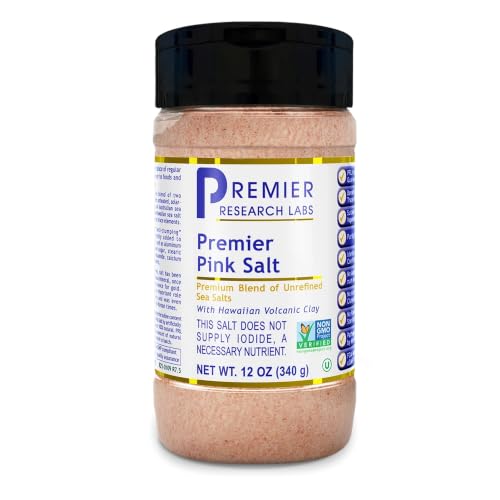
1. Premier Research Labs Pink Salt – Flaky, 12 oz
Our pick — 4.5+★ from 950+ verified ratings; the strongest balance of quality and price.
One salt, two oceans: Australian sea salt blended with Hawaiian red clay for a flake that tastes of both.
It tops this list because the ingredient list is the whole story: no preservatives, no anti-clumping agents, no iodine. The blend takes sea salt from Australian waters and folds in Hawaiian Red Alaea salt (sea salt that picks up its color from volcanic clay). You get one coarse, flaky 12-ounce bag with nothing else in it.
The flavor goes further than the label suggests. It reads saltier than ordinary table salt, so a smaller pinch does the job — handy if you are watching how much you shake on. That coarse flake is built for the finish. Crush it over Kahlua pork, scatter it on roasted vegetables, or pinch it over a salad right before it hits the table. It holds its shape instead of vanishing into the dish, which is exactly what the fine-ground Sante Naturelle below cannot do.
Two honest notes. The pink hue comes from the clay, and because this is a blend rather than a single marsh salt, buyers report it can look paler than the photo suggests. That is cosmetic, not a purity issue. Also, a coarse flake is slow to dissolve, so it is not your boiling-water salt. If you want one bag that does both cooking and finishing, this is it.
What earns it the top slot
- Zero preservatives, anti-clumping agents, or iodine in the blend
- Coarse flake texture that survives as a finishing crunch
- Two-source blend — Australian sea salt plus Hawaiian Red Alaea — for layered flavor
- Reads saltier than table salt, so a smaller pinch goes further
Where it asks a little patience
- Pink hue can look paler than the photo suggests
- Coarse flake is not the fast-dissolving choice for boiling water or baking
Reach for this: if you want a clean, additive-free all-rounder you can cook with and finish with from one bag.
Look wider: if you specifically need a fine grind that dissolves instantly into doughs and brines.
2. Napoleon’s Celtic Salt Organic Coarse
Raked by hand from French marshes and kept deliberately damp, so the minerals never dry out of it.
This bag earns its spot with one number: it is dried to stay under one percent humidity. Most coarse sea salt gets dried hard, and that process strips out most of its mineral content. Napoleon’s leaves the moisture in on purpose, and that moisture is what the label says carries its 82 minerals. The maker states it is free from microplastics and that each batch is independently lab tested under European quality controls.
Own a grinder and this bag is a pleasure. It grinds cleanly, and the flavor runs fuller than table salt in a way you notice on soups, salads and fresh bread. The coarse grain makes it a natural finishing salt for a holiday roast or a dinner-party plate. At 1.0lb it is the smaller bag of the coarse group — less salt than the 1.86lb Sante Naturelle bundle — but it keeps more moisture per grain, which is the trade you are choosing.
The recurring gripe in reviews is coarseness. Some cooks find it too chunky to use straight from the bag at the table, and you will want a grinder for anything delicate. A few cooks also find the size modest for the shelf price next to the larger bundles. What you get back is organic, kosher, vegan and paleo-friendly credentials, which none of the fine-ground picks match.
Why the texture sells it: coarse flakes that stay moist mean the salt lands where you put it and gives a proper crunch. Keep a grinder nearby and it earns its place on the counter.
The give-and-take: at 1.0lb it is the more compact bag of the coarse group — a strong choice if you finish dishes more than you bulk-season them.
Best suited to: cooks who finish plates by hand and want a moist, mineral-heavy organic flake.
Think twice if: you want to season straight from the bag without a grinder in the mix.
3. MAYİ Ancient Natural Spring Fine Ground Salt Shaker, 8.8 oz
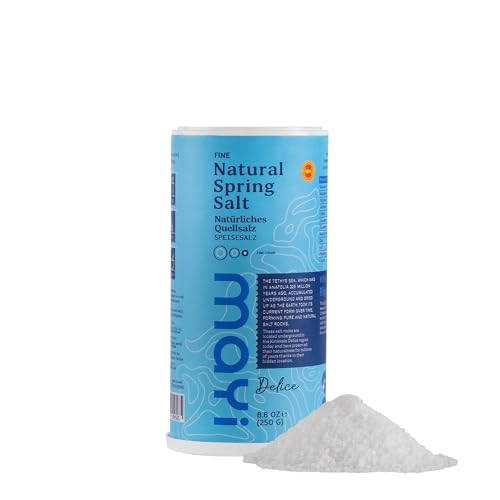
No ocean, no plastic: this one comes up from a deep spring, not an open waterway.
One spec does the most work here: the brand states the salt is tested free of microplastics. Most sea salt is harvested from open water where microplastics collect. This salt rises from an underground spring in Kırıkkale Delice, Türkiye — a single source registered with a geographical indication (an official origin label). The brand publishes the microplastic test and mineral analysis openly, so you can read them before you buy.
Because it is never refined, the brand says it keeps 84+ trace minerals from that spring, magnesium, calcium and potassium among them. No anti-caking agents, no bleach, no fillers. The 8.8-ounce canister is the shaker: stone-ground fine salt arrives ready for the table, with adjustable lid holes so you can dial the pour, and you refill the canister when it empties. Buyers single out magnesium content most after general quality, so if your minerals list skews that way this fits.
What you give up is finishing texture. Fine grind dissolves fast, which is perfect for baking and low-sodium cooking, but it gives you none of the crunch the coarse picks deliver. And with a smaller review base than the leaders, this is the pick for someone who values a paper trail above crowd size.
The purity case: a single named spring, published lab testing, and no refining chemicals — this is the most traceable salt on the list for anyone worried about what rides along with the grain.
Where it sits: fine grind in a shaker canister, best used at the table and in everyday cooking rather than as a finishing flake.
Choose this when: documented testing and a single-source origin matter more to you than a big bag or a coarse finish.
Pass if: you cook in bulk and need a larger fill or a flake you can crush on top of a dish.
4. Sante Naturelle Celtic Salt Organic Fine Ground
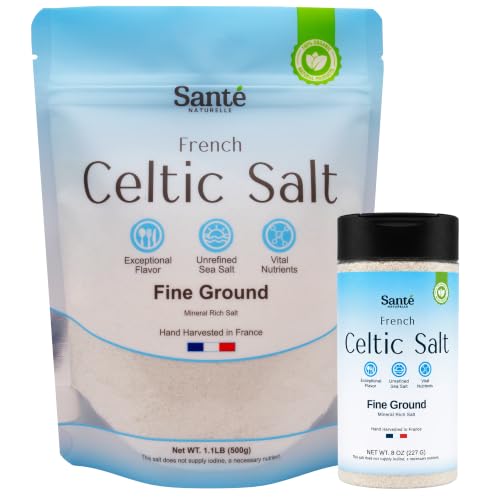
The bundle that keeps the shaker full and the pantry bag deep at the same time.
You get 1.86 pounds of unrefined French sea salt in one order: an 8-ounce shaker for the table and a 1.1-pound bag for the kitchen. That is nearly double the 1.0-pound Napoleon’s bag, so it is the buy that stops you refilling every few weeks. The label traces the hand-harvested ocean-marsh method back over a thousand years.
The fine grind is the feature to note. It dissolves fast into boiling water, marinades and baking, so it is the salt most people reach for when a recipe just says “salt.” The brand states it is packed with over 82 minerals, including magnesium, calcium, potassium and iron, with nothing processed. Reviewers describe the grind as nice and fine and the taste as more complex than table salt — the crowd here is clearly cooking with it daily, not saving it for guests.
Clumping is the one thing to manage. A moist, unrefined salt can cake up over time if it sits in a humid spot, so keep the bag sealed and the shaker dry. An occasional report of a cake-up is a storage habit, not a flaw in the grain. For anyone who seasons food constantly, this is the most straightforward value on the list.
Why cooks stock up on it
- Two formats in one order — table shaker plus 1.1lb kitchen bag
- Fine grind dissolves fast for brines, marinades and baking
- Over 82 minerals retained because it stays unrefined and moist
The one habit it needs
- Moisture means it can clump if left open in a damp kitchen
- Fine grind delivers no finishing crunch on top of a dish
The everyday pick: plenty of fine-ground mineral salt in two formats for a busy kitchen that salts constantly.
Skip if: you want a coarse flake for finishing plates by hand.
5. Premier Salt’s Celtic Sel Gris
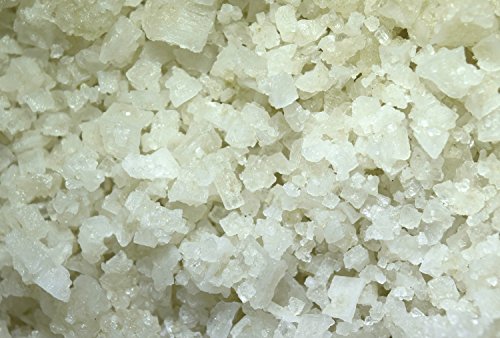
Grey crystals weathered in clay ponds — the coarse finishing salt for anyone chasing real sel gris character.
Sel gris means French grey salt, and the grey comes from the clay the crystals form in. This one is hand-harvested from the Guerande marshes using traditional Celtic methods and left unrefined, so it keeps its natural moisture and, per the label, over 80 trace minerals. It is Non-GMO and Kosher certified, with no chemicals, preservatives or additives listed. That is the same clean-label promise as the picks above, in the classic grey-salt form.
Where it differs from the pink and white salts here is flavor and grain. The coarse crystals carry a distinctly smoky grey tone and a mineral depth made for finishing — a pinch over a steak, a scatter across roasted vegetables, or the last touch on a plate where the crunch is part of the eating. It ships in a 12-ounce resealable bag that keeps the flakes dry between uses, which matters for a moist unrefined salt. At 12 ounces it matches the Premier Research Labs bag ounce for ounce, versus the smaller 8.8-ounce MAYİ canister.
The catch is the grind and the size. Coarse crystals are a finishing salt, not a fast-dissolver, so you will want a grinder or a mortar for anything that needs the salt to vanish into the food. And it is a single 12-ounce bag — fine for a salt you use by the pinch, less so if you salt big pots of water daily. Treat it as the gourmet finishing tool in the lineup, not the workhorse.
The texture payoff: coarse grey crystals that hold their shape and deliver a mineral, lightly smoky finish on top of a dish.
The trade: finishing-salt format only — coarse and modest in size, so pair it with a fine grind if you cook in volume.
Pick this for: gourmet finishing plates where you want the grey-salt look and coarse crunch.
Not the one if: you need an all-purpose salt for brines and baking — go fine ground instead.
Know the Specs
Grain: fine ground vs. coarse flake
Grain decides where a salt belongs in your kitchen. Fine ground dissolves fast, so it is the pick for boiling water, marinades and baking — it disappears into the dish. Coarse and flaky salt is a finishing salt: it lands on top and gives you crunch, so it suits a roast, a salad or a plated dinner. Fine ground wins for brines and baking; coarse wins for finishing. Most kitchens end up with a fine grind for cooking and a coarse flake for finishing.
Source and testing: what “clean” really means
Purity is a sourcing question, not a label word. A salt from open seawater can pick up whatever is in that water, while a salt drawn from a single deep spring or a named marsh gives you a fixed origin. The strongest signals are an identifiable source — a registered spring, a specific marsh — plus published independent lab testing. When a brand names its location and posts its results, you have something to check. When it only says “sea salt,” you do not.
Minerals and moisture
Unrefined salt is left moist on purpose, and that moisture keeps trace minerals such as magnesium, calcium, potassium and iron attached to the grain. Drying salt hard strips most of them out. The counts vary by brand — some name 82 minerals, some 84+, some over 80 — so read the label rather than assuming. The trade-off is that moist salt can clump. That is a storage note, not a flaw: keep it sealed and dry.
Certifications worth checking
Labels like organic, kosher, non-GMO and paleo-friendly tell you how a salt was handled and who it suits. Paired with the origin and any lab testing, they give you a fuller picture — though they are not purity tests on their own. A salt that carries several certifications and names its source does more of the homework for you than one listing claims with nothing behind them.
Common Questions
How do I know a Celtic salt is actually free of heavy metals?
Is unrefined Celtic salt better for me than table salt?
Why does my Celtic salt clump up in the shaker?
Can I cook with a coarse finishing salt like sel gris?
What is the difference between Celtic salt and pink Himalayan salt?
How much salt should I expect in each bag?
Does a fine grind or coarse grain last longer?
Is a salt shaker canister better than a bag?
Which salt is best for a low-sodium diet?
The Bottom Line
For most kitchens, the winner is the Premier Research Labs Pink Salt — a clean, additive-free blend of Australian and Hawaiian sea salt that cooks and finishes from one 12-ounce bag, with a flavor that reads saltier than table salt so a smaller pinch goes further. If you want a moist, mineral-heavy organic flake to finish plates by hand, the Napoleon’s Celtic Salt holds 82 minerals in its deliberately damp 1.0-pound bag. For the most traceable, lab-documented source, the single-spring MAYİ canister is the one to reach for. And for pure value across months of cooking, the Sante Naturelle bundle keeps a shaker full and a pantry bag deep. Pick the grain you will actually cook with, then check that the source is named and the lab testing is published.
How we choose
We do not accept paid placement. Every pick is matched to a real buyer and a real use-case; we do not hands-on test units.
Sources
Specifications: manufacturer listings and product documentation. Review insights: verified customer reviews, as of November 2026. Pricing: not shown on this page (it changes often); check the current price via the retailer link.
As an Amazon Associate, My Heart Lives Here earns from qualifying purchases. This does not affect which products we feature.