Heads up: This post contains affiliate links. As an Amazon Associate I earn from qualifying purchases, at no extra cost to you. Learn more
Specs are compiled from manufacturer listings and verified buyer reviews and can change over time — please confirm the key details on the product page before buying.
If your phone works in the driveway and dies at the kitchen table, this is the list you want. A cell phone booster without outside antenna pulls a usable signal into one or two rooms — no rooftop mast, no ladder, no landlord’s permission. Below are seven real options, ranked so the strongest pick sits at the top and the compromise picks sit at the bottom.
This guide is built by comparing the manufacturers’ published specifications and the patterns across verified customer reviews, so you get each pick’s real strengths and trade-offs instead of marketing spin.
The one thing you cannot skip: a booster can only amplify a signal that already exists somewhere nearby. So before you buy anything, treat every claim here as a question of indoor coverage. That single check is the whole point of this cell phone booster without outside antenna breakdown.
Top Picks

How To Choose The Best Cell Phone Booster Without Outside Antenna
Most buyers assume a booster magically creates signal. It does not. It captures whatever is already outside your wall and pushes that same signal through the rooms inside. So the first question is not which booster — it is whether you have a scrap of signal to work with.
Check your outdoor bars before you buy anything
Stand outside, ideally on the side of the house that faces your carrier’s tower, and look at your phone. You want at least 1–2 bars showing. Several of these kits state that number directly in their own instructions, and it is the single most common reason a booster disappoints someone.
Match the unit to your carrier’s band
Carriers broadcast on specific frequency slices called bands. A booster tuned to Band 12/17 (a 700 MHz slice) is aimed at AT&T, T-Mobile, Cricket, Straight Talk and U.S. Cellular users. A Verizon unit is usually built around Band 13. Buy a unit that skips your carrier’s band and it will amplify nothing you can use.
Read the coverage number honestly
Square-foot figures assume a strong outdoor signal. A 3,000 sq. ft. rating in a weak-signal area may only fill a couple of rooms. Treat the number as a best case, then drop your expectation one notch if you live in a rural, hilly, or metal-roofed building.
Side-by-Side Comparison
| Model | Best For | Coverage | Gain | Bands / Carriers | Amazon |
|---|---|---|---|---|---|
| 2026 Cell Phone Signal Booster (GAGBK)★ Best Overall | Simple Verizon pockets | 46.45 m range | — | 700 MHz, Verizon | Amazon |
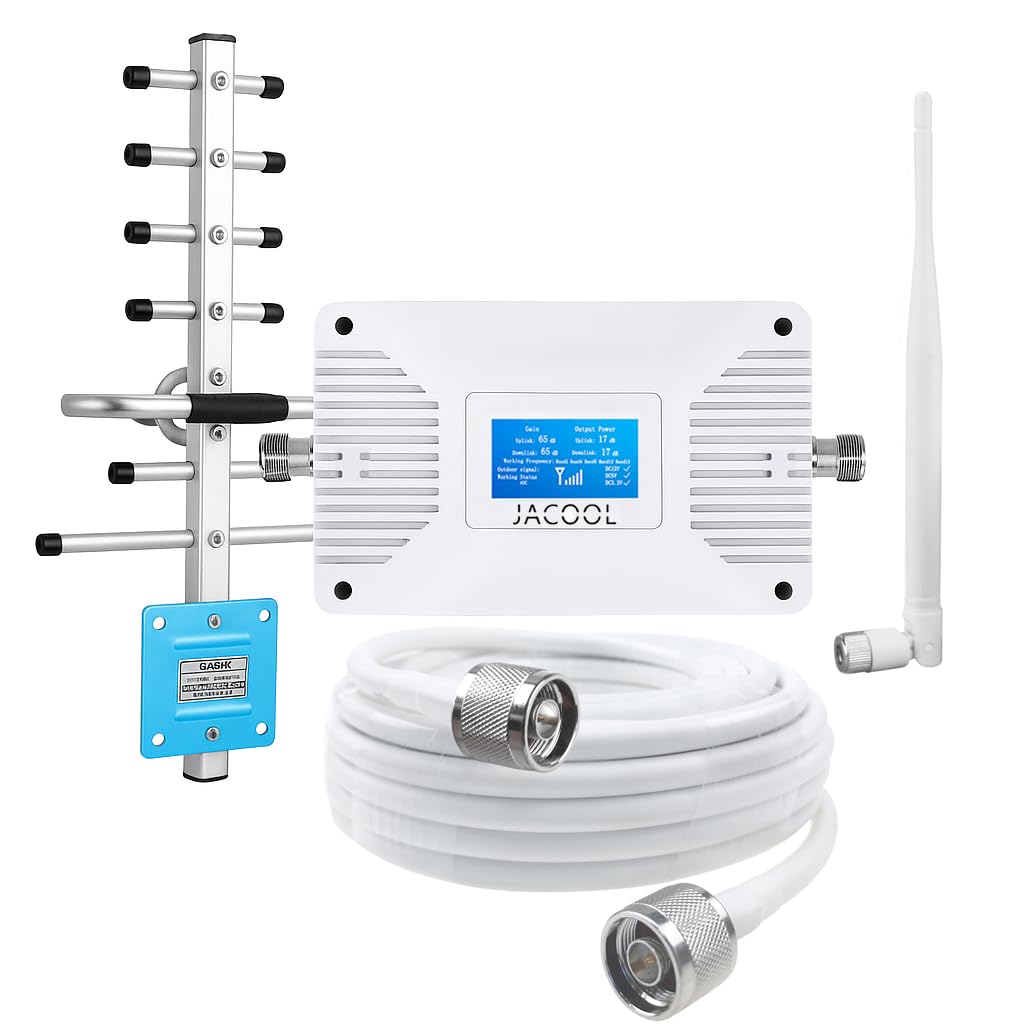
| JACOOL Home Office BoosterMulti-User Pick | Multi-user homes | 3000–5000 sq. ft. | — | 700 / 1700 / 2100 MHz, Verizon & AT&T | Amazon |
| GAGBK AT&T/T-Mobile Booster | Large rural homes | 4500 sq. ft. | 65 dB | Band 12/17, AT&T & T-Mobile | Amazon |
| subroad Band 12/17 Booster | VoLTE calling | 3000 sq. ft. | — | 700 MHz, AT&T/T-Mobile/Cricket | Amazon |
| ZORIDA Ace 5S | All-carrier small spaces | 2000 sq. ft. | 72 dB | Band 12/17,13,5,25/2,4 — all US carriers | Amazon |
| ZORIDA 5S Pro | Whole-home multi-room | 4000 sq. ft. | 72 dB | All US carriers, 2G–5G | Amazon |
| ZORIDA 4500 sq ft Booster | Biggest indoor footprint | 4500 sq. ft. | 72 dB | Band 12/17,13,5,25/2,4 — all carriers | Amazon |
Detailed Reviews
1. 2026 Cell Phone Signal Booster (GAGBK)
A tiny Verizon-only box for one room — if it works in your house.
This is the most compact pick on the list, and it is built around a single job: boosting Verizon on the 700 MHz band. Nothing else. If Verizon is your carrier and you want a small unit you can move from room to room, this is the strip-it-down option.
The published spec reads “Small Size, Portable,” with a signal range figure of 46.45 meters. Read that as the reach of the unit itself rather than a promise about your whole house. The kit runs on a 12V 2A power adapter and arrives FCC approved with a 30-day window. That FCC stamp is what makes the unit legal to operate in the US.
Here is the honest catch, and it is a big one for this specific model. The buyer consensus is uneven — the effectiveness and value-for-money write-ups take a wide range of views, and signal performance is the part people push back on hardest. That does not mean it fails for everyone. It means this one is worth trying only if you have a clean, strong Verizon signal just outside your wall and a single room to cover. If your outdoor bars are shaky, spend the extra on a higher-gain unit further down.
Where it earns a place: Verizon households that want one small, portable unit for a single room and do not need multi-device coverage.
The honest limit: single-band, single-carrier — swap to AT&T or T-Mobile and this box has nothing to amplify.
Reach for this if: Verizon is your carrier, your outdoor signal is solid, and you want the smallest thing on this list for one room.
Look elsewhere if: you need multi-carrier support or whole-home coverage — the higher-gain picks later in this list were built for that.
2. JACOOL Cell Phone Signal Booster for Home Office
Built to keep four people in three rooms connected at once, not just one phone.
Most budget boosters quietly assume one phone at a time. This one is pitched at the whole household — phones, tablets and hotspot devices all pulling signal at once on Verizon and AT&T. The published range reads 3000–5000 sq. ft., and it supports 700 MHz plus the 1700/2100 MHz bands.
The clever bit is AGC, or automatic gain control — a self-adjusting circuit that dials the amplifier up or down to keep it from feeding back on itself. In plain terms, that is what stops the booster from squealing and stabilizing a room where the outdoor signal wobbles. The kit also includes high-gain antennas, and the maker quotes a setup time under 30 minutes.
Two things worth knowing before you commit. First, this is a very new listing, so there is not yet a deep pool of buying experience behind it — the spec sheet is detailed, but you would be an early adopter. Second, it only covers Band 12/13/17 plus 1700/2100 MHz, so T-Mobile and the smaller regional carriers are outside its lane. For a Verizon or AT&T home office with a patchy outdoor signal and several devices, it reads as a sensible mid-tier answer.
What the spec sheet promises
- AGC automatic gain control keeps the amplifier stable instead of oscillating
- Multiple users on phones, tablets and hotspots at the same time
- 3000–5000 sq. ft. rated range and a 2-year warranty
Where it holds back
- Single-band family — no Band 5, 4 or 2 coverage for other carriers
- Very new listing with little owner history to lean on
Best fit: a Verizon or AT&T household where several phones and tablets need a usable signal in a home office.
Think twice if: your carrier is T-Mobile or a regional network — this unit does not reach those bands.
3. GAGBK AT&T / T-Mobile Cell Phone Signal Booster

The largest rated crowd on paper, with a 65 dB amplifier and a 4500 sq. ft. claim.
If square footage is your scoreboard, this GAGBK unit throws down the biggest number in the group — 4500 sq. ft. of rated coverage against the 3000 sq. ft. of the subroad booster later in this list. The gain figure is 65 dB, and the kit leans on AGC plus self-oscillation elimination to keep the amplifier from fighting itself. It also drops into an inactivity mode when nothing is drawing signal, which the maker ties to lower power draw and longer service life.
Carrier coverage is AT&T, T-Mobile, Straight Talk, Cricket and U.S. Cellular, all on Band 12/17 at 700 MHz. The listed frequency range is Downlink 728–746 MHz and Uplink 698–716 MHz — that is the slice of air these carriers use for calls and data. The included coax cable runs 50ft and can be extended to 100ft, which gives you real placement flexibility. A 3-year manufacturer warranty backs it.
The trade-off you have to weigh honestly: this is a very new product with only a thin layer of owner feedback behind it, so you would be buying largely on the published spec. And the 4500 sq. ft. figure assumes a usable outdoor signal — in a weak zone, treat it as a handful of rooms at best. For an AT&T or T-Mobile home with a metal roof or thick walls, the paper case is strong.
What stands out: 65 dB of gain and the biggest rated coverage in the group, plus a 3-year warranty and a 30-day money-back window.
The fine print: brand-new listing, so the real-world track record is still being written.
Pick this when: you are on AT&T or T-Mobile, need a large indoor footprint, and want the longest warranty of the budget-and-mid group.
Hold off if: you need coverage for a carrier outside Band 12/17 — the all-carrier picks are further down.
4. subroad Cell Phone Signal Booster (Band 12/17)
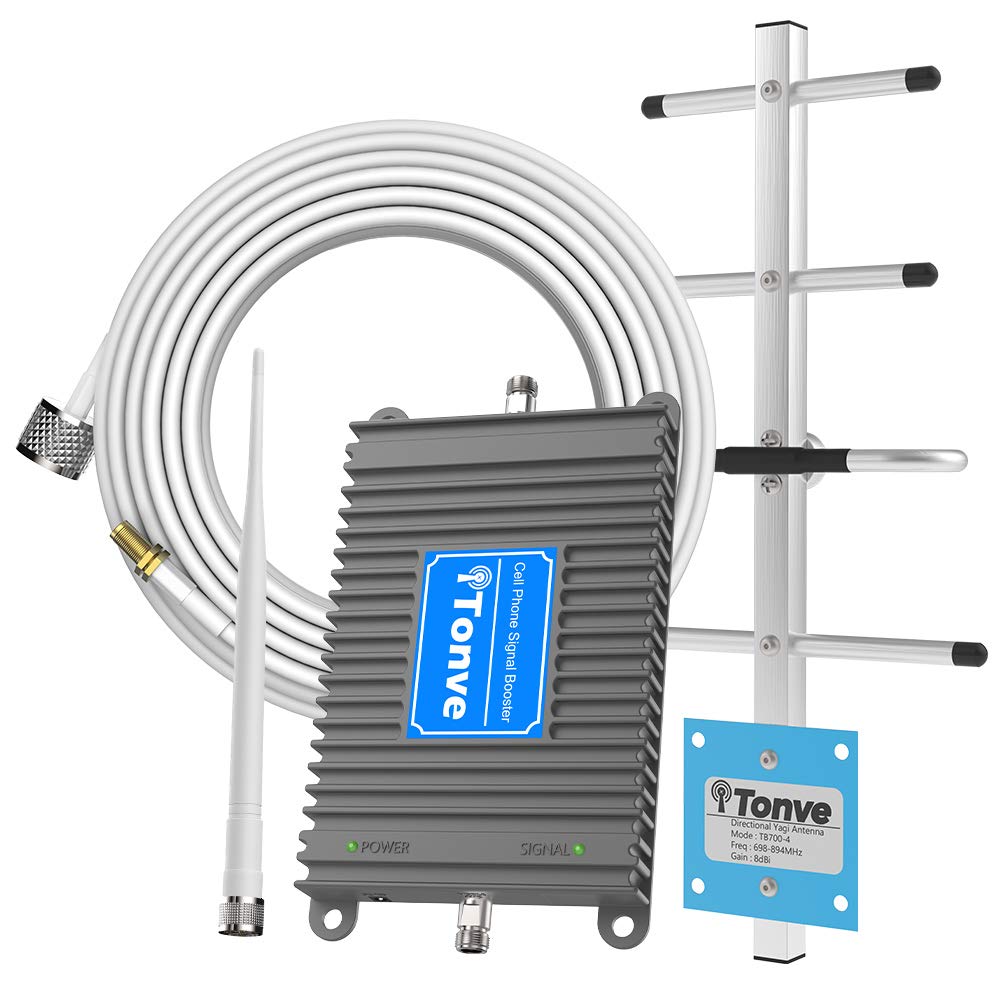
The one tuned specifically for keeping voice calls solid, not just data bars.
This subroad unit is aimed at a very specific buyer: someone whose calls drop mid-sentence more than someone whose video buffers. It supports VoLTE, which stands for Voice over LTE — the system most US carriers now use to carry calls over the data network. It also supports HD Voice and Advanced Calling, and the maker says it stabilizes both the uplink and downlink to cut drops and static.
It runs on Band 12/17 at 700 MHz, which covers AT&T, Cricket, T-Mobile and U.S. Cellular. The rated indoor coverage is 3000 sq. ft., against the 4500 sq. ft. claim on the GAGBK unit above — so it gives up some footprint in exchange for the call-quality focus. A 2-year warranty and a 30-day money-back window round out the package.
Now the part you should read twice. On the whole, the functionality side of this booster reads positively — it is the most-discussed strength in its own feedback, and buyers find that the unit operates as described. But signal quality itself takes both sides of the argument: some report a clear improvement, others say they see no noticeable gain. That is the pattern when an outdoor signal is borderline. And as the maker warns directly, verify you get at least 1–2 bars of Band 12/17 outdoors before buying.
Why it appeals for calls
- VoLTE, HD Voice and Advanced Calling support for cleaner conversations
- Works across AT&T, Cricket, T-Mobile and U.S. Cellular
- FCC certified with a 2-year warranty and a 30-day money-back guarantee
The before-you-buy reality
- Signal improvement lands unevenly depending on your outdoor bars
- 3000 sq. ft. rated range is the smaller side of the mid-tier
The right call for: AT&T or T-Mobile homes where dropped voice calls are the main pain, not slow data.
Not your pick if: your outdoor signal sits at zero bars — no booster on this list can amplify silence.
5. ZORIDA Ace 5S Cell Phone Signal Booster

The 72 dB all-carrier box that owners actually recommend in bulk.
Here is the one the crowd has already sorted out for you. The ZORIDA Ace 5S carries 4.0+ stars across 700+ ratings, and what wins people over is the signal lift — a 1-bar room coming up to full bars is the recurring story in its own feedback. That is owner experience, not a spec sheet on a brand-new listing. Owners have logged real hours on this box.
On paper it does the hard parts right. The 72 dB maximum gain is a real step above the 65 dB of the GAGBK unit, which matters because gain is how hard the amplifier pushes a weak outdoor signal into your rooms. It works with Verizon, AT&T, T-Mobile, U.S. Cellular and more, across Band 12/17, 13, 5, 4 and 2/25, covering 3G, 4G LTE and 5G. The rated coverage is 2000 sq. ft., which is the smallest footprint among the ZORIDA picks — so this is a small-home, studio or single-room answer, not a whole-house one.
Setup is where it quietly beats the rest. The indoor whip antenna attaches straight to the booster and can sit on a wall or a table, and the maker’s app walks you through placement and shows your signal data before and after. That 1v1 app-based tech support and the US-based service line are what owners keep calling out. The honest catch: 2000 sq. ft. does not stretch far, and like every unit here it needs 1–2 bars outdoors to have anything to amplify. If your house is around 2000 sq. ft. or less, this is the box most people should buy.
What earns the top badge
- 72 dB max gain — the highest amplifier rating in this group
- All-carrier support across Band 12/17, 13, 5, 4 and 2/25, plus 5G
- Table-top or wall indoor whip antenna with app-guided install and 3-year warranty
Where it stops short
- 2000 sq. ft. rated coverage — small homes and single rooms only
- Needs a usable outdoor signal already in place
My recommendation: for a small home or apartment on any US carrier, this is the box I would buy first — the 72 dB gain plus the all-carrier band coverage do the most work for the widest group of people.
One word of caution: if your space is well over 2000 sq. ft., the bigger ZORIDA units below are the smarter fit.
6. ZORIDA 5S Pro Cell Phone Signal Booster
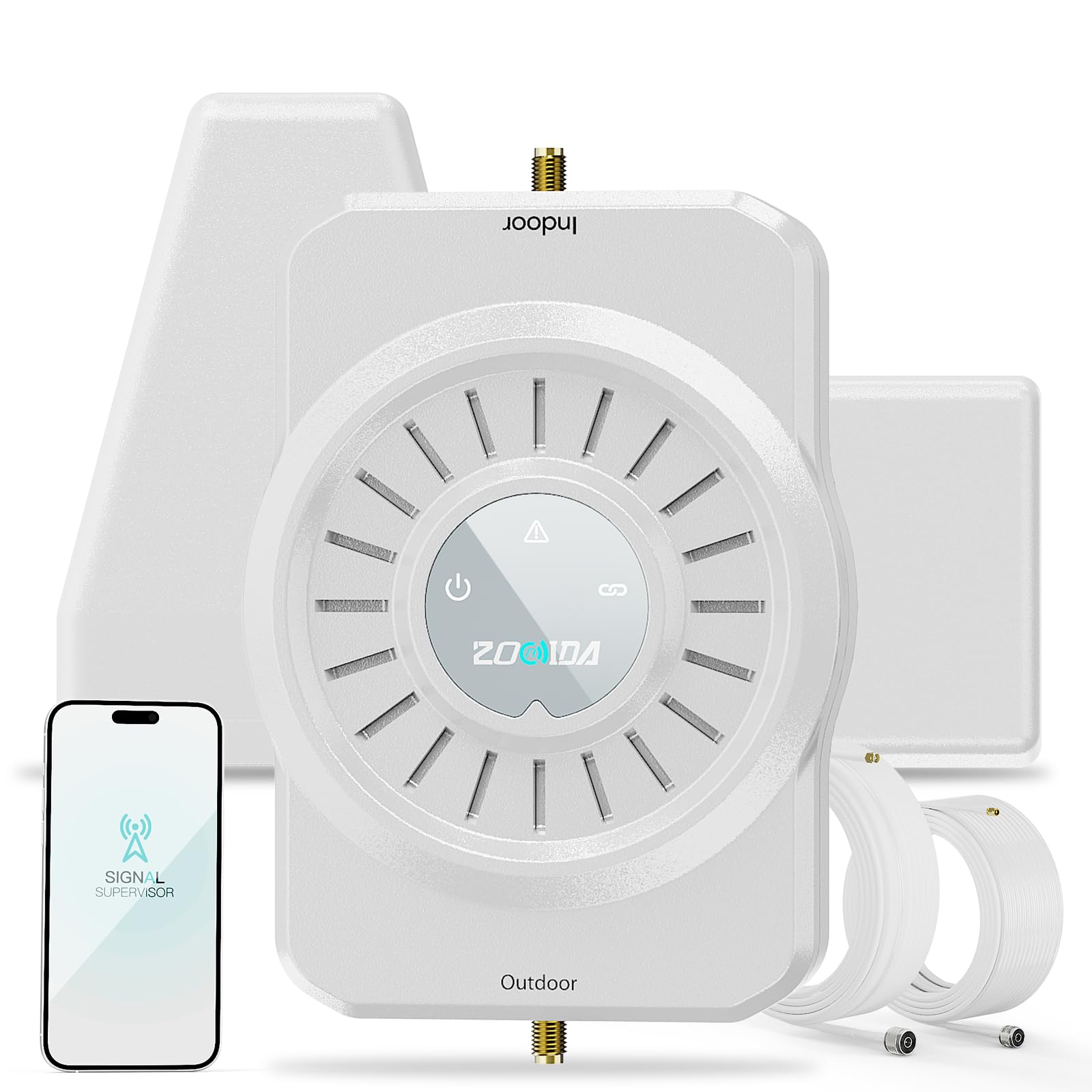
The same 72 dB ZORIDA engine, stretched to four full rooms and every device.
The step up from the Ace 5S is mostly one number: 4000 sq. ft. of rated coverage, which the maker describes as typically 3–4 full rooms. Same 72 dB power, same all-carrier reach, but designed to keep phones and tablets connected across the whole floor rather than a single corner.
It works with AT&T, Verizon, T-Mobile and other US carriers, covering 2G, 3G, 4G and 5G. The frequency support list is the widest in the group — 700 MHz up through 850, 900, 1800, 1900, 2100, 2300 and 2500 MHz, plus the 2.4 GHz and 5 GHz ranges. That breadth is why ZORIDA can claim all-carrier operation where the subroad and GAGBK units are locked to Band 12/17.
Two things to hold in mind. First, this is a newer listing than the Ace 5S, so the owner history sits mostly on the sibling model rather than this exact box — the specs are stronger, the track record is thinner. Second, the 4000 sq. ft. figure still depends on your outdoor signal; a rural property with 1 bar will fill fewer rooms. The app-guided install, the US-based support line, the FCC certification with ID OWWF110725S, and the 3-year warranty plus 90-day returns are all real and all worth having.
Why it climbs: the widest band support on the list and enough rated coverage for 3–4 rooms, with the same app-guided setup and 3-year warranty as its smaller sibling.
What to be clear-eyed about: the exact-model feedback is newer than the Ace 5S, so you are leaning more on the maker’s spec here.
Suits you if: your home is larger than a single room and you want all-carrier flexibility without stepping up to the biggest unit.
Otherwise consider: the Ace 5S for a small footprint, or the 4500 sq. ft. model if you have a big house and a strong outdoor signal.
7. ZORIDA 4500 sq ft Cell Phone Signal Booster
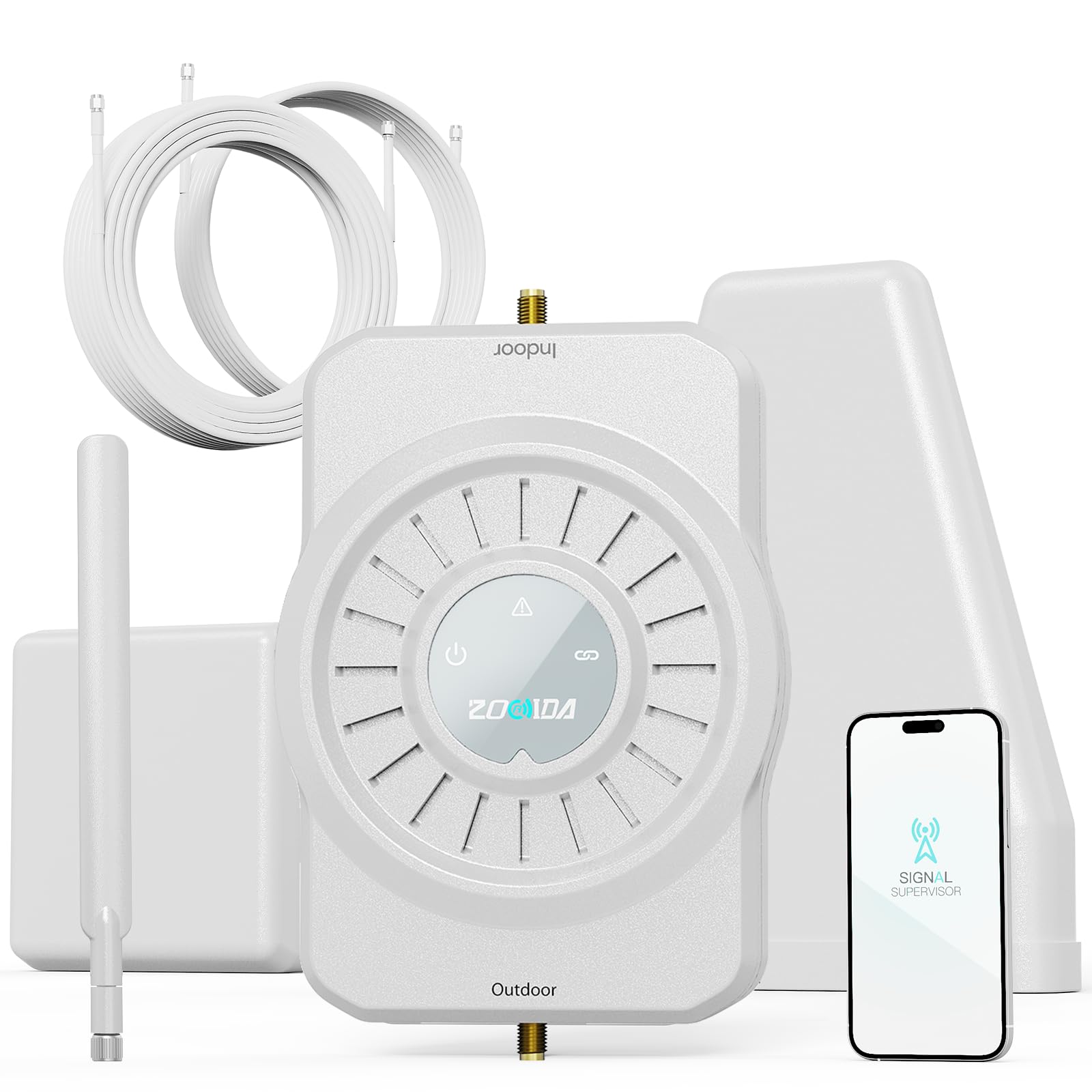
The largest indoor footprint here — five rooms, one 72 dB amplifier, all carriers.
If your dead zone is not one room but the whole lower floor, this is the ZORIDA that goes largest. Rated coverage tops out at 4500 sq. ft., which the maker maps to roughly 3–5 rooms, and it keeps the 72 dB gain and all-carrier support that made the Ace 5S the crowd favorite. Phones and tablets share the signal simultaneously.
Band coverage is Band 12/17, 13, 5, 25/2 and 4 — the same wide set as the 5S Pro — and it handles 5G alongside 4G, 3G and LTE. It is FCC approved, backed by a 3-year warranty and 90-day returns, and the ZORIDA app guides the install with real-time signal measurements.
The honest note: this is the newest and least-proven of the three ZORIDA boxes, so the spec sheet is doing more of the persuading than owner experience. And 4500 sq. ft. is a best case — a rural cabin with 1 bar outside will see far fewer rooms light up. But if you have a big footprint and a usable signal on the outside wall, nothing else on this list is rated to reach further.
The headline number: 4500 sq. ft. rated coverage with 72 dB gain and all-carrier support — the largest combination in this group.
What to weigh: the least owner history of the ZORIDA trio, so plan on a strong outdoor signal to get the full rated coverage.
Right for you if: you have a large home or multi-room dead zone and a solid outdoor signal to build on.
Choose something smaller if: you are covering one room — the Ace 5S does that at a gentler spec and is the proven one.
Know the Specs
Gain in dB
Gain is how hard the amplifier pushes a weak outdoor signal into your rooms. Higher is stronger — the ZORIDA units run 72 dB, while the GAGBK AT&T box runs 65 dB. Gain cannot create signal; it can only amplify what is already there.
Band and Carrier Match
Carriers use specific frequency slices. Band 12/17 at 700 MHz serves AT&T, T-Mobile, Cricket, Straight Talk and U.S. Cellular. Verizon often centers on Band 13. A unit that covers Band 12/17, 13, 5, 4 and 2/25 works across all US carriers; a single-band unit does not.
Coverage in Square Feet
The rated square footage assumes a strong outdoor signal. In a weak zone, treat the number as a best case and expect fewer rooms. Small homes fit the 2000 sq. ft. class; larger homes need the 4000–4500 sq. ft. class.
AGC and Oscillation Control
AGC stands for automatic gain control — it self-adjusts the amplifier to prevent feedback that would otherwise cause the unit to squeal and cut out. Self-oscillation elimination is the related safeguard. Together they keep the signal stable in rooms where the outdoor signal fluctuates.
Common Questions
Can a cell phone booster work without an outside antenna?
How many bars outdoors do I need before a booster will help?
Does a cell phone booster work in a basement or metal building?
Will a booster work with AT&T, Verizon and T-Mobile at the same time?
What does 72 dB gain actually mean for my phone?
Is it legal to use a cell phone booster in the US?
How long does installation take?
Does the square footage rating include walls between rooms?
Do I need to register a booster with my carrier?
Which ZORIDA model should I choose for a small apartment?
The Bottom Line
For most people, the cell phone booster without outside antenna winner is the ZORIDA Ace 5S because its 72 dB gain and all-carrier band support cover the widest range of homes at a footprint that fits most spaces. If you want more rooms covered, grab the ZORIDA 4500 sq ft for the largest rated reach on this list. And for an AT&T or T-Mobile home with a metal roof or thick walls, the GAGBK AT&T booster is the one to reach for, backed by its 3-year warranty.
How we choose
We do not accept paid placement. Every pick is matched to a real buyer and a real use-case; we do not hands-on test units.
Sources
Specifications: manufacturer listings and product documentation. Review insights: verified customer reviews, as of November 2026. Pricing: not shown on this page (it changes often); check the current price via the retailer link.
As an Amazon Associate, My Heart Lives Here earns from qualifying purchases. This does not affect which products we feature.