Heads up: This post contains affiliate links. As an Amazon Associate I earn from qualifying purchases, at no extra cost to you. Learn more
Specs are compiled from manufacturer listings and verified buyer reviews and can change over time — please confirm the key details on the product page before buying.
If your kidneys are impaired, the calcium question gets complicated fast: you need the mineral, but you also need a form your body can handle without loading up on the wrong compound. The short answer up front: look for calcium citrate rather than calcium carbonate, then check the elemental calcium per serving before anything else. Every pick below clears that bar in a different way.
This guide is built by comparing the manufacturers’ published specifications and the patterns across verified customer reviews, so you get each pick’s real strengths and trade-offs instead of marketing spin.
You will see how each option handles absorption, tablet size, and additive load, because those three things decide whether a bottle actually gets finished. Read on for a clear-eyed look at the calcium supplement for kidney disease shelf.
Top Picks

How To Choose The Best Calcium Supplement for Kidney Disease
With reduced kidney function, calcium handling changes, and many people are told to watch phosphorus and to favor a citrate-based calcium over a carbonate-based one. That single word on the label, citrate versus carbonate, is the first thing to check. The second is how much actual mineral you get per dose.
Read the form before you read the dose
Calcium citrate is the form most often discussed for kidney issues because it does not need stomach acid to be absorbed the way calcium carbonate does. On a label you will see either “calcium citrate” or “calcium carbonate” named outright. If the bottle only says “calcium” with no form, that is a reason to keep looking. One note here: the Micro Ingredients bottle below pairs its calcium with D3 and K2 but uses calcium carbonate as the base — worth knowing before you commit.
Elemental calcium is the number that counts
The big number on the front of a bottle is usually the compound weight, not the mineral you actually absorb. Elemental calcium is the usable portion, and labels list it per serving. A 650 mg serving of calcium from citrate delivers a specific amount of elemental calcium that you can compare directly against another bottle’s per-serving figure. Compare elemental calcium per serving across bottles, never the front-of-bottle compound weight.
Pill size and stomach comfort decide whether you finish the bottle
Large tablets are the most common reason people abandon a calcium supplement, so pill size decides whether you finish the bottle. Look for coated or bisected tablets if swallowing is a concern — bisected means the tablet is scored so you can snap it in half. Powders sidestep the swallowing issue entirely, but they bring their own catch: mixability. If gritty residue at the bottom of a glass would bother you, skip powders entirely.
Additives matter more here than in a general vitamin
When you are already managing a kidney condition, every extra filler is one more thing to account for. Single-ingredient powders and short ingredient lists are easier to slot into a restricted diet. Multi-vitamin formulas built for dialysis bring B-complex vitamins and vitamin C that a plain calcium tablet does not carry — a different job entirely, and sometimes exactly what is needed.
Side-by-Side Comparison
| Model | Best For | Calcium Form | Calcium Per Serving | Format | Amazon |
|---|---|---|---|---|---|
| Rena-Vite Tablets (2 Bottles)★ Best Overall | Dialysis vitamin replenishment | B-complex + vitamin C formula | — | Tablet | Amazon |
| Now Foods Calcium Citrate with Magnesium, Zinc & ManganeseCitrate Standard | Citrate plus trace minerals | Calcium citrate | — | Tablet | Amazon |
| Nutricost Calcium Citrate Powder | High-serving bulk powder | Calcium citrate | 650 mg | Powder | Amazon |
| Pure Original Ingredients Calcium Citrate | Single-ingredient purity | Calcium citrate | — | Powder | Amazon |
| Micro Ingredients Calcium 1,200mg with D3 & K2 | Full mineral complex with D3 and K2 | Calcium carbonate | 1,200 mg | Tablet | Amazon |
Detailed Reviews
1. Rena-Vite Tablets 2 Bottles
Our pick — 4.5+★ from 950+ verified ratings; the strongest balance of quality and price.
The two-bottle pack that targets what dialysis actually strips out, not just calcium.
Here is the thing most calcium shoppers miss: if you are on dialysis, the mineral you are most likely short on is not calcium at all. It is the water-soluble vitamins that get washed out during treatment. Rena-Vite is built around that gap — it delivers essential B-complex vitamins and vitamin C in an easy-to-swallow tablet, with the stated purpose of helping replenish vitamins lost during dialysis and supporting energy production.
You get two bottles of 100 tablets each, so you are not reordering every few weeks. That is why this one sits at the top for the kidney-specific shopper, and it makes it a different tool from a straight calcium citrate powder. Each tablet is a compact, easy-to-swallow size. The bottle is genuinely small at 4.49 x 3.86 x 1.85 inches and 4.23 ounces, so it disappears into a bedside drawer or a hospital bag rather than eating shelf space.
What wins people over is the quality of the formula itself, and the value of getting two bottles at once is the clear runner-up in owner feedback. Effectiveness shows up too, with the recurring theme being that it fits the daily routine of dialysis patients rather than fighting it. There is no dissolving step, no gritty glass to rinse, no powder to measure at 6 a.m.
What earns it the top slot
- Formulated specifically around vitamins lost during dialysis, not a generic calcium pill
- Two bottles of 100 tablets keeps the routine stocked
- Compact easy-to-swallow tablets with no mixing or measuring
- Small 4.23-ounce bottle footprint for a nightstand or travel bag
Where it asks something of you
- It is a vitamin replenisher, not a calcium dose — if your clinician wants a specific calcium citrate gram amount, this is not that bottle
- The 4.23-ounce pack size is noticeably lighter than the 9.28-ounce Now Foods bottle, so if you want bulk minerals in one tub, look elsewhere
Made for: anyone on dialysis who needs the B-complex and vitamin C replaced and wants a no-fuss tablet routine.
Look past it if: your goal is a measured elemental calcium dose from citrate — the powders further down handle that job.
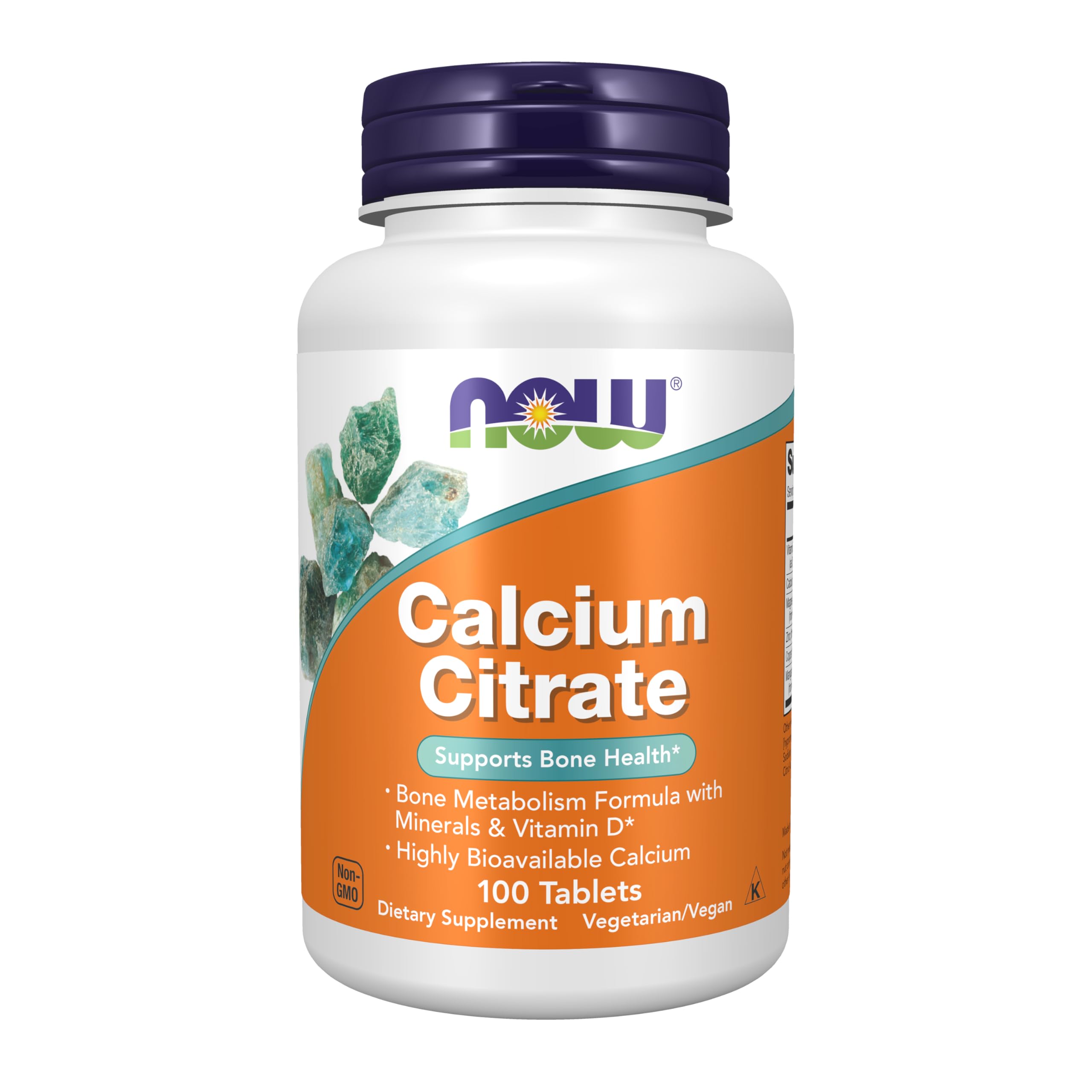
2. Calcium Citrate Now Foods 100 Tabs
Citrate paired with three partner minerals, in a bottle that outweighs the dialysis pick by more than double.
If you want the citrate form and you also want magnesium, zinc, and manganese riding along in the same tablet, this is the straightforward answer. The calcium here is citrate rather than carbonate, and owner feedback consistently notes that it is more readily absorbed than calcium carbonate — the exact distinction that matters when you are choosing carefully.
You get a real dose of minerals here, not a token sprinkle, and the formula is aimed at bone health, which is where most citrate buyers are aiming. The bottle is substantial at 4.69 x 2.56 x 2.44 inches and 9.28 ounces. That is more than twice the 4.23 ounces of the Rena-Vite pack, so you can feel there is real material inside rather than a light vitamin blend.
Now the honest part, and it is the most-discussed thing about this bottle: the tablets are big. Swallowability is split down the middle, and pill size draws far more negative than positive remarks, with the word “humongous” showing up more than once. Stomach effects are likewise mixed — some people feel better on it, others hit nausea. If you have choked on a large tablet before, skip this bottle. The coating is not scored for splitting, so you cannot halve it easily.
The absorption argument: citrate over carbonate is the whole reason this bottle exists in a kidney-focused conversation, and it delivers that with three trace minerals attached.
The size reality: big tablets and a split verdict on stomach comfort mean this suits confident swallowers — powder shoppers should scroll two entries down.
Reach for this if: you swallow tablets easily and want citrate plus magnesium, zinc, and manganese in one daily dose.
Think twice if: large pills are a struggle — the size is the recurring sticking point here.
3. Nutricost Calcium Citrate Powder 500 Grams

650 mg of calcium from citrate per scoop, stretched across 147 servings in one tub.
For sheer supply, nothing on this list comes close. One bottle holds 500 grams of calcium citrate powder — 1.1 lbs — and the included scoop delivers 650 mg of calcium from calcium citrate per serving, with 147 servings per container. Compare that against the Micro Ingredients tablets at 1,200 mg per serving: the Micro bottle front-loads a bigger dose, while this one spreads a smaller, easily-adjusted amount over far more days.
It is unflavored, non-GMO, and gluten-free, and it is manufactured in a GMP compliant, FDA registered facility. The unflavored part is the practical win — you can stir it into water, juice, or a smoothie without a chalky flavor takeover. Owner feedback backs that up, with taste drawing praise for having no weird flavor at all.
The catch is real and it is the biggest gripe on this product: the powder does not fully dissolve. A gritty residue settles at the bottom of the glass, and solubility draws more negative remarks than positive ones by a wide margin. If you want a drink that goes down clean, the grit will annoy you every morning. The tub also measures 4.02 x 4.29 x 6.46 inches at 1.31 pounds, so it takes up cabinet space and needs a dry shelf.
Why the powder crowd picks it
- 147 servings from a single 500-gram bottle
- 650 mg of calcium from calcium citrate per scoop, easy to dial up or down
- Unflavored, non-GMO, gluten-free, made in a GMP compliant facility
- Scoop included, so no kitchen scale required
The part you have to live with
- Does not fully dissolve — expect grit at the bottom of the glass
- Adds a mixing step that a tablet never asks for
Best match for: daily smoothie or juice drinkers who want a flexible citrate dose and a long supply.
Not your bottle if: floating sediment in your glass would ruin the habit — take the tablets instead.
4. Calcium Citrate Pure Original Ingredients 1lb
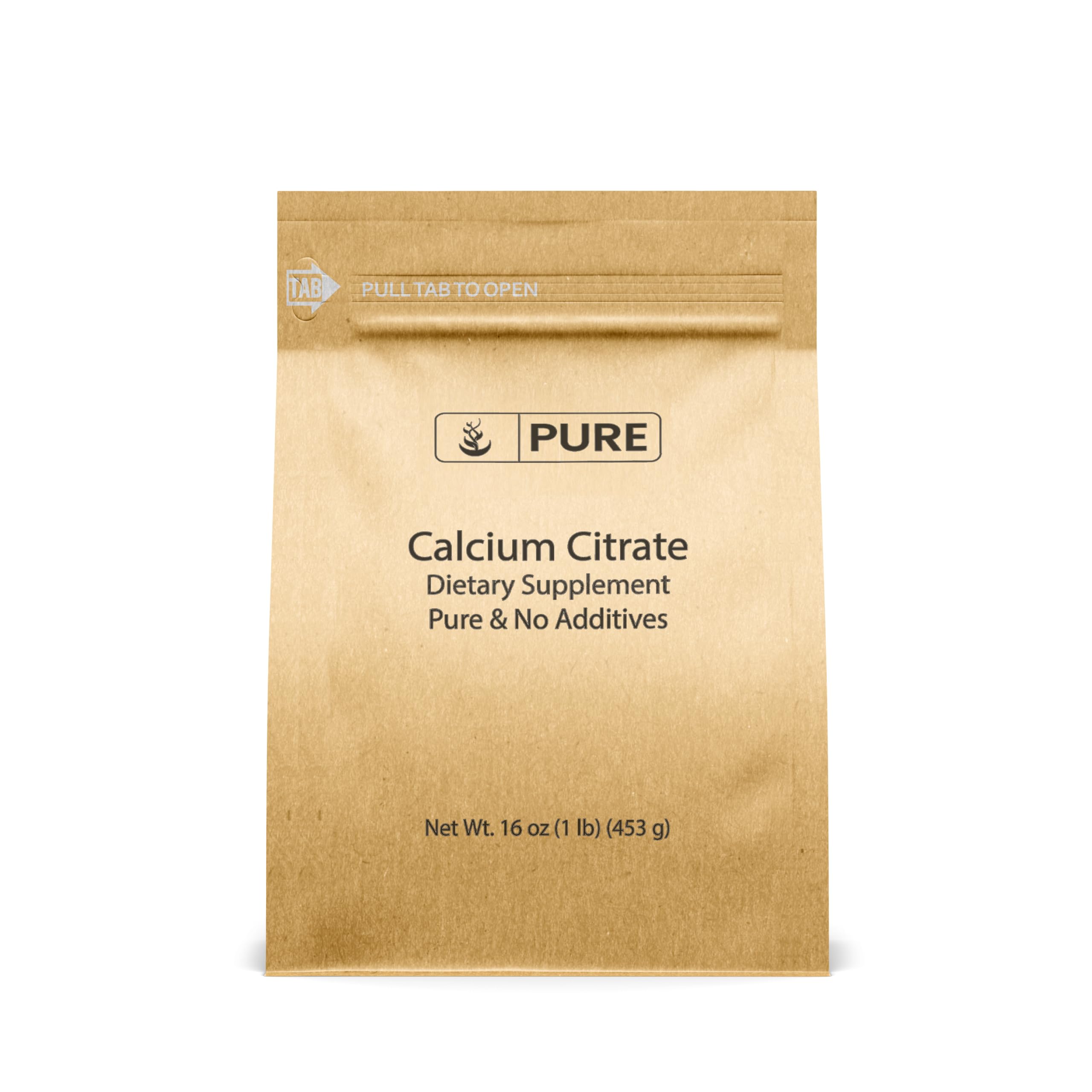
One ingredient, nothing else — the shortest label you can hand a dietitian.
When you are stacking a kidney-friendly diet with supplements, the ingredient list matters as much as the mineral. This powder is made from a single ingredient — calcium citrate and nothing else. No additives, no fillers, no flow agents, no D3, no K2, no magnesium. If your clinician wants to isolate one variable at a time, this is the cleanest way to do it.
You get calcium citrate here, described as a good source of elemental calcium, and the brand notes that calcium occurs naturally in dark leafy vegetables and cow’s milk. The tub measures 7.62 x 4.87 x 2.62 inches and weighs 1.05 pounds. Compare it directly with the Nutricost tub at 1.31 pounds: you get slightly more material there, but that bottle is a different bargain entirely, since this one trades volume for a stripped-down label.
Ease of use draws steady praise, and several people note no stomach upset after taking it — which for a calcium powder is the thing you actually care about. The flip side shows up in dissolving: the powder does not fully blend, and dissolvability skews negative. It is the same trade-off the Nutricost carries, just with a smaller jar and a shorter ingredient list. The 1lb size is also modest, so heavy users will refill sooner.
The label story: a true single-ingredient powder is rare on this shelf, and it is the reason to pick this one over a blend.
The blending reality: it resists dissolving, so treat it as a stirred-in addition rather than a clear drink.
Suits you when: you want calcium citrate alone, with zero extra compounds to account for.
Pass if: you rely on D3 or K2 in the same scoop — this bottle deliberately leaves them out.
5. Calcium 1,200mg 300 Tablets

The four-in-one tablet that bundles calcium, D3, K2, and boron into a single daily dose.
This is the most complete formula here, and also the one you need to read most carefully. Each serving delivers 1,200 mg of calcium alongside 25 mcg (1,000 IU) of vitamin D3, 25 mcg of vitamin K2 in its menaquinone-7 (MK7) form, and 2 mg of boron. The pouch holds 300 coated, bisected tablets — bisected meaning scored down the middle so you can snap one in half for a smaller dose.
The D3 and K2 pairing is the draw, since those two are the nutrients most often discussed alongside calcium for absorption and bone support. Boron rounds it out. The coated surface helps with swallowing, and buyers report these go down and digest easily. Some noticed results within the first day, which is faster than most supplement feedback you will read.
Here is the catch, and it is a big one for a kidney-focused buyer: the calcium base is calcium carbonate, not citrate. That is the opposite of the form most people in this situation are steered toward. On top of that, pill size draws far more negative than positive comments — oversized is the recurring word — and stomach effects split, with some reporting constipation. The 8.82 x 5.83 x 2.56 inch package also makes it the largest box on this list. The scoring helps, but it does not change the underlying form.
Where the formula shines
- 1,200 mg calcium plus D3, K2 (MK7), and boron in one serving
- 300 coated, bisected tablets — splittable for a lighter dose
- Non-GMO, made without soy, dairy, and gluten, with 3rd party lab testing stated
- Coated surface that owners find easy to swallow
The asterisks to read first
- Built on calcium carbonate, not citrate — a meaningful difference for kidney-focused shoppers
- Oversized tablets and a split verdict on stomach comfort
- Largest package footprint here at 8.82 x 5.83 x 2.56 inches
Right for: buyers who want the D3, K2, and boron package and have confirmed carbonate is acceptable for them.
Wrong for: anyone specifically told to use calcium citrate — the carbonate base makes this a mismatch.
Know the Specs
Calcium Citrate vs Calcium Carbonate
Citrate and carbonate are two different calcium salts, and the body handles them differently. Carbonate needs stomach acid to break down, which is why it is usually taken with food; citrate does not rely on that same acid environment. For a kidney-focused shopper, citrate is the form most often favored, which is why four of the five picks here are citrate-based and only the Micro Ingredients complex uses carbonate. Check the label for the exact word, because “calcium” alone tells you nothing.
Elemental Calcium Per Serving
The serving line is the only fair way to compare two bottles. Elemental calcium is the usable mineral portion, listed separately from the compound weight. The Nutricost powder lists 650 mg of calcium from calcium citrate per serving; the Micro Ingredients tablets list 1,200 mg per serving. Those two figures are like for like, which is exactly why they can sit side by side in a table. What you cannot do is compare a front-of-bottle compound weight against another brand’s elemental figure.
Bisected and Coated Tablets
You can split these tablets without a pill cutter, because bisected means the tablet carries a score line so it snaps cleanly in half for a partial dose. Coated means a smooth outer layer that helps the tablet slide down and shields the nutrients inside. The Micro Ingredients bottle uses both. That matters when large tablets are the reason a supplement gets abandoned, and pill size is the most consistent complaint across the tablet picks in this guide.
Powder Servings and Mixability
Powder formats exist for two reasons: swallowing is easier, and you can adjust the dose by scoop instead of by tablet. The trade-off is dissolving. Both powders here resist fully blending, leaving grit behind. If you take your calcium in a smoothie where texture is already blended in, that residue is a non-issue. In a glass of plain water, it is very noticeable.
Common Questions
Is calcium citrate better than calcium carbonate for kidney disease?
Does Rena-Vite contain calcium?
How many servings are in the Nutricost calcium citrate powder?
Why does my calcium powder leave grit at the bottom of the glass?
Are the Micro Ingredients calcium tablets easy to split?
How large are the Now Foods calcium citrate tablets?
Can I take a calcium supplement with vitamin D3 and K2 together?
What does a single-ingredient calcium citrate powder actually contain?
Should I take calcium with food?
Which pick works if I cannot swallow large pills at all?
The Bottom Line
For most people managing kidney disease, the calcium supplement for kidney disease winner is the Rena-Vite two-bottle pack because it targets the B-complex and vitamin C that dialysis actually removes, in a compact tablet that needs no mixing. If a measured citrate dose is what you are after, grab the Nutricost Calcium Citrate Powder — 650 mg per scoop across 147 servings is hard to argue with. And for the cleanest possible label with nothing added, the Pure Original Ingredients Calcium Citrate is the one to reach for. Whichever you land on, read the form line first — citrate versus carbonate is the decision that matters most on this shelf.
How we choose
We do not accept paid placement. Every pick is matched to a real buyer and a real use-case; we do not hands-on test units.
Sources
Specifications: manufacturer listings and product documentation. Review insights: verified customer reviews, as of November 2026. Pricing: not shown on this page (it changes often); check the current price via the retailer link.
As an Amazon Associate, My Heart Lives Here earns from qualifying purchases. This does not affect which products we feature.