Heads up: This post contains affiliate links. As an Amazon Associate I earn from qualifying purchases, at no extra cost to you. Learn more
Specs are compiled from manufacturer listings and verified buyer reviews and can change over time — please confirm the key details on the product page before buying.
You are pregnant, the mosquitoes found you anyway, and every can in the garage suddenly feels like a question mark. Here is the short answer: the pick that makes the most sense for most pregnant readers is the OFF! FamilyCare Spritz, because a 7% DEET formula that protects for up to 2 hours is a small, well-understood dose with aloe vera in the mix. If you would rather avoid DEET entirely, the plant-based options below have real, published protection windows too.
This guide is built by comparing the manufacturers’ published specifications and the patterns across verified customer reviews, so you get each pick’s real strengths and trade-offs instead of marketing spin.
Below you get the plain-English version of what each label actually promises, how many hours you can expect before a reapplication, and which formulas leave skin greasy. The goal is simple: you should be able to choose the best bug spray while pregnant for your own body and your own backyard without guessing.
Top Picks

How To Choose A Bug Spray While Pregnant
The single most useful thing you can do is stop shopping by brand and start shopping by two label facts: the active ingredient and the stated protection time. Those two numbers tell you how much of a chemical you are putting on your skin and how often you will need to stop and reapply. Everything else is scent, texture, and convenience.
One honest note before you read any further: this guide reports what the labels and the review pages say. It does not give medical advice. Your own clinician knows your pregnancy, your skin, and your history, so run your shortlist past them.
Start with the active ingredient, because it sets the dose
DEET is the chemical repellent most people have heard of, and on a label it appears as a percentage. A lower percentage means less of the active ingredient on your skin per spray. A 7% DEET product is the mildest DEET formula in this lineup, while plant-based picks swap the chemical for oils like lemon eucalyptus, citronella, cedarwood, or undecanone (a compound derived from wild tomato plants and tropical fruit).
Neither route is automatically right for you. What matters is that you know which one you are choosing, so you can discuss that specific ingredient with your clinician rather than a vague “bug spray”.
Check the protection window, then plan your reapplications
Every formula here publishes an hour figure, and those figures range widely: Natrapel states up to 6 hours for mosquitoes, Mimikai states up to 8 hours for mosquitoes and up to 4 hours for ticks, and OFF! FamilyCare states up to 2 hours. That window is your reapplication timer.
A shorter window is a trade-off, not a flaw. It simply means you are refreshing a smaller dose more often, which some pregnant readers prefer because it keeps each application modest. A longer window means fewer interruptions on a hike or at a cookout.
Decide between a spray and a lotion based on where you need coverage
A continuous spray reaches the back of your calves and your shoulders without asking anyone for help. A lotion lets you feel exactly where the product landed, which matters if you want precise coverage and no overspray drifting onto your clothes or your face. Babyganics is the lotion in this group; the rest are sprays.
Weigh scent and skin feel honestly
Pregnancy noses are not subtle, and every plant-oil formula here has a smell. Woodsy, lemony, and warm-spice scents all appear in this lineup, and each one draws mixed reactions on the review pages. If fragrance is your main worry, the unscented OFF! spritz is the only fragrance-free option in this group.
Side-by-Side Comparison
| Model | Best For | Active Ingredient | Stated Protection | Size | Amazon |
|---|---|---|---|---|---|
| OFF! FamilyCare Spritz★ Best Overall | Fragrance-free and unscented | 7% DEET | Up to 2 hours | 6 oz | Amazon |
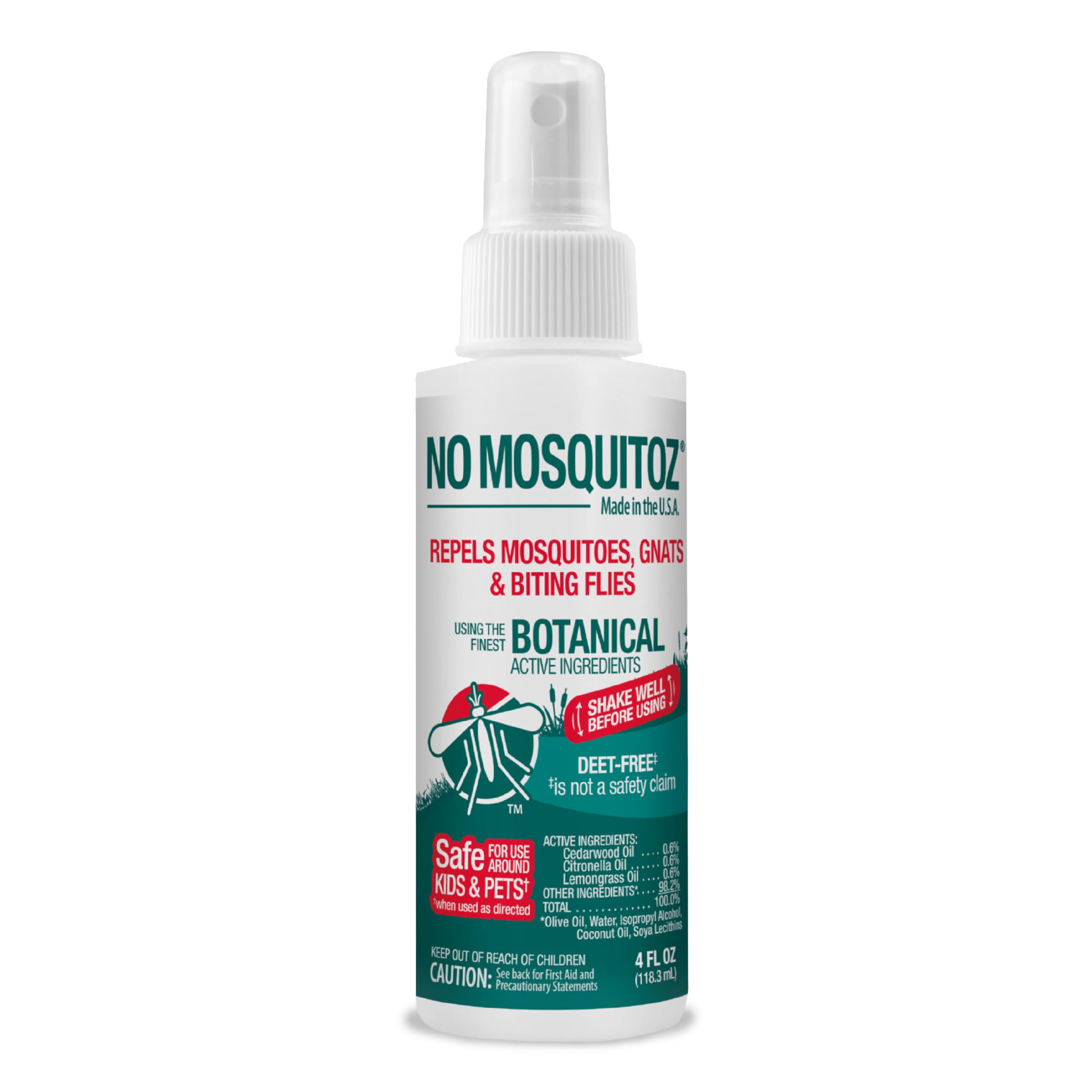
| No Mosquitoz BotanicalBest Value | Woodsy scent, DEET-free | Cedarwood, citronella, lemongrass oils | — | 4 fl oz | Amazon |
| Mimikai Plant-Powered Spray | Travel and on-the-go use | Undecanone (EPA-registered) | Up to 8 hrs mosquito / 4 hrs tick | 3.4 fl oz | Amazon |
| Babyganics Mosquito Repellent Lotion | Lotion application, families | Citronella, peppermint, rosemary, lemongrass, cedarwood, geranium oils | — | 4 oz | Amazon |
| Natrapel Lemon Eucalyptus | Longest plant-based window | Oil of Lemon Eucalyptus | Up to 6 hours | 6 fl oz | Amazon |
Detailed Reviews
1. OFF! FamilyCare Insect & Mosquito Repellent Spritz
Our pick — 4.5+★ from 650+ verified ratings; the strongest balance of quality and price.
The lowest-dose DEET option here, and the only one with no scent at all.
If your priority is a small, well-defined amount of active ingredient and nothing else drifting up into your nose, this is where you start. The label states 7% DEET, which is the gentlest DEET concentration in this lineup, and it promises protection for up to 2 hours. Two hours is short, but it suits pregnancy: each spray is a modest dose, and you refresh deliberately instead of leaving one heavy application on all afternoon.
What consistently comes through in owner feedback is simply that it works on mosquitoes, and that it sits comfortably on skin. The formula includes aloe vera and is described as non-greasy, so you are not walking around with a slick film on your arms during a summer evening. The unscented version uses a light fragrance to mask the DEET smell rather than adding a perfume note, so you get less of a “sprayed something on me” cloud than you would with a citronella or lemon formula.
The label also covers clothing: spray shirts, pants, socks, and hats, and it states the formula will not damage cotton, wool, or nylon. That matters when you are sitting on a blanket in tall grass. Against the Natrapel, the picture is a straight trade — Natrapel holds up to 6 hours of stated protection to this can’s up to 2, so you reapply roughly three times as often here. What you get in return is the smaller DEET percentage and a scent-free experience.
What works in your favour
- 7% DEET is the lowest chemical dose on this list, so each application is small and easy to account for
- Unscented version avoids perfume entirely — the formula only carries a light fragrance to mask the DEET smell
- Aloe vera and a non-greasy finish mean no slick residue on your arms
- Safe on cotton, wool, and nylon, so you can spray your shirt hem and socks too
The honest limits
- Up to 2 hours is the shortest stated window here, so a long afternoon outdoors means repeat sprays
- It still contains DEET, so anyone set on a plant-only formula will want to look further down this list
- The scent draws split opinions — some readers find it pleasant, others find it stronger than expected for an unscented label
Reach for this if: you want the mildest DEET concentration available and a formula that will not announce itself to your nose.
Think twice if: you plan to be outside for a full afternoon and would rather not stop every couple of hours to reapply.
2. No Mosquitoz Botanical Insect Repellent, DEET-Free, 4 oz
A 4-ounce pocket bottle of cedarwood, citronella, and lemongrass with no chemical active at all.
The ingredient list is the whole pitch here: cedarwood, citronella, and lemongrass oils, listed as hypoallergenic, made in the USA, and mixed with coconut and olive oils so the spray dries quickly instead of sitting wet on your skin. That quick-dry behaviour is what people notice first — you spray, rub it in, and get on with the picnic rather than waiting for your forearms to stop shining.
Where this earns its place is the balance between price tier and performance. It costs less than half of what a premium plant-based can does, yet the review pages reflect a formula that holds its own on mosquitoes, gnats, and biting flies. The woodsy scent takes the second-most attention of any feature and lands warmly, and the natural-oil approach draws near-uniform approval. As a value call for a DEET-free household, it is hard to argue with.
Two caveats deserve a straight mention. The label publishes no protection-hour figure, so you are judging by feel and by how the day goes rather than by a printed timer — plan on topping up through a long evening. And the volume is the smallest on this list at 4 fluid ounces, against Natrapel’s 6, so a family that sprays four sets of arms and legs will finish it faster. At 4 fluid ounces, that low price buys you fewer sprays per bottle.
Pick it for: a DEET-free staple you can keep in a bag and spray on the whole household without a second thought about chemical active ingredients.
Know before you buy: there is no stated protection window on the label and only 4 fluid ounces in the bottle, so heavy family use will empty it quickly.
3. Mimikai Mosquito & Tick Repellent Spray
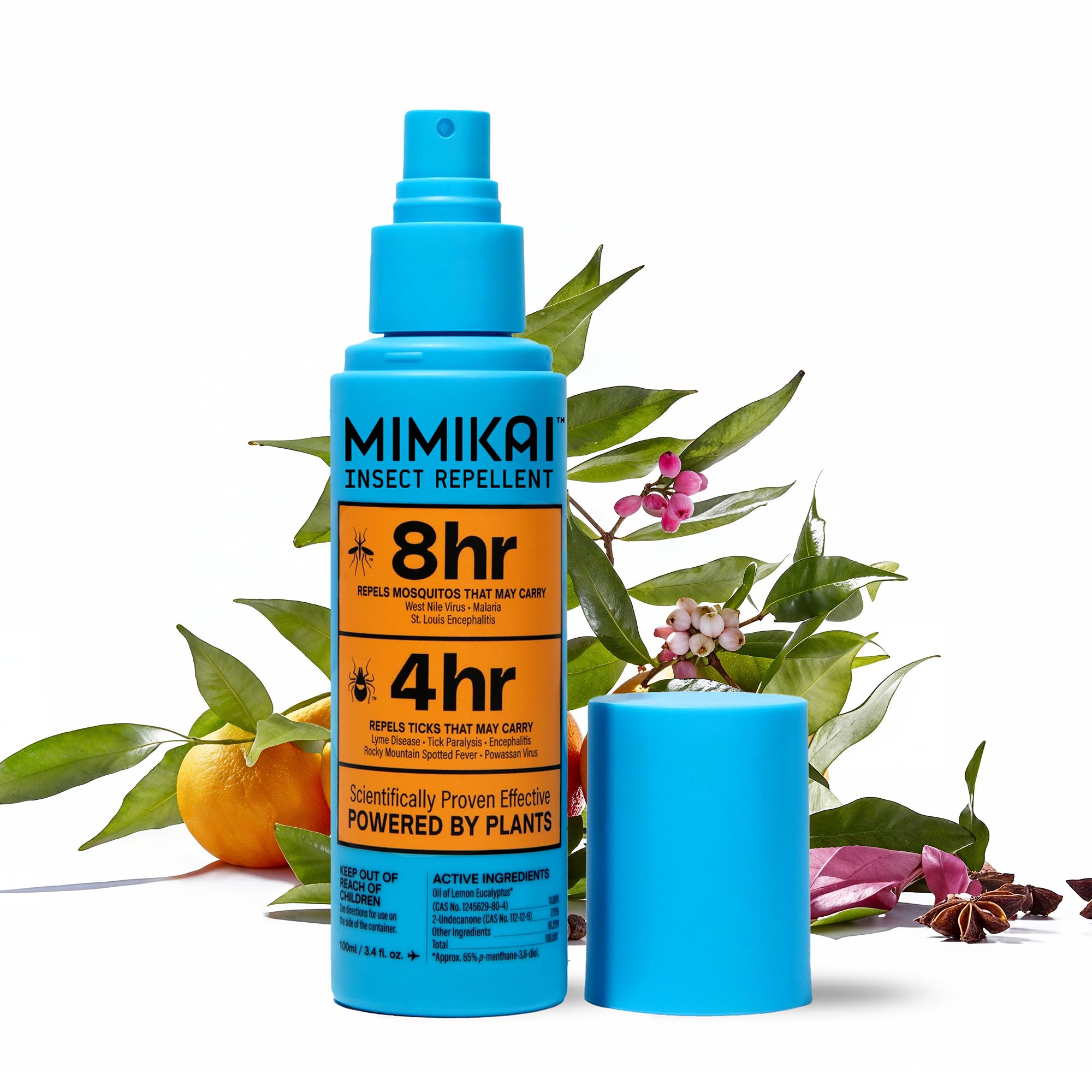
Eight stated hours of mosquito protection from a bottle that fits in a carry-on pouch.
This is the only spray here that publishes a separate tick figure: up to 8 hours against mosquitoes and up to 4 hours against ticks. Its active ingredient is undecanone, a compound derived from wild tomato plants and tropical fruit, and the formula is EPA-registered — a detail worth knowing if you want a plant-based product that has gone through a formal registration process rather than simply listing oils.
The bottle is 3.4 fluid ounces, which is the size you want for a weekend bag or a hospital go-bag rather than a full summer of backyard evenings. The scent runs warm and spicy from clove, allspice, star anise, and frankincense, and it is deliberately unlike a typical citronella spray. Owners describe a little going a long way — a light, even layer covers you, so a small bottle stretches further than its size suggests.
Here is the trade-off you should plan around: this is the greasiest formula in the group, and reviewers describe it leaving a slick feel and even slippery floors where it lands. Rubbing it in well rather than leaving it sitting on top of your skin makes a real difference. The scent also splits opinion sharply — it is a bold, aromatic smell, and a nose that is already sensitive in pregnancy may find it a lot.
Where it leads the field: that published tick window is unique among these five, and the EPA registration gives the botanical claim some structure behind it.
What to plan for: budget a little extra time to work it in properly, and spray it outside or over a sink rather than in a carpeted room.
The right call when: you are travelling, packing light, or heading somewhere ticks are a real concern alongside mosquitoes.
Not the right call when: you want a spray that disappears instantly into skin — this one needs rubbing in.
4. Babyganics Mosquito Repellent Lotion

The only lotion in the lineup, and the one you can feel exactly where it lands.
Every other product here arrives as a spray, which means overspray you cannot fully see. A lotion changes that completely: you squeeze, you smooth it over your forearms and ankles, and you know precisely where the coverage starts and stops. For a pregnant reader who wants a deliberate, measured application and no cloud of mist near her face, that difference is not cosmetic.
The formula is built on essential oils of citronella, peppermint, rosemary, lemongrass, cedarwood, and geranium, and it is made without parabens, sulfates, phthalates, synthetic fragrances, or dyes. Owners describe it going on smoothly and drying down without the sticky residue you might brace for from a lotion. The kids’ angle comes through strongly too — this is repeatedly described as the repellent children will actually tolerate being applied, which matters if you are managing more than just yourself outdoors.
Two things to weigh honestly. The scent is a strong herbal blend, not a whisper, and it draws split reactions. And the skin reaction is genuinely mixed in the feedback, with some finding it gentle and others reporting rashes or hives — if your skin has reacted to plant oils before, patch-test a small area rather than committing your whole leg on the first evening out.
Why it earns the premium slot: the lotion format plus the free-from list makes it the most controlled application in this group, and coverage you apply by hand is coverage you can see.
The one to test first: plant oils are not automatically gentle on every skin type, so a tiny patch on your inner arm a day ahead is a sensible habit.
Best for: anyone who wants to apply repellent by hand, see exactly where it went, and skip sprays entirely.
Worth a patch test: six essential oils is a lot of plant material for sensitive skin in one hit.
5. Natrapel Lemon Eucalyptus Tick & Insect Repellent

Six stated hours of protection from oil of lemon eucalyptus — the longest of the plant-based picks.
If you want to stay DEET-free and still get a printed protection window you can plan around, this is the one. The label states up to 6 hours against mosquitoes, and the active ingredient is oil of lemon eucalyptus, the only plant-based active ingredient the CDC recommends. Against the OFF! FamilyCare, the gap is plain: 6 hours versus 2, meaning you reapply roughly a third as often on a long day out.
The delivery system is the other half of the story. This is an air-powered Eco-Spray can, which means a fine mist you can point at any angle — the back of your knees, the underside of your forearm — without the can sputtering. It contains no ozone-depleting propellants, and the formula can be applied to clothing and gear as well as skin, which is useful when you are sitting on a picnic blanket or leaning against a canvas chair.
Now the honest part. Effectiveness is the most-discussed topic on this product’s review pages, and the opinions genuinely split, with some calling it the best they have used and others saying it did nothing for them. Irritation is a quieter but real theme — a small group describe nausea, sinus headaches, burning, and breathing difficulty after use. If you have reacted badly to strong botanical scents before, this is not the one to experiment with while pregnant. Start with a short outdoor session rather than a full hiking day.
Where it stands out
- Up to 6 hours of stated mosquito protection — the longest window among the plant-based options here
- Oil of lemon eucalyptus is the only plant-based active ingredient the CDC recommends
- The air-powered Eco-Spray mists at any angle with no ozone-depleting propellants
- Can be applied to clothing and gear as well as skin
What you should know
- Effectiveness is the most-discussed topic on the review pages and it splits — some find it excellent, others find it does little
- A minority report irritation including nausea, sinus headaches, and burning, which is worth heeding if your nose is already sensitive
- The lemon scent is strong and draws divided opinions
The standout spec to note: 6 hours of stated plant-based protection is the longest in this group, and it comes in a full 6 fluid ounces.
Who should look elsewhere: anyone who already knows strong botanical scents trigger headaches should pass this one by.
Know the Specs
Active ingredient and percentage
The active ingredient is the thing that actually does the repelling, and the percentage tells you how much of it is in the formula per spray. A 7% DEET label, for instance, means a modest share of the chemical in each application. Plant-based formulas list their oils instead — lemon eucalyptus, citronella, cedarwood, undecanone — and some, like Mimikai, carry EPA registration, which means the formula has been through a formal review rather than simply listing plant extracts.
Stated protection time
Protection time is the hour figure the label promises before you need another application. It is your reapplication timer, nothing more and nothing less. A 2-hour window means frequent top-ups; a 6- or 8-hour window means you can settle in for a long afternoon. When a label publishes no hour figure at all, you are relying on feel rather than a printed number, so plan to reapply generously.
DEET versus plant-based formulas
DEET is a chemical repellent measured as a percentage on the label. Plant-based formulas replace it with essential oils or botanical compounds. Neither is universally better — the choice is about which ingredient you personally want on your skin and which one you can discuss with your clinician. What matters for shopping is knowing which category a product sits in before you add it to a cart.
Spray versus lotion and bottle size
A continuous spray gives broad, quick coverage and reaches your back and calves without help. A lotion gives precise, visible coverage you apply by hand. Bottle size then decides how long the product lasts a household: 6 fluid ounces stretches further than 4, and a 3.4-ounce travel bottle is for a weekend bag rather than a whole summer. Greasiness also varies — some sprays need real rubbing in to avoid a slick film.
Common Questions
Is DEET safe to use during pregnancy?
How often do I need to reapply while I am outdoors?
Will a plant-based repellent actually keep mosquitoes off?
Can I spray repellent on my clothes as well as my skin?
Which of these is the least greasy on skin?
Is a travel-size bottle worth it or should I buy the big can?
What if my skin has reacted to essential oils before?
Does the scent actually fade or does it linger all evening?
Is a lotion better than a spray when I am applying it myself?
Will these sprays damage nylon or my outdoor gear?
The Bottom Line
Weighing the whole picture, the sensible first bottle of bug spray while pregnant is the OFF! FamilyCare Spritz, because 7% DEET is the mildest chemical dose here and the unscented version keeps the smell out of a sensitive nose. Should you want a DEET-free household staple you can pass around, the No Mosquitoz Botanical earns its place on a woodsy, quick-drying formula at the entry-level tier. And if ticks are on your mind or a weekend bag is being packed, the Mimikai Plant-Powered Spray is the one to reach for, with 8 stated hours against mosquitoes and 4 against ticks. One last nudge: whichever of these you choose, run the active ingredient past your clinician before your first outdoor evening — that conversation is worth more than any label.
How we choose
We do not accept paid placement. Every pick is matched to a real buyer and a real use-case; we do not hands-on test units.
Sources
Specifications: manufacturer listings and product documentation. Review insights: verified customer reviews, as of November 2026. Pricing: not shown on this page (it changes often); check the current price via the retailer link.
As an Amazon Associate, My Heart Lives Here earns from qualifying purchases. This does not affect which products we feature.