Heads up: This post contains affiliate links. As an Amazon Associate I earn from qualifying purchases, at no extra cost to you. Learn more
Specs are compiled from manufacturer listings and verified buyer reviews and can change over time — please confirm the key details on the product page before buying.
Stink bugs do not bite you or spread disease — they just ruin your house. They bumble in through window gaps each fall, cluster on warm siding, and leave that crushing coriander smell on your curtains when you swat them. The real answer is to match the product to where the bug actually is: a residual barrier for your foundation and door frames, a ready-to-use contact spray for the ones already indoors, or a plant-safe formula for the garden.
This guide is built by comparing the manufacturers’ published specifications and the patterns across verified customer reviews, so you get each pick’s real strengths and trade-offs instead of marketing spin.
Some picks here are contact sprays that kill the bug you hit, others are concentrates that leave a residual barrier on foundation and door frames, and a few are plant-safe formulas for the garden. Below, each pick is matched to the exact job it handles best so you can buy the right bug spray for stink bugs.
Top Picks
How To Choose The Best Bug Spray for Stink Bugs
Stink bugs get into a house in two ways: they crawl across an outside surface looking for a crack, or they are already inside on a wall, curtain, or screen. Those are two different spray jobs, and no single bottle does both perfectly. Decide first which problem you actually have, then pick the form factor that solves it.
Barrier spray versus contact spray
A barrier spray is meant to be applied to surfaces before bugs arrive — your foundation, window trim, door frames, and siding. It works when the bug walks across the treated surface and picks up the residue, so it does not need to hit the insect directly. The trade-off is patience: these products do not knock a bug down in front of your eyes, and one here states plainly that it has no repellent effect.
A contact spray, by contrast, is what you grab for the one currently on the ceiling. You spray it directly on the bug and it works on contact. These are the bottles to keep indoors for immediate problems, and many are formulated to leave no residue behind to wipe up.
Ready-to-use versus concentrate
Ready-to-use means you can spray the moment the box arrives — good for a small apartment or a single window. A concentrate is a smaller bottle that you mix with water in a pump sprayer, and it covers more area per bottle for the same job. The concentrate route is what you want for a whole house perimeter or a porch; the ready-to-use route is what you want for one room.
Match the formula to the room
Read where the label says the spray can go. Some formulas are built for counters, bedding, furniture, and clothes; others are for cracks and crevices and exterior surfaces only. If your stink bugs are landing on the kitchen counter or the bedroom curtain, the indoor-safe contact style matters more than raw strength.
Side-by-Side Comparison
| Model | Best For | Form | Active Ingredient | Volume | Amazon |
|---|---|---|---|---|---|
| Agrisel Bifenthrin Pro 7.9★ Best Overall | Whole-property barrier | Liquid concentrate | Bifenthrin | 1 gallon | Amazon |
| EcoPest Stink Bug Killer SprayIndoor Contact Pick | Indoor contact, family home | Ready-to-use spray | Clove and cottonseed oil | 22 fluid ounces | Amazon |
| Bugg Products Insecticide ConcentrateBest Barrier | Foundation and entry points | Concentrate | Deltamethrin | 16 fluid ounces | Amazon |
| Bonide Japanese Beetle Killer | Garden and foliage | Ready-to-use spray | — | 32 fluid ounces | Amazon |
| Neudorff Indoor Plant Spray | Houseplants and edibles | Ready-to-use spray | Pyrethrins and canola oil | 32 fluid ounces | Amazon |
| Bugg Products RTU Indoor Killer | Cracks and crevices indoors | Ready-to-use spray | Deltamethrin | 32 fluid ounces | Amazon |
| Wondercide Ant & Roach Aerosol 2-Pack | Kitchen and bathroom quick kill | Aerosol (2-pack) | Lemongrass and geraniol | 10 ounces each | Amazon |
| Ortho Home Defense MAX 2-Pack | Indoor and perimeter barrier | Spray (2-pack) | — | 24 fluid ounces each | Amazon |
| Donaldson Farms Stink Bug Killer | Entry-point defense | Ready-to-use spray | Plant- and mineral-based | 16 fluid ounces | Amazon |
Detailed Reviews
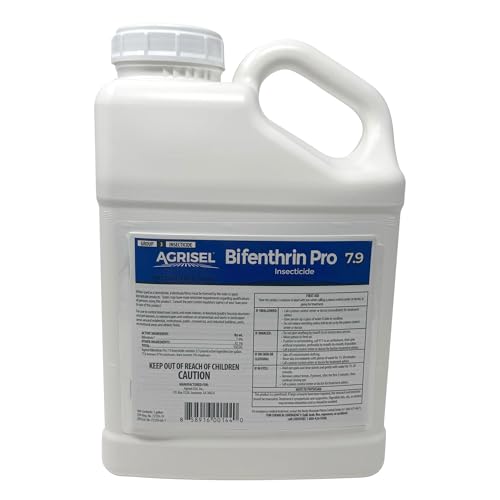
1. Agrisel Bifenthrin Pro 7.9 Insecticide, 1 Gallon
Our pick — 4.5+★ from 550+ verified ratings; the strongest balance of quality and price.
The one-gallon jug that treats a whole house perimeter, not one window sill
If your stink bug problem is a swarm on the siding and a stream of them squeezing through the same door frame every autumn, this is the bottle to buy. It is a liquid concentrate built on bifenthrin, and it is labeled for a wide spread of pests — spiders, ants, fleas, mole crickets, and stink bugs among them. That matters because the bug crawling in beside the stink bugs gets handled in the same pass.
The label lists lawn care, ornamentals, and agricultural use, so the same jug covers the grass, the flower bed, and the foundation line. Application is economical: the instructions call for low usage rates, which is why a single gallon stretches across small and large areas alike. At 9.2 pounds it is a heavy jug to carry — noticeably heftier than the 2.1-pound Bonide spray, so plan a steady two-handed pour when you mix it.
Reviewers praise its effectiveness most, and the label backs that up by naming stink bugs directly. One caution sits on the label itself: it cannot be sold in Hawaii or New York. On the pet question, the maker states the formula becomes safe for pets 1–2 hours after the application has dried — so treat that drying window as non-negotiable and keep animals off the surface until it passes.
Where this jug earns its place
- Labels stink bugs directly alongside spiders, ants, fleas, and mole crickets, so one mix covers the whole crawl.
- Low usage rates mean a single gallon goes a long way across lawn, ornamentals, and foundation.
- Safe for pets 1–2 hours after the spray has dried, per the maker.
Before you check out
- It is a concentrate — you need a sprayer and a mixing step before you can treat anything.
- Cannot be sold in Hawaii or New York.
- At 9.2 pounds, hauling and pouring the jug is a two-hand job.
Reach for this if: you are treating a whole perimeter, a porch, or a yard and want one product for stink bugs plus everything crawling beside them.
Keep looking if: you want to spray a single bug on the wall right now — this is a mix-and-apply barrier, not a grab-and-go can.
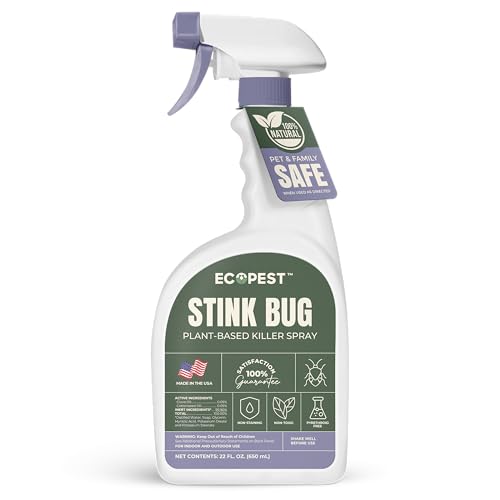
2. Stink Bug Spray 22 oz.
A plant-oil spray you can point at the bug on the bedroom curtain
The pitch here is simple: it is made for the stink bugs already inside. The formula is built on natural essential oils — clove oil and cottonseed oil — and it is free of synthetic pyrethroids. It is labeled non-toxic and non-staining, and the maker says it is safe to use on any surface that water alone will not damage, which includes counters, floors, bedding, furniture, and clothes.
Application is direct: shake, hold the bottle 8–12 inches from the target, and spray the bug until it is wet but not running off. The label says it dries with no residue to wipe up, so you are not chasing streaks off a wall afterward. The 22-ounce bottle comes with an ergonomic handle and a precision nozzle.
Be honest about the track record before you buy. Stink bug results are split — some owners get a fast kill, plenty report it simply does not do the job on stink bugs. The repeating note in the feedback is that the formula is gentle and the results are uneven, so treat this as the low-risk indoor option for a light problem, not a guarantee against an infestation. The feel-good story here is the safety profile; the weak spot is consistency.
What it is built for: the indoor, kid-and-pet household that wants a gentle formula it can spray on a counter or a curtain without worrying about harsh residue.
Where it stumbles: effectiveness on stink bugs specifically is the most-discussed point, and it splits both ways — buy it for occasional indoor bugs, not a full-blown season-long invasion.
Best for: a family home that wants a plant-based spray for the stray bug on the bedroom wall.
Skip if: you already have a heavy indoor population — the mixed results here will frustrate you.
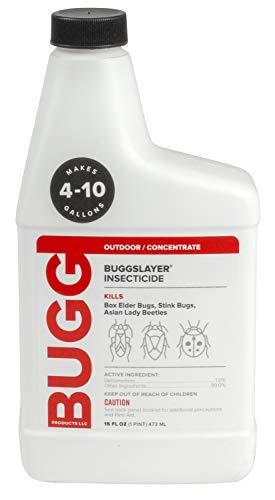
3. Insecticide Concentrate 16 oz Bottle
The months-long window and door frame barrier that won’t wash off in rain
If your house gets hit by stink bugs from the outside in — box elder bugs and Asian ladybugs usually arrive in the same wave — a barrier concentrate is the smarter form. This one is built on deltamethrin, a water-based formula, and it is meant to be mixed with water and sprayed on foundations, windows, and doors. The target is any spot where bugs get in, and the label calls out stink bugs by name.
Two facts make this a strong fit for a real house. The maker states the formula is odorless and non-staining where water alone will not stain, and that it will not wash away in the rain. It is also labeled weather-resistant. On top of that, it is described as a residual spray: it has no repellent effect, so a bug has to actually walk over the treated surface for it to work. Expect a delay, not an instant kill.
Effectiveness is the most praised trait in the reviews, and the label’s stink bug listing backs it up. The recurring trade-off is value: the bottle is small, and the mix ratio means you get fewer treated feet out of it than the jug-style concentrates. One 16-ounce bottle is genuinely compact next to a one-gallon jug.
What it does well
- Labels stink bugs directly, plus box elder bugs and Asian ladybugs — the same seasonal wave.
- Deltamethrin concentrate stays put through rain, per the label.
- Odorless and non-staining, so it won’t leave a chemical smell or a stain on siding.
Worth knowing
- No repellent effect — bugs must walk over the treated surface, so results take time.
- Small 16-ounce bottle, so budget for value-per-treated-area if your perimeter is large.
- Requires a sprayer and the mixing step before you can start.
Right tool for: the homeowner who wants a low-odor residual on the foundation and door frames heading into fall.
Not the tool for: someone who wants a bug dead the second they spray it.
4. Bonide Japanese Beetle Killer Ready-to-Use Spray, 32 oz

When the stink bugs are on the tomatoes and not the ceiling
Not every stink bug problem is a house problem. This is a foliage spray that lists stink bugs among the insects it controls, alongside Japanese beetles, aphids, flea beetles, leafhoppers, caterpillars, moths, Colorado potato beetles, and webworms. It is labeled for vegetables, flowers, ornamentals, trees, and shrubs, plus residential indoor, outdoor, and greenhouse use.
Its size is one of its real selling points: 32 fluid ounces is exactly double the 16-ounce Bugg concentrate, and at 2.1 pounds it is a comfortable one-hand spray that is 7.1 pounds lighter than the Agrisel jug. It arrives ready to use with a spray nozzle, so there is no measuring and no pump sprayer to buy.
The honest question here is fit rather than power. This is a broad garden insecticide first, so if your stink bugs are coming through the front door rather than sitting on the zucchini, the barrier concentrates above are the better tool. Buy it for the vegetable patch, flower bed, or greenhouse, and use it exactly as the label directs.
Best use case: the vegetable patch, the flower bed, and the greenhouse — a ready-to-spray bottle for stink bugs on plants.
The trade-off: it is not built for indoor perimeter work, so if your problem is entry points, the concentrates will do more for you.
Pick it for: garden and foliage protection where stink bugs are landing on edible and ornamental plants.
Pass it for: indoor wall and door-frame treatment — this is a plant spray.
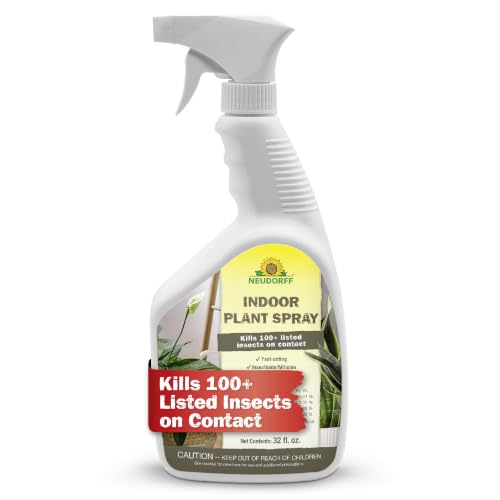
5. Neudorff Indoor Plant Spray 32 OZ
A botanical spray that also goes after the eggs, not just the adults
Most contact sprays only kill what you hit. This one lists stink bugs among the insects it targets and states it kills all stages of listed insects, including eggs. That is rare, and it matters if you are fighting a plant infestation where the next generation is already in the soil or on the leaves.
The actives are pyrethrins and canola oil — a botanical combination — and the maker says it can be used on edible fruits and vegetables up to and including the day of harvest. The target list is broad: fruit flies, fungus gnats, thrips, mites, aphids, beetles, mealybugs, moths, scales, and armyworms, plus stink bugs. It comes ready to use in a 32-fluid-ounce bottle.
Reviewers praise the clean experience: no harsh smell, and a 32-ounce bottle that covers a lot of plants. The catch is on stink bugs and gnats — results split, with some spraying and clearing the plant and others finding it does not deliver. One more caution is on the label itself: the ant coverage is limited, since fire ants, harvester ants, carpenter ants, and Pharaoh ants are excluded.
Why plant owners reach for it
- Kills all listed insect stages, including eggs and larvae, not just the adult on the leaf.
- Botanical pyrethrins and canola oil, usable on edibles through harvest day.
- No harsh odor, and a 32-ounce bottle that covers a lot of plants.
The honest catch
- Results against gnats and stink bugs split — some plants get cleared, some don’t.
- Ant coverage is limited; common household ants including carpenter and Pharaoh are excluded.
Best fit: indoor gardeners and houseplant owners who want an egg-killing, low-odor botanical spray.
Look elsewhere if: your stink bugs are on the house and not on a plant.
6. Insecticide RTU Indoor Insect Killer – 32oz
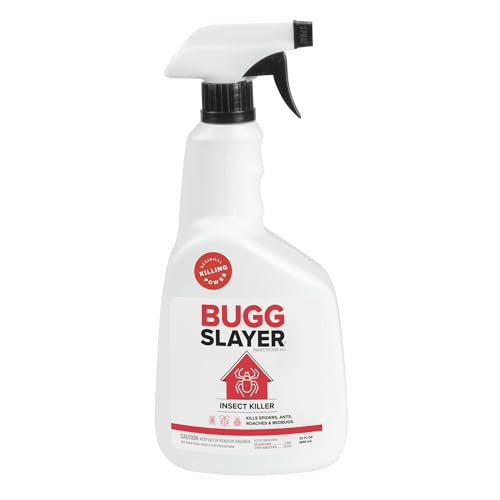
The ready-mixed indoor spray for the cracks the stink bugs squeeze through
This is the concentrate maker’s indoor bottle, already mixed. The active ingredient is deltamethrin and the liquid runs 32 fluid ounces, so it is plenty for targeting cracks and crevices around the house — the exact seams stink bugs use to get in. The maker says the formula is water-based, odorless, and non-staining.
Here is where it holds its own: the maker states the ready-to-use bottle is one of their strongest insecticides, and that once an insect contacts a treated area it stays effective for up to 12 months against species like cockroaches. The other thing it wins on is target breadth — the label also lists ants, spiders, and centipedes. Ready-to-spray means you can go straight to a crack without mixing anything.
The flip side of an indoor formula is that it is designed for interior surfaces, so if you want a house perimeter or siding defense, the 16-ounce concentrate version above is the right one. Buy it for the inside seams around windows, baseboards, and utility lines, where a ready-mixed deltamethrin spray does the job without a pump sprayer.
What it handles: indoor cracks, crevices, and lines where the stink bugs walk in, with deltamethrin and a water-based, odorless formula.
The limitation: it is an indoor product — for siding and perimeter, buy the 16-ounce concentrate instead.
Buy it if: you are spraying the inside seams around your windows, baseboards, and utility lines.
Keep shopping if: your battle is on the exterior wall — that’s a different formula.
7. Wondercide – Ant & Roach Aerosol Spray – 10 oz 2-Pack

A plant-powered can that kills the stink bug on the counter within seconds
This one is built for speed in the room where you least want a bug. It is designed for quick kill and fast knockdown, and it is proven to kill over 20 common household bugs, with stink bugs on that list alongside spiders, fleas, carpet beetles, earwigs, and silverfish. The format is an aerosol 2-pack, with 10 ounces in each can.
The formula is plant powered, using natural essential oil of lemongrass and geraniol, with no artificial colors or fragrances and a cruelty-free label. It is formulated to be safe around pets and family when used as directed. The intended use is point, spray to kill, then wipe the bug away — around cracks, baseboards, cabinets, door and window frames, water pipes, and appliances.
What owners like most is the speed: it drops ants and roaches in seconds and works within 24 hours. The scent is the one thing that splits opinions — some find the lemongrass pleasant, others say it is strong. Keep the two cans handy in the kitchen and bathroom and it earns its spot.
What it’s for: the quick draw — an aerosol you can point at a bug on the counter and have drop in seconds, in a plant-powered formula.
The downside: the scent is strong enough that the whole room notices it, and a 10-ounce can doesn’t last long if you spray often.
Good pick for: kitchens and bathrooms where you want a fast, plant-powered knockdown spray on hand.
Not for: long-term barrier work — an aerosol is a quick-hit tool, not a months-long residue.
8. Ortho Home Defense MAX Insect Killer Spray, 24-Ounce 2-Pack

A two-can perimeter barrier that keeps stinkbugs out or kills them when they land
This is a barrier spray, and it is honest about it: it creates a bug barrier on indoor and perimeter surfaces, with the label listing control up to 12 months for ants, roaches, and spiders indoors on nonporous surfaces. It kills ants, roaches, spiders, and many other listed home-invading insects, and the packaging names the stinkbug on the label. Two 24-ounce cans come in the pack, so you have one for the inside and one for the outside.
The features that matter for real housework: it is non-staining and odor-free, so you can walk the baseboards and door frames and not have to live with spray smell all afternoon. At 1.5 pounds, the can is light enough to hold one-handed while you trace a line around a door frame.
Effectiveness is the standout on this one — the sustained performance and the sheer number of listed pests give it credibility. If stink bugs are entering around windows and doors, the two-can format is hard to argue with.
Why it holds the line
- Creates a barrier with up to 12 months of indoor control on nonporous surfaces.
- Odor-free and non-staining, so the whole house doesn’t smell like a spray can.
- Listed for stinkbugs, ants, roaches, spiders, and centipedes.
What to weigh
- Two cans means a bigger outlay than a single spray.
- The 12-month control claim applies to ants, roaches, and spiders indoors on nonporous surfaces specifically.
Choose it if: you’re sealing off door frames and baseboards and want an odor-free barrier that lasts a season.
Think twice if: you only need one small room treated — a single can may be enough.
9. Stink Bug Killer Spray, Indoor & Outdoor Home Defense, 16oz
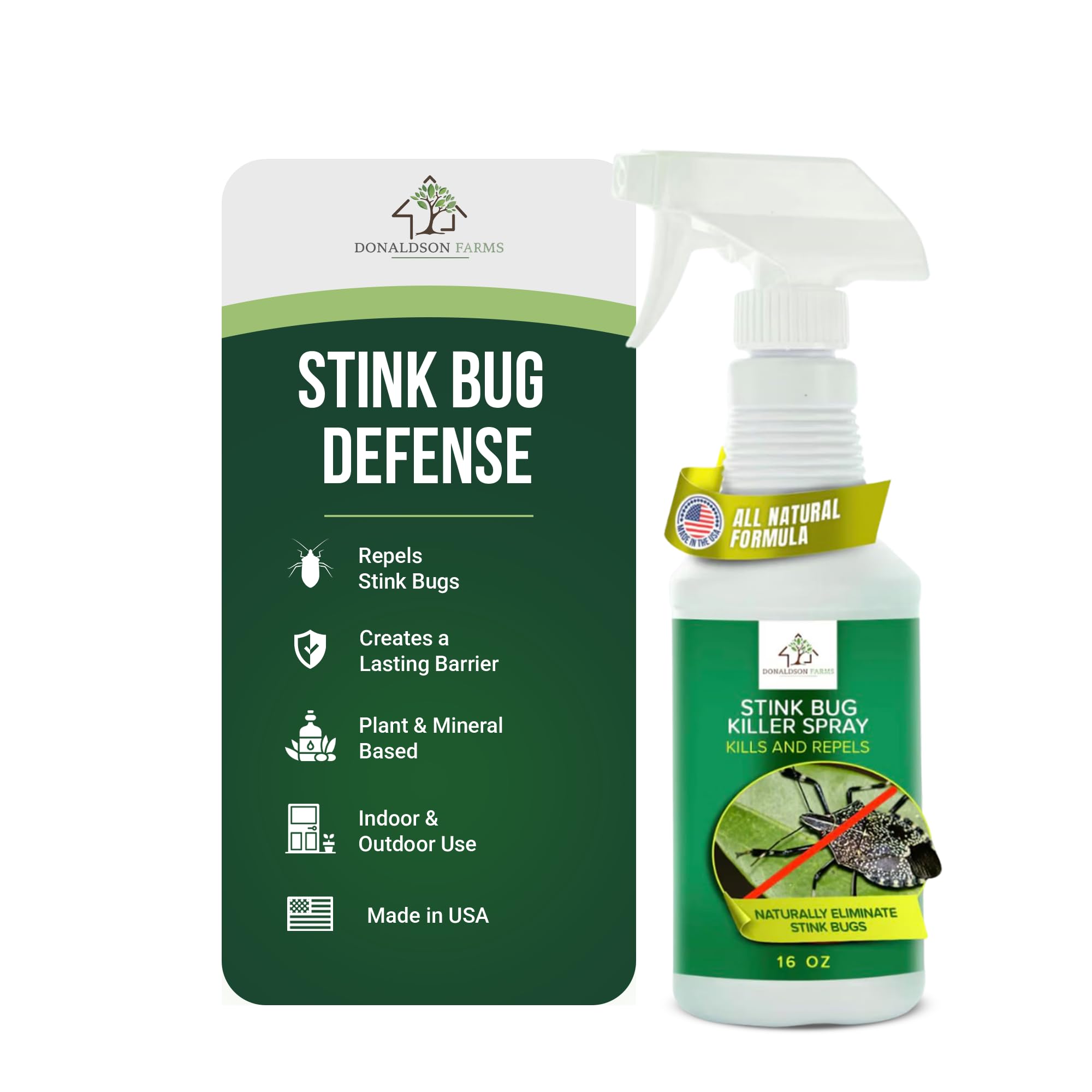
A small, nature-derived bottle aimed squarely at the stink bug entry point
This one is named for the bug you are fighting, and the pitch is narrow: it targets stink bugs on contact and create a defensive barrier around entry points. The formula is plant- and mineral-based, and it is meant for both indoor and outdoor use. Each bottle is 16 ounces.
The strongest argument for it is the price tier — it sits at the entry level, so you get a dedicated stink bug formula without committing to a big jug or a sprayer setup. Application is simple: spray the bug directly, or spray the surfaces where they tend to appear and let the barrier do the work.
The mixed record is worth knowing before you buy. Stink bug results split — some buyers report it really works, others say it does not work at all. The scent is the other split note, and there is a complaint that it does not last long. Treat this as a low-cost starter for a small entry-point problem, not a heavy-duty season-long barrier.
Where it makes sense: a small doorway or window problem where a dedicated stink bug formula at the entry level is what you want to try first.
Where it falls short: results are mixed on effectiveness and some find the scent strong, so it’s a starter bottle rather than a full-season solution.
Pick it when: you want an inexpensive stink bug-specific bottle for a small indoor or outdoor entry point.
Look elsewhere when: you need months-long barrier coverage around a whole house.
Know the Specs
Concentrate vs. ready-to-use
A concentrate is a smaller bottle of active ingredient that you mix with water in a pump sprayer before you spray. That mixing step is the reason a concentrate covers more area for the money and is the better tool for a perimeter or a yard. A ready-to-use bottle is already at full strength, so you skip the mixing and go straight to the bug — which is what you want for a single room or a quick touch-up.
Residual barrier versus contact kill
A residual barrier sits on a surface and works when a bug walks across it, which is why these products take time and why one here is explicitly described as having no repellent effect. A contact spray works the moment it hits the insect. If you want to spray the bug on the ceiling right now, you want a contact product. If you want the doorway to keep working next month, you want a residual.
Active ingredients in plain language
Deltamethrin and bifenthrin are synthetic active ingredients used in the barrier concentrates; pyrethrins and canola oil are the botanical actives in the plant spray; clove oil and cottonseed oil are the essential-oil base in the EcoPest bottle; and lemongrass and geraniol are the plant actives in the Wondercide aerosol. Each label tells you what it controls and where it can go — read that before you spray.
Volume and coverage
The bottle size tells you how far it will go. A one-gallon jug covers a whole property; a 16-ounce concentrate covers a door-frame job; a 22- or 32-ounce ready-to-use bottle covers a room or a plant collection. Match the bottle to the area you actually need to treat: a gallon for a whole property, 16 ounces for a door-frame job, 22 to 32 ounces for a room or a plant collection.
Common Questions
What actually kills stink bugs, barrier spray or contact spray?
Does the Agrisel Bifenthrin Pro 7.9 work on stink bugs specifically?
How long do I need to keep pets away after spraying?
Can I use a stink bug spray on the kitchen counter?
Will the Neudorff plant spray kill stink bug eggs as well as adults?
Is Ortho Home Defense MAX safe to use indoors?
Why do some stink bug sprays split down the middle on results?
Does a stink bug spray stop them coming back next season?
Is the Wondercide aerosol strong enough for stink bugs?
How do I mix a concentrate like the Bugg 16 oz or the Agrisel gallon?
The Bottom Line
For most people fighting stink bugs around the house, the bug spray for stink bugs to start with is the Agrisel Bifenthrin Pro 7.9 — it names stink bugs directly, covers a whole perimeter with one gallon, and works alongside a bug spray for the lawn and foundation. If you want a low-odor residual for entry points, grab the Bugg Products Insecticide Concentrate. And for the one already on the kitchen counter, keep the Wondercide aerosol within reach for a fast, plant-powered knockdown.
How we choose
We do not accept paid placement. Every pick is matched to a real buyer and a real use-case; we do not hands-on test units.
Sources
Specifications: manufacturer listings and product documentation. Review insights: verified customer reviews, as of November 2026. Pricing: not shown on this page (it changes often); check the current price via the retailer link.
As an Amazon Associate, My Heart Lives Here earns from qualifying purchases. This does not affect which products we feature.