Heads up: This post contains affiliate links. As an Amazon Associate I earn from qualifying purchases, at no extra cost to you. Learn more
Specs are compiled from manufacturer listings and verified buyer reviews and can change over time — please confirm the key details on the product page before buying.
If you are flying into Costa Rica, the bug question is not whether mosquitoes exist — it is whether your repellent survives humidity, sweat, river crossings and a rainforest that breeds insects year-round. The short answer: bring two products, not one. You want a skin repellent with a proven active ingredient (DEET or picaridin) and, ideally, a fabric treatment for your clothes. This guide covers six options that travellers actually carry, from pocket-sized wipes to a 24-ounce permethrin trigger spray, and explains in plain English which one fits your trip.
This guide is built by comparing the manufacturers’ published specifications and the patterns across verified customer reviews, so you get each pick’s real strengths and trade-offs instead of marketing spin.
Costa Rica throws heat, rain and dense vegetation at you at once, so match the formula to the moment. Below you will find the bug spray for costa rica picks that hold up best.
Top Picks

How To Choose The Best Bug Spray for Costa Rica
Costa Rica’s mosquito pressure changes hour to hour. Coastal lowlands and wet-season rainforest are the hardest test; a breezy Pacific beach at midday is far gentler. Your repellent needs to match the terrain you booked, not the brochure photo.
Start with the active ingredient, not the brand
There are only two actives worth carrying into the tropics: DEET and picaridin. DEET at a higher percentage (30% and 40% appear in this list) buys you longer protection per application. Picaridin at 20% is the low-odour alternative and is gentler on plastics, watches and synthetic gear.
Decide your format before you pack
Aerosol cans spray fast over large areas but the nozzle is the usual failure point. Pump sprays give you controlled coverage but can be awkward on your own back. Wipes are the only format that is genuinely TSA-friendly, won’t leak in a humid daypack, and let you target ankles and wrists without spraying your face.
Treat fabric separately from skin
Permethrin is a clothing-and-gear treatment, not a skin spray. It bonds to fabric fibres for up to 6 weeks or through 6 washings, whichever comes first. Pairing it with a skin repellent gives you two layers instead of one — useful when you are sitting still in a cloud forest rather than moving.
Side-by-Side Comparison
| Model | Best For | Active Ingredient | Format | Stated Protection | Amazon |
|---|---|---|---|---|---|
| Ben’s Tick & Insect Repellent Wipes 2 Pack★ Best Overall | Carry-on only trips | 30% DEET | Wipes (2 packs of 12) | Up to 7 hours | Amazon |
| Sawyer Products SP5432 Picaridin Insect Repellent SprayTop Performer | Whole-family skin protection | 20% Picaridin | Pump spray (2 x 3 oz) | Up to 12 hours mosquitoes and ticks | Amazon |
| Sawyer Products SP657 Permethrin Insect Repellent | Treating clothes and gear | Permethrin | Trigger spray (24 oz) | Up to 6 weeks or 6 washings | Amazon |
| Repel Sportsmen Max Mosquito & Insect Repellent 3 Pack | Heavy-pressure rainforest days | 40% DEET | Aerosol (3 x 6.5 oz) | About 6 hours per application | Amazon |
| Natrapel Tick & Insect Repellent Wipes 3 Pack | Families with kids | 20% Picaridin | Wipes (3 packs) | Up to 12 hours | Amazon |
| Ben’s Tick & Insect Repellent Wipes 4 Pack | Long trips, bigger group | 30% DEET | Wipes (4 packs of 12) | Up to 7 hours | Amazon |
Detailed Reviews
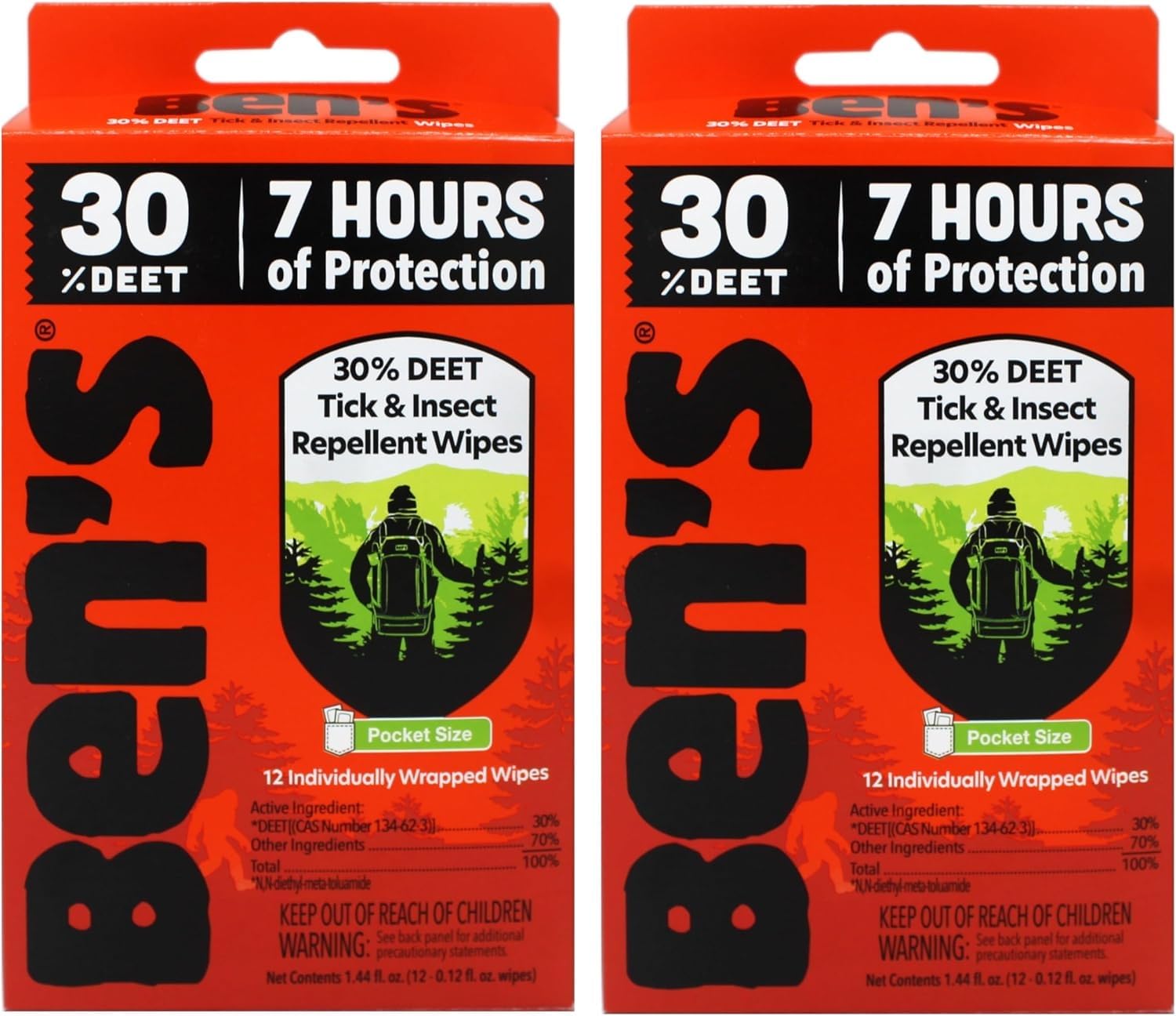
1. Ben’s Tick & Insect Repellent Wipes 2 Pack
Our pick — 4.5+★ from 600+ verified ratings; the strongest balance of quality and price.
The wipe that clears airport security and still carries 30% DEET into the jungle.
Here is the case for a wipe over a spray in Costa Rica: nothing leaks. A 30% DEET formula buys up to 7 hours of tick and mosquito protection per application, which covers a morning hike and lunch without a reapplication stop. The sachets are travel-sized and TSA-approved, so a two-pack of 12 slips into a daypack or a carry-on with no aerosol restrictions and no pressurised can to fail in the humidity.
The formula is water-based and free of additives and alcohol, which matters if you are reapplying several times a day on hot skin. It is also made and tested in New Hampshire’s White Mountains — a colder, rougher climate than Costa Rica, but the same principle of testing against real biting pressure. Owners praise effectiveness above all else, and the wipes for being easy to pull out and use one-handed on a trail. As one published review puts it, wipes are the format that makes people actually reapply.
The catch is texture. The consensus is split — some find the wipe glides on and dries down, while a vocal minority finds it oily on the skin, and the scent divides people the same way. That is a fit question, not a defect: if you have oily skin or hate the feel of anything sitting on your arms, a pump formula will suit you better. The other thing to know is that wipes give you less precision over large areas; a family of four sharing one sachet will go through a pack faster than you expect.
Where this wipe earns its place
- 30% DEET delivers up to 7 hours of stated tick and mosquito protection per application
- TSA-approved sachets pack into a daypack with zero leak risk
- Water-based, alcohol-free formula is comfortable for repeat application
- Two packs of 12 give you a generous supply for a one-week trip
What to weigh before you buy
- Texture divides opinion — some find the residue oily on skin
- Scent is polarising, from barely-there to noticeably strong
- A single wipe covers less ground than a spray over big areas
Reach for this if: you are travelling carry-on only, hiking in the wet season, or want a repellent you can hand to someone else without sharing a nozzle.
Look elsewhere if: you dislike any residue on your skin — the Sawyer picaridin pump below is the low-feel alternative.
2. Sawyer Products SP5432 Picaridin Insect Repellent Spray
Twelve hours of protection from a bottle that will not melt your sunglasses.
Twenty percent picaridin is the reason this one ranks so high for Costa Rica. That concentration is stated to give up to 12 hours against mosquitoes and ticks and up to 8 hours against flies, gnats and chiggers — a single morning application covers a full day of excursions. It is fragrance-free and odourless, dries quickly, and is formulated not to damage plastics or synthetic coatings, so your watch, sunglasses, fishing line and backpack straps survive contact with it.
The volume maths works in your favour if you are comparing against a wipe pack. This two-bottle set gives you two separate 3-ounce pumps — a total of 3 fluid ounces per bottle, two bottles — where the Ben’s wipe two-pack runs to 19.5 fluid ounces of treated product across a dozen sachets each. In practice that means the Sawyer is the lighter, more precise option for skin, while wipes win on sheer coverage per gram carried. The manufacturer also notes picaridin outperforms DEET against biting flies — relevant on Costa Rica’s Caribbean side.
The recurring gripe is the pump itself. Sprayability is the weakest point, and a few owners find it hard to reach their own back without help. Longevity is where it shines — the review pages describe it holding through a full day in Belize’s jungles and rivers, terrain that mirrors Costa Rica’s wet lowlands closely. Leakage in transit also comes up, so bag the bottle separately.
Comfort over chemistry: no smell, no grease, and 12-hour stated protection from 20% picaridin make this the easiest repellent to wear all day in humid heat.
The honest caveat: the pump is fiddly and can leak in a pack — decant it or double-bag it before the flight.
Best fit for: travellers who want one application to last a whole excursion and cannot stand the smell of DEET on their skin.
Think twice if: you need to spray your own back solo — a trigger spray reaches further.
3. Sawyer Products SP657 Permethrin Insect Repellent

Not a skin spray — the layer that turns your hiking shirt into a barrier.
Permethrin works differently from everything else on this list, and that is the whole point. You spray it on shirts, jackets, pants, socks, boots, sleeping bags, tents and netting, and it bonds to the fabric fibres for up to 6 weeks or through 6 washings, whichever comes first. That means you treat your kit once before you fly and it is still working on day ten. It is fragrance-free and formulated not to stain or damage clothing, fabrics, plastics or finished surfaces.
The manufacturer cites a 2017 University of Rhode Island study finding that permethrin-treated shoes and socks cut tick-bite likelihood by 73.6 times — their published figure, not ours. The spray is stated to be effective against more than 55 kinds of insects, and endurance matters in Costa Rica: it stays effective despite sweat or water, and degrades mainly through UV exposure or washing machine agitation. Pair it with a skin repellent like the Sawyer picaridin above and you have protection on two fronts, which is how serious hikers and field researchers tend to travel.
The honest trade-off is twofold. The 24-ounce trigger spray is a pack-it-in-your-suitcase item, not something you decant into a carry-on, and the spray quality itself is the weak link in owner experience — it is a trigger, not a fine mist. Odour divides people: some report nothing, others find it noticeable while wet. Wear gloves, treat outdoors, and let gear dry fully before packing.
Why it earns a slot: a single pre-trip treatment protects your clothing and tent for up to 6 weeks or 6 washings — far longer coverage than any skin spray offers.
Who it is not for: anyone expecting to spray it on their arms. It is a fabric treatment only, and it must be applied before you leave.
Buy it if: you are trekking, camping or spending long hours in Corcovado or Monteverde and want your clothes working while your skin spray wears off.
Skip the effort if: you are doing a resort-and-beach trip — a skin repellent alone covers that.
4. Repel Sportsmen Max Mosquito & Insect Repellent 3 Pack
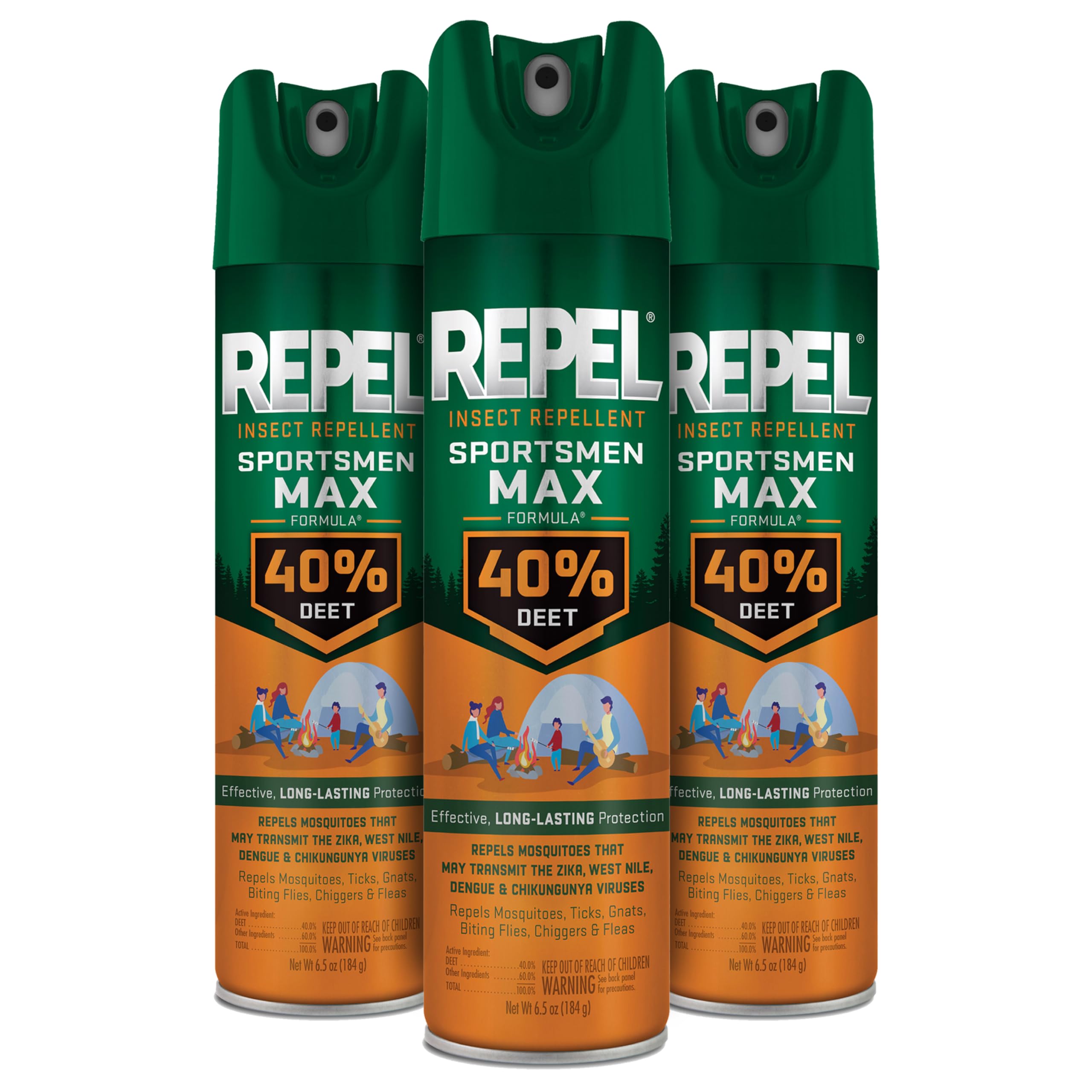
Forty percent DEET, three cans, and enough volume to arm a whole family.
This is the heaviest-duty skin formula here. Forty percent DEET is the highest concentration on the list, giving long-lasting protection per application and coverage against ticks, gnats, biting flies, chiggers and fleas as well as mosquitoes. Three 6.5-ounce aerosol cans together hold 19.5 fluid ounces, so a family of four can spray up before every outing without rationing. It is unscented and fragrance-free, and the aerosol format covers arms and legs in seconds — genuinely useful when the mosquitoes come out at dusk and you want to move fast.
Compare it directly against the Sawyer picaridin pump and the trade-off is clear. Repel gives you 19.5 fluid ounces across three cans where Sawyer gives you two 3-ounce pumps, so Repel is the volume pick for a group. Sawyer gives you 12 hours of stated protection and no smell; Repel runs about 6 hours per application and asks you to accept a DEET formula and an aerosol can. Owners talk most about effectiveness and value for money, and the stated 6-hour window matches how they describe a full afternoon outdoors.
What lets it down is the nozzle. Spray performance is the mixed spot — a minority find a can stops spraying after a few uses, which is the classic aerosol failure. Scent and greasiness also divide opinion, so if you dislike the DEET feel, the picaridin option is the cleaner experience. Otherwise, this is the one to hand around the group before a jungle walk.
What it does brilliantly
- 40% DEET — the strongest concentration on this list
- 19.5 fluid ounces across three cans, enough for a whole group
- Unscented and fragrance-free
- Repels ticks, gnats, biting flies, chiggers and fleas, not just mosquitoes
The honest limitations
- About 6 hours per application, roughly half the picaridin option’s stated window
- Aerosol nozzles can stop spraying after a few uses
- Aerosol cans restrict you to checked luggage
Made for: families and groups heading into heavy mosquito country who want maximum DEET strength and fast whole-body coverage.
Not the right call if: you are flying carry-on only or want an odourless formula.
5. Natrapel Tick & Insect Repellent Wipes 3 Pack
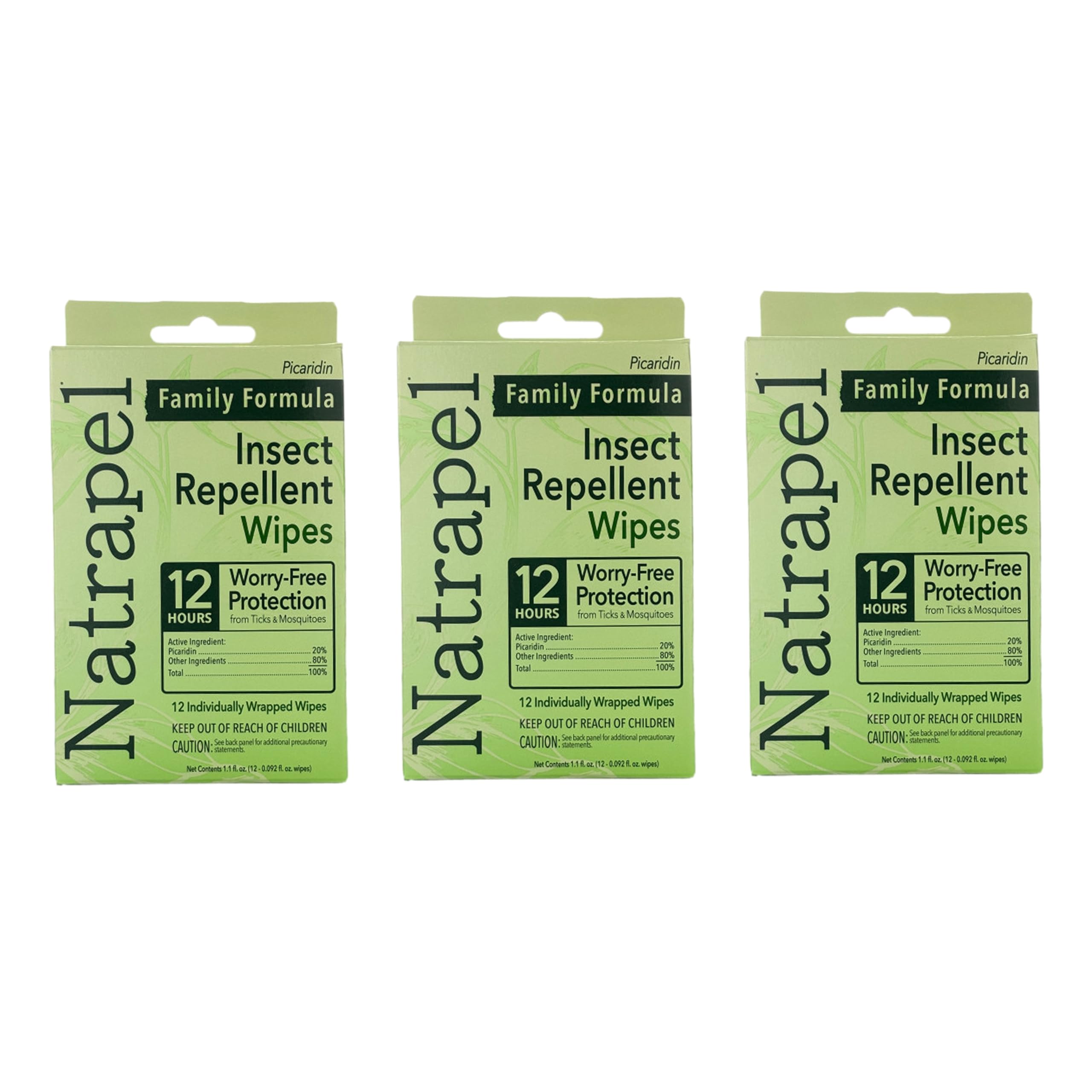
DEET-free wipes built for kids and for gear you would rather not ruin.
Twenty percent picaridin in a wipe is a combination that suits Costa Rica well when you are travelling with children. The stated protection window is 12 hours against chiggers, mosquitoes and ticks, and because picaridin is kind to intact synthetics, you can wipe it onto a child’s arms without worrying about the car seat, the waterproof watch or the strap on a dry bag. The pack is described as suitable for children, and it is pitched as a direct alternative to DEET sprays for anyone who wants to avoid that ingredient entirely.
Wipes also solve a problem sprays cannot: precision. You can hit the ankles, the wrists and the back of the neck exactly where the skin is exposed, without misting repellent across a face or into eyes. Portability is the second thing that stands out — the sachets live in a daypack pocket or a fanny pack and are there the moment you need them. Three packs in one bundle covers a family for a decent stretch of a trip.
There is a weight and consistency side to know. At 7.2 ounces this three-pack is heavier than the Ben’s 2-pack of DEET wipes at 5.12 ounces, so it takes slightly more room in a bag for the same travel convenience. Consistency is the point of friction — some find the wipes wetter or slimier than they expected. Scent is also described as freshly scented, which some like and others do not.
The family angle: 20% picaridin with a stated 12-hour window, in a wipe format pitched as suitable for children and safe on intact synthetics.
The trade: a freshly scented formula and a wetter wipe feel will not suit everyone, and three packs carry more weight than a single pack.
Worth it for: parents who want a DEET-free wipe with a long stated window and no risk to kids’ gear.
Pass if: you want an odourless formula or the lightest possible pack weight.
6. Ben’s Tick & Insect Repellent Wipes 4 Pack

The same 30% DEET wipe, doubled up for a two-week trip.
If the two-pack of Ben’s wipes above looks right but you are going for a fortnight rather than a week, this is the same product in a four-pack. Each sachet carries 30% DEET with a stated window of up to 7 hours of tick and mosquito protection, the formula is water-based and free of additives and alcohol, and the wipes are TSA-approved — so a whole family can pack their own supply without touching an aerosol can.
Where this version makes sense is in the carry maths. Forty-eight wipes total, split across four packs, means no one runs out mid-trip and no one has to share a sachet. Owners describe a single wipe covering the neck, arms and legs, which is what makes the format work: one wipe, one person, done. It is the same New Hampshire testing story and the same easy-apply, easy-pack behaviour that makes the wipes popular for jungle and hiking conditions.
Everything we said about the two-pack carries over — including the split on texture and scent. Some find it oily, some find the smell strong, and the wipe itself is wetter than a spray. The difference here is weight and commitment: at 10.24 ounces the four-pack is a heavier item in your bag, and it is a lot of wipes if you only have a long weekend booked.
What you are getting
- 30% DEET with up to 7 hours of stated protection per wipe
- 48 wipes total — enough for a two-week trip or a four-person group
- TSA-approved, alcohol-free, water-based formula
- One wipe covers neck, arms and legs
What to think about first
- At 10.24 ounces it is heavier than the two-pack
- Oily residue and strong scent still divide opinion
- More wipes than a short trip needs
Choose this: for two-week itineraries, multi-stop trips, or a family where each person wants their own pack.
Downsize instead if: you are travelling solo for a week — the two-pack above is the lighter, cheaper call.
Know the Specs
DEET percentage
DEET is the active ingredient that has been the benchmark for decades, and the percentage tells you roughly how long one application lasts. A higher percentage does not mean stronger per minute — it means it holds longer before you need to reapply. The options here run at 30% DEET (stated up to 7 hours) and 40% DEET (about 6 hours per application on the Repel, per its owner consensus), so read the stated window rather than assuming the bigger number always wins.
Picaridin percentage
Picaridin is the low-odour alternative, and 20% is the concentration that appears on both Sawyer’s pump and Natrapel’s wipes here. At that strength it is stated to give up to 12 hours against mosquitoes and ticks, and the Sawyer formula also states up to 8 hours against flies, gnats and chiggers. Its practical advantage in Costa Rica is that it is fragrance-free, non-greasy and formulated not to damage plastics or synthetic coatings — so it will not eat your sunglasses or backpack straps.
Permethrin: fabric, not skin
Permethrin is a treatment for clothing, tents, sleeping bags and netting — never for your skin. It bonds to fabric fibres for up to 6 weeks or through 6 washings, whichever comes first, and it stays effective despite sweat or water. It degrades mainly through UV exposure or washing machine agitation, so re-treat after a long sunny trip or a few washes. Think of it as a base layer of protection underneath your skin repellent, not a replacement for it.
Wipes vs sprays in the tropics
The format matters as much as the formula. Wipes are TSA-approved, cannot leak or pressurise in a humid daypack, and let you apply to ankles and wrists without spraying your face. Pump sprays give you finer coverage but can leak in transit and are hard to aim at your own back. Aerosol cans are the fastest for a group but work only in checked luggage, and the nozzle is the usual failure point after a few uses.
Common Questions
Is DEET or picaridin better for Costa Rica?
Can I carry bug spray in my carry-on to Costa Rica?
Do I need permethrin if I already have a skin repellent?
How long does one application actually last in the humid heat?
Are the picaridin wipes suitable for children?
Will DEET damage my hiking gear or sunglasses?
How many wipes do I need for a two-week trip?
Do I need bug spray on Costa Rica’s beaches?
How often do I have to re-treat clothing with permethrin?
The Bottom Line
For most travellers heading to Costa Rica, the winning combination is the Ben’s 30% DEET wipes for skin — up to 7 hours per wipe, TSA-approved, and impossible to leak in a humid daypack — paired with the Sawyer permethrin trigger spray for your clothes and daypack, which keeps working for up to 6 weeks or 6 washings. If you want the longest single-application window and no odour, take the Sawyer 20% picaridin pump instead; 12 hours of stated protection in two 3-ounce bottles is hard to argue with. And if you are travelling with children and want a DEET-free wipe, the Natrapel picaridin wipes are the family pick. Pair one skin repellent with one fabric treatment and mosquitoes stop being the story of your trip.
How we choose
We do not accept paid placement. Every pick is matched to a real buyer and a real use-case; we do not hands-on test units.
Sources
Specifications: manufacturer listings and product documentation. Review insights: verified customer reviews, as of November 2026. Pricing: not shown on this page (it changes often); check the current price via the retailer link.
As an Amazon Associate, My Heart Lives Here earns from qualifying purchases. This does not affect which products we feature.