Heads up: This post contains affiliate links. As an Amazon Associate I earn from qualifying purchases, at no extra cost to you. Learn more
Specs are compiled from manufacturer listings and verified buyer reviews and can change over time — please confirm the key details on the product page before buying.
A budget heart rate monitor is only worth buying if its optical sensor holds a steady pulse reading past the first month. That is the real fork in this category: cheap sensors are easy to find, but a tracker that stays paired, counts your steps honestly, and survives the strap pulling every day is the one you want. This guide narrows the field to four trackers that hold up, and names the right one for Android, iPhone, and runner use.
This guide is built by comparing the manufacturers’ published specifications and the patterns across verified customer reviews, so you get each pick’s real strengths and trade-offs instead of marketing spin.
You will see the exact screen size, battery days, and water rating that decide whether a tracker belongs on your arm. The picks below span the range of what a budget heart rate monitor delivers at this price: 5 ATM sealing, AMOLED screens, and 7- to 14-day battery claims.
Top Picks

How To Choose The Best Budget Heart Rate Monitor
The trap is not the hardware — it is the software and the strap. A tracker lives or dies on two things: the optical sensor keeping skin contact, and the companion app that turns the readings into trends.
The sensor and the fit matter more than the brand
Every tracker here uses an optical sensor that shines light into your wrist and reads the pulse underneath. That light needs skin contact, so a loose band or a cold wrist throws off the reading. Look for a strap with a buckle adjustment and a silicone band, which grips better than metal during a run. If the band loops too large, the sensor floats and the heart rate reads low.
Match the water rating to your routine
A 5 ATM rating (five atmospheres of pressure, the equivalent of a swim-proof seal) lets you shower and swim without thinking. An IP68 rating (dust-tight and able to sit in shallow water) covers sweat, rain, and hand-washing but is not built for laps. If you wear it through gym sessions and showers, treat 5 ATM as the minimum and IP68 as sweat-and-rain only.
Battery days vs. screen brightness
You get a sharper picture or longer battery at this price, rarely both. An AMOLED screen (the bright, colorful panel type phones use) looks sharper but drinks power faster than a basic LCD. A tracker claiming two weeks of battery usually means low screen time and no always-on display. So pick your priority: a bright AMOLED panel, or a 14-day charge on a basic LCD.
Side-by-Side Comparison
| Model | Best For | Battery Claim | Water Rating | Screen Size | Amazon |
|---|---|---|---|---|---|
| Fitness Rate 5 ATM Health Smart Watch★ Best Overall | Full health metrics on a loose budget | 10–14 days | 5 ATM | 1.10 inch AMOLED | Amazon |
| Kriutefy Smart Watch (Starlight) | Looks and easy setup on a phone | Not stated | IP68 | — | Amazon |
| SAMSUNG Galaxy FIT 3 | Big screen, long battery, Android phones | 14 days (13 days average) | 5 ATM & IP68 | 1.6 inch AMOLED | Amazon |
| Google Fitbit Charge 6 | Built-in GPS and exercise-machine link | 7 days | — | — | Amazon |
Detailed Reviews
1. Fitness Rate 5 ATM Health Smart Watch
The one that packs blood oxygen, sleep stages, and swim-proof sealing into the tightest budget on this list.
If you want the most health readouts for the least money, this is the pick. It tracks heart rate, blood oxygen, blood pressure, sleep, and temperature all day — the kind of dashboard that used to require a premium tracker. It runs those numbers through Bluetooth to the “Keep Health” app on iPhone or Android, so you check your trends on your phone rather than squinting at a tiny screen.
The screen is a 1.10 inch AMOLED touch display, which is small but sharp and colorful. Battery is the headline: 10 to 14 days of regular use, with standby stretching to 30 days, and a magnetic charging cable tops it up. The 5 ATM waterproof seal means you can wash your hands, shower, or swim with it on without panic. It carries 25 sport modes and records steps, distance, and calories, plus conveniences like a sedentary reminder and cycle tracking.
Here is the honest catch: durability is the most-discussed weakness. The band has been known to give out within a few months, and some units simply stop working down the line. The step counter draws mixed reception too — a few people find it inaccurate. Treat it as a light-use tracker, keep the silicone band clear of door handles, and it delivers well above its price.
Why it earns the top spot
- Blood oxygen, blood pressure, sleep, and temperature in one budget watch
- 10–14 days of regular battery with 30-day standby
- 5 ATM seal for swimming and showers
- 25 sport modes plus step, distance, and calorie logging
Where it asks for care
- The band is the common failure point — expect a replacement sooner than premium straps
- Step accuracy is mixed; a few users find it overcounts
- 1.10 inch screen is small for reading long data screens
Reach for this if: you want the widest health dashboard for the smallest outlay and you are fine treating the band gently.
Look elsewhere if: you need a tracker that survives daily rough treatment for years — that is the one real weakness here.
2. SAMSUNG Galaxy FIT 3
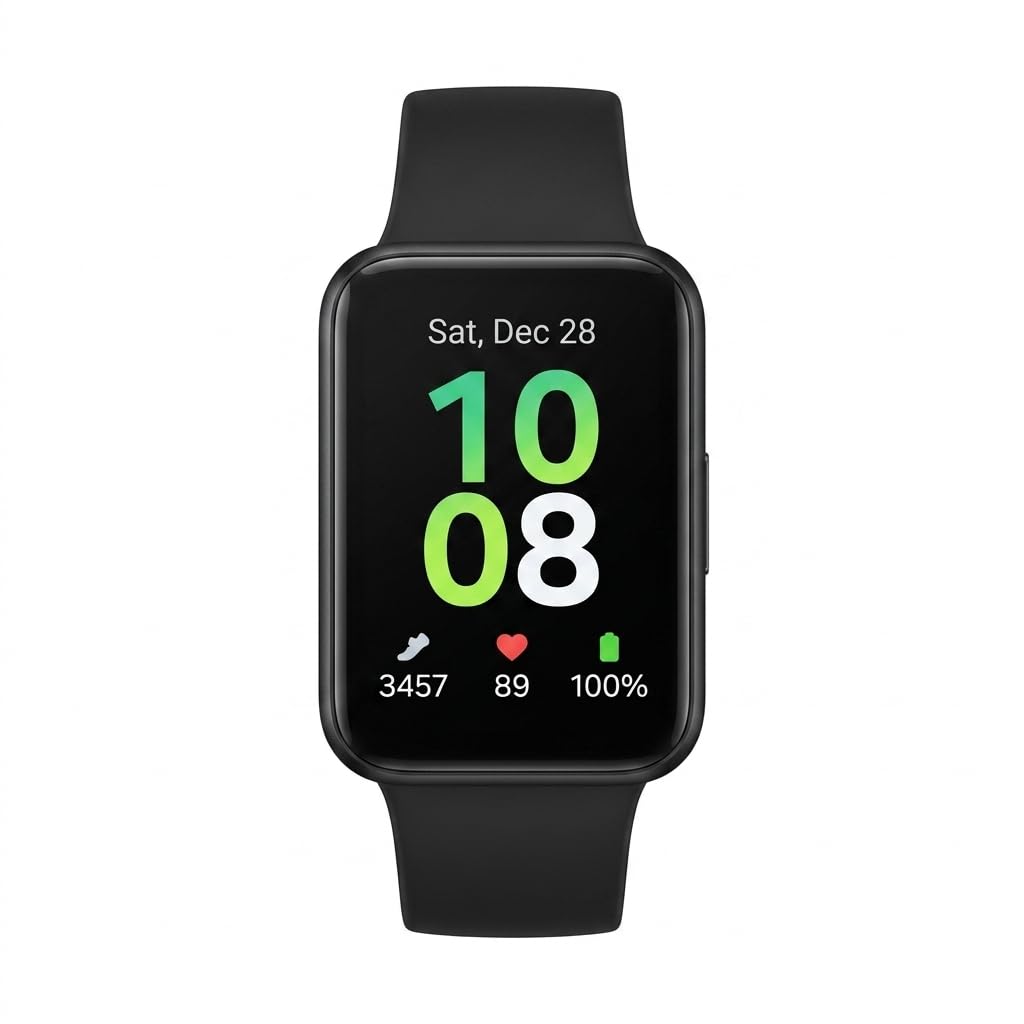
The one with the biggest screen and the longest battery — a 1.6 inch panel backed by 14 days of claimed runtime.
The Galaxy FIT 3 is the premium pick here, and the specs say why. Its 1.6 inch AMOLED display is the largest of the group — by a wide margin over the 1.10 inch screen on the Fitness Rate above. That extra real estate makes heart-rate zones, sleep graphs, and step counts readable at a glance instead of a squint.
Battery life is where it pulls away. Samsung claims up to 14 days from a 208mAh battery, with a 13-day average in the spec sheet, while the Fitbit Charge 6 below is rated at 7 days. That is a clear two-week rhythm versus a weekly charge. It carries 101+ workout modes with auto detection, sleep coaching, SpO2 (blood oxygen), heart rate, and snore detection, and the 5 ATM plus IP68 dual sealing handles swims and dust.
What wins people over is the look and the ease of use — it wears like a proper watch and sets up in minutes. The trade-offs are specific: it works with Android only, so iPhone owners should skip it, and Samsung Pay is not supported on this international model. Some units arrive with charging quirks. If your phone is Android, that compatibility fence is the only real wall.
The compatibility fence: this is the model to buy if you carry an Android phone — the pairing is clean and the screen is a pleasure. If you are on an iPhone, the FIT 3 will not connect with iOS at all, so read on for a Google option that covers both camps.
The charge advantage: a 208mAh cell rated for 13-day average use versus the 7-day rating on the Charge 6 changes how often you hunt for a cable.
The verdict: Android users who want the biggest, brightest screen and the longest stretch between charges will find this the most watch-like of the group.
One caveat: commit only if your phone runs Android — iOS is not supported here.
3. Kriutefy Smart Watch (Starlight)
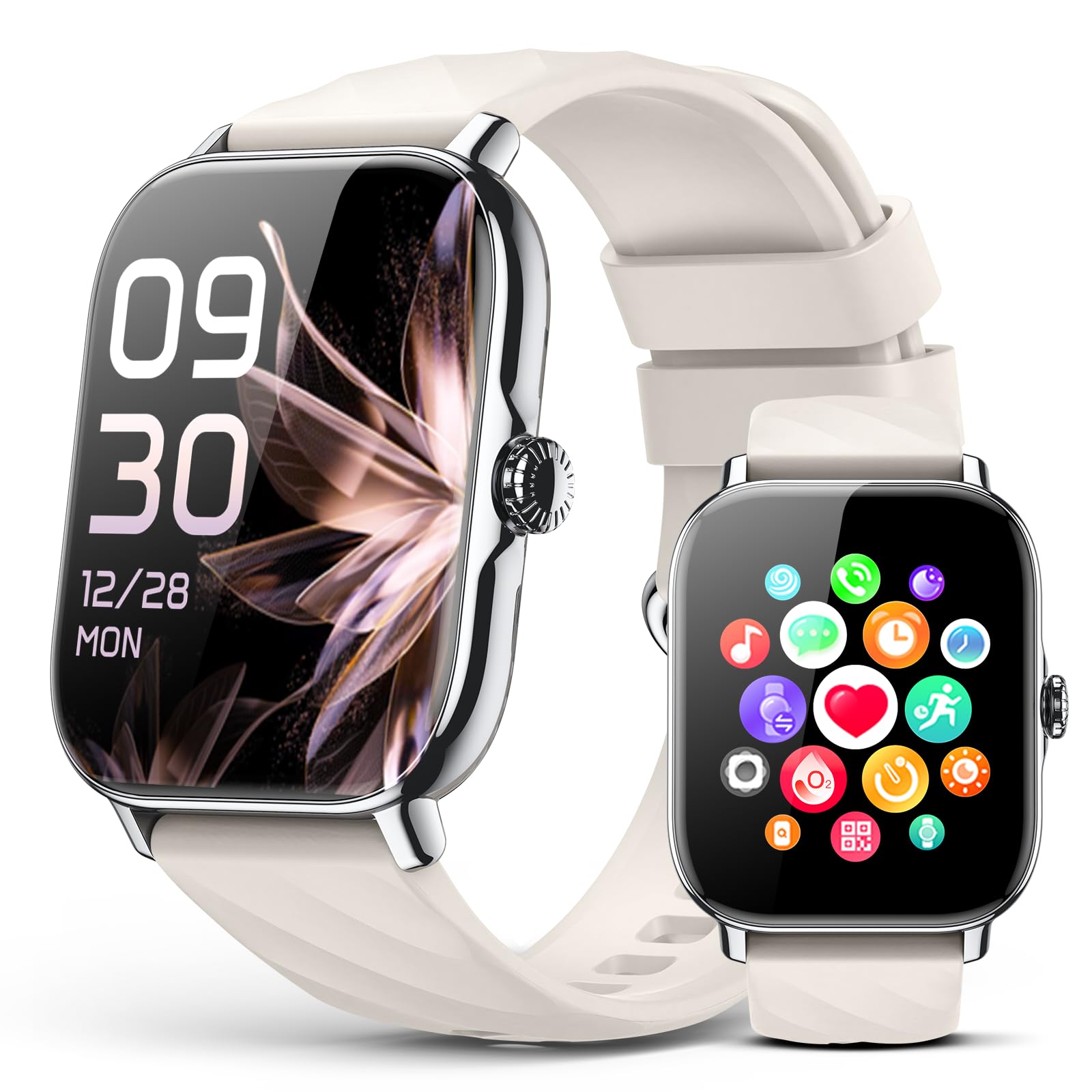
The calling, voice-assistant watch that turns a fitness band into a wrist phone on a budget.
Where the other picks focus on health sensors, this one leads with connectivity. Bluetooth 5.3 pairs with Android and iOS, and once connected you take calls straight from your wrist through the built-in microphone and speaker. An AI voice assistant handles reminders and the forecast without a phone in your hand. It comes in a polished silver case with a Starlight band, and the look is the thing reviewers love most — it reads as far nicer than its tier suggests.
Under the hood are 110+ sport modes, automatic logging of steps, distance, and calories, and a sleep and calorie monitor. You get IP68 sealing for sweat and rain, more than 200 watch faces to swap, and extras like cycle tracking, guided breathing, and a hydration reminder. Setup is quick and the app pairing is smooth for most people.
Now the fair warning: accuracy is the split here. Heart rate and step tracking are good for plenty of owners but not universally tight — the step counter draws the most mixed feedback. Battery life is a similar story, fine for days at a stretch but not the two-week figure the FIT 3 promises. For a wrist phone that tracks your day, it is a steal; for lab-level step precision, look to the Samsung.
What makes it the value buy
- Bluetooth 5.3 calling with mic and speaker on your wrist
- AI voice assistant for reminders and weather
- IP68 rating for sweat and showers
- 110+ sport modes and 200+ watch faces
What to expect going in
- Step counting draws mixed feedback — not a precision pedometer
- Battery charges in days, not the fortnight the premium pick claims
- Call and text alerts work for some pairing setups and not others
balance: you want a sharp-looking watch, hands-free calls, and basic fitness tracking without spending much.
Think twice if: step and heart-rate precision is your whole reason for buying.
4. Google Fitbit Charge 6

The GPS tracker that talks to the treadmill — designed for runners who want their pulse on screen in real time.
The Charge 6 is the fitness-first pick. It carries 40+ exercise modes with automatic exercise tracking, built-in GPS for mapping your runs, and 24/7 heart rate. The neat trick: connect it to compatible machines like treadmills and ellipticals and your live heart rate shows on the machine’s display. It adds turn-by-turn Google Maps directions on your wrist, YouTube Music controls, stress management scoring, a nightly Sleep Score, and tap-to-pay through Google Wallet.
This is the one that measures readiness and stress as hard as it measures steps. Daily Readiness and Active Zone Minutes give you a training-target picture rather than a bare step tally. The trade-off is rhythm: it is rated around 7 days of battery versus the 14-day claim of the Galaxy FIT 3 — a weekly charge versus a fortnightly one. If built-in GPS and machine linking matter more than charging less often, this is your tracker.
Be clear-eyed about longevity, though. Reliability and durability are the soft spots in the review record — some units hold up past a year, while a portion die early or stop syncing with the app. GPS accuracy has drawn criticism, and daily charging complaints recur. Buy this for the running features and the Google ecosystem, and treat its lifespan as the variable to watch.
Where it shines: built-in GPS and machine connectivity put it well ahead of the screen-only trackers for anyone training with pace and heart-rate zones.
The real risk: durability and sync reliability are the recurring gripes, so it is a buy for the GPS features first and a long service life second.
Who it beats: no other pick here pairs built-in GPS with treadmill heart-rate sharing, so runners and gym rats get the most training data.
Who should pass: if a tracker needs to last years without sync hiccups, the Samsung’s cleaner reliability record fits better.
Know the Specs
Optical Heart-Rate Sensor
The sensor uses light to read blood flow under your skin, so fit and skin contact decide accuracy. A loose band lets light leak in and the reading drops. Tighten the strap so it sits flat, and wear it a finger’s width above the wrist bone for a steadier pulse.
AMOLED vs. LCD Screens
AMOLED panels glow per pixel and look vivid in sunlight, but they cost battery. An LCD trades some pop for endurance. The Samsung’s 1.6 inch AMOLED is the largest here; the Fitness Rate’s 1.10 inch AMOLED keeps the panel smaller to stretch its charge.
Water Ratings Explained
5 ATM means the watch survives pressure equal to a 50-meter depth — fine for swimming. IP68 means dust-tight and able to sit in shallow water — good for sweat and rain. Pick 5 ATM for laps, IP68 for daily life.
Battery Days in Real Use
A “14-day” claim assumes low screen time and no always-on display. Heavier heart-rate and GPS use cuts that. A built-in GPS tracker like the Charge 6 draws more power than a screen-only band, hence its 7-day rating.
Common Questions
Will a budget heart rate monitor work with my iPhone?
Can I swim with a 5 ATM tracker?
Why does my heart rate read low or drop out mid-workout?
How accurate are budget step counters?
Do I need a subscription to use these trackers?
What is the difference between 5 ATM and IP68?
How long should a budget tracker’s battery really last?
Can these trackers measure blood oxygen and sleep?
Will the band wear out?
Do these trackers need my phone nearby to work?
The Bottom Line
For most people shopping for a budget heart rate monitor, the Fitness Rate 5 ATM Smart Watch is the pick. It gives you blood oxygen, sleep stages, and temperature tracking plus a 5 ATM swim seal, all at the entry tier where budgets bite. If a big, bright screen and a genuine two-week charge matter more, the Samsung Galaxy FIT 3 is the more watch-like buy — just confirm your phone runs Android first. And if you need built-in GPS and live treadmill heart rate, reach for the Google Fitbit Charge 6, accepting that its lifespan is the wild card. Keep your band snug and dry, and any of these four will track your pulse honestly for the money.
How we choose
We do not accept paid placement. Every pick is matched to a real buyer and a real use-case; we do not hands-on test units.
Sources
Specifications: manufacturer listings and product documentation. Review insights: verified customer reviews, as of November 2026. Pricing: not shown on this page (it changes often); check the current price via the retailer link.
As an Amazon Associate, My Heart Lives Here earns from qualifying purchases. This does not affect which products we feature.