Heads up: This post contains affiliate links. As an Amazon Associate I earn from qualifying purchases, at no extra cost to you. Learn more
Specs are compiled from manufacturer listings and verified buyer reviews and can change over time — please confirm the key details on the product page before buying.
Buying basketball shoes for a kid is not the same as buying shoes for yourself. The pair has to survive recess, gym class, and the driveway hoop without costing so much that a growth spurt ruins your month. The short answer: start with a mid-top that locks the ankle without fussing over laces, then size up on durability if your child actually plays organized ball.
This guide is built by comparing the manufacturers’ published specifications and the patterns across verified customer reviews, so you get each pick’s real strengths and trade-offs instead of marketing spin.
You will see how each pair handles ankle coverage, outsole grip, and everyday wear, and which ones parents keep re-buying. These are the boys basketball shoes worth handing your kid before the season starts.
Top Picks


How To Choose The Best Boys Basketball Shoes
A boys basketball shoe does two jobs at once. It has to hold a fast-growing ankle steady on a hard court, and it has to survive being worn to school on Tuesday. Nail both and the rest of the spec sheet matters far less.
Ankle height and how they close
A mid-top rises partway up the ankle and a high-top rises further. Higher collars hold the ankle better during lateral cuts, but they take longer to lace. Look for a strap or a wide collar opening if your child dresses in a hurry before gym.
Outsole and where it gets worn
A non-marking rubber outsole leaves no black scuffs on a gym floor, which is why schools ask for it. The same rubber gives the grip your kid needs for stopping and turning. A rubber outsole with a visible traction pattern does the same job on the driveway or playground.
Cushioning under a growing foot
Foam in the footbed or midsole absorbs landings and takes pressure off the sole of the foot during long stretches on the court. Soft foam feels forgiving at first. A footbed with a little firmness tends to hold its shape longer through a school year.
Side-by-Side Comparison
| Model | Best For | Collar Height | Closure | Listed Weight | Amazon |
|---|---|---|---|---|---|
| PUMA Rebound Layup Mid★ Best Overall | School and driveway all-rounder | Mid | Laces | 2.13 lb | Amazon |
| Nike Team Hustle D 12Fastest On | Fast lacing for active kids | Low | Laces plus hook-and-loop strap | — | Amazon |
| ASHION High Top Non-SlipHigh-Top Anchor | Ankle hold on a tight budget | High | Laces | — | Amazon |
| adidas Ultradream DNA | Pull-on convenience | Low | Elastic laces | 2.13 lb | Amazon |
| Reebok Open Gym | Sizes 11 little kid to 7 big kid | High | Laces | — | Amazon |
| AND1 Gamma 4.0 SS | Lightest pair here | — | Strap | 1.2 lb | Amazon |
| Under Armour Jet ’23 | Court player who needs ankle coverage | — | Standard tie laces | 9.6 oz | Amazon |
| New Balance 480 V1 | Everyday wear plus court time | — | Laces | 1.2 lb | Amazon |
| Nike LeBron Witness IX | Cushioned play for a committed player | — | Laces with sidewalls | — | Amazon |
Detailed Reviews
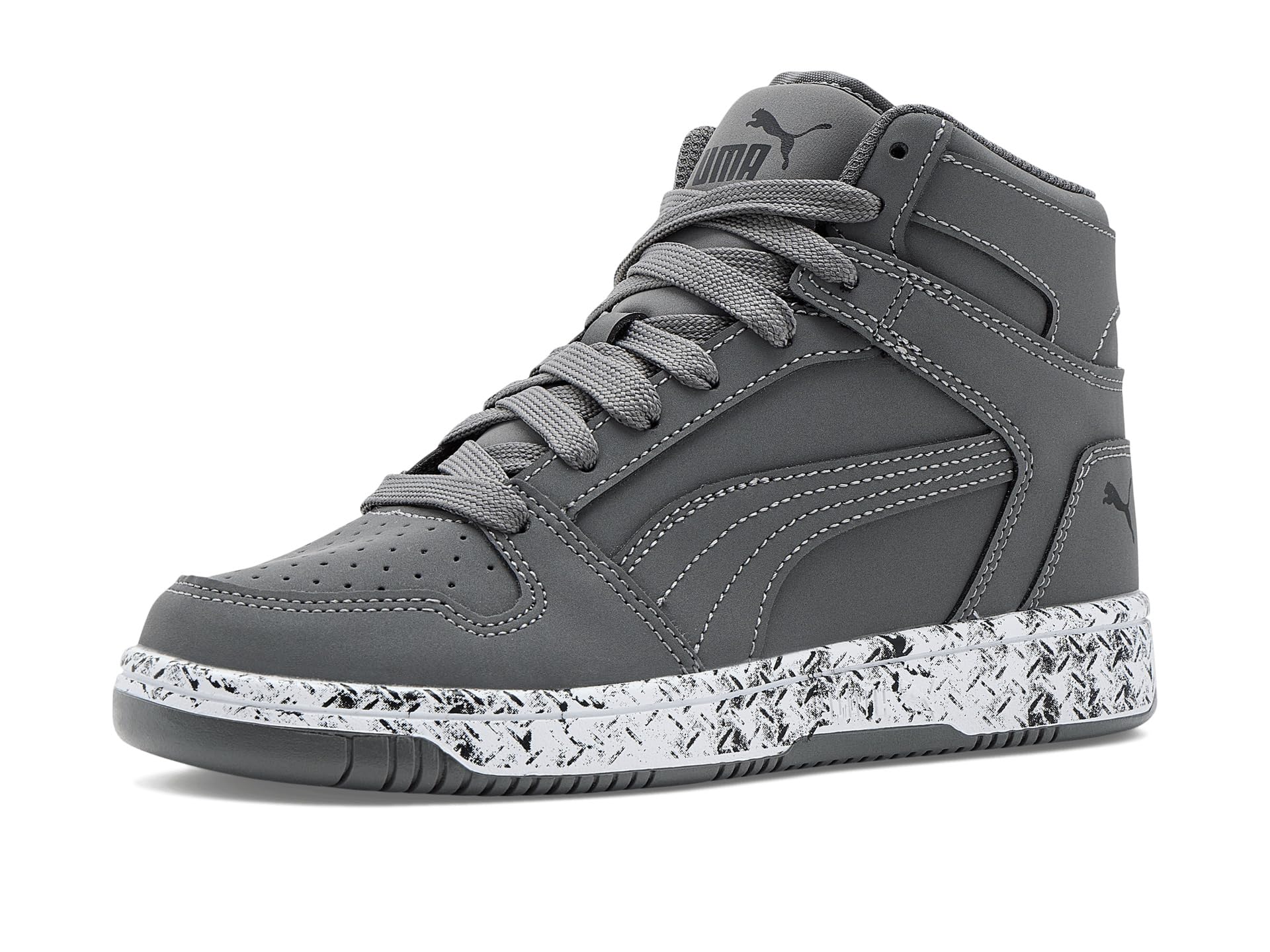
1. PUMA Unisex-Child Rebound Layup Mid Shoes
Our pick — 4.5+★ from 1,500+ verified ratings; the strongest balance of quality and price.
A mid-cut sneaker that treats the ankle gently and the school run seriously.
You get ankle coverage without a full high-top wall of collar. The PUMA Rebound Layup Mid sits in that middle zone, which is why it works for a kid who plays pickup at lunch and then wears the same pair to class. The synthetic leather upper (a man-made leather-look shell) shrugs off scuffs on the toe box — useful when the shoes get kicked off under a desk.
Underfoot sits a SoftFoam+ footbed (a cushioned insole that softens each step), and the thick padded tongue and collar keep the fit snug without pinching. The non-marking rubber outsole is the detail schools care about, because it grips the floor without leaving black streaks. The leather comes from a Leather Working Group certified tannery, a supply-chain credential for responsible leather production.
The honest trade-off is durability. Some of these hold up through an entire school year, and others come apart within a couple of months under a kid who never takes them off. At 2.13 pounds a pair they are the heavier end of this list, which a bigger kid will not notice and a smaller one might.
What earns the top spot
- Mid-cut collar gives ankle coverage without the fuss of a full high-top
- SoftFoam+ footbed spreads out impact through long school days
- Non-marking rubber outsole suits gym floors and playgrounds alike
- Padded tongue and collar stop the fit from biting at the instep
- LWG-certified tannery leather in the upper
Where it can fall short
- Durability is the split verdict — a school year for some, two months for heavier wear
- 2.13 pounds is the heaviest listed pair in this roundup
- Laces only, so no quick strap for a kid who dresses in a rush
Go for it if: you want one pair that covers school, the driveway, and gym class without a second purchase.
Look elsewhere if: your child wears one pair hard every single day — the durability question makes a second pair worth considering.
2. Nike Unisex Kids’ Team Hustle D 12 Basketball Shoes
Two closures on one shoe — laces for fit, a strap for speed.
Classic laces plus a hook-and-loop strap over the top is the most useful detail here. The strap pulls the midfoot down tight in one motion, so a kid who cannot be bothered to lace properly still gets a secure fit. That one-motion strap beats the lace-only pairs here when you are running late for a game.
The upper is breathable mesh, a woven fabric that lets air move through, so feet do not overheat during a full afternoon of running. Underneath sits a flexible full-length rubber outsole, which is the brand’s way of describing a sole that covers the whole bottom and bends with the foot. That gives you both durability and grip on hardwood and concrete.
The recurring comment from buyers centres on how much use these get out of active kids, and the arch support and looks come in for regular praise. What you should know is that a mesh upper trades some scuff resistance for airflow — a toe-dragger will wear through fabric sooner than through leather. Sizing runs close to standard, so a kid mid-spurt may want the next half size up.
Verdict: a practical pick for the child who plays hard and dresses fast. The strap is the feature you will appreciate most.
The catch: mesh breathes well but takes scuffs less gracefully than a leather-look upper.
Best fit: a busy household where nobody has time to re-tie laces before practice.
Think twice if: your kid drags their toes constantly — the fabric upper will show it first.
3. ASHION Boys’ Basketball High Top Non-Slip Shoes
The tall collar and molded heel shield are built for lateral cuts.
Ankle security is the whole pitch here. The high-top cut wraps further up than a mid, and a molded heel shield (a firm plastic cup around the back of the heel) locks the foot back in place during hard side-to-side movement. For a kid learning to plant and pivot, that heel cup keeps the foot from sliding during cuts.
The soft arch support inside is shaped to follow the curve of the foot, so the shoe hugs the instep instead of flattening it. The one-piece solid MD+rubber outsole — a foam-and-rubber blend — carries a traction pattern across the whole bottom for torsional rigidity, which is the technical way of saying the sole resists twisting. That stiffness helps on cuts but can feel firm on a very young wearer.
Quality is what wins people over here, and the value for the money comes up nearly as often. The honest friction is sizing: some find these run true, others report they do not, and the floor grip gets a split read too. The practical answer is to measure the foot and check the size chart rather than guess, since a high-top that is too long will roll at the ankle.
Why the collar matters
- High-top cut adds visible ankle coverage over a mid
- Molded heel shield holds the foot back during quick direction changes
- Soft arch support follows the instep rather than pressing flat
- One-piece MD+rubber outsole resists twisting underfoot
What to plan around
- Fit feedback splits between true-to-size and off — measure before ordering
- Floor grip is rated mixed by some wearers
- A firm sole feel suits a stronger player better than a small beginner
Reach for this one: if ankle coverage is your main worry and your child plays on a real court.
Skip the guesswork: order by measured foot length, because the high collar punishes a loose fit.
4. adidas Unisex-Child Ultradream DNA

Elastic laces mean the shoe goes on and stays on without a single knot.
Here is a shoe that eliminates the lace problem entirely. The elastic lace setup (stretchy cords that hold tension on their own) slides on like a slip-on but keeps the midfoot snug. For a younger kid, or one who simply will not sit still for tying, that removes a daily argument.
The fit is the standout across buyer feedback, with comfort trailing close behind — the most repeated point being that the shoe does not rub against the heel. That matters on a low-cut sneaker, where a rough heel counter is the usual cause of blisters on the walk to school. These weigh 2.13 pounds, which puts them on the heavier side for a low-profile shoe.
Compare that with the AND1 Gamma 4.0 SS at 1.2 pounds and the weight gap is obvious in the hand — nearly double the listed figure. The other thing to weigh is ankle height. This is a low-cut, not a mid or high, so it gives no collar support during a hard cut. Good for the playground and the school hallway; less protective for organized five-on-five.
The trade: you gain easy on-and-off and lose the ankle collar. Simple as that.
Editor’s note: the heel-rub point is the kind of detail that only shows up after real miles — and it lands well here.
Right for: little kids and reluctant lace-tiers who need a shoe they can pull on alone.
Not for: a child already playing competitive games who needs the collar height.
5. Reebok Open Gym Kids Basketball Shoes
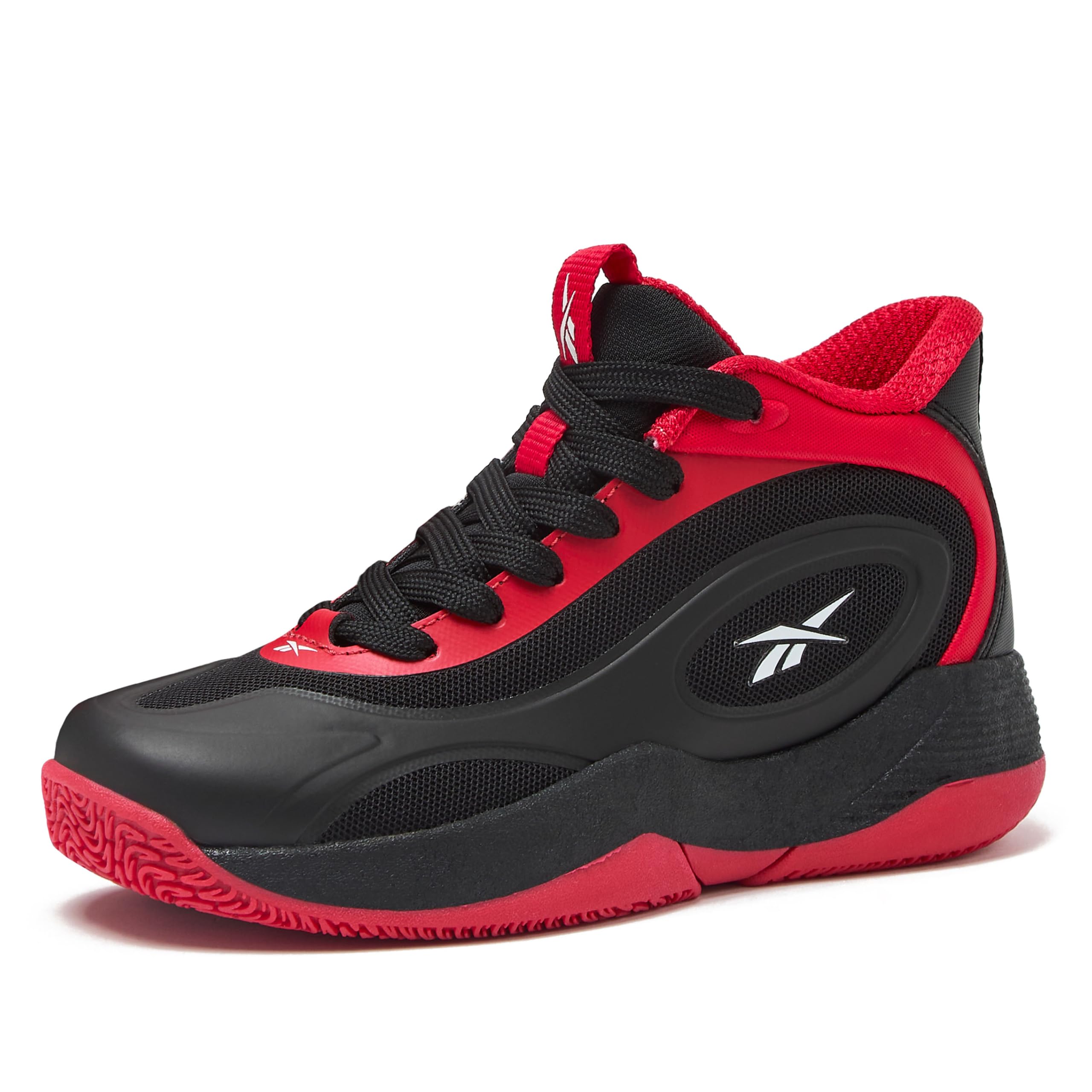
A retro-basketball hightop that covers a wide run of youth sizes in one listing.
The size span is the practical headline. This listing runs from youth size 11 in little kid through size 7 in big kid, so you can order the same model across a couple of seasons of growing feet. The hightop silhouette nods to early 2000s basketball styling — visible on the court, still tidy enough for school.
Support comes from a lightweight, breathable mesh upper with molded overlays placed where the foot needs structure. Underfoot, an EVA midsole (a foam layer that compresses and springs back) delivers cushioning and energy return, so landings feel less harsh. The durable rubber outsole is built for both indoor and outdoor courts, which saves you from owning separate shoes for driveway and gym.
Appearance is what wins people over — these get noticed, and compliments come up again and again. Fit is the second reliable point, with buyers reporting a precise match. If your kid cares how the shoe looks, the retro hightop styling does some of the persuading for you.
Where it shines: colorways and a fit that lands true, plus that stretch of sizing.
Keep in mind: mesh upper and hightop collar together mean a taller shoe — try it on before a game, not on the morning of one.
Pick this if: you want one hightop model you can size up through as feet grow.
Consider the alternative if: your child hates a tall collar and prefers a low-cut feel.
6. AND1 Gamma 4.0 SS Boys & Girls Basketball Shoes

At 1.2 pounds for the pair, this is the lightest shoe on the whole list.
Weight is the reason to look here first. A strap closure keeps the fit adjustable without a lace-tying routine.
It comes in a white and dark pink colorway that reads as a fun crossover shoe rather than a serious court tool. Treat it as a value-friendly starter pair for the driveway, the school playground, and a first season of youth league. At 4.0+ stars it sits at the bottom of this list on buyer satisfaction, so go in with measured expectations.
What is missing here is depth of specification. There is no published breakdown of the midsole foam, the outsole compound, or the upper material, which makes it hard to judge long-term durability from the listing alone. If your child is already playing organized games and needs proven ankle structure, this is not the pick.
Strong points
- 1.2 pounds per pair — the lightest option reviewed here
- Strap closure makes on-and-off quick and adjustable
- Friendly white and dark pink colorway kids often pick themselves
Fair warning
- Lowest buyer satisfaction of the group
- No published midsole or outsole spec to judge durability
- Built for casual play, not competitive court wear
Suits: a first pair for a small kid in gym class or the driveway.
Better to pass if: you need documented court technology for a serious player.
7. Under Armour Unisex-Child Grade School Jet ’23

Cushioned landings that turn into quick takeoffs, at 9.6 ounces per shoe.
This one is built like a player’s shoe. The full-length Micro G midsole is a foam layer that compresses on impact and rebounds, which is what turns a hard landing into a push back up the court. A plush foam sockliner adds a softer layer right under the foot, and a mixed-material upper puts durability where the shoe wears and breathability everywhere else.
The outsole uses an anatomical traction pattern, which means the grip is laid out following the natural shape of the foot rather than in a generic grid. Because the pattern follows the foot’s shape, the sole flexes with each step instead of fighting it. It weighs 9.6 ounces per shoe, light enough that it will not slow a fast player down.
Quality is the thing buyers applaud most, and ankle support and durability follow close behind. The one point to check before ordering is sizing — some find these true to size, others find they run small, so measure the foot rather than assuming an old size still fits. That is the main trade-off in an otherwise genuinely court-focused shoe.
The build: a midsole meant for impact, an upper meant to last, and a footbed with cushion right where it counts.
One thing to verify: sizing is the split point — go by measurement, not memory.
Made for: the kid who actually plays games and needs cushioning on every landing.
Look elsewhere if: you want a shoe for casual wear only — this one is overbuilt for that.
8. New Balance Kids 480 V1 Lace-up Sneaker
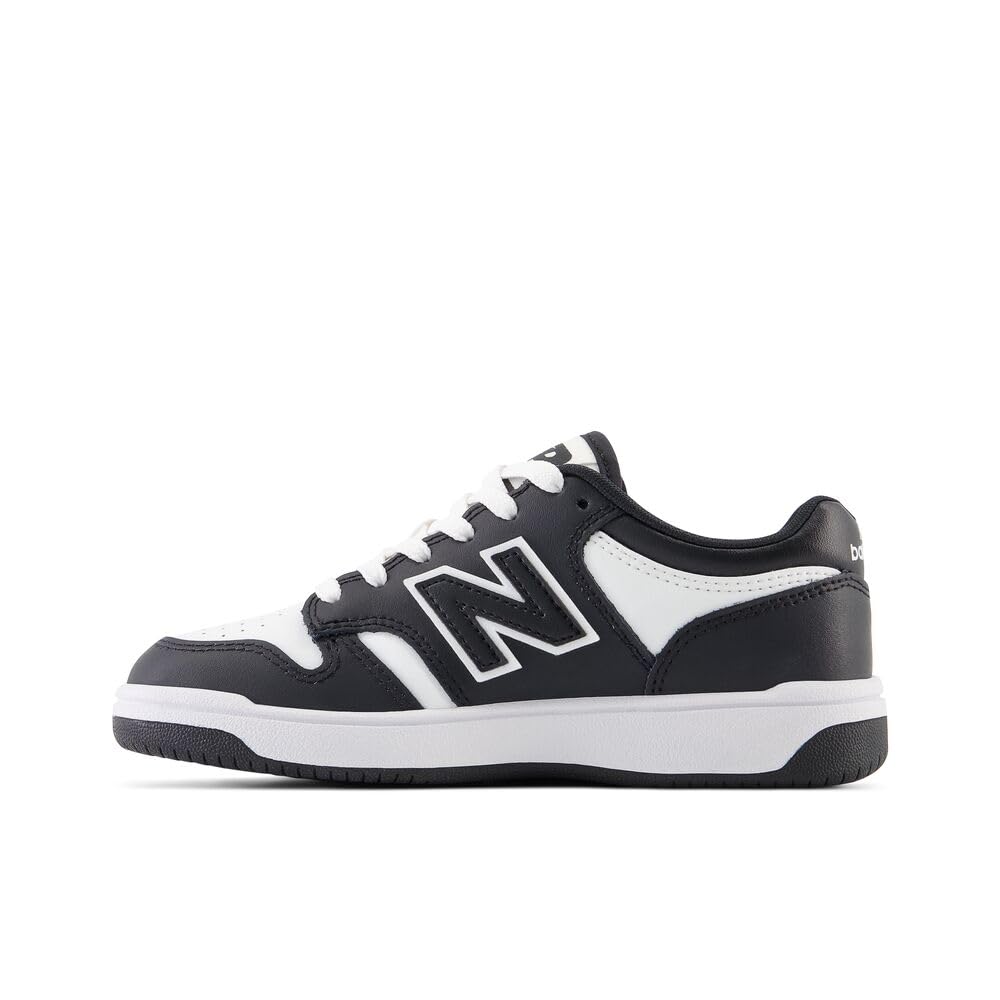
A court-inspired lace-up that wears just as easily at school as it does on hardwood.
The styling is lifted from game-worn basketball designs, which gives it that authentic look kids tend to gravitate toward. More important is the fit: this is a true-to-size shoe that is not too narrow, so a wider foot gets room instead of a squeeze. The black-and-white colorway goes with anything in the closet.
Comfort holds up over a full day, with padding around the ankle adding cushioning where the collar meets the leg. Buyers also use these far beyond the court — skateboarding, scooters, and all-day wear all come up, which speaks to how flexible the shoe is in daily life. The package measures 14 x 9 x 5 inches, slightly more compact than the adidas at 14.63 x 10.75 x 6 inches.
Quality is what buyers praise most, and fit comes second, so the core build earns its keep. One caveat on the design: the black-and-white palette is classic, which means it will not stand out the way the Reebok colorways do. If your kid wants a loud shoe, this is the quiet choice.
What it does well: a true-to-size fit with ankle padding, and enough range to cover school and street.
Trade-off: the classic black-and-white look is understated — not a pick for a kid who wants attention.
Worth it for: one pair that goes from gym to sidewalk to skate park without a change.
Pass on it if: you want a bolder colorway or a high-top collar.
9. Nike Kids’ Lebron Witness IX Basketball Shoes

Plush foam underfoot and sidewalls that work with the laces to lock the foot down.
The cushioning is the centerpiece. A plush foam midsole is built to soak up impact and return it, so a kid who plays a full game does not feel every landing in their knees. That pairs with lock-in sidewalls — raised sections on the outside of the shoe that tighten with the laces to hold the foot centered over the sole.
A durable rubber compound on the outsole gives better court feel and mobility than a flat slab, so turning and stopping feel connected to the floor. Appearance is what gets the most attention from buyers, and they hold up for real days out — one set of owners took a pair through a whole theme-park day without complaints. Ankle support and value also come up favorably.
Durability is the split point. Some wearers find the build holds up well, others report seams coming apart. That is worth knowing if your child plays outdoor games on concrete, which is the hardest surface on any basketball shoe. Treat these as an indoor-first pick and they will serve you better.
The case for it: real cushioning plus sidewall lock-in makes this the most court-oriented shoe of the group.
Where care pays off: seams are the weak link when these live on concrete.
Your match if: your child plays indoors and wants maximum cushion underfoot.
Reconsider for: a driveway-only player who is hard on seams.
Know the Specs
Ankle height: mid-top vs high-top
A mid-top rises partway up the ankle, and a high-top rises further. Joining these collars to the lacing system is how a shoe holds the ankle during a lateral cut. If your child is new to the game, start with a mid-top for easier lacing; move to a high-top once they are cutting hard on a real court.
Outsole compound and marking
A non-marking rubber outsole leaves no scuffs on a gym floor, and it also supplies the grip that stopping and turning demand. Rubber outsoles built for indoor and outdoor courts cover both situations. A foam-and-rubber blend like MD+rubber resists twisting, which supports the foot on quick pivots.
Cushioning and footbed layers
Foam midsole layers compress under a landing and spring back, while the footbed sits directly under the foot and softens the first contact. An elastic lace closure holds tension without knots. A plush foam sockliner adds a softer top layer. Together these decide how a shoe feels over a full day.
Weight and youth sizing
Listed weights here run from 1.2 pounds to 2.13 pounds per pair, and a lighter shoe tires a smaller kid less. Youth sizing moves from little kid into big kid, and a high-top fit punishes a shoe that is too long at the ankle. Measure the foot before ordering, since fit feedback splits on several pairs in this roundup.
Common Questions
What is the difference between a mid-top and a high-top basketball shoe for kids?
What does non-marking outsole mean on boys basketball shoes?
Should I buy a high-top for a young beginner?
How do I pick the right youth size for basketball shoes?
Are elastic laces secure enough for playing basketball?
How much does shoe weight matter for a kid?
Can these basketball shoes be worn for school and everyday use?
What midsole foam is best for a growing foot?
Do basketball shoes need a strap or is lacing enough?
The Bottom Line
For most families, the boys basketball shoes winner is the PUMA Rebound Layup Mid, because a mid-cut collar plus a SoftFoam+ footbed and a non-marking outsole handles school, gym, and the driveway in one pair. If a fast on-and-off matters more than ankle height, the Nike Team Hustle D 12 with its strap is the easier daily choice. For a kid who actually plays organized games, the Under Armour Jet ’23 brings the full-length Micro G midsole and a 9.6-ounce build that belongs on a real court. Buy by measured foot length, not by the size printed inside the old pair.
How we choose
We do not accept paid placement. Every pick is matched to a real buyer and a real use-case; we do not hands-on test units.
Sources
Specifications: manufacturer listings and product documentation. Review insights: verified customer reviews, as of November 2026. Pricing: not shown on this page (it changes often); check the current price via the retailer link.
As an Amazon Associate, My Heart Lives Here earns from qualifying purchases. This does not affect which products we feature.