Heads up: This post contains affiliate links. As an Amazon Associate I earn from qualifying purchases, at no extra cost to you. Learn more
Specs are compiled from manufacturer listings and verified buyer reviews and can change over time — please confirm the key details on the product page before buying.
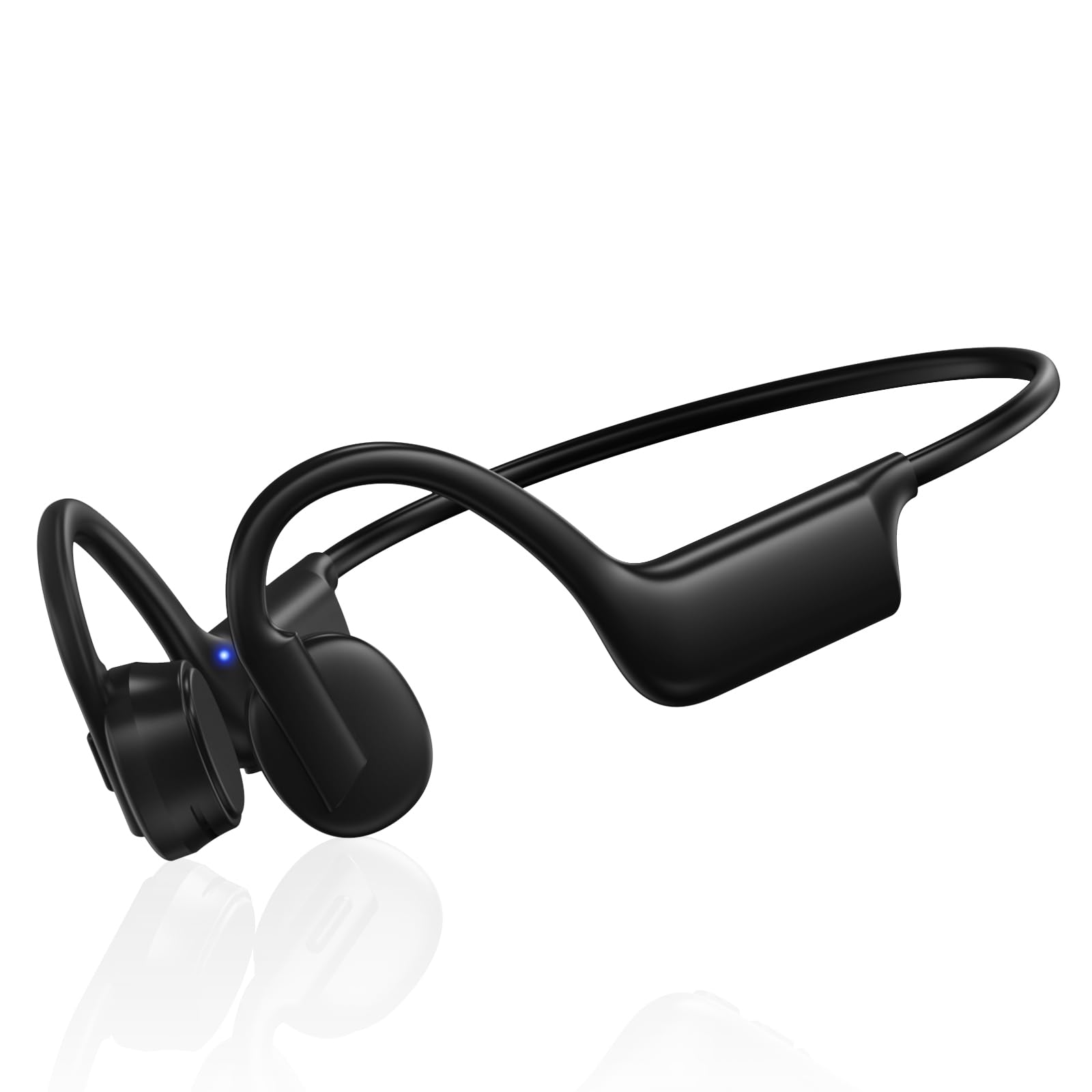
If your calls keep turning into “sorry, say that again,” the fix is usually the microphone, not the driver. Bone conduction headphones for phone calls skip your ear canal entirely and send sound through your cheekbones — so your ears stay open to traffic, your desk, and the barista calling your name. The picks below were chosen for one job above all: making you sound clear on the other end of the line.
This guide is built by comparing the manufacturers’ published specifications and the patterns across verified customer reviews, so you get each pick’s real strengths and trade-offs instead of marketing spin.
You will see how boom mics, ENC noise reduction, and multipoint pairing change a call, and which headset fits a full workday versus a quick run. These are the bone conduction headphones for phone calls worth shortlisting before you buy.
Top Picks

How To Choose The Best Bone Conduction Headphones for Phone Calls
The mistake most buyers make is shopping by sound quality. On a phone call, the person on the other end never hears your driver — they hear your microphone. A great-sounding headset with a weak mic still produces a call full of “what?” A modest-sounding headset with a proper boom mic and noise-reduction software sounds professional.
Start with the microphone, not the driver
A bone conduction driver moves your cheekbone to deliver audio; that says nothing about how your voice travels back. Look for a boom arm that reaches toward your mouth, plus ENC (environmental noise cancellation — software that separates your voice from surrounding sound). A windproof foam cover over the mic helps outdoors, where wind hits the element directly and turns into a roar.
Read talk time separately from listening time
Manufacturers list these as two different numbers, and the call figure is the one that decides whether the headset survives your workday. A headset rated for 8 hours of listening may quote 16 hours of talk time, so check both lines. Quick-charge features matter too — a few minutes on the cable can buy hours of conversation when you forgot to charge overnight.
Check where the headset has to work
The open-ear design keeps your ear canal clear so you hear traffic, office chatter, and announcements. That is the whole point on a commute or a bike lane. It also means wind and road noise reach the microphone, so a windscreen and a directional mic earn their keep. If you take calls mostly at a desk, wind protection matters less and multipoint pairing matters more.
Match water resistance to your routine
Sweat and light rain call for a sealed finish, and the ratings are not interchangeable. IP55 and IPX5 both guard against water jets, but the first digit in an IP rating covers dust — so IP55 also keeps grit out. Neither rating survives a swim. If you plan to run in drizzle, treat water resistance as a requirement, not a bonus.
Side-by-Side Comparison
| Model | Best For | Mic Setup | Talk / Listen Time | Bluetooth | Amazon |
|---|---|---|---|---|---|
| SHOKZ OpenComm2★ Best Overall | All-day calls and commuting | Noise-canceling boom mic with DSP | 16h talk / 8h listen | 5.1 | Amazon |
| Ogogrs Bone Conduction SportsBudget Runner | Budget running and workouts | Built-in mic | 10 hours music or calls | 5.3 | Amazon |
| SANOTO Open Ear AS24 | Lightest all-day wear | Directional mic with noise cancelling | 15h calls / 17h music | 5.3 | Amazon |
| Gixxted Open Ear Headset | Muting fast in shared spaces | AI noise cancelling mic with mute | — | 5.3 | Amazon |
| SANOTO Bone Conduction Boom Mic | Windy outdoor calls | Dual-mic ENC with foam windscreen | 8h talk / 6h listen | 5.3 | Amazon |
| SHOKZ OpenComm2 UC | Laptop-first hybrid work | Noise-canceling boom mic with DSP | 16h talk / 8h listen | 5.1 | Amazon |
Detailed Reviews
1. SHOKZ OpenComm2 Bluetooth Headset
Our pick — 4.0+★ from 1,000+ verified ratings; the strongest balance of quality and price.
The headset built for the person whose calendar is calls, not music.
Sixteen hours of talk time against eight hours of listening is the number that explains the OpenComm2. Most headsets in this space flip that ratio or quote a single vague battery figure. Here the call figure is the larger one, which means a full workday of back-to-back meetings fits inside one charge. A five-minute top-up returns two hours of talk time when you forgot the cable overnight.
The call hardware is the real argument. A noise-canceling boom microphone with DSP (digital signal processing — a chip that cleans and separates your voice from background sound) reaches toward your mouth instead of picking up sound from your cheekbone. The 7th-generation bone conduction driver and PremiumPitch 2.0 audio handle what comes back to you. Bluetooth range runs to 98 feet, so you can leave the phone on a desk and walk the room mid-call.
The DSP boom mic keeps your voice intelligible in noisy rooms where call clarity usually collapses. The trade-offs sit around the edges: some wearers find the flexible frame loose, and the Bluetooth 5.1 connection occasionally needs a re-pair. The 35 g frame carries an IP55 rating, which means sweat, rain, and dust are all covered.
What Sells It
- 16 hours of talk time per charge, with a 5-minute charge adding 2 hours of calling
- Dedicated noise-canceling boom mic with DSP for voice isolation
- Multipoint pairing holds a laptop and a phone at once, switchable through the Shokz App
- IP55 silicone finish and 35 g frame for all-day mobile wear
Where It Asks Patience
- The flexible frame runs loose on some head shapes
- Bluetooth 5.1 instead of the newer 5.3 standard
- Physical buttons take a few calls to learn by touch
Worth it for: anyone whose day is voice calls, desk to street, with the phone left behind on the charger.
Think twice about: the loose-frame feel if you prefer a firm, clamped-on fit.
2. Ogogrs Bone Conduction Headphones, Open-Ear Sports with Mic
A titanium frame that bends, survives the gym, and keeps the price low.
Ten hours of music or calls per charge puts the Ogogrs in the same endurance zone as the OpenComm2’s 8-hour listening figure. The Bluetooth version is actually newer — 5.3 on this one versus 5.1 on the SHOKZ — which generally means a quicker, steadier pairing handshake. The gap opens on range: 33 feet here against 98 feet on the OpenComm2, so this one wants the phone on you, not across the house.
The titanium frame is the physical story. It flexes freely and holds tension during high-intensity training, and the open-ear design keeps traffic and gym announcements audible. An IP55 rating covers sweat and dust. Type-C charging is the standard connector most people already keep on the nightstand, and a built-in mic handles conference calls and video meetings.
The catch is audio consistency. Reviews split — some call the sound great and clear, others describe it as muffled, and the cause is usually an imprecise bone-contact position on the cheek. Seat the band firmly and the sound firms up considerably. At this tier you are buying the frame, the 10-hour battery, and Bluetooth 5.3 rather than a polished call mic.
The value read: a flexible titanium frame, 10 hours of runtime, and IP55 at the entry tier — with the mic doing honest basic work rather than office-grade noise rejection.
One thing to know: charge time is listed at 10 hours, which is a slow overnight commitment, so plug it in before bed rather than 20 minutes before a run.
Reach for this if: you want a training partner that bends instead of snapping, and calls are occasional rather than constant.
Look elsewhere if: your calls happen in loud places — the basic mic will let that noise through.
3. SANOTO Open Ear Headphones with Mic (AS24)

At 26.7 g, this is the one you forget is resting on your head.
Weight is where the AS24 makes its case. At 26.7 g it undercuts the 35 g OpenComm2 by a wide margin, and that difference shows up around the 8-hour mark of a wear-day: less pressure behind the ear, less of that “take it off” itch. It runs Bluetooth 5.3 with multipoint pairing, so a laptop and a phone can both sit connected and you hop between them without repairing.
A 50-minute full charge returns up to 17 hours of music or 15 hours of calls at 80% volume, which is the longest call figure on this list. Sealed directional audio transmission plus a noise-canceling mic handles two-way conversation for Zoom, Skype, and customer calls. An IPX5 rating shrugs off sweat and light rain, and the open-ear shape keeps your ears clear for driving.
This is the lightest headset here, and the one with the least proven track record — a newer listing with a thinner review history than the SHOKZ models. Buyers are mixed on overall quality, and the open-ear air-conduction design means bass is thinner than a sealed bone conduction driver can produce. For call clarity and all-day featherweight comfort, though, the numbers are hard to argue with.
What the scale says: 26.7 g against 35 g on the SHOKZ — you feel the difference over a long shift, not in the first hour.
The honest offset: 15 hours of call time is exceptional, but the low-frequency response on open-ear air conduction trails a true bone conduction driver, so music sounds leaner than it does on calls.
Pick this when: lightness and call endurance top your list and you mostly talk rather than listen to bass-heavy tracks.
Pass if: you want a long-established listing with a deep review base behind it.
4. Gixxted Open Ear Headphones with Mic, Bluetooth 5.3 Headset

The one-button mute that saves you in a shared room.
Muting without hunting for a screen is the feature that sets the Gixxted apart on a work call. One press mutes your voice for a meeting or a call, another press brings it back. That single physical control earns its place on any headset used in an open office, a shared kitchen, or a house with a dog that has opinions.
Around that button sits a solid package: Bluetooth 5.3, a 29 g body, an AI noise cancelling mic that uses environmental noise reduction to keep background chatter off your voice, and multipoint pairing for two connected devices with one-click switching. Transmission range reaches 49 feet — noticeably shorter than the SHOKZ 98-foot reach, longer than the Ogogrs 33 feet. Touch, voice, and media controls round it out.
Buyers consistently report clear sound, a fit that stays put, and a Bluetooth link that does not drop. Battery life runs long enough that charging becomes a twice-a-week chore rather than a nightly one. If there is a gap, it is that this is an air-conduction open-ear design with a dynamic driver — the bass is polite, and the mute button is the reason to choose it.
Why It Earns Its Slot
- Dedicated one-press mute and unmute for calls and online meetings
- AI noise cancelling mic for caller-side clarity
- Bluetooth 5.3 with 49-foot transmission range
- 29 g skin-friendly body rated for all-day wear
The Fine Print
- Dynamic driver means thinner bass than a bone conduction model
- 49-foot range trails the 98-foot SHOKZ reach
- Touch controls can be fussy until you learn the zones
Best matched to: remote workers and office regulars who need to kill their mic fast and often.
Not the pick for: deep-bass listeners or anyone who wanders far from their laptop mid-call.
5. SANOTO Bone Conduction Headphones with Mic and Windscreen
Built for the call you take outdoors with wind in the microphone.
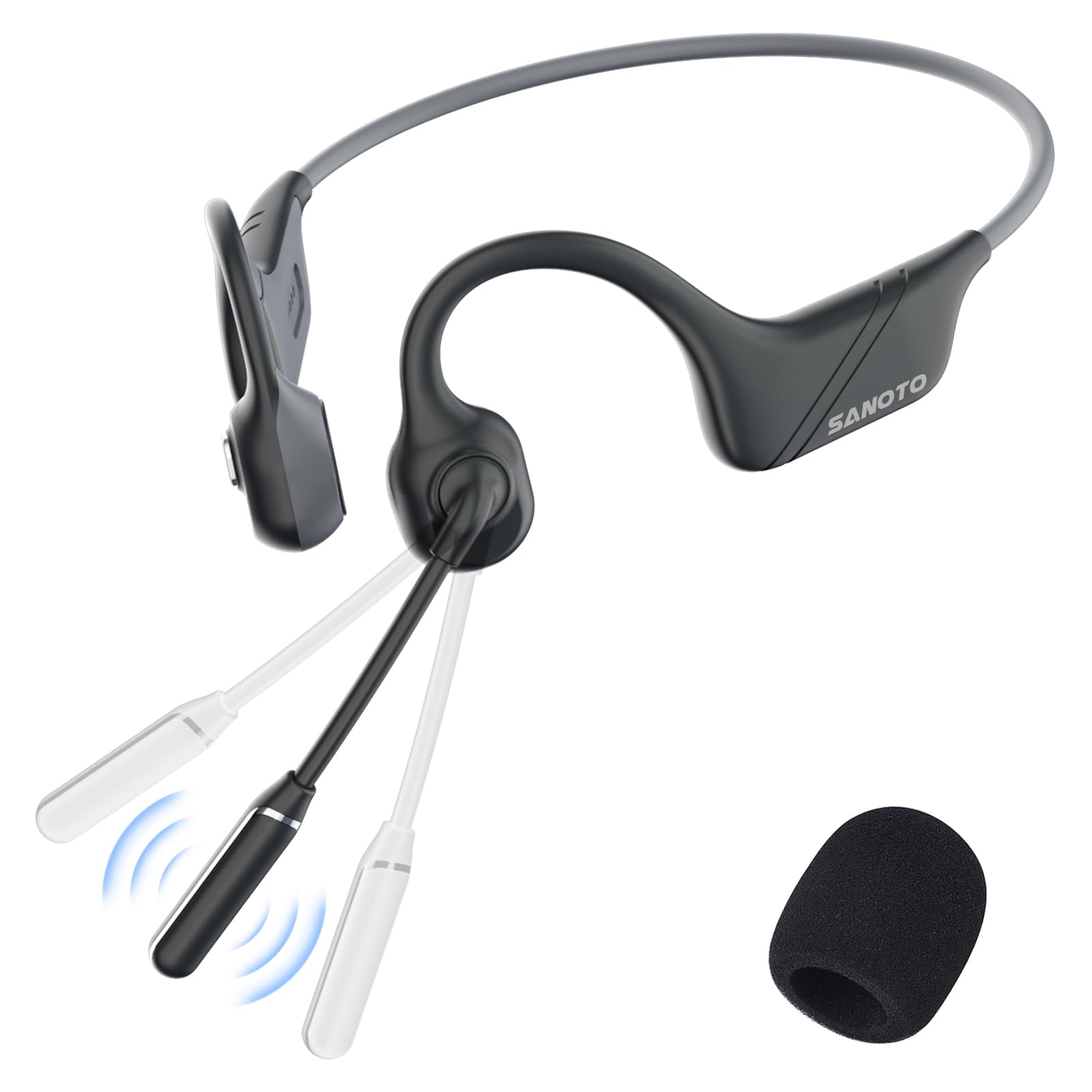
An adjustable boom microphone plus a detachable foam windscreen is a combination you rarely see at this level. The dual-mic ENC algorithm picks up your voice and blocks surrounding noise at the same time, and the foam cover stops wind from hammering the mic element directly. For a call taken on a ferry deck or a windy street corner, that is the difference between a conversation and a broadcast of weather.
The frame is 33 g with skin-friendly silicone pads and a flexible titanium band that hugs without pinching. A single multifunction button covers play and pause, track skip, answer and end, mute and unmute, and your phone’s voice assistant. Bluetooth 5.3 handles pairing to phones, laptops, desktops, and tablets, and multipoint keeps two devices connected at once.
Callers report clear audio even in wind and street noise, and the 33 g frame stays comfortable through a full shift. Now the number that matters: 8 hours of talk time and 6 hours of listening after a 2-hour full charge. That listening figure is the shortest here, and unlike the Gixxted above, this one rewards a nightly charging habit. Pair it with the included earplugs and the same driver doubles as a private-music option.
The wind argument: a boom mic with a foam windscreen and dual-mic ENC is the setup that keeps you intelligible outdoors.
The trade-off to plan around: 8 hours of talk and 6 hours of listening against a 2-hour recharge means this is a daily-charge headset, not an all-week one.
Choose it for: outdoor and mobile calls where the wind is the enemy.
Skip the shortlist if: you need the longest possible listening runtime between charges.
6. SHOKZ OpenComm2 UC Open-Ear Headset with USB-C Dongle

The same 16-hour call headset, with a dongle that anchors it to your laptop.
If your calls live in a laptop rather than a phone, the UC version solves the problem that plagues plain Bluetooth headsets on computers: a link that drops mid-meeting. The included Shokz Loop120 USB-C wireless adapter holds the PC or Mac connection steady, and the headset carries Zoom certification for software integration. The rest is the OpenComm2 you already know — 7th-generation bone conduction tech, PremiumPitch 2.0 audio, and a DSP noise-canceling boom mic.
Talk time reaches 16 hours against 8 hours of listening, with a five-minute quick charge returning 2 hours of talk. The 35 g frame and IP55 silicone finish match the non-UC model. Bluetooth 5.1 and 98-foot range are the same. Multipoint pairing is here too, and the physical controls for volume, mute, play, and pause are identical.
Where this version pulls ahead is the hybrid-work pattern: laptop at the desk, phone in the pocket, and no re-pairing between them. Reviewers settle on comfort — the 35 g frame wears all day without pressure. On call clarity, the DSP boom mic carries the consensus ahead of the Gixxted’s dynamic-driver tuning. A few note that Bluetooth 5.1 and the mid-tier call time feel conservative for the premium tier.
What you are paying for: the Loop120 dongle and Zoom certification — a stable laptop link that is the whole reason to step up from the standard OpenComm2.
Skip the upgrade if: your calls run through a phone, because the standard version covers the same 16-hour talk time without the adapter.
The right fit: desk-based hybrid workers whose calls live in Teams, Zoom, or a browser tab on a computer.
Not required if: you are already happy pairing to a phone — the plain OpenComm2 does that job.
Know the Specs
Talk time vs listening time
These are two separate ratings, and the call number is the one that matters for a phone headset. Listening hours measure continuous music playback; talk hours measure an active call, which is usually a lighter load and therefore a higher figure. A headset quoted at 16 hours of talk and 8 hours of listening will outlast one that only advertises a single music figure. If you take calls all day, read the talk line first and treat the listening line as a bonus.
Boom mic vs built-in mic
A boom mic sits on an arm that reaches toward your mouth, so it captures your voice closer to the source and picks up less of the room. A built-in mic lives on the headset body and relies on software to isolate your voice. Boom headsets tend to sound clearer on the other end, especially outdoors. A foam windscreen over the boom further protects against wind noise, which otherwise overwhelms a small microphone element.
Bluetooth version and range
The version number describes the wireless standard the headset uses, and newer versions generally pair faster and hold a steadier link. Range is listed separately and describes how far you can wander from the paired device before the audio drops. A headset rated at 98 feet lets you leave the phone on a desk and walk the room; one rated at 33 feet expects the phone in your pocket. Both work fine on a call if the source stays close.
IP55 and IPX5 explained
These ratings describe how well the shell keeps water out. IPX5 means protection against water jets — sweat and light rain are fine. IP55 adds a dust rating on top, so grit and debris stay out as well. Neither rating covers full submersion, so no swimming or showering with the headset on. Choose IP55 if you sweat heavily or work out where dust and rain both show up.
Common Questions
Will bone conduction headphones work with Zoom, Teams, or Skype on a laptop?
Can the person on the other end hear background noise?
Is an open-ear headset safe to wear while driving?
How long does the battery actually last on a full day of calls?
What does multipoint pairing change about a workday?
Do these headsets work with glasses or a helmet?
Can I mute a call without touching my phone?
Is bone conduction better than air conduction for calls?
Will these work with an iPhone and an Android phone at once?
Do I need to charge these headsets every night?
The Bottom Line
The bone conduction headphones for phone calls shortlist lands on the SHOKZ OpenComm2 for most people, because 16 hours of talk time and a DSP noise-canceling boom mic solve the two problems that ruin a call. If wind is your daily enemy, the SANOTO boom-mic model brings the windscreen and dual-mic ENC. And for anyone whose calls live in a laptop, the SHOKZ OpenComm2 UC adds the Loop120 dongle and Zoom certification that keep the link steady through a long meeting.
How we choose
We do not accept paid placement. Every pick is matched to a real buyer and a real use-case; we do not hands-on test units.
Sources
Specifications: manufacturer listings and product documentation. Review insights: verified customer reviews, as of November 2026. Pricing: not shown on this page (it changes often); check the current price via the retailer link.
As an Amazon Associate, My Heart Lives Here earns from qualifying purchases. This does not affect which products we feature.