Heads up: This post contains affiliate links. As an Amazon Associate I earn from qualifying purchases, at no extra cost to you. Learn more
Specs are compiled from manufacturer listings and verified buyer reviews and can change over time — please confirm the key details on the product page before buying.
You want one simple answer: which basic washer and dryer actually gets clothes clean without eating your weekend or your hallway. The short version is that a straightforward top-load washer with an agitator (a center post that scrubs clothes) still beats most fancy machines on stain-fighting per load. A compact all-in-one only makes sense when floor space is the thing you cannot buy more of. Below you get twelve real machines, sorted by what each one is genuinely good at, so you can match the appliance to your laundry room instead of the other way round.
This guide is built by comparing the manufacturers’ published specifications and the patterns across verified customer reviews, so you get each pick’s real strengths and trade-offs instead of marketing spin.
A washer that fights stains, fits your alcove, and skips the repair calls beats any app-connected feature. This rundown covers the best basic washer and dryer setups for real homes.
Top Picks


How To Choose The Best Basic Washer and Dryer
Start with the wall behind the machine, not the machine. A basic washer and dryer has to fit a real alcove, reach a real outlet, and connect to real plumbing before any cycle feature matters. Work through these four decisions and the shortlist narrows itself.
Measure the opening before you read any spec sheet
A top-load washer needs clearance for the lid to swing up, and a front-load door needs room to open flat. The GE Unitized Spacemaker lists a 43-inch depth with the door open maximum, so a narrow closet can still work if the door has swing room. Write down your width, depth, and height first, then compare.
Decide if you need a dryer at all, or one box that does both
An all-in-one combo washes and dries in the same drum, so you load once and walk away — but you cannot wash a second load while the first is drying. A stacked or side-by-side pair lets two loads run at once. If your building has no vent, a ventless combo is often the only legal option.
Agitator or impeller — the choice that changes how clean your clothes get
An agitator is the tall center post that pushes clothes through the water. An impeller is a low plate that swirls them. Agitators tend to handle heavy soil better; impellers are gentler on delicate fabrics and free up drum space. Neither is wrong — pick the agitator for gym clothes and work pants, the impeller for silk blouses.
Match the electrical setup you already have
Many compact combos run on a standard 120V outlet, which the Midea and KoolMore listings both confirm. Full-size electric dryers typically need their own dedicated circuit. Check the breaker panel and the vent path before you order, because moving a dryer vent is a contractor job.
Side-by-Side Comparison
| Model | Best For | Washer Capacity | Type | Cycles / Key Spec | Amazon |
|---|---|---|---|---|---|
| Kenmore 4.4 cu. ft. Top Load★ Best Overall | Stain-heavy family loads | 4.4 cubic feet | Top load washer | 10 wash cycles, triple action agitator | Amazon |
| LG 5.2 cu. Ft. Front LoadBest For Big Loads | Big loads, low energy draw | 5.2 cubic feet | Front load washer | 105 kWh per year, steam and Turbowash | Amazon |
| LG WashTower WKE100HWABest Stacked Pair | One footprint, full-size pair | 4.5 cubic feet | Stacked washer + 7.4 cu. ft. dryer | 607 kWh per year, central control panel | Amazon |
| Kenmore 4.5 cu. ft. Front Load | Steam stain treatment | 4.5 cubic feet | Front load washer | 12 wash cycles, Steam Treat | Amazon |
| Samsung WF45T6000WPR Set | Quiet pair in a full-size room | 4.5 cubic feet | Front load washer + 7.5 cu. ft. dryer | 10 drying cycles, Sensor Dry | Amazon |
| GE Profile PFQ97HSPVDS | Large all-in-one, no venting | 4.8 cubic feet | Ventless washer/dryer combo | 12 wash / 14 dry cycles, heat pump | Amazon |
| Westland WDV2200XCD | Small-space vented combo | 11 pounds | Vented washer/dryer combo | 4 cycles, 11 A draw | Amazon |
| Splendide Stacked Bundle | RV and tiny-home installs | 2.3 cubic feet | Stacked washer + dryer pair | 15 drying cycles, Opti Sensor | Amazon |
| GE Unitized Spacemaker | Narrow closets in apartments | 2.3 cubic feet | 24-inch unitized center | 2.3 cu. ft. wash / 4.4 cu. ft. dry | Amazon |
| BLACK+DECKER 2.7 cu. Ft. | 16 cycles in a tight corner | 2.7 cubic feet | Front load washer | 16 cycles, 1300 RPM spin | Amazon |
| Midea 2.7 cu. Ft. Combo | Wash-and-dry without moving a load | 2.7 cubic feet | Ventless all-in-one combo | 16 programs, 1400 RPM, 90 kWh/year | Amazon |
| KoolMore FLC-3CWH | Apartment and RV combo | 2.7 cubic feet | Ventless all-in-one combo | 16 wash / 4 dry cycles, 1300 RPM | Amazon |
Detailed Reviews
1. Kenmore 4.4 cu. ft. Top Load Washer
Our pick — 4.5+★ from 100+ verified ratings; the strongest balance of quality and price.
The old-school agitator that still outscrubs the smart machines on grass stains and grease.
Pick this machine if your laundry basket is mostly kids’ clothes, work pants, and towels that come back genuinely dirty. Its party piece is a Triple Action Agitator (a center post that attacks soil three ways at once): it sprays a concentrated detergent mix at the load, rocks the wash basket back and forth, and rotates clothes in a circular path. That mechanical scrubbing is exactly what a basic washer needs. Buyers report performance is what they praise most, and loads routinely come out cleaner than they did in the premium Samsung they replaced.
A 4.4-cubic-foot drum swallows a family’s worth of towels without a second pass. If you are short on time, Express Wash cleans a small load in just 28 minutes (based on a 3-lb load at the default cycle setting). Accela Wash cleans a full-size load up to 51% faster than a standard 8-lb normal cycle at warm temperature and extra heavy soil, according to the maker. You get 10 wash cycles including Heavy Duty, Whites, Towels, Delicates, and Express, plus 4 temperature options and an Extra Rinse for sensitive skin. The soft-close lid has tempered glass, so it will not slam on your fingers.
Running costs are where a basic top-loader can still compete. Cold Clean cleans gently and completely while using up to 90% less energy than the normal cycle at default settings on an 8-lb load. The honest trade-off is the footprint: at 30 inches deep and 44 inches tall, it needs a real utility room and clear space above for the lid to swing. There is also a physical quirk worth knowing — you must remove the shipping bolts before install, which the listing flags in the copy for a reason.
What earns it the top slot
- Triple Action Agitator pulls dirt from three directions on the same load
- 4.4 cubic feet handles oversized towel and bedding loads
- Express Wash finishes a small 3-lb load in 28 minutes
- Cold Clean uses up to 90% less energy than the normal cycle
- Quiet in day-to-day running, and the tempered-glass lid is soft close
Where it asks something of you
- 30-inch depth and 44-inch height need genuine floor space and lid clearance
- Shipping bolts must come out before first use or the drum will rattle
- Agitator posts are rougher on very delicate fabrics than a front loader
Buy this one if: your loads are genuinely dirty and you want one machine that fights stains without a learning curve.
Think twice if: your laundry is mostly silk and wool, where an agitator post is the wrong tool.
2. LG 5.2 cu. Ft. Front Load Washer
Bigger drum than almost anything here, on a fraction of the yearly electricity.
Two numbers decide this one. That difference is the gap between folding a duvet into a second pass and doing it in one. Second, an estimated 105 kilowatt hours per year, which is a measure of electricity used over twelve months. Compare it to the LG WashTower at 607 kilowatt hours per year and you are looking at a washer that sips power while running a bigger drum.
The cleaning comes from tune water motion and precise temperature control, paired with steam and Turbowash technology for stain removal and fabric care. An Inverter Direct Drive motor — a drive system that spins the drum without a belt — cuts vibration and noise, which matters if the laundry is near a bedroom. The Black Steel finish and remote-capable controls keep it looking and feeling current rather than utilitarian.
Here is the qualifier you need before ordering. This is a washer only, not a pair, and it weighs 225 pounds, so plan the delivery path before it arrives. It also needs a front-load drain and a level floor, because a drum this size will let you know if the machine is rocking. At 32.88 inches deep and 40.75 inches tall, the door needs real swing room when open.
Room for a whole duvet: the 5.2-cubic-foot drum is the single biggest capacity in this lineup, so bulky bedding stops being a two-load chore.
The catch worth planning for: a 225-pound washer-only machine needs a clear delivery path and a level floor, and you still have to buy the dryer separately.
Reach for it when: bedding and blankets are the reason you keep running two loads, and you want the energy bill to stay small.
Look elsewhere if: you need one box that washes and dries — this is washer only.
3. LG WKE100HWA WashTower Stacked Smart Laundry Center
One vertical column replaces two separate machines and keeps the full-size drum you wanted.
If your laundry corner is one narrow slot rather than a whole room, this is the shape to buy. The WashTower puts a 4.5-cubic-foot front-load washer under a 7.4-cubic-foot electric dryer in a single unitized column, with one central control panel instead of two sets of dials. You get full-size laundry performance out of a footprint that is 30.38 inches deep, 27 inches wide, and 74.38 inches tall — a vertical stack rather than a pair spread across the floor.
Reliability and build quality are what owners circle back to, which is the right thing to care about in a unit you cannot easily replace one half of. A maximum door-open depth of 55 inches lets both doors swing fully for loading and unloading, and the electric dryer keeps the fuel type consistent with the washer. Families running high-volume laundry will feel the 7.4-cubic-foot dryer drum most — towels and sheets go in wet and come out ready to fold.
Be clear about the energy picture before you commit. The estimated annual energy consumption is roughly 607 kilowatt hours per year, which is the number to weigh against a washer-only machine at 105 kilowatt hours per year. That is the real cost of running a full-size dryer in the same box, and it is normal for a washer-and-dryer pair rather than a red flag.
The case for the column
- Washer and dryer share one 27-inch-wide footprint
- 4.5-cubic-foot washer and 7.4-cubic-foot dryer in a single column
- Reliability is the standout trait in owner feedback
- Central control panel means one place to set a cycle
What you accept in return
- Around 607 kilowatt hours per year, the cost of running a full-size electric dryer
- 74.38 inches tall — measure your ceiling and doorways before delivery
- You cannot wash a second load while the first is drying in the same stack
Fits the narrow laundry slot: a family that needs full-size capacity but only has one 27-inch-wide column of floor.
Skip the stack if: your ceiling height or delivery route cannot clear a 74.38-inch-tall unit.
4. Kenmore 4.5 cu. ft. Front Load Washer in Metallic Silver

Steam does the stain work, so you can stop pre-treating every collar and cuff.
For households where stains are the daily battle but you want gentler handling than an agitator, the Steam Treat option on this 4.5-cubic-foot Kenmore is the whole argument. It uses the cleaning power of steam to lift everyday stains — the kind of treatment that saves you standing over a sink with a stain stick. Twelve wash cycles cover Kids Wear, Whites, Delicates, Express Wash, and more, with 5 temperature options and an Extra Rinse for sensitive skin.
Speed is competitive for a front loader (a machine that loads through a door in front). Express Wash handles a small load in just 25 minutes (based on a 3-lb load on the express cycle). Accela Wash cleans a full-size load up to 26% faster than a standard 8-lb normal cycle at warm temperature and extra heavy soil, according to the maker. Buyers rate performance highest on this machine, and the light-touch controls with an LED time-remaining readout make a 12-cycle panel feel far less fussy than it sounds.
The energy side is genuinely impressive: Cold Clean cleans gently and completely while using up to 90% less energy than the normal cycle at default settings on an 8-lb load, and the unit is ENERGY STAR certified. Plan for depth, though — this one measures 34.02 inches deep, so a standard closet will not swallow it. Reliability feedback is mixed on this model, so treating it to a level floor and regular Clean Washer cycles is worth the habit.
Where steam pays off: Steam Treat targets everyday stains without a pre-treat step, and 12 cycles cover kids’ clothes through delicates.
The honest footnote: at 34.02 inches deep it is the deepest washer here, so closets and tight alcoves are out.
Best matched to: a household that wants stain help without an agitator post, and has the depth to house a full front loader.
Not for you if: your laundry alcove is shallow or you need a matching dryer in the same purchase.
5. Samsung WF45T6000WPR White Front Load Laundry Package

A full washer-and-dryer set tuned to keep the spin cycle from walking across the floor.
The reason to pick this package is the pair, not the parts. You get a 4.5-cubic-foot front-load washer with Vibration Reduction Technology+ (a system that damps the drum’s movement so a fast spin does not rattle the cabinet or the room). It is matched to a 7.5-cubic-foot electric dryer with Sensor Dry. Sensor Dry uses moisture readings to stop the cycle when clothes are actually dry, so you are not guessing at a timer. Owners rate quality highest on this set, and it holds up as one of the better-built pairs here.
The dryer’s 10 preset drying cycles mean you can set towels, bedding, or delicates and walk away rather than babysit a dial. Self Clean+ on the washer handles drum hygiene without a separate cleaning cycle you have to remember. Combined footprint is 32 inches deep and 55 inches wide, so this is a side-by-side arrangement in a full utility room, not a closet solution.
Noise and dryer performance show up as mixed in owner experience, so if you need a machine that reliably dries a dense load in one pass, test that expectation against your habits. There is also a listing quirk: the capacity field reads 335 pounds rather than cubic feet, which is the kind of typo worth confirming against the drum spec on the product page before you buy.
Good fit for: a dedicated laundry room where a 55-inch-wide side-by-side pair has space and quiet spin matters.
Second-guess it if: your dryer loads are heavy and dense and you want predictable one-pass drying.
6. GE Profile PFQ97HSPVDS Smart Front Load Washer/Dryer Combo
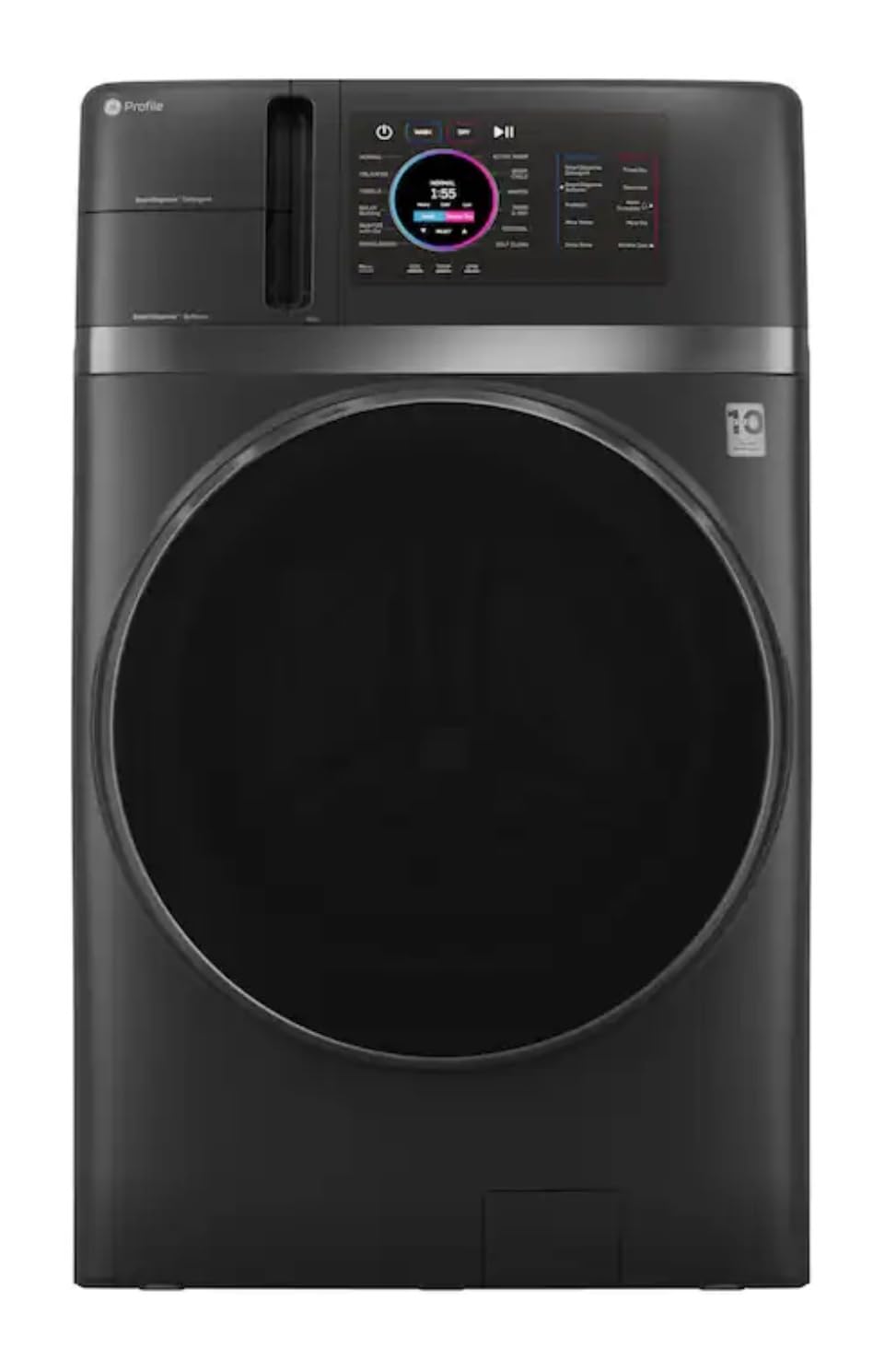
The biggest all-in-one drum on this list, and it dries without a vent.
At 4.8 cubic feet, this GE Profile holds more per cycle than any other combo here — matching machines that need two separate boxes. It washes and dries in the same drum using a ventless heat pump dryer with a Fast Airflow Drying System, so there is no duct to install and no outside wall to cut. That alone makes it the practical choice for a condo, a basement, or any room where venting is not possible.
You get 12 wash cycles and 14 dryer cycles, which is more granular control than most all-in-ones offer. Performance and cleaning results are the two things owners rate highest — clothes come out clean and dry in one load, which is the entire promise of an all-in-one. Estimated annual energy consumption is 535 kilowatt hours per year. Controls are touch-based, the finish is Carbon Graphite, and the maximum door-open depth is 54.5 inches.
The trade-off is physical and financial in equal parts. This unit weighs 323 pounds and measures 32 inches deep by 46.7 inches tall, so delivery and installation need planning. Drying performance and value are both mixed in owner experience, and durability feedback skews negative — several machines stopped working after a period of use. Drying time is also called out as slow. Weigh that against the ventless convenience, and consider whether a service plan makes sense.
Why the big drum wins
- 4.8 cubic feet — the largest capacity of any combo in this lineup
- Ventless heat pump drying means no duct work and no outside wall
- 12 wash cycles and 14 dryer cycles for precise control
- Cleaning performance is the standout trait in owner feedback
What to weigh honestly
- 323 pounds and 46.7 inches tall — plan the install route
- Drying time runs long on a full load
- Durability feedback is the weakest on this list — consider a service plan
The ventless answer: a condo or basement laundry where a 4.8-cubic-foot drum and no ducting outweigh a slower dry.
Hold off if: you want a machine with a proven long service record and fast dry times.
7. Westland WDV2200XCD Washer/Dryer Vented Combo
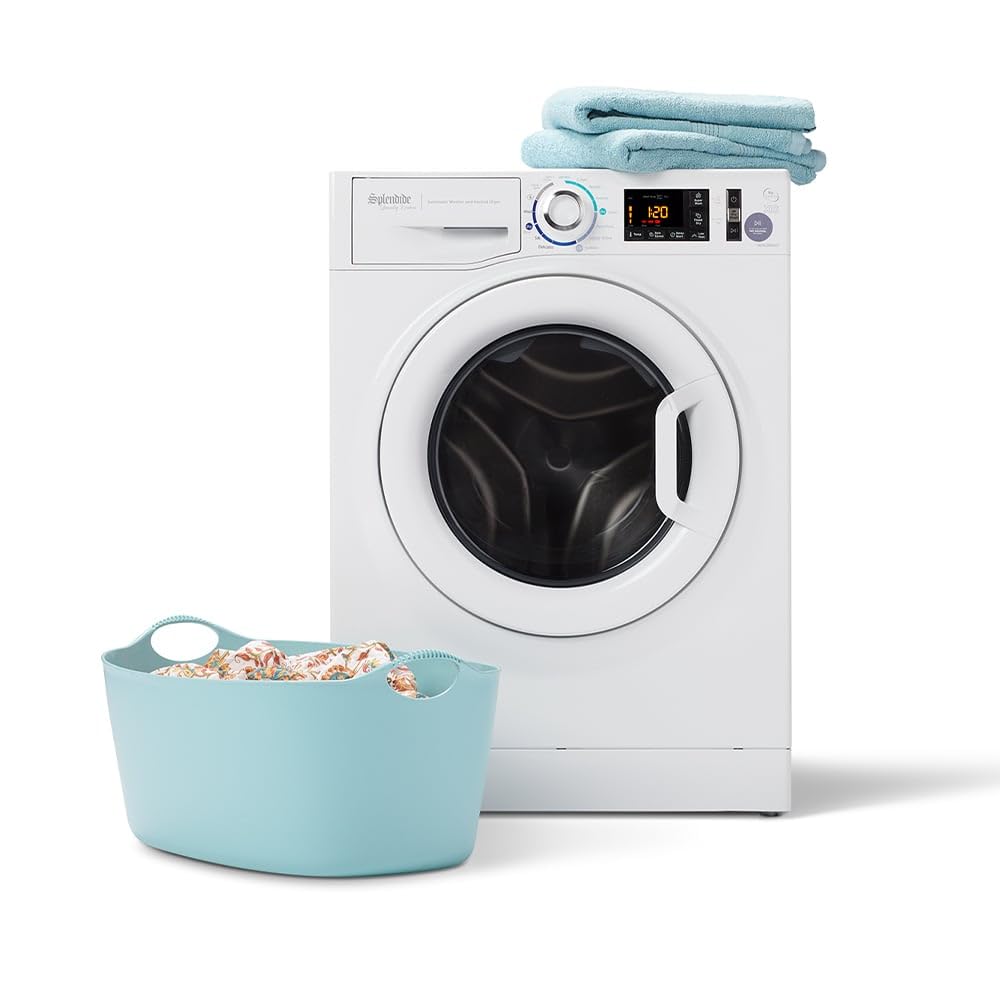
Reliability is the headline here — owners keep this combo running in RVs and tight quarters for the long haul.
This is a load-rated combo rather than a cubic-foot one: 11 pounds of laundry per cycle, with a 35-inch depth and 25.5-inch width. It uses a vented drying setup, so unlike the ventless Midea and KoolMore machines it needs a duct path to the outside — but that vented design is also why it can dry faster than a condenser unit. Four cycles (Delicates, Heavy Duty, Normal, Quick Wash) keep the dial simple, and it draws 11 amps.
What owners praise most is reliability, and it is not a small thing in a machine that lives in an RV or a cabin where a service call is inconvenient. Quality runs a close second, and the combo is quiet enough that noise is rated positively rather than tolerated. It handles clothes better than you would expect from a compact unit, which is the recurring theme.
The wrinkles to know about are real but fixable. Drying time splits opinion — some finish a wash-and-dry load in 2.5 hours, others find it takes longer than expected. Installation directions take some reading, and wrinkle resistance is mixed, so pulling clothes promptly and shaking them out helps. If you want a vented combo that survives life on the road, this is the one to shortlist.
Built for the road: an RV, cabin, or small home that already has a vent path and needs a combo that keeps working.
Rule it out if: you have no way to vent a dryer or you expect clothes to come out wrinkle-free with no attention.
8. Splendide DV1725X & WFL2500X Stacked Washer and Dryer Bundle
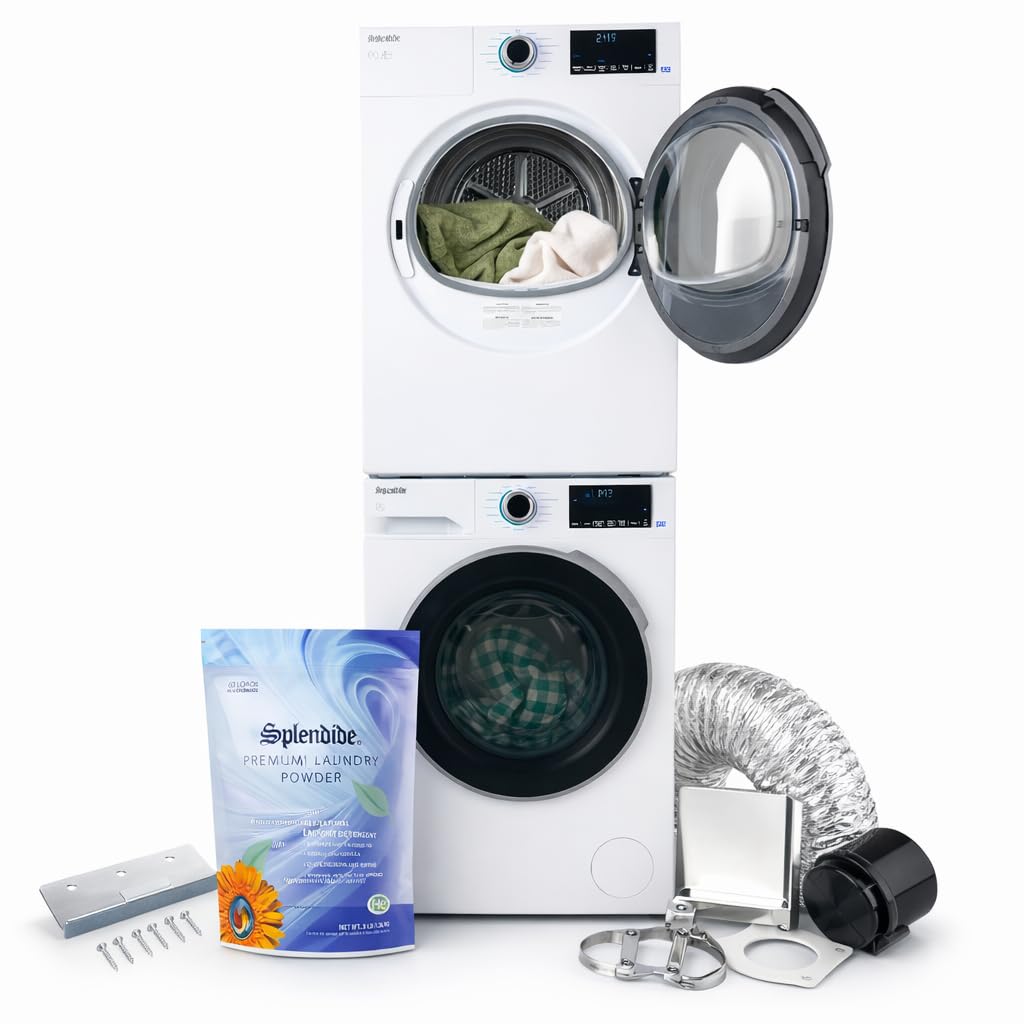
Two separate machines built for RV walls, with a vent kit and stack kit already in the box.
Splendide designs for rolling homes first, and this bundle shows it. You get a separate washer and dryer rather than one all-in-one drum, so you can wash a second load while the first is drying. The dryer carries 15 cycles with Opti Sensor moisture detection, which reads the load and stops when clothes are actually dry rather than running a fixed timer. Both doors are reversible on the dryer, and the pair installs stacked or side-by-side depending on your wall.
Two maintenance features matter for anyone living full time in a rig. An Automatic Winterization cycle handles the freeze risk that cracks plumbing in cold storage, and a Tub Fresh drum cleaning cycle keeps the washer from going musty between trips. The washer offers 15 wash cycles with touch controls, a Speed+ option, and adjustable temperature, spin speed, and soil level. Digital displays show live cycle status, and app compatibility lets you monitor a load remotely.
Specs run compact: 2.3 cubic feet of washer capacity, 23-inch depth, 23.5-inch width, and 33-inch height, with a 22.75-inch maximum door-open depth. The listing lists 15 drying cycles in the description while the spec panel lists 9 washing cycles, so confirm the exact cycle count on the product page if that number matters to you. At 4.0+ stars it holds up well for a niche machine, and performance is the trait owners praise most.
Winterization is the killer feature: an Automatic Winterization cycle protects the machine when your rig sits in cold storage.
Confirm before checkout: the description and spec panel disagree on cycle counts, so check the product page for the exact figures.
Suits the full-timer: an RV owner who wants separate wash and dry machines, app monitoring, and winter protection built in.
Not needed if: you live in a fixed home with a standard closet and no freezing season to plan for.
9. GE Unitized Spacemaker Washer and Dryer
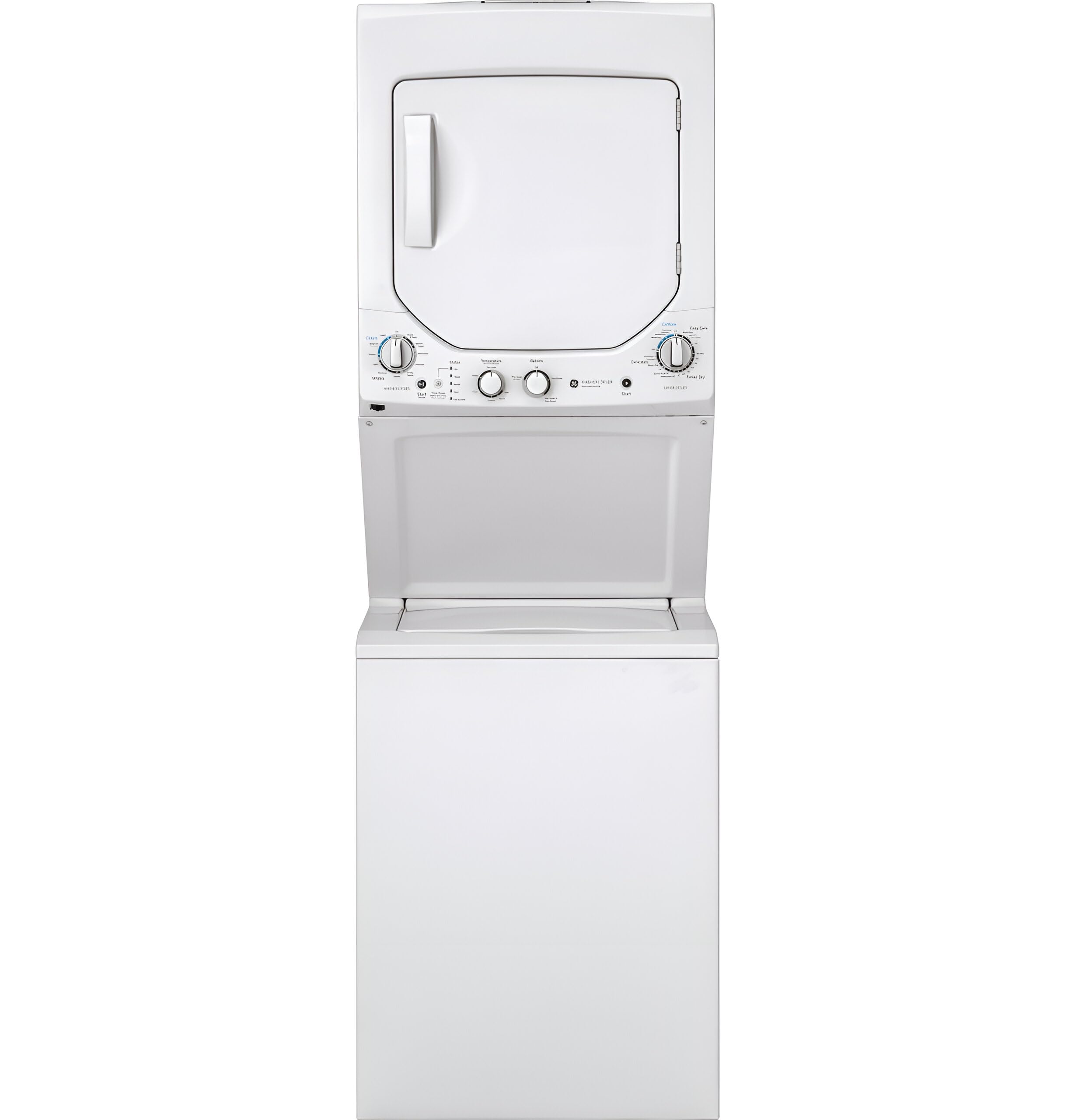
A 24-inch column that turns a closet into a laundry room without a remodel.
Twenty-four inches wide is the number that sells this machine. It combines a top-load washer and an electric dryer in one vertical unit, sized for apartments, condos, and closets where a side-by-side pair simply will not go. The washer holds 2.3 cubic feet and the dryer holds 4.4 cubic feet — and that washer figure is the one to stare at, because it is 2.9 cubic feet smaller than the 5.2-cubic-foot LG. Small loads are the deal here, not family-size bedding.
Use is deliberately simple: knob controls, cycles for Bulky, Delicates, Quick Wash, Rinse, and Spin, and a stainless steel wash basket. The dryer offers both auto dry and timed dry, so you can pick convenience or control. Space-saving is one of the traits owners value most, and it genuinely delivers — the unit is built to slot into a footprint two separate machines could never share.
The honest limit is performance and durability, both of which draw mixed feedback. Some owners find it works better than the larger traditional units they replaced; others run into repair issues within a short window. The maximum depth with the door open is 43 inches, so the closet needs swing clearance. It is also worth ignoring the listed 1-inch-by-1-inch-by-1-inch dimensions — that is a data error, not a real measurement.
Where it earns its place: a 24-inch closet or condo nook where nothing else on this list will physically fit.
Consider capacity first if: you regularly wash bedding, since 2.3 cubic feet fills fast.
10. BLACK+DECKER Front Load Washer, 2.7 Cu. Ft. with LED Display

Sixteen cycles in a compact front loader — more wash options than machines twice the size.
Compact does not have to mean bare-bones here. The drum is 2.7 cubic feet with a stainless steel tub, and the cycle list runs to 16 programs: My Cycle, Quick Wash, Delicates, Wool, Baby Wear, Sanitary, Cold Wash, Tub Clean, Normal/Cotton, Permanent Press, Heavy Duty, Bulky/Large, Sports Wear, Spin Only, Drain Only, and Rinse & Spin. A 1300 RPM (revolutions per minute) maximum spin speed pulls more water out before the clothes hit the air, which shortens drying time.
Everyday handling is thoughtful. Auto unbalance detection keeps an uneven load from thrashing, Add a Garment lets you toss in a forgotten sock mid-cycle, and Extra Rinse helps with sensitive skin. A Child Lock and Door Lock keep small hands out, and the transparent front lid lets you watch the wash. The easy-to-read LED panel and push-button controls are simple to learn.
Two things need honest mention. Vibration is the most-raised issue — this machine shakes during operation, so a solid, level floor and a firm anti-vibration pad are worth the small cost. Reliability feedback is mixed too. What saves it is the performance and size combination: it works well precisely because it fits where a full-size washer cannot, at 23.4 inches deep and 33.5 inches tall.
What makes it worth a look
- 16 wash cycles on a compact 2.7-cubic-foot front load drum
- 1300 RPM max spin pulls more water out before drying
- Add a Garment lets you rescue a missed item mid-cycle
- Child Lock and Door Lock for homes with small children
Plan around this
- Shakes during operation — needs a level floor and anti-vibration padding
- Reliability feedback splits, so a service plan is a reasonable hedge
- Washer only — no drying drum in this unit
The cycle-rich compact: a small home or city apartment where 16 programs and a 1300 RPM spin beat raw drum size.
Pick differently if: you want a rock-solid, shake-free machine above all else.
11. Midea Washer Dryer Combo 2.7 Cu. Ft. All-in-One Front Load

Load it once at night and wake up to dry clothes — the overnight cycle is the whole pitch.
Fit is the reason to start here. This ventless all-in-one slots into apartments and RVs at 23.4 inches deep, 25.2 inches wide, and 33.5 inches tall, and space compatibility plus fit are the traits owners value most. It runs on a standard 120V outlet with no venting needed, so a laundry room can exist where you never thought it could. A BLDC inverter quattro motor backs the machine with a 10-year warranty.
The overnight wash and dry cycle is the feature that changes your week. Set it before bed and the machine washes, then dries, while you sleep — the default dryer program runs 4 hours, and the combined wash-and-dry program runs 6 hours. There are 16 optional programs and 6 extra features, including Steam Care, Air Fluff, reload, quick wash, and washer clean. Air Fluff keeps clothes fresh for up to 8 hours after the dry cycle finishes, which matters if you cannot unload the second it stops. Estimated annual energy consumption is 90 kilowatt hours per year. The 1400 RPM spin speed helps pull water out before drying begins.
Here is the part you need to hear plainly. Drying time and stability are both negatives in owner experience — a full cycle can take hours, and the machine shakes and bangs when it spins hard. The listing explicitly says to remove the transport bolts before use, and skipping that step is a common cause of violent shaking. Treat this as a machine for small, patient loads rather than a drop-in replacement for a full-size dryer.
The overnight trick earns its keep: a 6-hour wash-and-dry program means clothes go in dirty at bedtime and come out clean and dry in the morning.
Size the load honestly: drying time and stability are the weak points, and transport bolts must come out before the first run.
Made for the small-space schedule: a tiny apartment or RV where a 120V ventless combo running overnight beats hauling laundry elsewhere.
Better to wait if: you need a quick turnaround dry on a full load of towels.
12. KoolMore 2-in-1 Washer and Dryer Combo

Ventless, 120V, and built to slide into an apartment corner without a duct run.
Start with the install story, because that is where this combo separates itself. It is ventless, so there is no duct to route through a wall, and it plugs into a standard 120V outlet. The unit measures 23.1 inches deep, 23.4 inches wide, and 33.5 inches tall, which is small enough for a dorm room or an RV bay. Size and suitability for apartments are the two things owners value most, and the 2.7-cubic-foot drum handles small loads well.
You load dirty clothes once and the machine washes and dries them without a transfer step. There are 16 washing cycles and 4 drying cycles, plus a fast 20-minute wash cycle for when you need something clean in a hurry. A 1300 RPM maximum spin speed wrings more water out before the dry phase begins. Push-button controls run the cycle list, and the stainless steel drum is built for repeated use. UL energy verified and UL listed, with a 1-year parts and labor warranty backing the purchase.
The drying phase is where expectations need calibrating. Drying performance draws mixed feedback, and drying time is a clear negative in owner experience — a load can take several hours and sometimes needs more than one session to finish. Vibration is the other mixed point, with the machine shaking noticeably during a spin. Give it a level, solid floor and keep loads modest, and it behaves far more predictably.
Right for a renter: an apartment or dorm where a ventless 120V all-in-one is the only legal option and small loads are the norm.
Look at a stacked pair instead if: you need a full load of towels dry in a single pass.
Know the Specs
Drum Capacity in Cubic Feet
Cubic feet is the volume inside the wash drum, and it is the single best predictor of how much you can wash in one go. A 5.2-cubic-foot drum like the LG front loader handles a duvet; a 2.3-cubic-foot washer like the GE Spacemaker handles a couple of outfits. When a listing quotes capacity in pounds instead, as the Westland does at 11 pounds, that is the weight of dry laundry per cycle rather than volume. Neither number is better — cubic feet measures drum volume, pounds measures dry laundry weight, so compare like with like.
Annual Energy Consumption in Kilowatt Hours
A kilowatt hour is one unit of electricity, roughly what a 1,000-watt appliance uses in an hour. Annual energy consumption adds those units up across a year of typical use, so a lower figure means a cheaper machine to run. The LG front loader is rated 105 kilowatt hours per year, while the LG WashTower is rated 607 kilowatt hours per year — the gap comes mostly from the dryer built into the tower. Use the annual kilowatt hours figure to compare running costs across machines.
Vented, Ventless, and Heat Pump Drying
A vented dryer pushes damp, warm air out through a duct to the outside. A ventless dryer condenses that moisture instead, so it needs no duct — handy in a condo or basement. A heat pump dryer, which the GE Profile uses, moves heat around a closed loop rather than generating it fresh, and it is a ventless design. Vented units generally dry faster; ventless units need no duct, so they fit condos and basements.
Agitator vs Impeller Washers
An agitator is the tall center post that pushes clothes through the water and scrubs soil loose — the Kenmore top loader’s Triple Action Agitator is one. An impeller is a low plate that swirls water and clothes. Agitators generally handle heavy soil better; impellers are gentler and free up drum volume. For mud, grass, and grease, the agitator’s scrubbing post still has the edge over an impeller.
Spin Speed in RPM
RPM means revolutions per minute — how fast the drum turns during the spin cycle. A faster spin flings more water out of the fabric, which shortens the drying phase. The BLACK+DECKER, KoolMore, and Midea machines all list 1300 RPM or 1400 RPM maximum spin speeds. A 1300 RPM spin is meaningfully drier clothes than a slow one, but it also creates more vibration, so a level floor matters.
Electrical Draw and Outlet Type
Compact combos frequently run on a standard 120V household outlet — both the Midea and KoolMore listings confirm this. The Westland lists an 11-amp draw. Full-size electric dryers typically need their own dedicated circuit. Check your breaker panel and outlet before you order, because adding a circuit is an electrician’s job, not a delivery-day fix.
Common Questions
Will a ventless washer dryer combo actually dry clothes properly?
How much laundry fits in a 2.3 cubic foot washer?
Do I need a special outlet for a washer dryer combo?
Is an agitator washer better than a front loader for stains?
Can I stack a washer and dryer in a narrow closet?
Why does my front load washer shake during the spin cycle?
Is an all-in-one combo cheaper to run than a separate pair?
How long does a wash-and-dry cycle take on a combo?
Do I need to winterize a washer dryer in an RV?
What does the soft-close lid actually do on a top load washer?
The Bottom Line
For most homes, the best basic washer and dryer is the Kenmore 4.4 cu. ft. Top Load Washer because its Triple Action Agitator does the heavy lifting on stains that smart machines miss, and 10 cycles plus a 28-minute Express Wash cover the rest of the week. It holds 4.5+ stars across 100+ ratings, and the crowd stays with it for good reason: it is a straightforward machine that cleans.
If you want maximum drum size with minimal electricity, the LG 5.2 cu. Ft. Front Load Washer gives you the biggest capacity on this list at 105 kilowatt hours per year. For a narrow closet, the GE Unitized Spacemaker fits a 24-inch opening when nothing else will. And for an apartment with no vent, the Midea Washer Dryer Combo lets you load at bedtime and unload in the morning.
One honest nudge: the lowest sticker price here is rarely the cheapest to run — check the annual kilowatt hours figure before you commit, because a washer rated at 105 kWh per year costs far less to run than a 607 kWh stack. Match the drum size to your typical load, the depth to your alcove, and the plug to your outlet, and any of these twelve will serve you for years.
How we choose
We do not accept paid placement. Every pick is matched to a real buyer and a real use-case; we do not hands-on test units.
Sources
Specifications: manufacturer listings and product documentation. Review insights: verified customer reviews, as of November 2026. Pricing: not shown on this page (it changes often); check the current price via the retailer link.
As an Amazon Associate, My Heart Lives Here earns from qualifying purchases. This does not affect which products we feature.