Heads up: This post contains affiliate links. As an Amazon Associate I earn from qualifying purchases, at no extra cost to you. Learn more
Specs are compiled from manufacturer listings and verified buyer reviews and can change over time — please confirm the key details on the product page before buying.
You want to know whether that flutter in your chest is worth worrying about, and you want to know it from your own kitchen table rather than a waiting room. That is what a home heart monitor does: it captures your heart’s electrical rhythm or your blood pressure numbers in a few seconds so you have something concrete to bring to your doctor. The picks below split into two jobs — rhythm catchers and pressure cuffs — and choosing the wrong type is the mistake most first-time buyers make.
This guide is built by comparing the manufacturers’ published specifications and the patterns across verified customer reviews, so you get each pick’s real strengths and trade-offs instead of marketing spin.
Some devices read your heart’s rhythm, others read the pressure inside your arteries, and a few do both. Here is how to pick an at home heart monitor that actually fits what you are trying to track.
Top Picks

How To Choose The Best At Home Heart Monitor
Decide first what you are measuring, then check the fit and the app. Those three things decide whether the device ends up useful or in a drawer.
Rhythm or pressure
An EKG monitor records the electrical signal of your heartbeat and flags irregular rhythms, while a blood pressure monitor squeezes your arm to measure how hard blood pushes against your arteries.
Cuff fit
An upper-arm cuff has to match your arm’s circumference, so measure around your bare upper arm before you buy — a cuff that is too small or too loose throws the numbers off.
App and syncing
A monitor that syncs to your phone keeps a running history you can hand to your doctor, while a device with no app relies on you writing numbers down.
Side-by-Side Comparison
| Model | Best For | Type | Power | Cuff / Fit | Amazon |
|---|---|---|---|---|---|
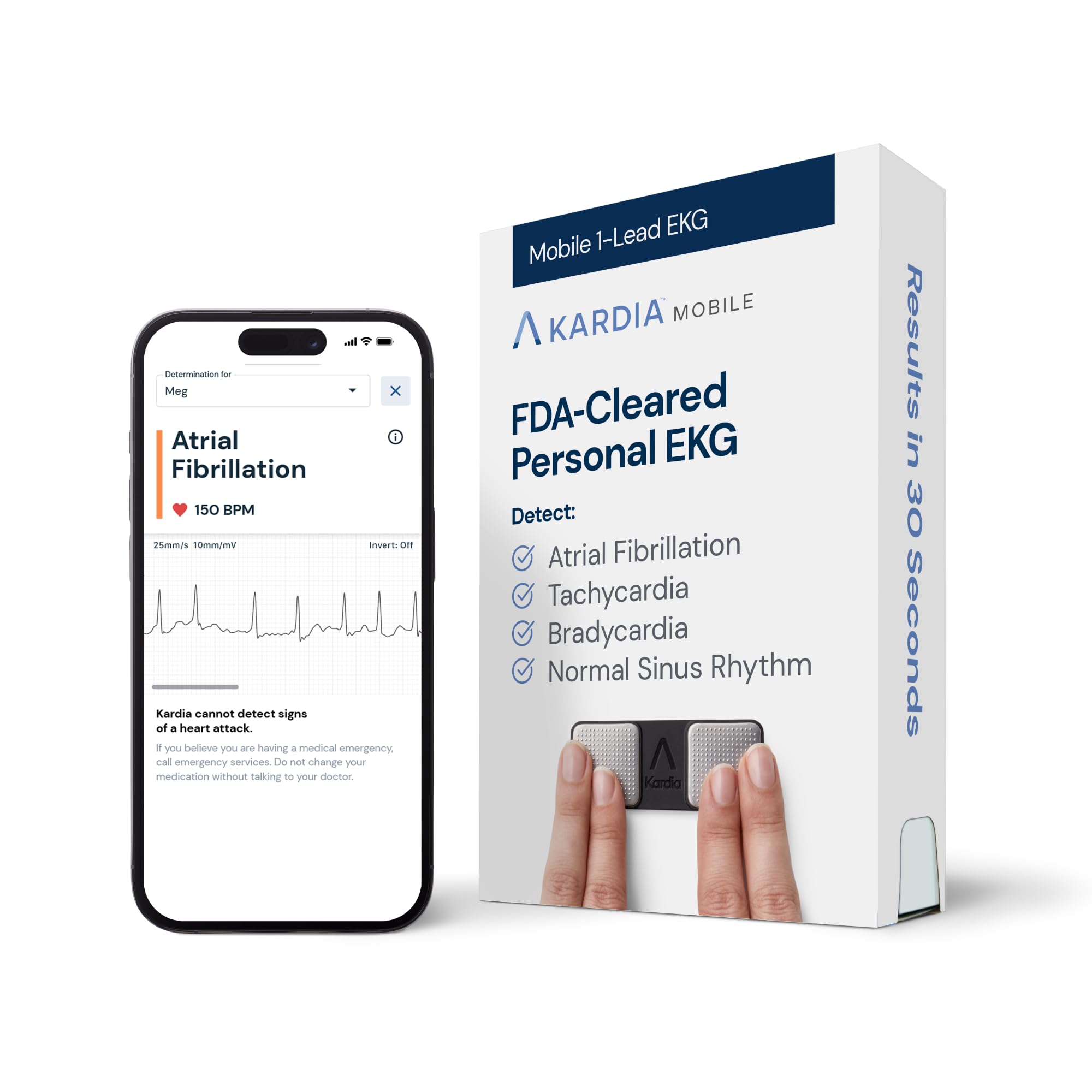
| KardiaMobile 1-Lead EKG★ Best Overall | Quick rhythm checks | Single-lead EKG | 12-month battery | Finger sensors | Amazon |
| EMAY Portable ECG MonitorTop Performer | PC and phone recording | Lead I ECG | Rechargeable lithium | Finger sensors | Amazon |
| Greater Goods Bluetooth BP Monitor | Trend tracking by app | Upper-arm BP | 4 AAA or AC adapter | 8.7–16.5 in cuff | Amazon |
| OMRON Gold BP Monitor | AFib screening with BP | Upper-arm BP | 4 AA batteries | 9–17 in cuff | Amazon |
| Polar H10 Chest Strap | Workout heart rate | Chest-strap HR | CR2025, 400 hours | M–XXL strap | Amazon |
| Garmin Index BPM | Multi-user home tracking | Upper-arm BP | 4 AAA, up to 9 months | 9–17 in cuff | Amazon |
| Dual Cuff Upper Arm Monitor | Two-arm-size households | Upper-arm BP | 4 AAA or USB-C | 8.7–16.5 and 12.6–20.5 in | Amazon |
Detailed Reviews
1. KardiaMobile 1-Lead EKG Monitor
Our pick — 4.0+★ from 83,500+ verified ratings; the strongest balance of quality and price.
Thirty seconds, two fingers, and a rhythm strip on your phone — with no subscription required.
This one is a single-lead EKG (an electrocardiogram that reads your heart’s electrical signal from one viewpoint) and it fits in a pocket at under an ounce. You rest two fingers on the silver sensors and the Kardia app records in 30 seconds, flagging Atrial Fibrillation, Tachycardia, Bradycardia or Normal Sinus Rhythm. It needs no Bluetooth, Wi-Fi or cord — just the device beside your phone.
What wins people over is how simple the whole ritual is — the app and setup carry the ease-of-use reputation, and the device is treated as a genuine home health tool rather than a gadget. The crowd backing is enormous, at 4.0+ stars across 83,000+ ratings.
The catch is compatibility. A meaningful share of buyers report the device simply won’t pair with certain phones, Android especially, so check your handset against the supported list before you order. Battery life runs 12 months on a lithium cell.
Where it earns its keep
- 30-second EKG with results shown in plain language on the app
- Pocket-sized and under an ounce, so it travels anywhere
The honest snag
- Phone compatibility is the recurring gripe — verify your model first
Reach for this if: you want a fast rhythm check at home or on the road and you own a supported smartphone.
Look elsewhere if: you need blood pressure numbers — this device reads rhythm only.
2. EMAY Portable ECG Monitor
The one that records to a laptop as readily as a phone, with a display you can actually see.
EMAY’s unit records Lead I ECG signals and shows your heart rate on a 1.8-inch display — that screen is a big part of the appeal, since unlike the KardiaMobile above you are not reading everything off a phone. It pairs by Bluetooth to a phone or plugs into a PC by USB, and the built-in lithium battery recharges rather than needing a swap. The whole unit weighs 80 g in a metal body.
Accuracy is the trait buyers single out most, and the effectiveness notes back it up — this is a device people describe as a real home health tool. It is not intended for anyone with an implanted pacemaker, and it does not replace a hospital diagnostic ECG.
What you are buying: an on-device screen plus dual PC and phone recording, which suits anyone who prefers a visible readout over a phone-only workflow.
Best fit: someone who wants a screen and a rechargeable battery, and may want to review recordings on a computer.
Think twice: if you have a pacemaker, this model is explicitly not recommended for you.
3. Greater Goods Bluetooth Blood Pressure Monitor
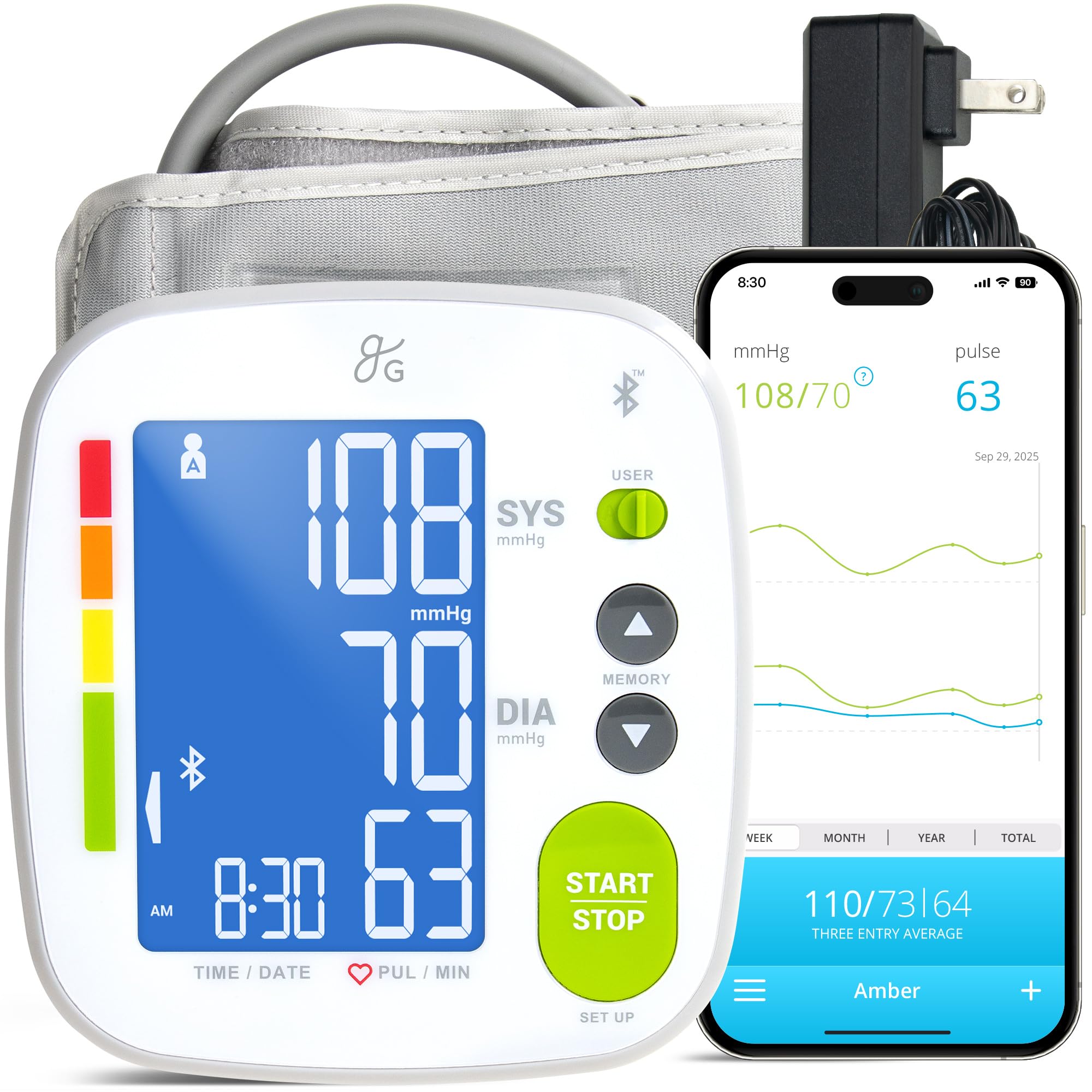
Set up in under five minutes, then let the app remember every reading for you.
The Balance Health app stores unlimited readings, tracks averages and trends, and exports reports you can share with your doctor — and it plugs into Apple Health. The adjustable cuff fits arms from 8.7 to 16.5 inches and has an artery alignment guide so the cuff lands in the right spot. Without Bluetooth, built-in memory still holds 60 readings per user.
As owners mention, The device is super easy to set up, taking less than 5 minutes to be ready for use, and customers consider it good value for money. There is irregular heartbeat detection built in, plus a large backlit display for dark-morning checks.
Accuracy is the honest caveat here — readings are broadly trusted but a portion of buyers find theirs don’t match their doctor’s numbers closely enough. Take it to an appointment and compare once.
The verdict: the strongest app experience in this group, and a sensible first cuff for anyone who wants a trend line rather than a single number.
Pick this one: if you want your readings stored and exported without any manual logging.
Skip if: you would rather compare a fresh reading against your doctor’s cuff first.
4. OMRON Gold Blood Pressure Monitor
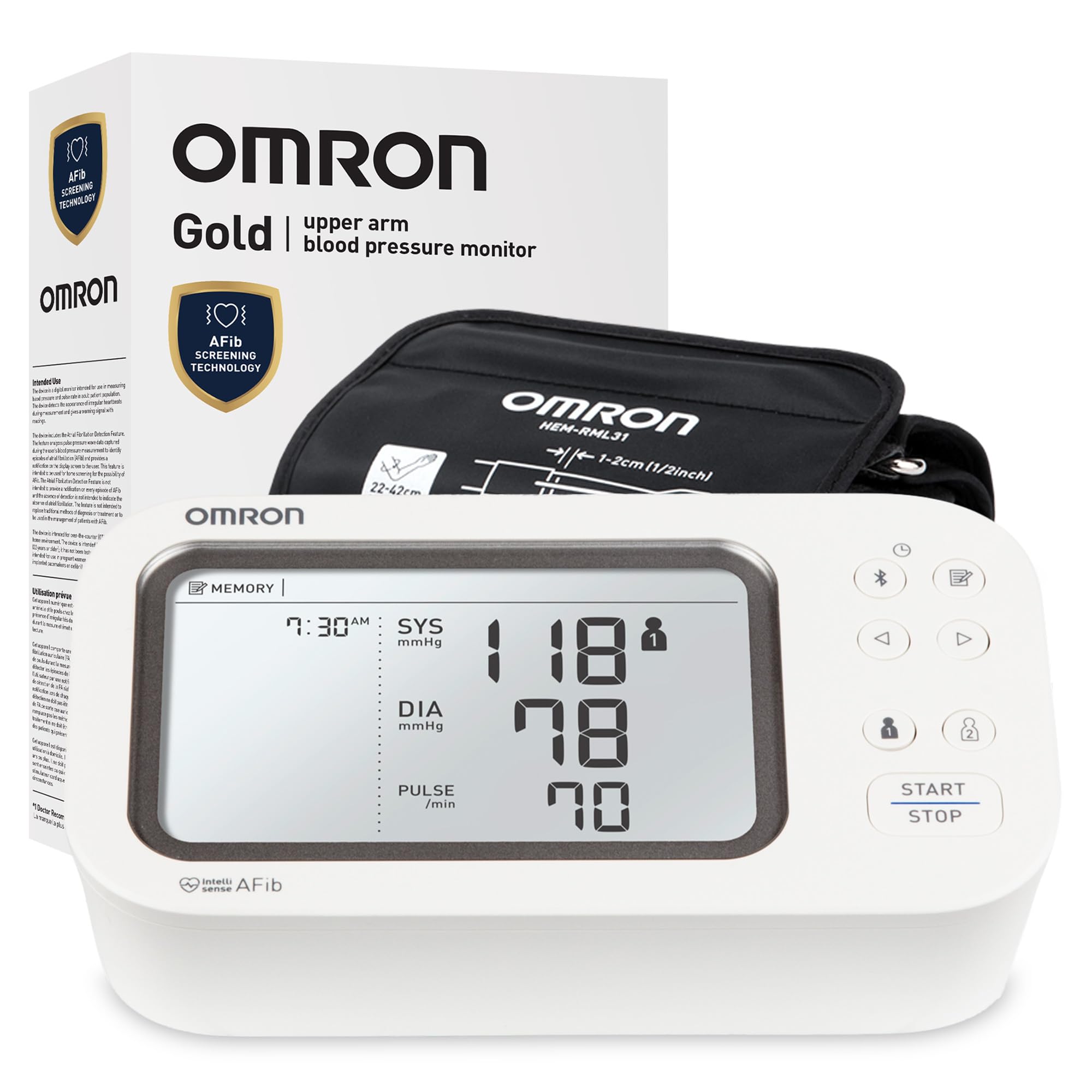
A pressure cuff that also watches the rhythm while it squeezes.
OMRON’s AFib Detection Technology screens for unusual heart rhythms every time you take a blood pressure reading, and a High Morning Average Indicator flags morning spikes. Two users can each store up to 80 readings, and the free OMRON Connect app syncs by Bluetooth to store trends and share reports, with Apple Health and Google Fit support. The D-ring cuff fits arms from 9 to 17 inches.
The recurring gripe is consistency — some units deliver steady readings, others need a second attempt to register at all. Pairing with the app also varies by phone. If you want rhythm and pressure from one cuff, this is the pick that does it.
Why it earns a spot
- AFib screening runs on every blood pressure check automatically
- Two-user memory with 80 readings each suits a couple sharing one cuff
What to expect
- Occasional failed readings mean you may need a second attempt
Go with this: when you want pressure numbers and a rhythm screen from a single arm cuff.
Not for you: if you want a guaranteed first-try reading every single morning.
5. Polar H10 Heart Rate Monitor Chest Strap
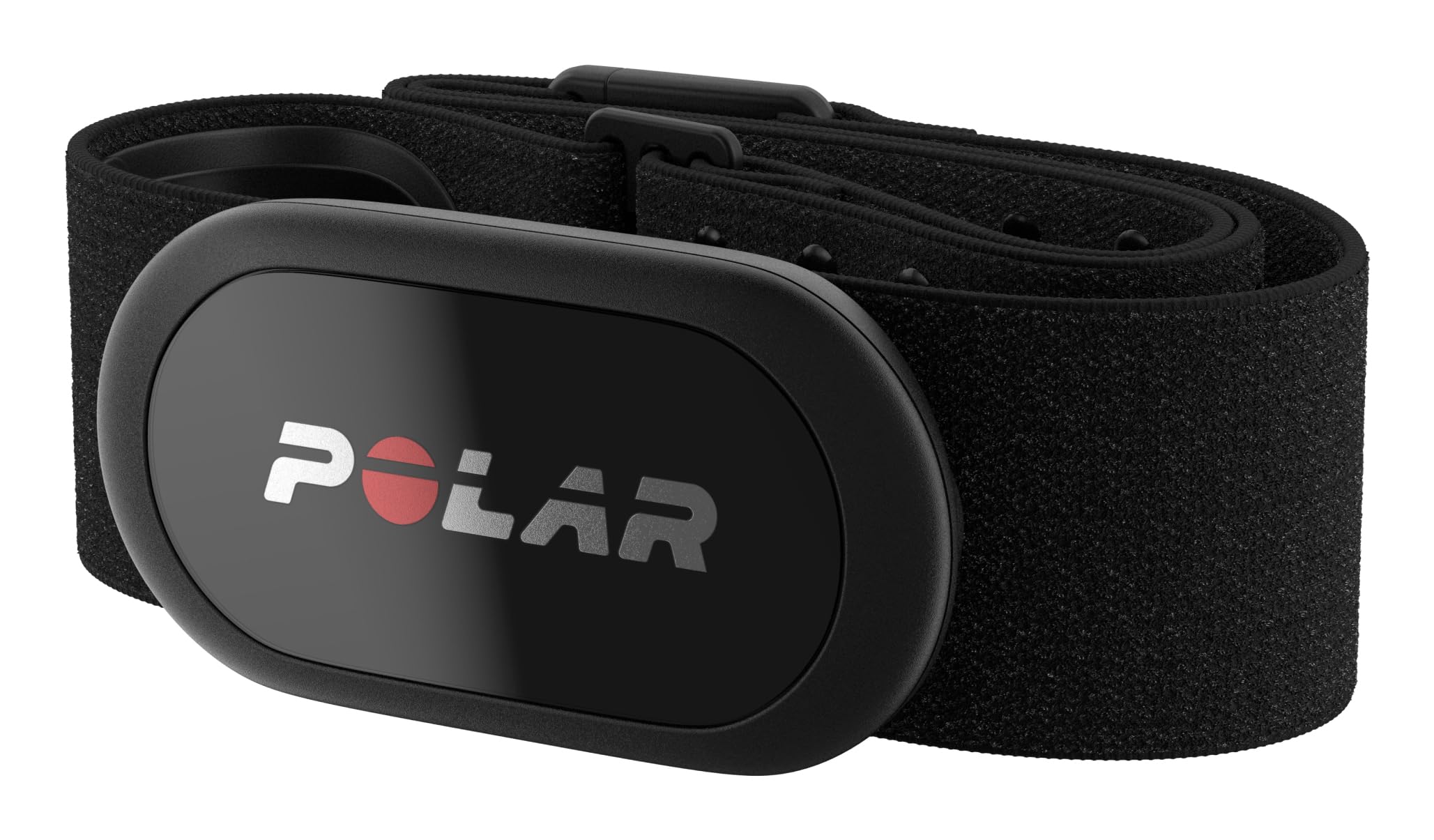
Built for the treadmill, not the nightstand — a chest strap that tracks effort mid-session.
The H10 sends continuous heart rate over Bluetooth, ANT+ and a 5 kHz signal, and you can run two Bluetooth connections at the same time. It is fully waterproof with internal memory for multiple hours of recording, and a CR2025 button cell is rated for 400 hours. The pro strap has improved electrodes, a buckle and silicone dots to keep it steady.
Functionality is the bright spot — it holds up across running and gym work. Durability and battery life are the honest trade-offs: straps can fray and cells get swapped more often than you would like, so treat it as a training tool rather than a decade-long buy. This is not a clinical monitor and it will not flag an irregular rhythm for your doctor.
Straight read: excellent for workout heart rate, the wrong tool for at-home rhythm screening — it measures effort, not rhythm.
Right for: runners and gym-goers who want accurate effort data feeding their watch or app.
Wrong for: anyone hoping to catch an irregular heartbeat for their cardiologist.
6. Garmin Index BPM Smart Blood Pressure Monitor

An all-in-one cuff for the whole household, syncing each person’s numbers separately.
Up to 16 people can each sync their own Garmin Connect account, which makes this the obvious pick for a family or a shared caregiving setup. Readings push to the app over Wi-Fi, and you can generate 7-day, 4-week and 1-year reports and export them as a PDF to email to a doctor. The adjustable cuff fits 9 to 17 inches, and four AAA batteries last up to 9 months.
Connectivity is exactly what buyers praise — it slots into Garmin Connect and the watch app without fuss, and the integrated display means you can read a result without your phone. Accuracy is the honest caveat, with a fair share of owners finding their numbers run high compared to a clinic cuff. Calibrate against your doctor’s reading before you lean on the trend.
Worth knowing: the report export is the standout — a year of readings in a PDF is genuinely useful at an appointment.
Choose it: if several people in one home need their own tracked history in a single app.
Consider another: if you are already happy with a simpler single-user cuff and app.
7. Blood Pressure Monitor for Home Use, Upper Arm, Dual Cuffs
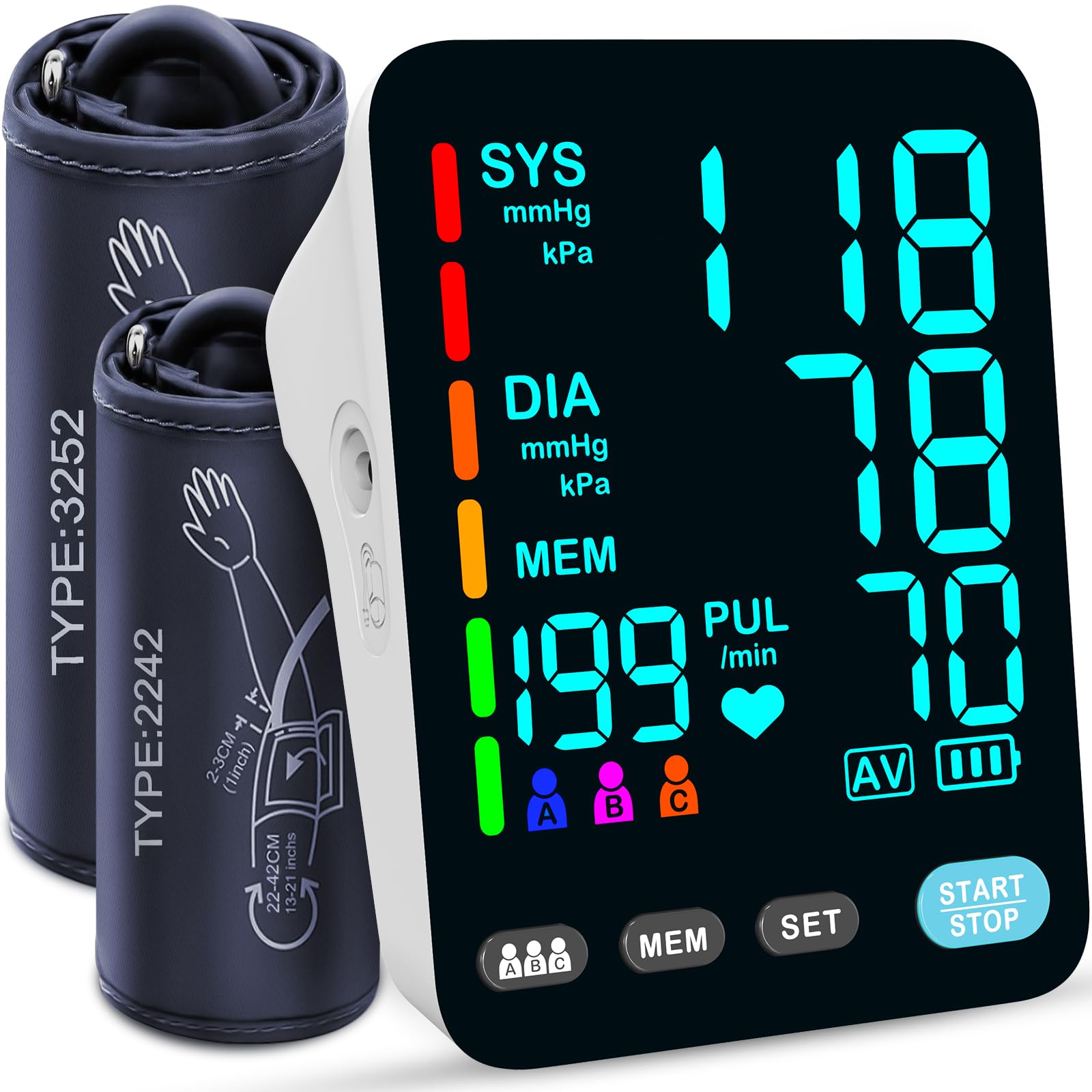
Two cuffs in the box so a big arm and a slim arm can share one machine.
The standard cuff covers 8.7 to 16.5 inches and the extra-large cuff covers 12.6 to 20.5 inches, so you never buy a second cuff separately. Wrap it, press START and the automatic inflation delivers systolic, diastolic and pulse in under a minute, on a large backlit display with a green-orange-red colour bar. Three user profiles each hold up to 199 readings, and it runs on four included AAA batteries or the included USB-C cable.
For scale, this unit is a much larger piece of hardware than the KardiaMobile — 12.98 in long versus 3.28 in, and 13 in wide versus 1.25 in — because it is a full arm-cuff station rather than a pocket strip. Quality and readability are what land with buyers, and the big digits help anyone with weaker eyesight. Readings can run inconsistent between checks, so sit quietly for five minutes and keep the cuff at heart level.
What stands out
- Two cuff sizes included, covering 8.7–16.5 in and 12.6–20.5 in arms
- Three profiles with 199 readings each for a shared household
Worth planning for
- Readings need a settled five-minute rest to stay consistent
Made for: a household where arm sizes differ enough that one cuff will not fit everyone.
Pass on it: if you want app syncing — this one keeps its history on the device.
Know the Specs
Leads and Cuffs
A lead is one viewpoint of your heart’s electrical signal, so a single-lead EKG captures a shorter strip than a hospital ECG and is a screening tool, not a diagnosis. A blood pressure cuff measures something different entirely — the pressure in your arteries — so pick the type that matches the number you want to know.
Cuff Range and Power
The cuff range in inches tells you which arms it fits, so measure your upper arm before buying. Power matters too: AAA or AA batteries are easy to replace anywhere, a rechargeable cell means a cable, and rated hours tell you how often you will be swapping.
Common Questions
Is a single-lead EKG as good as a hospital ECG?
Will a KardiaMobile work with my Android phone?
How do I know which cuff size to order?
The Bottom Line
For most people, the at home heart monitor that earns its place is the KardiaMobile, because it turns a 30-second finger rest into a rhythm strip you can email to your doctor. If you want pressure numbers with a rhythm screen built in, the OMRON Gold is the one. And for a household where arm sizes vary, the dual-cuff monitor saves you buying a second cuff later — and no device here replaces a real conversation with your doctor.
How we choose
We do not accept paid placement. Every pick is matched to a real buyer and a real use-case; we do not hands-on test units.
Sources
Specifications: manufacturer listings and product documentation. Review insights: verified customer reviews, as of November 2026. Pricing: not shown on this page (it changes often); check the current price via the retailer link.
As an Amazon Associate, My Heart Lives Here earns from qualifying purchases. This does not affect which products we feature.