Heads up: This post contains affiliate links. As an Amazon Associate I earn from qualifying purchases, at no extra cost to you. Learn more
Specs are compiled from manufacturer listings and verified buyer reviews and can change over time — please confirm the key details on the product page before buying.
You want the pink jug that keeps your water lines from splitting on the first hard freeze — and the right one depends on what you are winterizing. A potable water system, a hydronic heating loop, and a diesel engine all take different fluids, and pouring the wrong one in is the expensive mistake this whole category is built around. Below you get seven picks separated by what they actually protect, with the dilution math and the temperature ratings spelled out in plain words.
This guide is built by comparing the manufacturers’ published specifications and the patterns across verified customer reviews, so you get each pick’s real strengths and trade-offs instead of marketing spin.
Every jug here lists a burst-protection temperature, and the number only means something if you follow the mixing ratio on the label. This breakdown covers which fluid goes in which system, so you can pick the antifreeze for rv that matches your rig without guesswork.
Top Picks

How To Choose The Best Antifreeze for RV
The label is where most people get burned. Two jugs can both say “RV antifreeze” and still protect completely different things — one is meant for the drinking-water lines, another only for a heating loop, another for the engine block. Read the front of the jug before you read the price.
Match the fluid to the system, not the vehicle
Your freshwater plumbing, your hydronic heating system, and your engine cooling system are three separate jobs. A propylene glycol fluid rated for potable water lines goes in the freshwater side. A heating-system fluid is formulated for the closed loop that runs your furnace. Engine coolant, like a nitrite-free extended-life formula, stays in the radiator. Mixing these up is how a cheap jug turns into a repair bill.
Read the burst temperature and the dilution ratio together
A -50°F rating usually assumes the fluid is used as directed. Some jugs are ready to pour straight in; others are concentrated and need water added at a set ratio before that rating applies. A concentrate that makes a full gallon per bottle can be excellent value — but only if you actually do the mixing. Pour concentrate in undiluted and you spend more than you needed to; dilute a ready-to-use jug and you weaken the protection you paid for.
Check what it does to seals and fittings
Alcohol-free and glycerin-free formulas are worth looking for. Alcohol can dry out rubber components and plastic fittings over a season of storage, and some plumbing parts are more sensitive than others. A fluid that lists seal and gasket lubrication is doing extra work while it sits in the lines.
Side-by-Side Comparison
| Model | Best For | Protection Rating | Form | Volume | Amazon |
|---|---|---|---|---|---|
| Garden at Home RV/Waterline Antifreeze★ Best Overall | Freshwater lines and seasonal homes | -100°F | Ready to use | 1 gal (128 fl oz) | Amazon |
| Century Heat Transfer FluidHeating Loop Pick | Hydronic heating loops | — | Ready to use | 1 gal | Amazon |
| Prime Guard -50°F RV & Marine | Whole-rig bulk winterizing | -50°F | Ready to use | 6 gal | Amazon |
| Shell Rotella Nitrite-Free ELC | Diesel and gas engine cooling systems | — | Pre-diluted 50/50 | 1 gal | Amazon |
| RecPro RV Antifreeze (2 Pack) | Two-season stocking up | -50°F | Ready to use | 2 pack | Amazon |
| RecPro RV & Marine Antifreeze 1 Gallon | Mixing your own on a budget | -50°F when diluted | Concentrate (1:3) | 32 oz makes 1 gal | Amazon |
| RV & Marine Splash 619526 | Big rigs and long storage | -50°F | Ready to use | 6 gal | Amazon |
Detailed Reviews
1. RV/Waterline Antifreeze 1 gal
Our pick — 4.5+★ from 550+ verified ratings; the strongest balance of quality and price.
The coldest-rated jug here, and the one that earns the top spot on paper.
That -100°F figure is the headline, and it is a full 50 degrees colder than the -50°F protection on most of this list. For anyone winterizing in the northern states or the mountains, that margin is the difference between a comfortable buffer and a night of watching the weather app. It is also a single 128-fluid-ounce gallon of ready-to-use pink fluid, so there is no mixing step and no ratio to get wrong — you pour and you are done.
It holds 4.5+ stars across 500+ ratings, and the recurring theme is drain lines that come through winter intact, with owners reporting stretches of years with no issues at all. It is also formulated to prevent corrosion while it sits in the lines, which matters for copper and brass fittings that spend months wet. Use spans extend past the RV too: pools, boats, and seasonal cabins all appear on the label.
The honest catch is cost per jug. A single gallon is the least fluid per container on this list, so a full rig with a long plumbing run will need several. Some owners find that outlay steep, and it is fair — this is the convenience-and-margin pick, not the bulk-value pick.
Where it pulls ahead
- -100°F rating, the lowest temperature on this list, for real cold-climate buffer
- Ready to use at 128 fluid ounces, so there is no dilution math
- Formulated to prevent corrosion in the lines over the storage months
- Works across RVs, pools, boats, and seasonal homes
Where it asks more of you
- One gallon per jug means a long plumbing run needs multiple containers
- Cost per gallon sits at the higher end, a point owners raise honestly
Reach for this: if you winterize in serious cold, or you want the widest safety margin without mixing anything.
Look elsewhere: if you are flushing a long system and want the most fluid per container instead.
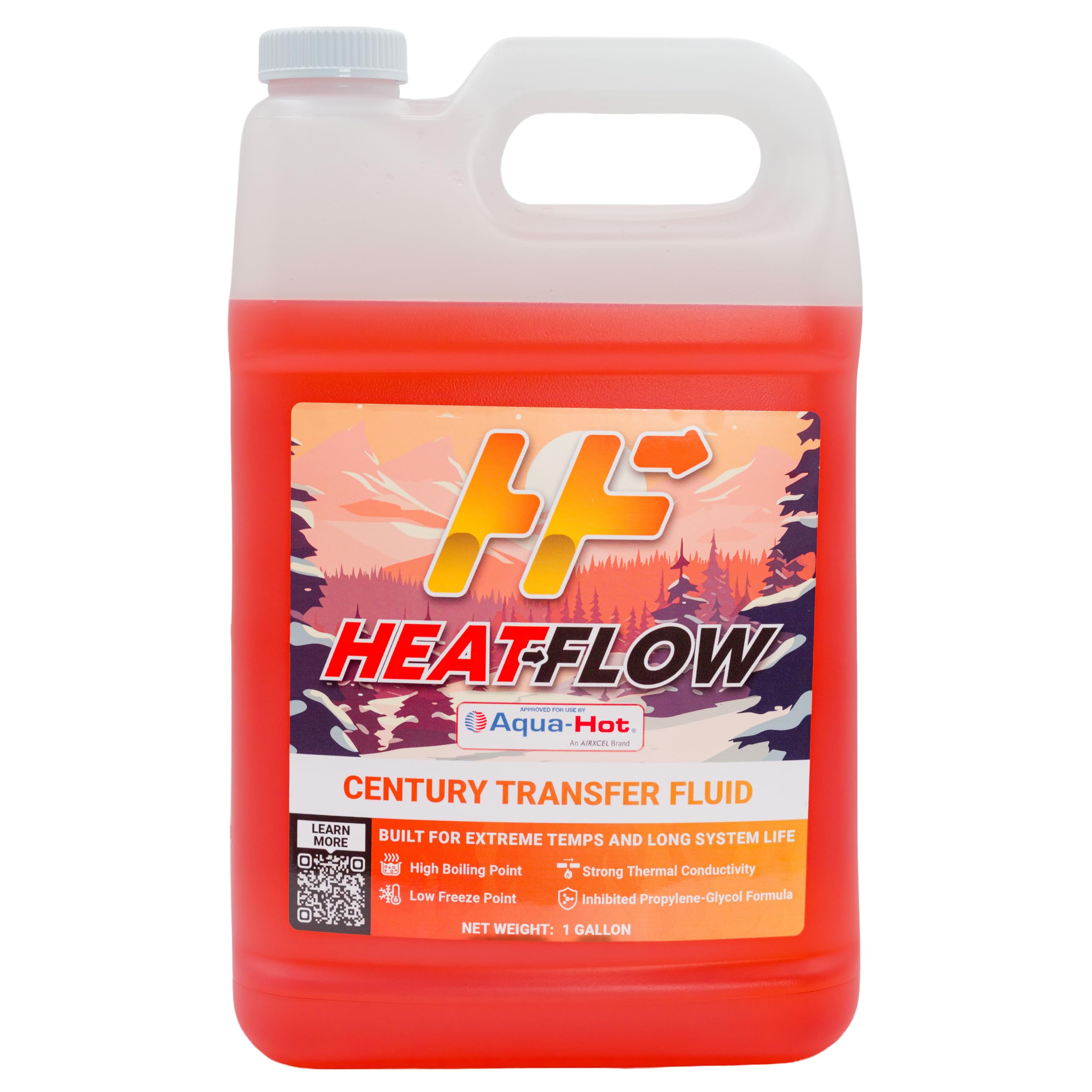
2. Century Heat Transfer Fluid 1 Gallon
Not a plumbing fluid — this one is built for the closed loop that heats your rig.
If your coach runs a hydronic heating system, the fluid in that loop is a different animal from what goes in the freshwater lines. This is a propylene glycol heat transfer fluid, and the label names Aqua-Hot, Oasis, and Timberline as systems it is recommended for. It is also the lightest container on this list at 4 pounds, which tells you it is a single gallon you can carry one-handed to the fill point.
The job here is moving heat, not just sitting in a pipe. Century formulates it with high thermal conductivity and a high boiling point, so it transfers warmth efficiently through the system across a wide temperature range. It also delivers a natural lubricant to seals and gaskets and sits at a pH between 8 and 10, which keeps the loop’s rubber and metal parts happier over time. The non-corrosive, non-toxic formulation is made from GRAS ingredients (Generally Regarded As Safe) with very low toxicity.
Here is the thing to get straight before you buy: this is a heating-system fluid, and it is not the pick for flushing your drinking-water lines. It comes in a ready-to-use gallon that needs no dilution, though the brand also offers a 32-ounce concentrated size that does require mixing — so check which one you are ordering. Compare that to the Prime Guard six-gallon jug: at 52.2 pounds against this container’s 4 pounds, the Century is the one you add to a heating loop rather than the one you haul around a whole rig.
What it is actually for: a closed hydronic heating circuit, where thermal conductivity and a high boiling point do the real work. The pH range and the seal lubricant are the details that matter for a loop that stays filled.
The honest limit: it is a specialized fluid, so if you were hoping for one jug to cover both your furnace loop and your freshwater taps, this is not that jug.
Suits you if: your RV has a hydronic heating system and the loop needs topping up or refilling.
Not the one for: freshwater line winterizing, which calls for a potable-water-rated fluid.
3. Prime Guard -50°F RV & Marine Premium Antifreeze | 6 Gallons
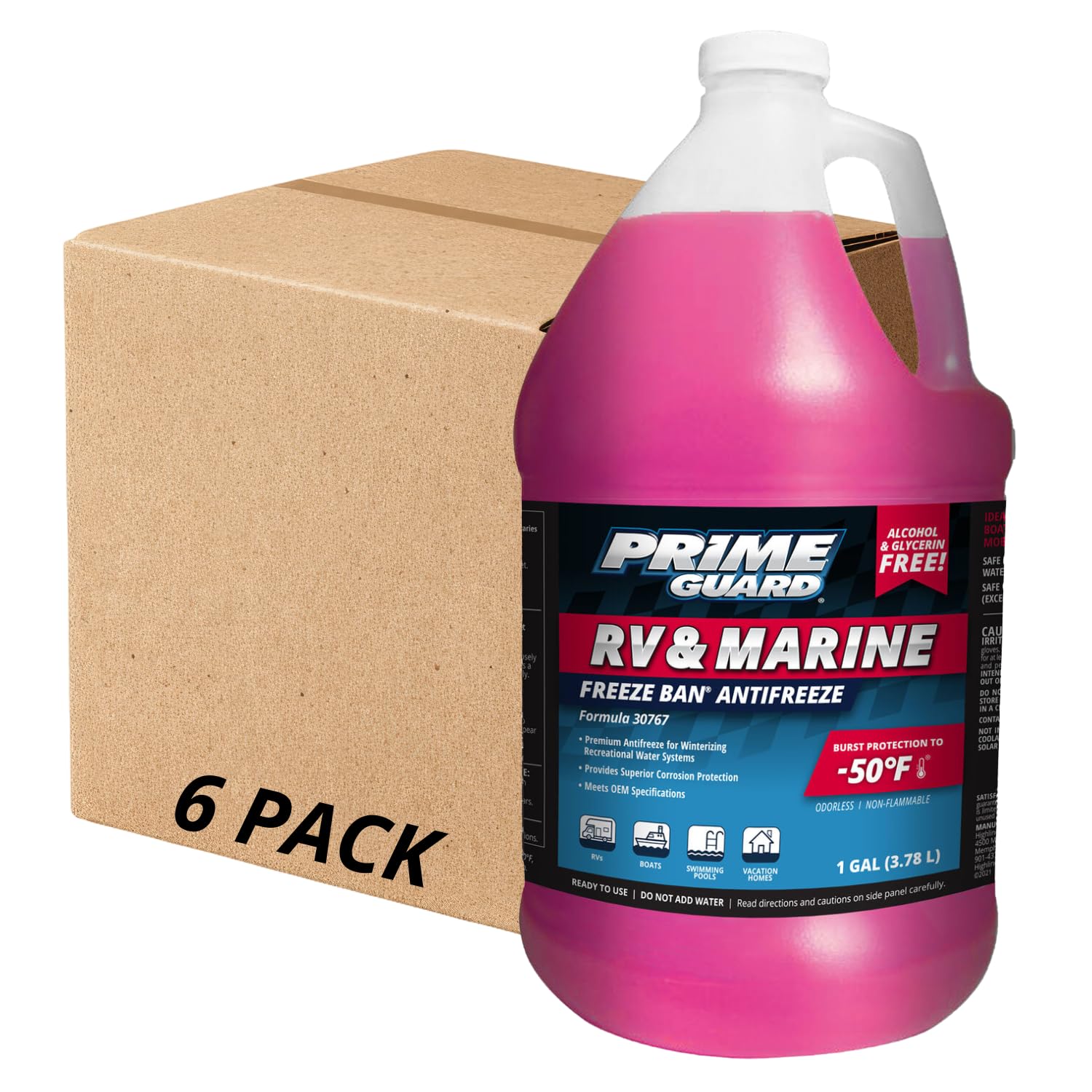
Six gallons in one case, for the owner who winterizes more than one thing.
Burst protection down to -50°F is the working number, and it comes in a case of six gallons — enough to flush a full freshwater system without stopping to order more. The 52.2-pound shipping weight tells you how much liquid you are dealing with: the package measures 19 by 13 by 12 inches, which is a real box to move, not a jug you tuck under one arm. Set that against the Century’s 11.97 by 7.32 by 3.78-inch package and the difference in bulk is obvious — this is the stocking-up format.
The formula is propylene glycol based and free of both alcohol and glycerin, which is what you want for rubber and plastic plumbing parts that sit full for months. It is rated safe for potable water systems and listed as suitable for recreational water systems and plumbing lines, while being safe on copper, brass, and most plastics except acetate. There is corrosion protection built in for plumbing components, marine engines, and water system parts. It is non-flammable and ready to use, so nothing to mix.
Buyers report it works as expected for the money, and one owner used it in a whole class A diesel pusher (a large motorhome with a diesel engine) with no problems. The catch is weight and storage: six gallons is a heavy case, and you need somewhere to keep it between seasons.
What buys it for most rigs
- Six gallons per case — enough for a whole rig’s freshwater system in one go
- Alcohol- and glycerin-free, which is easier on rubber and plastic parts
- Rated safe for potable water lines and plumbing systems
- Built-in corrosion protection for plumbing and marine parts
What to plan around
- A 52.2-pound case with a 19 x 13 x 12-inch footprint needs real storage space
- Not for acetate plumbing parts, so check what your lines are made of
Your match if: you winterize a whole rig plus a boat or pool and would rather buy once.
Think twice if: you have a small system, little storage, or acetate fittings in the plumbing.
4. Shell Rotella ELC Anti-Freeze + Coolant
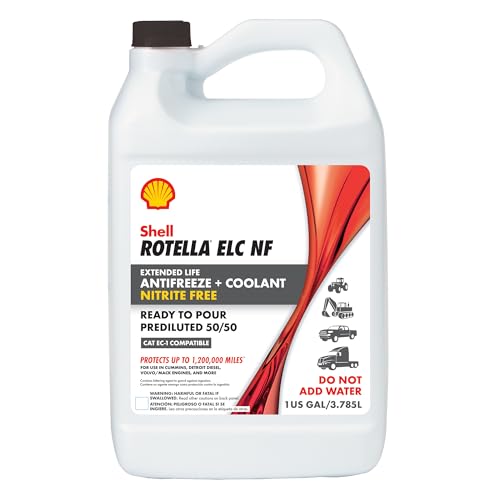
The coolant jug for the engine, not the sink — and it goes the distance.
Rotella’s extended-life ELC (extended life coolant) formula is built for long service intervals, with the brand rating it up to 1,200,000 miles in Class 8 over-the-road trucks. It is pre-diluted 50/50, so it pours straight into the radiator with no mixing. At 10.38 pounds it is a solid carry, and the package’s 11.17 x 6.6 x 3.9-inch footprint makes it easy to stash in a bay. Stack that against the Splash six-gallon case, and it is clear this is a one-gallon top-up format rather than a bulk flush.
The nitrite-free formula is the detail that matters most for your aluminum. It is designed for improved protection of aluminum components in modern engines, including brazed aluminum heat exchangers, and it guards against cylinder liner pitting from cavitation as well as corrosion of all engine and cooling system metals. It works with diesel, gasoline, and natural gas engines, plus light-duty passenger cars and pickups, so a single jug can cover a tow vehicle and a generator.
Reviewers rate it highly for build quality and compatibility, with even a Ducati 848 Evo named as a case it suited. One thing to keep straight: this is engine coolant, not plumbing antifreeze. It has no business in your freshwater lines.
Why it earns its place: the pre-diluted 50/50 mix means you top up the radiator and close the hood, and the nitrite-free chemistry protects the aluminum parts that modern engines lean on.
The line you must not cross: keep this in the cooling system. Freshwater lines need a potable-water-rated fluid like the Garden at Home jug.
Buy it for: topping up or refilling the engine cooling system on a diesel pusher, a gas coach, or a tow vehicle.
Not for: winterizing the water lines, sinks, or holding tanks.
5. RecPro RV Antifreeze -50°F Protection Non-Toxic (2 Pack)

Two jugs, one order, and a formula that looks after your seals while it waits.
RecPro rates this for burst protection to -50°F, which is the standard bar for a freshwater winterizing fluid. The two-pack format is the practical part: it is enough for many coaches in one order, so you are not making a second trip mid-job. The formula is made from materials considered non-toxic and is septic safe, so what you flush through the lines is not a hazard downstream.
Where it earns trust is the plumbing compatibility. It will not harm steel, plastic, copper, or brass plumbing, and it lubricates seals and gaskets as it works — a real help for fittings that sit wet for months. It is also listed as safe for marine engine blocks, so the same jug can handle a boat’s raw-water side. Owners mention it holds up through freezing winter camping nights without a burst line.
The catch worth knowing is cost. A two-pack is convenient but the per-gallon math is one of the pricier ways to buy, and the value question is the one that gets the most debate on this pick. If you winterize a single compact rig with short plumbing, a bulk case will stretch further.
What makes it easy to live with
- -50°F burst protection at the standard bar for freshwater lines
- Lubricates seals and gaskets while it sits
- Will not harm steel, plastic, copper, or brass plumbing
- Septic safe and safe for marine engine blocks
The trade-offs
- Per-gallon cost is on the higher side against bulk cases
- A two-pack may overshoot a very small system
Best fit: a mid-size coach where two gallons covers the job and you want one clean order.
Instead consider: a bulk case if you winterize often or run long plumbing.
6. RecPro RV & Marine Antifreeze | -50°F Protection | 1 Gallon

A 32-ounce bottle that turns into a full gallon once you add water.
This is the concentrate on the list, and the mixing ratio is the whole story. You dilute it at 1:3, and a single 32-ounce bottle yields a full gallon of ready-to-use fluid — so a smaller bottle covers the same ground. The -50°F burst protection applies once it is diluted as directed, which means the mixing is not optional. Get the ratio right and you are winterizing a whole system from one small, easy-to-store bottle.
RecPro built this one alcohol-free, which matters for the plastic fittings and rubber components in your plumbing — no drying or cracking from a solvent sitting in the lines all winter. It is non-toxic and compatible with septic systems, so it is suited to cabins, pools, RVs, boats, and off-grid setups. The same winterizing protection you would get from a ready-to-use jug, just in a smaller bottle you mix yourself.
Here is the honest math: the quality and winter protection are solid, but the value depends entirely on you doing the dilution. Fail to mix it and you are pouring concentrate down the drain. Mix it right and this is one of the more efficient ways to buy, since one bottle fills a gallon jug.
The smart move: keep a clean gallon jug on hand, mix 1:3, and one 32-ounce bottle fills it. That is a full gallon of -50°F protection from a bottle that stores in a cabinet.
The one thing to nail: the ratio. The -50°F rating is a diluted figure, so measure rather than guess.
Worth grabbing if: you do not mind a little mixing and want a compact bottle that makes a full gallon.
Skip the shortcut: if you would rather pour straight from the jug, pick a ready-to-use fluid instead.
7. RV & Marine Splash 619526 RV/Marine Antifreeze, 6 gal, Pink
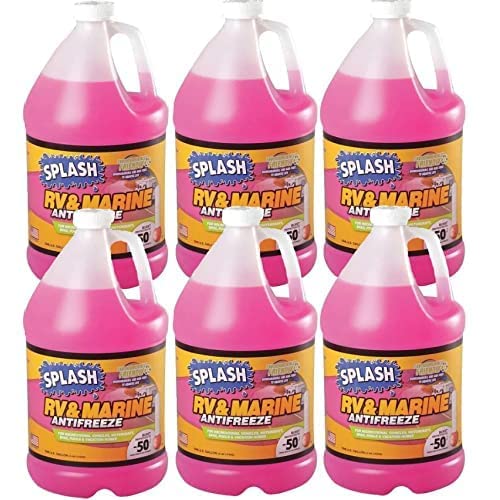
Six gallons of plant-derived pink fluid for the rig that takes a lot of flushing.
Burst protection to -50°F, six gallons in the case, and it is ready to use with nothing to mix. The 49.9-pound shipping weight tells you this is a full case, not a top-up jug. The plant-derived additive is the standout: it is formulated to improve user safety compared with ethylene glycol-based products, and it is listed as safe for incidental contact with people, pets, and wildlife. For anyone with kids or dogs around the campsite, that is a meaningful distinction.
The fluid is also readily biodegradable and listed as non-toxic to aquatic life, which suits the boat and marine side of the label. Beyond that, it covers the usual ground: RVs, boats, spas, pools, and vacation homes. It is ready-to-use, so you pour it in and move on. It is bought for anti-freezing performance, and it delivers at its -50°F rating.
The recurring note across this category — and on this pick in particular — is cost. Six gallons is a big outlay in one go, and the value is the thing that gets debated most. That is fair, but spread across a full boat, pool, and coach, it makes a different kind of sense. It is the “one case, all season” pick rather than the cheapest single jug.
What it does well: plant-derived, non-toxic to aquatic life, and safe for incidental contact — plus six gallons of ready-to-use pink fluid for a whole rig and a boat.
The question you will ask: do you need this much fluid at once? If you winterize one small system, a single gallon covers you.
Choose it when: you winterize a boat, pool, or vacation home alongside the rig and want a non-toxic case in one order.
Look at a single jug when: your system is compact or you only winterize once a year.
Know the Specs
Burst Protection vs Freeze Point
A -50°F or -100°F rating on RV antifreeze is a burst-protection figure — the point at which the fluid stops expanding enough to crack a pipe. It does not mean the fluid stays liquid to that temperature; it means your plumbing survives. Read the rating as the safety margin for your climate, and treat the coldest-rated jug as the one with the widest buffer for hard freezes.
Concentrate vs Ready-to-Use
Ready-to-use fluid pours straight from the jug. A concentrate is meant to be diluted — RecPro’s 1:3 formula turns a 32-ounce bottle into a full gallon, and the -50°F rating applies after dilution. Concentrate saves on shipping and storage; ready-to-use saves on mixing mistakes. Either way, follow the ratio on the label so the protection figure you paid for actually holds.
Propylene Glycol and Potable Water Systems
Most freshwater RV antifreeze is propylene glycol based, which is what lets a fluid be rated safe for potable water lines. The label will say whether it is suitable for drinking-water plumbing. Engine coolant and hydronic heating fluid are separate formulas and should not go into the freshwater side, even when the wording on the front looks similar.
Alcohol-Free and Seal Lubrication
Alcohol can dry out rubber seals and plastic fittings over a season in storage. That is why several picks here advertise alcohol-free or glycerin-free formulas, and why a fluid that lubricates seals and gaskets does extra work while it sits in the lines. It is a small label detail with a real effect on how long your fittings last.
Common Questions
Can I use the same antifreeze in my freshwater lines and my engine radiator?
Does a -50°F antifreeze mean my pipes will not freeze at 30°F?
Do I have to dilute a concentrate before it works?
What is the difference between RV antifreeze and engine coolant?
How much antifreeze does a typical RV freshwater system need?
Is RV antifreeze safe for septic systems and the environment?
Can I use RV antifreeze in a hydronic heating system?
Will alcohol-based antifreeze damage my plastic fittings?
Can I reuse leftover antifreeze next season?
The Bottom Line
For most owners, the Garden at Home RV/Waterline Antifreeze is the strongest all-around pick. Its -100°F burst-protection rating gives the widest cold-weather margin of anything here, so your lines stay protected in a hard freeze. It pours straight from the jug, and it is the crowd favorite at 4.5+ stars across 500+ ratings. If your coach runs a hydronic heating loop (a closed system that circulates heated fluid), the Century Heat Transfer Fluid is built for that closed system. And for a whole-rig flush where you want fluid in bulk, the Prime Guard six-gallon case saves the second trip.
How we choose
We do not accept paid placement. Every pick is matched to a real buyer and a real use-case; we do not hands-on test units.
Sources
Specifications: manufacturer listings and product documentation. Review insights: verified customer reviews, as of November 2026. Pricing: not shown on this page (it changes often); check the current price via the retailer link.
As an Amazon Associate, My Heart Lives Here earns from qualifying purchases. This does not affect which products we feature.