Heads up: This post contains affiliate links. As an Amazon Associate I earn from qualifying purchases, at no extra cost to you. Learn more
Specs are compiled from manufacturer listings and verified buyer reviews and can change over time — please confirm the key details on the product page before buying.
The weeks after a broken ankle are a strange kind of limbo. The cast comes off, but your ankle still feels loose, weak, and ready to roll over at any moment. The right brace gives you back the confidence to walk across a wet parking lot or step onto a court again; the wrong one rubs, slips, or won’t fit inside a shoe. This guide walks you through nine real braces and tells you exactly which one fits your recovery stage.
This guide is built by comparing the manufacturers’ published specifications and the patterns across verified customer reviews, so you get each pick’s real strengths and trade-offs instead of marketing spin.
You’ll see which braces lock rigidly for early rehab and which flex for the gym, plus the straps, splints, and sizing details that actually matter. Here is what separates a brace you’ll wear every day from one you’ll abandon in a drawer.
Top Picks
How To Choose The Best Ankle Brace After Broken Ankle
A healed bone does not automatically mean stable ligaments and muscles around the joint. After a fracture, the ligaments and muscles around the joint often need weeks of guided support before they trust themselves again. Match the brace to your recovery stage: a rigid brace that’s right for week two is wrong for the gym in month four.
Match the rigidity to your recovery stage
Early rehab wants a brace that limits sideways rolling. A semi-rigid shell or a pair of removable side splints does that job. As you rebuild strength, splints that pull out let the same brace turn flexible for walking and light sport. Pay attention to whether the side supports come out — that single feature is what lets one brace follow you from recovery into real life.
Check the closure before anything else
Laces, speed-lace, hook-and-loop, and figure-8 straps all secure the ankle differently. A figure-8 strap wraps under the heel and pulls it into a locked position, which is what resists the inward roll that re-injures a freshly healed ankle. A speed-lace closure lets you pull one cord tight in seconds — handy when your ankle swells during the day and you need to micro-adjust.
Get the size right or the brace fights you
Most braces on this list are sized by shoe size, not by measuring around your ankle. A brace that’s too large slides down inside the shoe and jams against your heel. If your foot sits at the bottom of a range with a narrow build, size down; at the top of a range or with a wide foot, size up. Sizing this way prevents most of the slipping and rubbing complaints you’ll see in reviews.
Side-by-Side Comparison
| Model | Best For | Closure | Weight | Removable Splints | Amazon |
|---|---|---|---|---|---|
| AGPTEK Lace Up Foot Stabilizer★ Best Overall | Everyday rehab with quick on-off | Hook & Loop, Lace-Up | 0.18 kg | Yes (2 side stabilizers) | Amazon |
| Velpeau Stirrup Ankle BraceRigid Stability | Rigid stirrup support for sprains | Hook & Loop | 9.44 oz | No (semi-rigid shells) | Amazon |
| Fitomo Figure 8 Strap BraceStays Put | Low-profile support that stays put | Hook & Loop | 0.19 kg | Yes (removable stabilizers) | Amazon |
| Aircast Air-Stirrup | Swelling control with air cells | Hook & Loop | — | No (semi-rigid shells) | Amazon |
| Med Spec ASO Speed Lacer | Fast lace-up that replaces taping | Lace | 6.4 oz | No | Amazon |
| Active Ankle T2 | Court sports like volleyball and cheer | Single strap | 7.04 oz | No (rigid U-shell) | Amazon |
| McDavid Bio-Logix | Competition-grade ankle roll control | Quick-wrap | 0.2 kg | No (TPU exoskeleton) | Amazon |
| BioSkin TriLok | Arch plus ankle support together | Figure-4 | 0.2 kg | No | Amazon |
| Zamst A2-DX | High-grade sprain and chronic instability | Adjustable | 5.44 oz | No (guard stabilizers) | Amazon |
Detailed Reviews
1. AGPTEK Lace Up Foot Stabilizer for Sprained Ankle
Our pick — 4.5+★ from 400+ verified ratings; the strongest balance of quality and price.
The brace that flexes from rigid rehab support to soft daily wear without buying a second one.
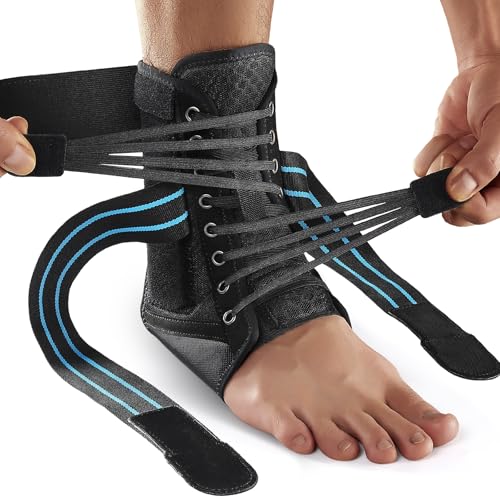
The crowd favorite here — 4.5+ stars across 400+ ratings — wins because it solves the exact problem a healed ankle faces. Its reinforced dual side stabilizers (two rigid inserts that block sideways roll) pull out when you no longer need them. Keep them in for early rehab, then slide them out for flexible walking and light sport. One brace, two jobs.
On-and-off speed is the other reason it tops the list. The quick-lace system with dual-direction hook-and-loop tabs (Velcro-style fasteners you press instead of tie) cinches in about a second. That matters on a swollen morning when your ankle has changed shape overnight, and the elastic laces adapt to a puffy or normal foot. At 0.18 kg it tips the scales just under the Fitomo brace below, which sits at 0.19 kg — a small margin that keeps it the lighter of the two inside a shoe.
The honeycomb ventilation zones (small mesh patches that let air through) and abrasion-resistant nylon Oxford shell keep it wearable through a full day, and the open heel is what lets your ankle move naturally instead of feeling pinned. The honest catch: the manufacturer lists hand wash only, so you can’t toss it in the machine. And with splints out, it’s a soft support — not a substitute for a rigid shell in the earliest, most unstable weeks.
Lace-up sprain support
- Removable splints switch it between rigid rehab and flexible wear
- Quick-lace fastening secures in about one second, no tangled laces
- Breathable honeycomb panels and open heel keep it comfortable all day
- Fits a swollen or normal ankle thanks to elastic laces that adapt
Straps need retying
- Hand wash only — no machine cleaning
- With splints removed it’s soft support, not rigid bracing
- One color option, and it comes in a single Medium size
sprained ankle pick: you’re past the cast and want one brace that does rigid protection now and soft support later.
bulky under shoes: your ankle is still in a phase needing a full semi-rigid shell around both sides.
2. Velpeau Stirrup Ankle Brace for Sprain and Ligament Injury
A stirrup-style shell that cups both sides of your ankle the way a cast once did.
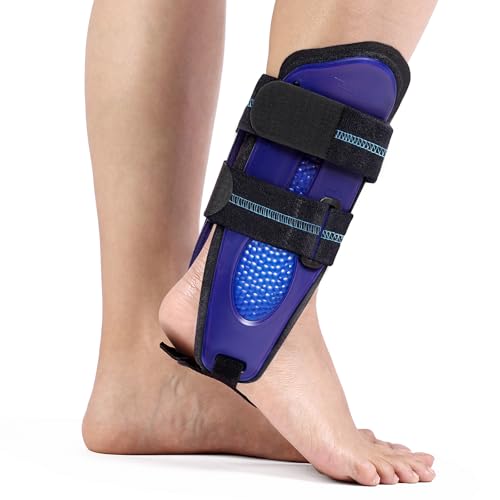
When you want a brace that genuinely feels like protection, this is the one. The medial and lateral malleolus — the two bony bumps either side of your ankle — sit in shell holes lined with gel, so the semi-rigid shells hold the joint without digging into bone. For a Grade I or II ligament injury, or a stable post-operative ankle, that stiffness is exactly what you’re paying for.
It sizes by foot length rather than ankle girth: the pads are built for a foot measuring 8 1/2″ to 11 1/2″ (22 to 29cm). If your foot lands in that window, the two large lateral straps on the buckle system balance pressure across the whole joint and resist slipping loose. It works on either foot, so you don’t need to order a dedicated left or right.
The trade-off is fit consistency once you’re in motion. A stirrup this structured can shift rather than hug, and the semi-rigid build takes a few wears to dial in with the straps. Get the size and strap tension right, and it delivers strong stability for recovery; rush that, and it can feel like it’s not sitting where you want. Think of it as the brace for the cautious, structured phase — not the loose everyday one.
Stirrup ligament bracing: the shell-lined gel pads protect the ankle bones and give uniform pressure across the whole joint.
Limited flex when walking: structured shells can shift during wear, so strap tension and correct foot-length sizing do the heavy lifting.
ligament injury fit: you have a Grade I–II sprain or a stable post-op ankle and want semi-rigid shell support.
rigid for daily wear: you want a soft brace you can forget you’re wearing.
3. Fitomo Ankle Brace
The low-profile brace built to stop the slipping that makes people give up on ankle support.
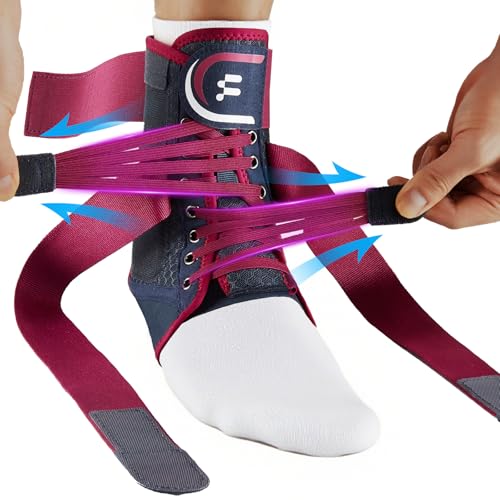
Instead of laces, this one runs a triple-lock system: a top compression strap, dual removable side stabilizers, and cross straps working together. The figure-8 strap wraps under your heel and lets you dial compression up or down depending on whether you’re walking the dog or back on the court. Its figure-8 strap and cross straps hold the heel in place, so it resists the constant readjusting that plagues loose braces.
At 0.19 kg it’s a touch heavier than the AGPTEK above, but that extra structure is what keeps it from drifting inside a shoe. It’s built to sit low and slip into most everyday shoes without a bulky look, and the polyester-and-nylon shell keeps it breathable through long hours. Slide the side stabilizers out when you want a softer daily feel; leave them in for recovery and sport.
The clear limitation: it’s a hand-wash-only piece and it comes as a single unit with one color option (rose), so there’s no size ladder to move up or down. That’s fine if you fall into the range it’s built for, but buyers with a notably wide or narrow foot should double-check before committing. For most average feet, though, this is the pick that removes the daily annoyance of a brace that won’t hold still.
adjustable support pick: anyone whose main frustration with old braces was non-stop readjusting.
fiddly insert swaps: you need a multi-size fit chart or a machine-washable brace.
4. Aircast Air-Stirrup Ankle Support Brace

The stirrup known for its air cells — two semi-rigid shells that squeeze swelling down while they hold the joint.
This brace draws on a long-standing design idea: contoured semi-rigid shells lined with Duplex aircell technology, which means air-filled pads that add gentle compression right against the ankle. That pressure is aimed at helping a puffy, post-injury ankle settle. The shells are shaped to hug the joint closely, so despite the structure there’s minimal bulk inside your shoe.
What wins people over is the build itself — the quality of the shells is the most-praised trait by a wide margin, followed by how well it functions as an everyday stabilizer. It handles a graded list of ankle problems in one product: acute injury, post-operative use, chronic instability, and sprains graded I, II, and III. That range is why it keeps showing up as a go-to for serious injuries.
The fit is the part to plan around. These are rigid shells, and the trade-off is rubbing against the outside of the ankle for some feet, plus the challenge of getting the bulk to sit comfortably in a shoe. Order the size that genuinely matches your foot, give yourself a couple of wears to break in the placement, and it becomes a reliable daily brace. Treat it as a structured companion for the swelling-heavy phase rather than a soft slip-on.
Air cell cushioning: aircell compression aimed at swelling plus contoured shells that keep bulk low in a shoe.
Pump bulb awkward: rigid shells can rub at the outer ankle and take some fits in the shoe, so sizing carefully matters.
swelling control aid: swelling-heavy recovery and post-op ankles that want active compression.
air leaks over time: feet that bristle at any rigid shell against the outer ankle bone.
5. Med Spec ASO Speed Lacer Ankle Stabilizer
Pull one cord, lock the heel — the taping replacement you can put on one-handed.
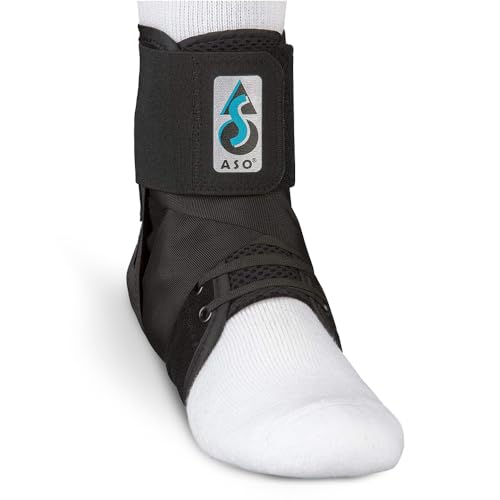
If taping your ankle every morning has worn thin, the Speed Lacer is the swap. A quick-pull hook-and-loop closure tightens the laces evenly in seconds and holds repeatable compression, so you’re not re-tying mid-game. The figure-8 stabilizing straps then wrap under the heel and resist the inward and outward roll that catches a weak ankle.
What people rave about is how well it works — functionality and support sit at the top of the pile, with the quick lacing itself a close favorite. The oversized finger loops let you dial tension one-handed, which is a real help when you’re adjusting around a swelling ankle through the day. It’s built bilaterally, so the same brace does left or right, and the low-profile shape slides into most athletic shoes.
The fit is the honest asterisk. It runs on laces and a snug wrap, and some feet need a few tries to land on the tension that feels secure without pinching — the mixed notes you’ll come across center on fit, not on function. At 6.4 oz it’s among the lighter laced braces here. Give it a practice run before game day and it becomes a dependable pre-hab and recovery tool.
quick on and off: you want taping-level support without re-tying laces all day.
tight fit needed: you’d rather have a pull-on wrap than something you lace up.
6. Active Ankle T2 Ankle Brace
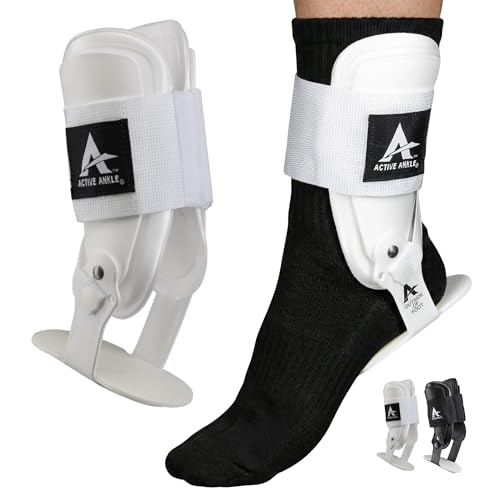
Built for the volleyball player who plants, pivots, and lands hard — and needs an ankle that won’t roll.
This is the brace you’ll see on the court making a difference during jumps and lateral cuts. A rigid U-shaped polypropylene shell minimizes side-to-side movement, and the anatomical bilateral hinge lets the joint flex naturally forward and back while it blocks the roll. It’s sized Small for men’s shoe 5–7 and women’s 6–8, with feather-light EVA padding that molds to your ankle for longer wear.
The single strap adjusts for either low-top or high-top shoes, and the whole thing fits on either foot. What wins people over is the build quality — it’s the most-praised trait by a wide margin, and the strong support is what volleyball and cheer athletes rely on for both prevention and post-sprain stabilization. The shell holds up to intense play without needing a fresh brace each season.
The fit is where you have to be honest with yourself. It’s also latex-free and hand wash only. Get it securely seated around your ankle before activity and it does its job — treat it as a sport brace first, a lounging brace never.
active sport use: volleyball, cheer, and court athletes who need rigid roll protection during play.
casual daily wear: everyday wear or feet that want a soft, not rigid, hug.
7. McDavid Bio-Logix Ankle Brace
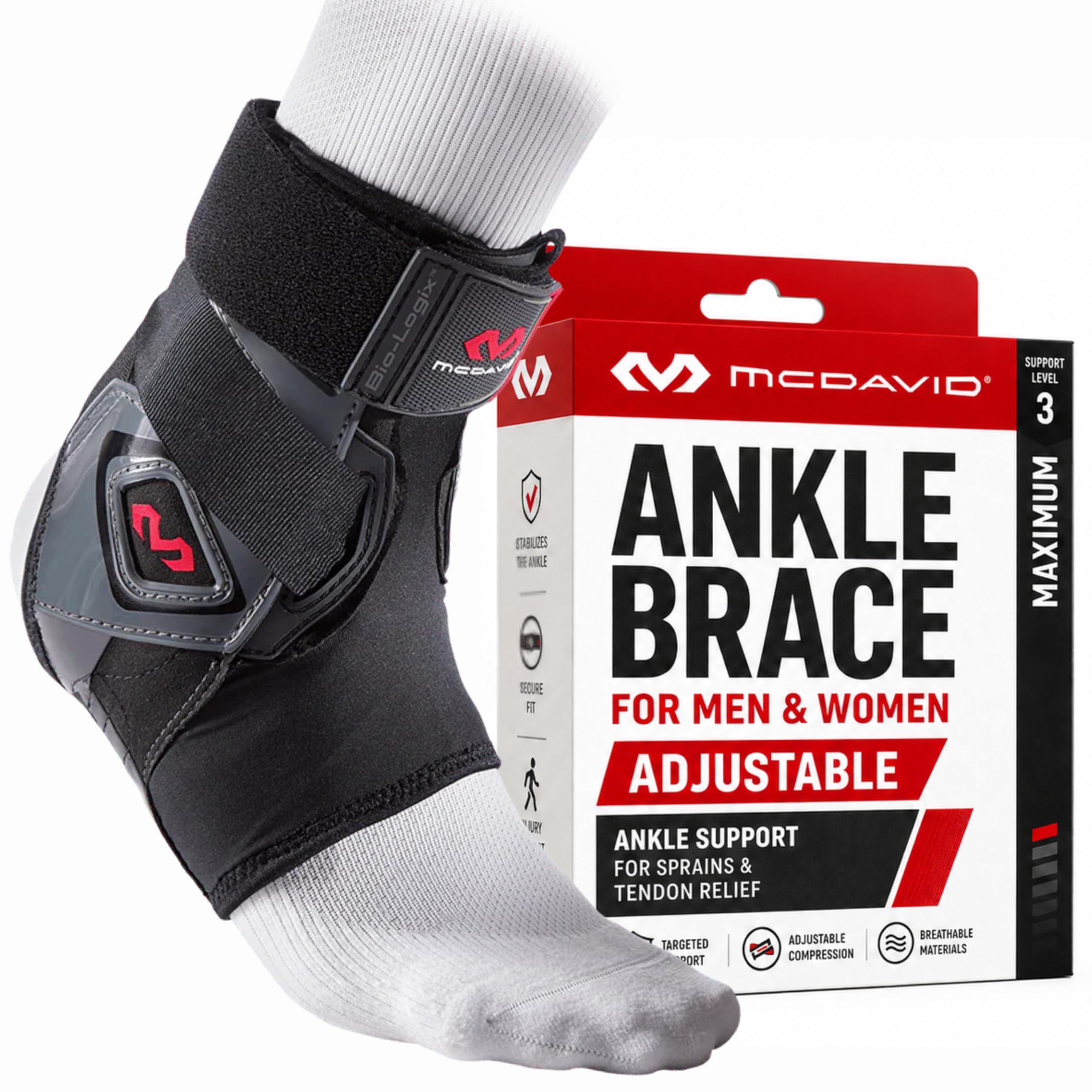
A molded exoskeleton and stirrup that fight ankle roll during cuts, jumps, and pivots.
When you’re moving at speed and want a brace that genuinely resists roll, the Bio-Logix steps up. A molded TPU exoskeleton (a rigid plastic frame over the ankle) and internal stirrup fight inversion, while the flex-link hinge lets your ankle bend naturally so you don’t feel frozen. Figure-8 and heel-lock straps add another layer that keeps the heel seated during hard cuts.
It’s built for the sports crowd — soccer, basketball, volleyball, running — and comes in a right-specific design with memory foam padding for a secure fit inside athletic shoes. The rear-entry sleeve and quick-wrap closure make it simpler to get on than a laced brace. At 0.2 kg it’s light enough to forget about once it’s fitted.
The trade-off lands on the fit and the padding. It’s side-specific (this is a right-foot build), so you need the correct side before ordering. The memory foam and rigid frame create a stiffer feel that some prefer and others find takes getting used to when they’re after a soft compression sleeve. Once it’s dialed in, this is the pick for actually playing — not just supporting — on a healing ankle.
Bio-Logix hinged fit: a molded TPU frame plus heel-lock straps that resist roll while the hinge keeps you mobile.
Pricey for beginners: confirm the correct side, because this is a right-specific design, and expect a firmer feel than a soft sleeve.
serious athlete pick: returning athletes who want roll resistance and natural motion in the same brace.
budget shoppers: you want a soft sleeve feel rather than a framed, structured brace.
8. BioSkin TriLok Ankle Brace

The brace that supports your arch and ankle together — not one or the other.
Most ankle braces stop at the joint. This one adds a FootLok strap that lifts and supports the arch while the figure-8 wrap stabilizes the ankle, so foot and ankle are handled as one system instead of separately. If your post-injury issues run alongside plantar fasciitis or tendonitis, that combination is what separates it from a plain compression sleeve.
It sizes by shoe size, not ankle circumference, and comes in Medium, Large, and Extra Large. At the bottom of a range with a narrow foot, size down; at the top or with a wide foot, size up. One bilateral design works on either foot and can be adjusted to control rolling inward or outward, and it’s low-profile enough to slip into trainers, flats, boots, and cleats. The materials are nylon and Lycra with a lightweight, breathable build.
Setup is the honest catch — four straps and a specific wrap path mean your first few wears take attention. Follow the four-step images and it becomes second nature by the second or third go. Some feet find it runs large, so the size chart is worth a close read before you commit. Handle the learning curve and it’s a genuinely different, arch-aware option for a tricky post-fracture ankle.
custom tension fit: people who want arch and ankle supported together, especially with foot-arch pain in the mix.
quick dressing needs: the four-strap wrap — it rewards a little practice before it feels quick.
9. Zamst A2-DX Ankle Brace
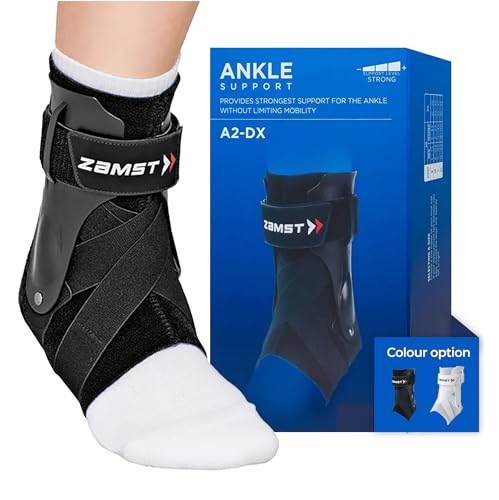
The premium pick for high ankle sprains — guard stabilizers built to hold a demanding joint.
If your injury sits on the high side of the ankle, or you deal with chronic instability, this is the step up. Stabilizing guards on both sides of the joint plus a connected plantar strap and cross strap pull upward from the heel in a stirrup action, adding support right where a high sprain needs it. It’s aimed at exactly the kind of roll that keeps coming back on a joint that never felt solid again.
The materials keep it wearable during play: thin, low-profile nylon, polyester, and elastane with good ventilation, so it breathes instead of turning into a hot wrap. It’s designed for tennis, football, volleyball, basketball, and gym sessions. At 5.44 oz it’s light for the level of support on offer, and it’s side-specific with Small through XL sizing — if your measurement falls between two sizes, step up to the larger.
The honest part is that this much structure asks a little of you. Comfort and the learning curve to put it on split both ways, and a stiff guard that holds a sprained ankle so firmly can feel tight until you find the right fit. Nail the size (remember: size up between sizes) and it delivers stability that stands up to hard play. The quality of the build is what owners praise most by a clear margin, and the support is a close second.
Premium A2-DX lockdown
- Guard stabilizers plus a connected heel-to-stirrup strap for high-sprain support
- Breathable nylon, polyester, and elastane keep it ventilated during play
- Low-profile at 5.44 oz for the support level
- Side-specific sizing in Small through XL for a closer fit
High cost barrier
- Firm support can feel tight and takes a wear or two to dial in
- Learning the strapping takes a little patience
- You need to order the correct foot side
elite performance pick: high ankle sprains and chronic instability where the joint needs serious holding power.
occasional users: a first brace on a mild ache, where a softer support would suit better.
Know the Specs
Semi-Rigid Splints and Shells
A splint or shell is a shaped piece of stiff material that runs along the side of your ankle and blocks it from rolling over. Semi-rigid means it gives a little, so it’s stiffer than fabric but softer than a cast. Removable splints let you pull them out for a looser feel once your ankle trusts itself, which is why a brace with removable side stabilizers can follow you from rehab into normal life.
Figure-8 Straps and Heel Lock
A figure-8 strap wraps under your heel and up across the top of the foot, pulling the heel into a locked position. That is what resists inversion — the inward roll that rolls a weak ankle. The tighter cross pattern also spreads compression evenly, so it doesn’t pinch in one spot. Speed-lace and quick-pull closures then let you adjust that tension one-handed as swelling changes through the day.
Weight and Shoe Fit
The braces here run from 0.18 kg to about 9.44 oz, so most sit light enough to forget once they’re on. The real fit question is whether the brace slides into your shoe: low-profile laced and soft braces fit most trainers, while rigid shells keep bulk low but can rub the outer ankle bone. Check that the brace sits flush at your heel before you add motion.
Sizing by Shoe Size
Most of these braces size by your shoe, not by measuring around your ankle. A range like men’s 5–7 is common. If you fall at the bottom of a range with a narrow foot, size down; at the top or with a wide foot, size up. Sizing by ankle circumference instead of shoe size is the number one reason a good brace slips, rubs, or never feels secure.
Common Questions
Is it okay to wear an ankle brace after my cast comes off?
Should I choose a rigid brace or a soft sleeve after a broken ankle?
How do I know if my ankle brace is the right size?
Will an ankle brace fit inside a regular shoe?
Can I wear an ankle brace during sports after my ankle heals?
How long can I wear my ankle brace each day?
Should I put my brace on over a sock?
How do I clean an ankle brace?
Can a figure-8 brace really stop my ankle from rolling again?
Is a lighter brace always better?
The Bottom Line
The best ankle brace after broken ankle for most people is the AGPTEK Lace Up Foot Stabilizer, because its removable side splints let one brace cover rigid early rehab and flexible everyday wear without buying a second. If you need a semi-rigid shell around both sides of the joint for a Grade I–II sprain, reach for the Velpeau Stirrup Brace. And if your ankle needs serious holding power on the court or for chronic instability, the Zamst A2-DX is the one to pair with your return to play. Start with the brace that matches your recovery stage and size it by the manufacturer’s chart.
How we choose
We do not accept paid placement. Every pick is matched to a real buyer and a real use-case; we do not hands-on test units.
Sources
Specifications: manufacturer listings and product documentation. Review insights: verified customer reviews, as of November 2026. Pricing: not shown on this page (it changes often); check the current price via the retailer link.
As an Amazon Associate, My Heart Lives Here earns from qualifying purchases. This does not affect which products we feature.