Heads up: This post contains affiliate links. As an Amazon Associate I earn from qualifying purchases, at no extra cost to you. Learn more
Specs are compiled from manufacturer listings and verified buyer reviews and can change over time — please confirm the key details on the product page before buying.
You already know the frustration: your horse comes out of a trim cycle with fresh chips and vertical cracks, and the bucket of “complete” hoof supplement in the tack room has done nothing. Amino acids are not a standalone miracle; they are the raw material your horse uses to build keratin, the protein behind hoof wall, tendon and top-line muscle. A supplement only helps if it delivers lysine, methionine and threonine in meaningful amounts and the horse actually eats it. Below you get the picks that do both, sorted by what each one really does.
This guide is built by comparing the manufacturers’ published specifications and the patterns across verified customer reviews, so you get each pick’s real strengths and trade-offs instead of marketing spin.
Feed-tag reading beats label-front marketing every time, because the guaranteed analysis tells you exactly how much lysine and methionine reaches the bucket. Here is the honest breakdown of the best amino acid supplement for horses.
Top Picks

How To Choose The Best Amino Acid Supplement for Horses
The first thing to settle is what you are actually trying to fix. Cracked, slow-growing hoof wall asks for biotin plus the sulfur-bearing amino acid methionine. A dropped top-line or a horse coming back into work after time off asks for lysine, threonine and often creatine. Those are different jobs, and no single bucket does both equally well.
Read the guaranteed analysis, not the front panel
A guaranteed analysis is the legally required breakdown of what is inside the bucket, listed in milligrams or percent. Look for lysine stated as a minimum percentage and methionine stated in milligrams. A bucket that lists “amino acid blend” with no numbers is telling you nothing. Farnam’s pelleted formula, for instance, guarantees methionine at 2,721 mg and lysine at a 1 percent minimum per 6 oz serving — that is the level of detail you want to see before you buy.
Match the form to how your horse eats
Powders disappear into a damp feed and can be sifted out by a fussy horse. Pellets are harder to sort around and usually carry an alfalfa base that most horses will eat without a fight. Palatability decides the dose: a pellet your horse sorts out and leaves in the tub delivers nothing. That is why taste and digestibility show up so often in owner feedback on pelleted products.
Size the supply against your horse’s weight
A “30-day supply” is calculated on one fixed serving size. A 1,200 lb horse on a full scoop will burn through a tub faster than a pony on half. Check the serving weight and the total item weight together, then do the rough math for your own horse before you commit to a large bag.
Side-by-Side Comparison
| Model | Best For | Form | Key Amino Acids | Supply / Weight | Amazon |
|---|---|---|---|---|---|
| Farnam Horseshoer’s Secret Pelleted★ Best Overall | Cracked, chipping hooves | Pellet | Lysine, Methionine | 30-day supply, 11 lb | Amazon |
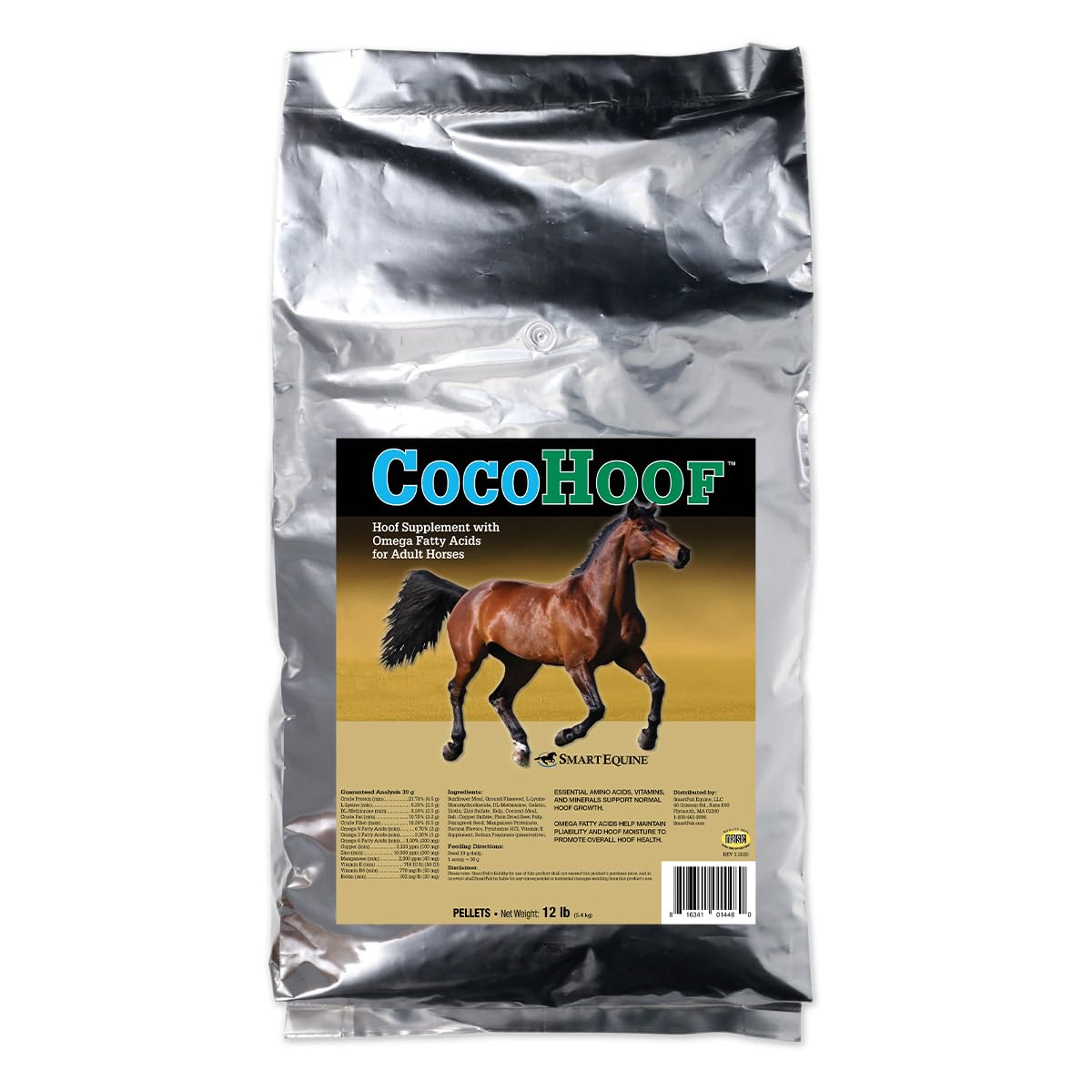
| SmartEquine CocoHoofMoisture Keeper | Hoof moisture and pliability | Pellet | Amino acids, Omega 3-6-9 | 12 lb | Amazon |
| SmartPak Tri Amino | Building top-line muscle | Powder | Lysine, Methionine, Threonine | 45 servings, 2.2 lb | Amazon |
| Feeds Equine Total Recovery | Working horses in recovery | Powder | 9 amino acids incl. lysine, leucine, arginine | 30 servings | Amazon |
| MuscleMx Muscle Supplement | Muscle mass and definition | Pellet | Lysine, Creatine, OKG | 32 servings, 3 lb | Amazon |
| Hoof Health Equine Supplement | Slow-growing, crumbling hooves | Pellet | D-Biotin, DL-Methionine, L-Lysine | 80 servings, 5 lb | Amazon |
| Life Data Labs Farrier’s Formula 2X | Serious long-term hoof rebuilding | Pellet | Phospholipids, omega fatty acids, amino acids | 11 lb | Amazon |
Detailed Reviews
1. Farnam Horseshoer’s Secret Pelleted Hoof & Biotin Supplements, 11 lb
Our pick — 4.5+★ from 850+ verified ratings; the strongest balance of quality and price.
The bucket that made methionine a number you can actually check before buying.
If you want one supplement to fix cracked, chipping hoof wall without adding a second scoop to the feed room, start here. Each 6 oz serving guarantees 2,721 mg of methionine and lysine at a 1 percent minimum — the two amino acids your horse uses to build the keratin in hoof wall. The same scoop also carries biotin at 15 mg, copper at 96 mg and zinc at 288 mg.
Copper and zinc are the trace minerals tied to hoof horn quality, and they arrive together here rather than in separate tubs. The alfalfa base does the rest of the work. Pellets mixed into grain are far harder for a horse to sift out than a powder, and this bucket is built around that idea. Across 800+ ratings it holds 4.5+ stars, and the crowd favorite label is earned — what wins people over is hoof health, by a wide margin over every other topic owners raise.
The honest catch is the supply math. Eleven pounds is sold as a 30-day supply on the standard serving size, so a big horse on a full scoop will run out sooner than the calendar says. The other thing worth knowing: this is a hoof, tendon and ligament formula, not a top-line muscle builder. If your horse’s real problem is a dropped back, the Tri Amino below is the more direct tool.
What earns it first place
- Guaranteed analysis states methionine at 2,721 mg and lysine at a 1% minimum per 6 oz — real numbers, not a vague blend
- Biotin at 15 mg per serving sits alongside copper and zinc for hoof horn support
- Alfalfa-based pellets mix into grain and are hard for a fussy horse to sort out
- Carries a 4.5+ star score across 800+ ratings, with hoof health the most-discussed topic
Where it asks something of you
- The 30-day supply figure assumes one fixed serving size — larger horses will go through it faster
- Built for hoof, tendon and ligament support, not for building top-line muscle
Worth your feed-room space if: your horse chips and cracks between trims and you want one pellet that covers amino acids, biotin and trace minerals together.
Look at the Tri Amino instead if: the goal is muscle and topline rather than hoof wall.
2. SmartEquine CocoHoof Hoof Supplement, 12 lb
For dry, brittle hooves that crack in summer rather than from work.
Some hooves do not split from stress — they split because they dried out. CocoHoof points at that problem directly, with omega-3, omega-6 and omega-9 fatty acids aimed at hoof moisture and pliability. Alongside them sit essential amino acids for hoof growth, trace minerals for structural integrity, and biotin with other B vitamins to support hoof protein synthesis. It is a 12 lb pelleted formula from a brand with over 25 years in horse health.
The contrast with Farnam is worth naming. Farnam spells out its methionine in milligrams; CocoHoof describes its amino acid content in broad terms on the listing. If you want to verify exact grams before you buy, that is a genuine gap here. What you do get is the fatty acid side of hoof condition, which a straight biotin-and-minerals bucket tends to skip.
Who this fits: horses on dry summer pasture or in sand pens where hooves go chalky, and owners who want fatty acids folded into the same scoop as the amino acids.
Read the listing carefully: the guaranteed analysis is not published on the product page, so ask the seller for the methionine figure if that number matters to you.
Reach for this one when: dryness and lost pliability are the visible problem and you want omega fatty acids in the bucket.
Skip the swap if: you already measure your horse’s methionine intake and need a stated milligram figure.
3. SmartPak Tri Amino, 2 lb, 45 Servings

Three amino acids, one job: rebuilding the muscle over the back.
This is the pick for the horse that has lost top-line after a layoff, a hard season or a heavy worm burden. Tri Amino delivers lysine, methionine and threonine — the three amino acids most often short in a hay-based diet — as a powder aimed at efficient protein production. Lysine is the one that limits everything else: without enough of it, the horse cannot use the rest of the protein in its feed.
The supply is the most generous of the two pouches here. Tri Amino gives you 45 servings from a 2.2 lb tub, while the Feeds Equine pouch beside it gives 30 — so you get more days of coverage from the smaller-looking container. At 4.5+ stars the feedback centres on effectiveness first and formula quality second, and the recurring theme is a horse filling out over the back and holding condition better through work.
Two real considerations. First, it is a powder, so a horse that sifts its feed will leave some behind — you lose the alfalfa-pellet advantage Farnam has. Second, this does no hoof work to speak of. If you are chasing cracks, you still need a biotin and mineral bucket separately.
The case for the powder: a clean three-amino-acid formula at 45 servings is a straightforward way to test whether your horse is protein-limited before you commit to a bigger hoof-and-muscle tub.
What to expect: results show over weeks of consistent feeding, and top-line changes are slow by nature — this is a nutrient fix, not a quick cover-up.
Best fit: a horse in work with a dipped back and a hay-heavy ration, where protein quality is the weak link.
Not the answer if: your horse’s issue is crumbling hoof wall rather than muscle.
4. Feeds Equine Total Recovery Supplement, 30 Servings
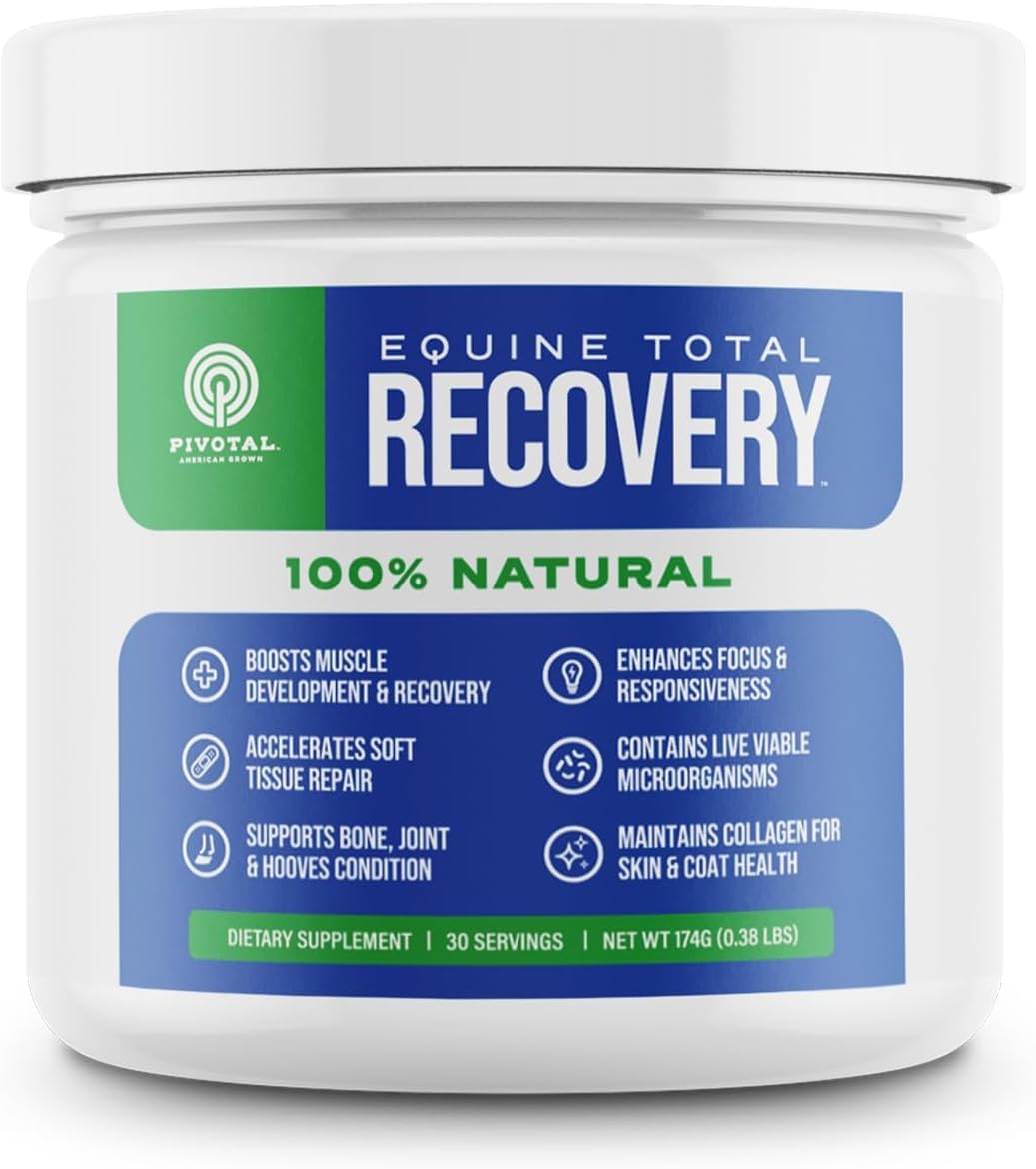
Nine amino acids plus a gut-support angle the hoof buckets do not touch.
Recovery after hard work is where this one lives. The formula carries nine amino acids — lysine, leucine and arginine among them — paired with probiotics and apple pectin. Leucine supports protein synthesis, arginine supports circulation, and the probiotics work on the gut side so the nutrients in the rest of the ration get used properly. For a horse in a training or competition schedule, that combination is a different proposition from a hoof-only tub.
It also suits a sensitive feeder. There are no added sugars and no artificial sweeteners in the mix, which matters if you are managing a horse that reacts to a rich feed. The container is a small one at 7.8 oz total, delivering 30 servings as a daily top dressing.
Be clear about the limit before you buy. This is a recovery and digestion formula, not a hoof builder — there is no biotin or trace mineral programme built into it. If cracks are your problem, the Farnam or Hoof Health buckets are the match. This is the one to reach for when the horse is working hard and you want the muscle and gut side covered.
Why it earns a slot: a nine-amino-acid profile with probiotics is a rarer combination than a straight biotin pellet, and the clean no-added-sugar formula suits horses on a managed ration.
The catch worth knowing: 30 servings goes quickly at one scoop a day, and small tubs mean frequent reordering.
This one earns the scoop in the feed room when: your horse is in full work and you want recovery and gut support in the same daily top dressing.
Hold off if: you need hoof wall and mineral support — this formula does not carry that job.
5. MuscleMx Muscle Supplement for Horses, 3 lb, 32 Servings

Four ingredients aimed at one thing: definition and mass, not hoof wall.
Where the Farnam bucket spreads itself across hoof, tendon and ligament, MuscleMx picks a single target and stays on it. The pellet combines lysine for building muscle proteins, creatine for energy supply to muscle cells, gamma oryzanol for weight gain and muscle formation, and ornithine-A-ketoglutarate (OKG) to help the body get past the metabolic steps that hold new muscle back. Three pounds gives you 32 servings.
It is milled in the company’s own Colorado facility, operating since 1946 — rare in a category full of rebadged blends. What owners respond to is the taste: a 3 lb sack of pellets that goes in the feed without a struggle is a real advantage when your horse is already on a busy ration. Effectiveness is the other theme that runs through the feedback.
The honest trade-off is focus. There is no biotin programme here and no fatty acid coverage for hoof moisture, so this is not a hoof supplement by any stretch. It also expects a horse in enough work to convert the nutrition into muscle — feed it to an idle horse and you mostly get weight rather than definition.
Why it holds a premium slot
- Lysine, creatine, gamma oryzanol and OKG in one pellet — a defined muscle-building stack rather than a general tonic
- 32 servings per 3 lb sack keeps the daily ritual simple
- Pellets that horses take readily, which decides whether the dose actually lands
What it does not do
- No biotin, no omega fatty acids — zero hoof-conditoning support in this formula
- Muscle gain depends on a horse in real work; idle horses tend to put on weight instead
Pick it for: a show or performance horse that needs more mass and definition over the back and hindquarter.
Keep looking if: you are chasing hoof quality — this formula has no hoof ingredients at all.
6. Hoof Health Equine Supplement, 5 lb Bag, 80 Servings

Eighty servings in a five-pound bag makes the arithmetic look after itself.
If hoof rebuilding is a long game — and it is, because a hoof wall grows down slowly — then servings per bag matter as much as the formula. This bag delivers 80 servings from 5 lb, which gives you a long, uninterrupted run at the problem rather than a tub that runs dry mid-cycle. The pelleted formula carries D-biotin, DL-methionine and L-lysine plus calcium and further minerals, aimed squarely at cracking, crumbling, delaminating or slow-growing hooves.
The biotin load does a second job too: it is the ingredient tied to skin condition and coat shine, so a dull coat often brightens alongside the hoof change. The brand has milled in-house in Colorado since 1946, and the label’s veterinarian-formulated, farrier-recommended claims are marketing until your own farrier sees the result.
Palatability is the variable to watch here. Some horses clean it up; others turn their nose up at the pellet, and a refused scoop helps nobody. Introduce it gradually mixed into a wet feed rather than dry, and give it a fortnight before you draw conclusions.
The strength: 80 servings is the longest single-bag run in this lineup, and D-biotin with DL-methionine and L-lysine covers the three core hoof nutrients in one scoop.
The honest note: taste is the swing factor — this pellet divides horses, so buy a smaller quantity first if your horse is fussy about supplements.
Go here if: you want a long, uninterrupted hoof-building run and your horse is not picky about pellets.
Think twice if: your horse has refused pelleted supplements before — start small and mix it wet.
7. LIFE DATA LABS Farrier’s Formula 2X Strength, 11 lb
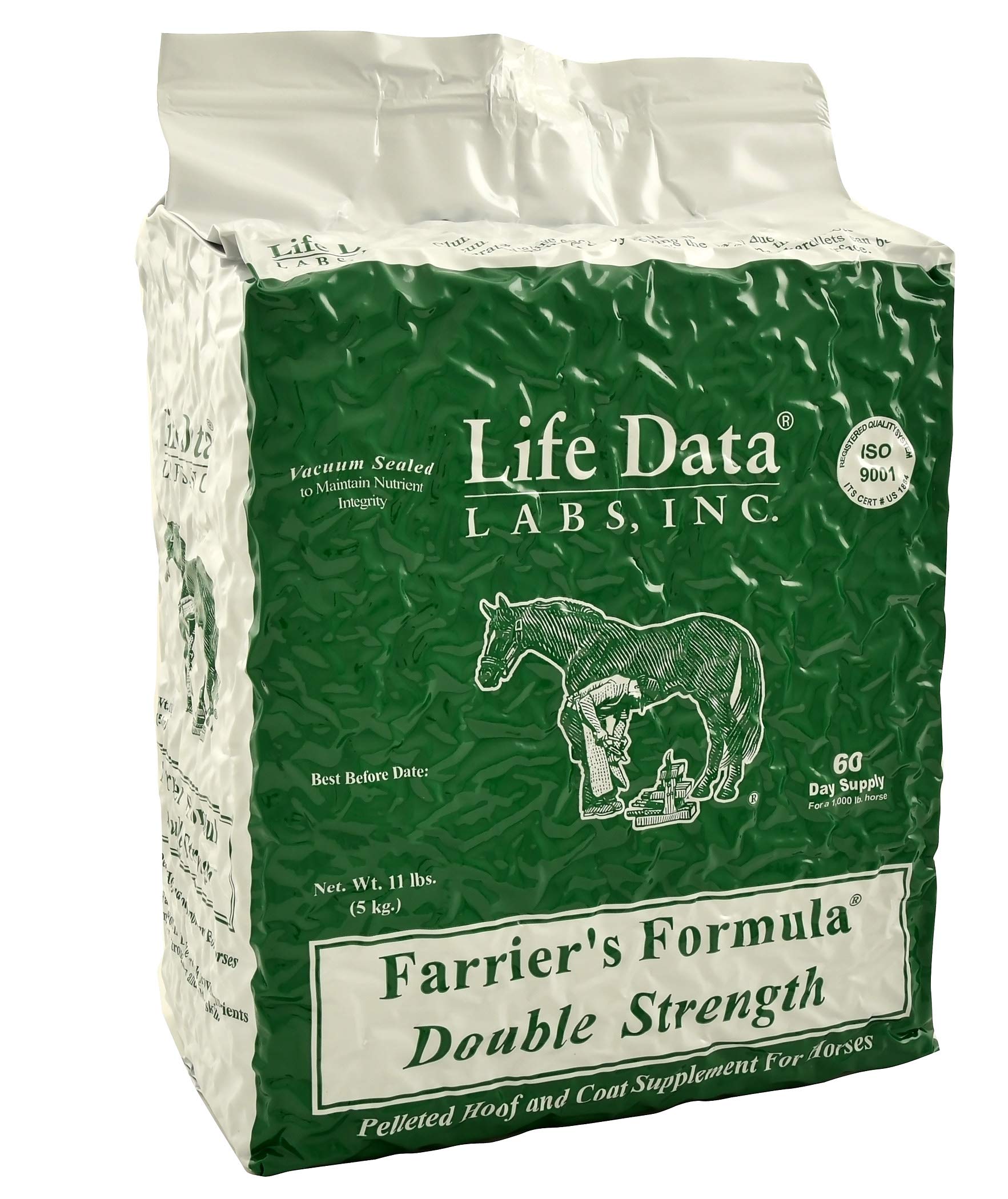
The serious rebuild option, and the one most owners stick with once they start.
Farrier’s Formula has been sold since 2008 and is the pellet owners move up to when a cheaper biotin bucket has not moved the needle. The 2X formula delivers phospholipids, omega fatty acids, vitamins, minerals and amino acid protein building blocks — a wider nutrient spread than a straight biotin pellet. Phospholipids are the piece most competitors leave out; they are the fat-based components tied to cell structure in hoof tissue.
What separates this from the Farnam bucket is depth and pace. Eleven pounds is the same weight as the Farnam tub, but the 2X concentration means you are feeding a denser formula per scoop. Owner feedback on this 2X pellet describes visible hoof change within three weeks, faster than the months most biotin buckets take. Quality is the most-praised aspect here by a wide margin, and the coat shine feedback sits alongside the hoof growth rather than replacing it.
Cost is the open question, and this lineup is honest about it — value is the one topic where opinions genuinely split. It is the premium tier of this list for a reason, and a horse that needs a full rebuild will use it steadily. Buy it when the hoof problem is serious enough to justify the habit, not as an experiment.
Why owners stay with it: a concentration of phospholipids, omega fatty acids and amino acids that cheaper pellets do not match, with visible hoof change reported sooner than the category norm.
The real consideration: it is the highest-commitment spend on this page, and value is the single point on which feedback divides — go in knowing you are paying for a genuine rebuild.
This is your pick when: a horse has a genuine hoof crisis and you want the densest nutrient spread on offer.
Let it go if: you are experimenting casually — begin with a smaller hoof bucket and move up only if you need to.
Know the Specs
Lysine and Methionine: The Two You Measure
Lysine is the limiting amino acid — it caps how much of the rest of the protein in your horse’s ration actually gets used. Methionine is the sulfur-bearing one, and sulfur is what hoof keratin is built from. A hoof supplement without methionine is working with one hand behind its back. Farnam publishes methionine at 2,721 mg per serving; most listings do not publish a figure at all, which is exactly why the ones that do stand out.
Biotin and Trace Minerals: The Long Game
Biotin is a B vitamin tied to keratin production, measured in milligrams on a guaranteed analysis. Copper and zinc work on hoof horn quality and usually travel together in a decent formula. None of this is fast — a hoof wall grows down slowly, so you are feeding for the next trim cycle, not this week. Consistency over months beats doubling the dose for a fortnight.
Common Questions
How long before I see a difference in my horse’s hooves?
Can I feed an amino acid supplement alongside my horse’s normal ration?
Is a hoof supplement the same as a muscle supplement?
My horse refuses pelleted supplements — what should I do?
Do these supplements help hooves that crack in summer?
How much does the serving size actually vary between brands?
Are amino acid supplements safe to feed with joint supplements?
Will a supplement improve the coat as well as the hooves?
What is the difference between a 2X strength pellet and a standard one?
Can I feed these to a pony or a young horse?
The Bottom Line
The strongest starting point for most horses is the Farnam Horseshoer’s Secret Pelleted formula, because it publishes the methionine figure you are actually buying — 2,721 mg per serving — alongside biotin, copper and zinc, and it holds a 4.5+ star score across 800+ ratings. Note that it does not carry the largest review base here; the Life Data Labs bag has more voices behind it. If your horse’s real problem is a dropped top-line rather than cracked horn, the SmartPak Tri Amino is the more direct tool with its 45 servings. And if you are rebuilding a horse from a genuine hoof crisis, the Life Data Labs Farrier’s Formula 2X is the one people stay with once they have started.
How we choose
We do not accept paid placement. Every pick is matched to a real buyer and a real use-case; we do not hands-on test units.
Sources
Specifications: manufacturer listings and product documentation. Review insights: verified customer reviews, as of November 2026. Pricing: not shown on this page (it changes often); check the current price via the retailer link.
As an Amazon Associate, My Heart Lives Here earns from qualifying purchases. This does not affect which products we feature.