Heads up: This post contains affiliate links. As an Amazon Associate I earn from qualifying purchases, at no extra cost to you. Learn more
Specs are compiled from manufacturer listings and verified buyer reviews and can change over time — please confirm the key details on the product page before buying.
Vinyl siding is thin, slick, and expands in the sun, which is exactly why so many glues let go a season or two after the repair. For a crack or seam, reach for a flexible vinyl cement; for a puncture, a purpose-made siding patch beats a general construction tube. This guide sorts seven real options by what they actually stick to, how they handle heat and water, and the job each one fits.
This guide is built by comparing the manufacturers’ published specifications and the patterns across verified customer reviews, so you get each pick’s real strengths and trade-offs instead of marketing spin.
Because surface type, weather exposure, and cure time decide whether a repair holds, the shortlist below is grouped by job. Here is the honest breakdown of the adhesive for vinyl siding worth your time.
Top Picks
How To Choose The Best Adhesive for Vinyl Siding
Glue struggles to grip vinyl siding. The surface is slick, it expands and contracts as the temperature changes, and the plastic contains oils that break down the wrong adhesive over time. That is why a tube that bonds wood and concrete well can peel right off a siding panel. Before you buy, answer three questions: what surface are you sticking to, will the repair face weather, and do you need a glue or a patch?
Match the adhesive to the surface, not the label
A flexible vinyl cement is formulated to grip vinyl and PVC and stay slightly pliable, so panels can move without cracking the seam. A general construction adhesive is built for a firm hold on porous things like wood, drywall, and stone. If you are gluing a crack, a trim piece, or a patch to a vinyl panel, that surface-matched formula is the safer bet. Self-adhesive patches sidestep glue entirely and stick straight to the panel.
Check cure time and working temperature
Cure time is how long until the bond reaches full strength. A 24-hour full cure is common, and it is a real deadline — do not stress the repair before it sets. Working temperature matters just as much. Solvent-based cements can go on in a wide temperature window, while many others want a moderate day. Read the can before you climb the ladder.
Weatherproofing and where the repair sits
Sun-facing siding bakes in summer and freezes in winter, so look for a formula that stays flexible and resists water. Some cements are rated for use underwater, which tells you how tough the bond is on a wet pool liner or gutter. Paintability is another factor: some repairs you will want to colour-match, and some products simply are not paintable.
Side-by-Side Comparison
| Model | Best For | Format | Full Cure Time | Container | Amazon |
|---|---|---|---|---|---|
| DAP Weldwood Landau Top & Trim HHR★ Best Overall | Large upholstery and vinyl panels | Spray contact adhesive | 24 hours | 1 Gal can | Amazon |
| Loctite Power Grab Ultimate crispClearest Bond | Clear, semi-visible bonds | Liquid | 24 hours | Cartridge | Amazon |
| A.A Stick N Repair Kit | Small holes, bathtub and siding | Tape (one-sided) | — | 6″ x 12″ patch | Amazon |
| HH-66 Vinyl Cement | Flexible PVC and vinyl repairs | Liquid cement | 24 hours | 4 oz can | Amazon |
| Stepsaver Vinyl Siding Repair Patch Kit | Punctures in siding and fencing | Self-adhesive patch | — | 12 patches, 4.5″x 5.5″ | Amazon |
| Tear-Aid Type B Vinyl Kit | Tears on vinyl and vinyl-coated items | Patch sheet | — | 3″ x 12″ sheet | Amazon |
| Gorilla Heavy Duty Construction Adhesive | Trim, molding and mixed surfaces | Paste | 24 hours | 2 x 7 oz tubes | Amazon |
Detailed Reviews
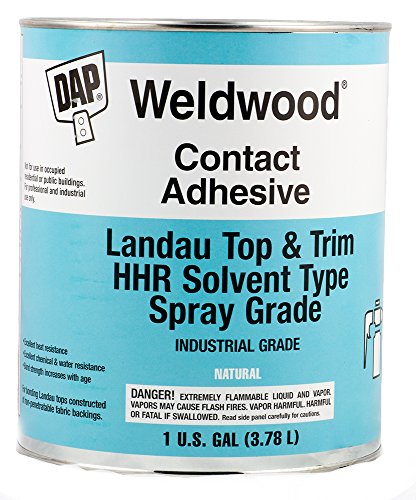
1. DAP Weldwood Landau Top & Trim Contact Adhesive 1 Gal
Our pick — 4.5+★ from 900+ verified ratings; the strongest balance of quality and price.
A spray contact cement built for big vinyl panels that have to stay put through heat and rain.
If you are bonding a large sheet of vinyl to a firm backing — a headliner, a panel, a wide repair — spraying is faster and more even than brushing. This one is a solvent-based contact adhesive that goes on in spray form and is rated for interior and exterior use. The maker lists a permanent bond with high heat resistance and water resistance, which is the combination that matters on siding that bakes in summer sun.
What wins people over is simply how well it holds versus other spray adhesives, and it lays down smoothly from the can. The 1-gallon size covers a lot of surface, and the full cure runs 24 hours. This is not a squeeze-tube job — it is a shop-class product for a bigger project, and you will want proper ventilation because the can is highly flammable.
The honest catch is leaking. Spray format rewards good technique and punishes a rushed pass, and a few buyers report the product running through where a heavier coat went down. Treat it as a large-format tool rather than a precise one, and mask off anything you do not want coated.
Why the pros rate it
- Spray format covers wide vinyl panels evenly.
- Permanent bond with high heat and water resistance.
- Rated for both interior and exterior jobs.
Where it asks for care
- Highly flammable, so ventilation is non-negotiable.
- Spray can run or leak through on a heavy pass.
Built for: bigger vinyl-to-backing jobs where a spray gun beats a brush for speed and evenness.
Not for: tiny touch-up repairs or anyone working in a tight, unventilated space.
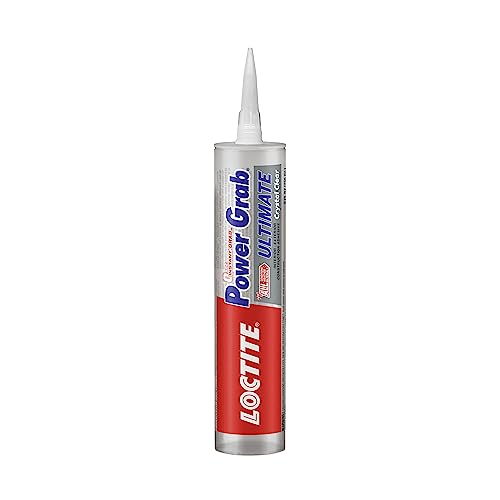
2. Loctite Power Grab Ultimate Construction Adhesive
A clear-drying adhesive for repairs you would rather nobody notices on the siding.
When a repair sits in the open, a visible glue line is its own problem. This Loctite goes on clear and stays clear after it cures, so the fix disappears into the panel. It handles wet surfaces and even bonds two non-porous materials, which is the hardest kind of joint because there is no texture for the glue to grip. The maker also rates it against extreme temperatures from 0°F to 140°F for exterior projects, and the full cure runs 24 hours.
A quick initial tack means it grabs early and you need less bracing and nailing to hold a piece in place while it sets. It does not shrink as it cures, so the joint stays tight. For an interior-to-exterior adhesive across wood, metal, glass, tile, and plastic, the surface list is broad.
The takeaway worth knowing: durability and grab performance come in for mixed feedback, and some find it not strong enough for a load-bearing joint. Read it as a good grab-and-hold adhesive for flat laps and light trim, not the final word on a heavy structural repair. If you want maximum strength on a stressed seam, a dedicated vinyl cement is the surer call.
The draw: it dries crisp, so the glue line stays hidden on your siding. It is waterproof and weatherproof, and it grabs fast, so you need fewer clamps.
The caution: it is best on light, flat bonds — heavy load-bearing joints may want a stronger formula.
Reach for this if: the repair has to look invisible and the joint is flat and light.
Look elsewhere if: you are gluing something that carries real weight or stress.
3. A.A Stick N Repair Repair Kit (Tan)

A single tan patch that skips the glue bottle and goes straight over the damage.
Some jobs do not want a tube at all. This is a 6″ x 12″ self-adhesive patch, tan in color, with the sticky side on one face. Peel it, press it over the damage, done. It is rated UV protected and the maker says it will not delaminate or deteriorate outdoors, which is the whole game for anything left on a siding panel or a skylight through the seasons. It also works above or below water lines.
Getting it right is the whole trick. The patch is one-sided tape, so it is unforgiving about placement — once it touches the surface, it is committed. It is not paintable either, so the tan color is what you get, which is fine on tan siding and obvious on anything lighter or darker. Match your panel color before you buy.
Where it shines on the multi-job list is versatility: roofs, pool liners, skylights, cracked bathtubs, vinyl skirting and siding all appear on the label. If you want a repair you can do in a minute without mixing or spraying anything, this is that repair. Just accept that a single patch and a permanent color make it a specific-job tool.
Best suited to: a quick patch on a tan surface where mixing glue is more trouble than the fix.
Think twice if: your siding is a different shade, because this patch cannot be painted.
4. HH-66 Vinyl Cement 4 oz
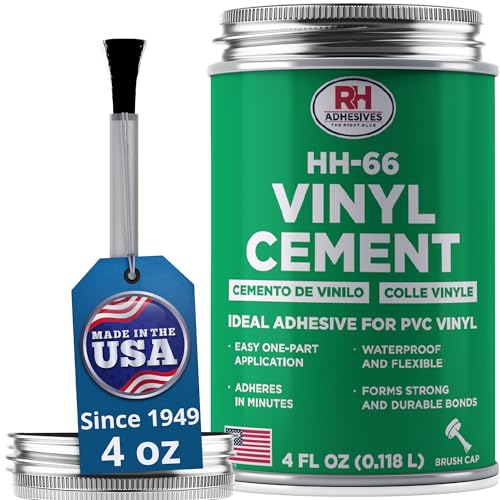
The specialist solvent cement that actually bonds to vinyl instead of sitting on top of it.
Most glues fail on vinyl for one reason: the plastic’s oils absorb into the adhesive and turn it gummy. HH-66 is a solvent-based vinyl cement that penetrates the PVC and vinyl surface and stays flexible once cured, serviceable from -30°F to 150°F. It bonds in temperatures from 35°F to 95°F, and the maker says it can even be applied underwater. That is the toughness level you want on a pool liner, a tarp, an awning, or marine vinyl.
The built-in brush cap gives controlled, even spreading on both flexible and rigid vinyl, so you are not fighting a messy applicator. The can lists a broad set of compatible surfaces — vinyl-coated fabrics, canvas, fiberglass, neoprene, leather, EVA and nitrile foams, cork, wood, and rigid plastics. As owners mention, it is “easy to apply, taking about 30 seconds to set up,” and it is “excellent for patching vinyl pools and repairing mesh or solid vinyl tarps.”
Two limits you need to know: it is not for ASTM/NSF-listed PVC plumbing pipe, and it will not bond polyethylene — which is most blue tarps — or extremely thin vinyl used for lettering and wraps. Check your material against that list before you buy. Made in the USA by RH Adhesives in Acton, Massachusetts, this is the pick that understands what vinyl actually needs.
Where it earns its keep
- Penetrates vinyl for a flexible bond that resists cracking.
- Handles water, including underwater application.
- Brush cap makes controlled spreading easy.
Material limits to match
- Not for polyethylene like most blue tarps.
- Not for vinyl plumbing pipe or very thin wrap vinyl.
The strongest fit: flexible PVC and vinyl seams that have to stay bonded and stay pliable.
Not the one: for blue poly tarps or thin wrap film, which this cement won’t bond.
5. Stepsaver Products Vinyl Siding Repair Patch Kit

Twelve siding-shaped patches that hide a puncture better than any dollop of glue.
If the damage is a hole rather than a loose panel, a patch beats a tube. This kit gives you 12 patches at 4.5″ x 5.5″ — a matched set for repeat repairs, and a direct contrast with the Tear-Aid kit’s single 3″ x 12″ sheet. Each patch has a self-adhesive lower surface and a paint-ready upper face, so you can hold it to the panel, then colour-match it afterward. The edges are deliberately uneven, which is what lets the patch blend into the repaired area.
The maker includes center reinforcement patches and says the kit repairs vinyl siding and fence damage. In practice it handles punctures in the 1/2 to 3/4 inch range well, according to buyers, and it takes almost no time to apply. Because the top is paint-ready, you are not stuck with an off-colour square on the wall.
What holds it back is thickness. The patches run thin for some users, and adhesion is a bit of a mixed bag — on a clean, flat panel they grip fine, but a rough or dusty surface is less forgiving. Prep the spot properly and press firmly. The reward is a repair you can barely spot once painted.
What buyers like
- 12 patches at 4.5″ x 5.5″ for repeat jobs.
- Paint-ready top and blending uneven edges.
- Handles 1/2 to 3/4 inch punctures.
What to watch
- Thin, so adhesion needs a clean, flat surface.
- Not for structural or large-area damage.
Go with this: for punch holes and punctures where a paint-matched patch hides the fix.
skip it if: the siding is deeply cracked rather than holed, or the surface is rough and dusty.
6. Tear-Aid Repair Type B Vinyl Kit

An elastomer patch that blocks vinyl’s oils so the glue does not go gummy.
Type B is the vinyl-specific version of Tear-Aid, and the distinction matters. Vinyl carries oils that most adhesives soak up, which then turn gooey and let go. These patches contain an inhibitor that blocks those oils for a lasting repair. Each patch is a tough matte elastomer that resists puncture and tearing, and the sheet is see-through so it works on any colour and won’t yellow over time.
This kit works like a small repair station. It includes a 3″ x 12″ sheet you cut with scissors, a 7/8 x 7/8″ patch, a 1 3/8 x 1 3/8″ patch, a 12″ reinforcement filament for tears at edges, two alcohol prep pads, and illustrated instructions. You get no glue, no sewing, and no mess — just peel and press, and it conforms to irregular surfaces. It also resists turning gummy in high heat.
Adhesion and durability come in for mixed results — some find it holds great, others report it lifting. The key is prep: use the alcohol pads, apply to a dry, clean surface, and press hard. The recurring gripe is quantity, because one sheet goes fast on a bigger repair. This is a detail-fix kit for vinyl and vinyl-coated materials, so keep it for that job.
The clever part: an oil inhibitor keeps vinyl’s natural oils from degrading the adhesive, and the see-through matte patch hides the fix.
The limit: a small sheet and prep-sensitive adhesion mean it suits small tears, not wide failure areas.
Worth grabbing: for small, edge-of-tear repairs on vinyl-coated gear, tents, or awnings.
Not the answer: for a broad moving failure area, where one sheet will not cover it.
7. Gorilla Heavy Duty Construction Adhesive 7 oz 2-Pack
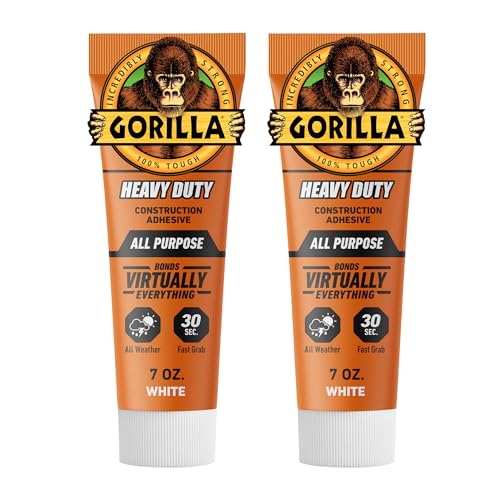
The squeeze-tube grab artist for trim, molding, and mixed surfaces in one formula.
Not every vinyl siding job is a hole. Sometimes you are sticking a trim piece, molding, or a replacement panel against a mixed wall. This Gorilla construction adhesive is a 100% adhesive formula that won’t shrink or crack, with a fast grab that takes hold in as little as 30 seconds and a 10 minute working time to line things up. Full cure runs 24 hours.
The all-weather claim is strong: 100% waterproof, able to bond indoors or out, and built to withstand extreme temperatures. It is a gap-filling paste, so it handles the slightly uneven surface, and it is sandable and paintable as soon as 30 minutes after application, with the ideal window running out to 2 days. It grabs subfloor, drywall, trim, molding, mirrors, metal, plaster, plastic, and painted surfaces in one non-foaming formula — which is the versatility you want when the job is mixed.
Where it stops: it is built for porous, firm surfaces like brick, concrete, stone, and wood, so a slick vinyl panel is not its strongest match. Use it for trim and holding pieces against the wall, and reach for a vinyl cement or a patch when the repair is the vinyl itself. Two 7 oz tubes give you a spare for the next project.
What makes it handy
- Fast grab in 30 seconds, 10 minute working time.
- 100% waterproof and paintable after 30 minutes.
- Bonds trim, molding, metal, plastic and more.
The one gap
- Built for porous and firm surfaces, not slick vinyl panels.
Pick it for: trim, molding, and mixed-surface grabs where fast hold matters.
Pass on it: for the vinyl repair itself, where a matched cement or patch does the job better.
Know the Specs
Full cure time
Full cure is how long the bond takes to reach its final strength. A 24-hour cure is common on contact cements and construction adhesives, and it is a real deadline — do not load the joint before it sets. A patch or tape has no cure clock; it grabs on contact, which is why it suits quick fixes but not heavy loads.
Working temperature and service range
Working temperature is the window in which you can apply the adhesive. A solvent vinyl cement like HH-66 bonds between 35°F and 95°F. Service range is how the cured bond holds up over time — the same cement stays flexible from -30°F to 150°F. On sun-baked siding, that flexibility is what stops a seam from cracking.
Water and heat resistance
Waterproof and heat resistant are two separate jobs. A waterproof bond survives rain, gutters, and pool liners; a heat-resistant bond survives a hot, sun-facing panel. Some cements are rated for underwater application, which signals a very tough bond. For most siding repairs you want both, so check the label for each.
Format: cement, construction adhesive, or patch
Format decides the job. A vinyl cement is built for vinyl and PVC and stays flexible. A construction adhesive is built for porous, firm surfaces like wood and masonry. A self-adhesive patch skips glue entirely. Match the format to the surface before you match anything else.
Common Questions
Can I use construction adhesive to glue vinyl siding?
What makes a vinyl cement different from normal glue?
How long does the adhesive need to cure before it rains?
Can I use vinyl adhesive in cold weather?
Will an adhesive for siding work on pool liners too?
Is it better to glue a crack or use a patch kit?
Can I paint over the repaired area?
Why did my adhesive peel off the vinyl panel?
Can I use vinyl cement on blue tarps?
How much adhesive do I need for siding repair?
The Bottom Line
The strongest pick for most siding repair projects is the DAP Weldwood Landau Top & Trim HHR, because its spray format covers wide vinyl panels evenly and its permanent bond is rated for high heat and water. If your repair is slippery PVC or a flexible seam, the HH-66 Vinyl Cement is the specialist that penetrates vinyl and stays pliable through freezing and summer heat. For a hole rather than a loose seam, grab the Stepsaver Vinyl Siding Repair Patch Kit — twelve paint-ready patches that hide the fix once painted. Match the format to your damage — cement for cracks, patches for holes — and prep the surface clean and dry before you apply.
How we choose
We do not accept paid placement. Every pick is matched to a real buyer and a real use-case; we do not hands-on test units.
Sources
Specifications: manufacturer listings and product documentation. Review insights: verified customer reviews, as of November 2026. Pricing: not shown on this page (it changes often); check the current price via the retailer link.
As an Amazon Associate, My Heart Lives Here earns from qualifying purchases. This does not affect which products we feature.