Heads up: This post contains affiliate links. As an Amazon Associate I earn from qualifying purchases, at no extra cost to you. Learn more
Specs are compiled from manufacturer listings and verified buyer reviews and can change over time — please confirm the key details on the product page before buying.
Neoprene fights back. It flexes under your arm, stretches across a shoulder, and slides against a seam every time you move. Ordinary glue cracks off it within a week. A neoprene cement keeps a wetsuit seam or gasket edge sealed through stretching, salt water, and heat. Below you’ll find the pick that holds best for general neoprene repair, the one that blends invisibly into a black suit, the one built for rubber-to-metal work, and the value can that still carries a neoprene contact cement formula.
This guide is built by comparing the manufacturers’ published specifications and the patterns across verified customer reviews, so you get each pick’s real strengths and trade-offs instead of marketing spin.
Neoprene fails at the seam, not the sheet, so the right glue has to behave like the rubber it joins. The strongest all-rounder here sets in 2.5 hours — quicker than most of the field. Cure time, more than bottle size, decides which can suits a same-day repair. So this breakdown of the best adhesive for neoprene rubber ranks cure speed and bond strength above bottle size.
Top Picks


How To Choose The Best Adhesive for Neoprene Rubber
Neoprene is a stretchy synthetic rubber that snaps back into shape after it is pulled. That stretch is exactly what breaks a normal glue joint. You want an adhesive that stays slightly rubbery after it dries, so it can move with the material instead of cracking along the seam.
Contact cement versus a patch-and-glue kit
Contact cement works by coating both edges, letting the film go tacky, then pressing them together for an instant grab. A patch kit instead uses an iron-on fabric piece plus a small tube of cement — handy for a torn knee or elbow that needs extra fabric reinforcement. Pick the cement when the seam is your problem. Pick the kit when the neoprene itself has a hole.
Cure time and how fast you can get back on the water
Full cure time is how long the bond needs before it reaches final strength. A 2.5 hour cure lets you repair a seam in the morning and use the suit by afternoon. A 24 hour cure is still fine for a planned fix — just don’t rush it. Some formulas are quick to tack up but slow to fully set, so read the cure number, not just the dry-touch time.
Color and how it looks on a black suit
A tan, yellow, or amber cement is easier to see while you work. A black cement disappears against black neoprene. If the repair sits on a visible shoulder seam or a suit lapel, the black formula saves you a visible scar.
Water, heat, and what the finished bond has to survive
Neoprene lives in salt water, chlorinated pools, and direct sun. Look for water resistance and heat resistance on the label. If the repair sits near a hot engine bay or a heated gasket, check the temperature rating the maker publishes — 3M lists its 1300 formula as performing up to 300°F/148°C.
Side-by-Side Comparison
| Model | Best For | Full Cure Time | Container | Color | Amazon |
|---|---|---|---|---|---|
| DAP Weldwood High Strength Rubber Contact Cement 1 pt.★ Best Overall | Fast, high-strength seam repairs | 2.5 hours | Pail or Can | Tan | Amazon |
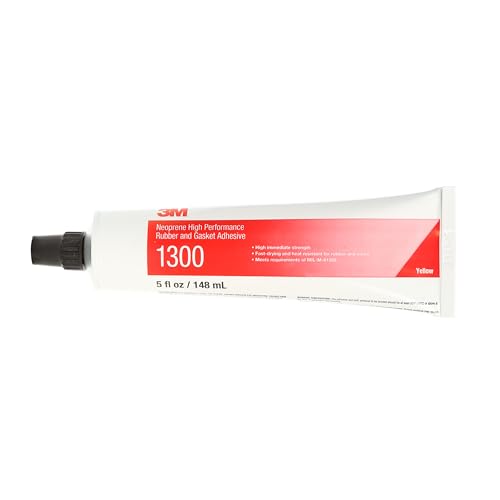
| 3M Neoprene Adhesive 1300Fastest Set | Rubber and gasket work near heat | 10 minutes | Tube | Yellow | Amazon |
| O’Neill Wetsuits Neoprene CementBrush-In-Cap | Invisible black wetsuit tear fixes | — | Can | Black | Amazon |
| Wonshine Contact Cement Adhesive with Brush (4.16 Oz) | Precision brush-on craft and leather work | 24 hours | Can | Amber | Amazon |
| Wonshine Contact Cement Adhesive with Brush (LDXJ-W01) | High-viscosity brush control on vertical faces | 24 hours | Bottle | White | Amazon |
| Bondtech Contact Cement Adhesive 4.16 Ounce | Waterproof furniture and craft repairs | 24 hours | Can | Clear | Amazon |
| Trident Black Neoprene Cement 4 Ounce | Dive gear and spray skirt repairs | — | Can | Black | Amazon |
| GEAR AID Wetsuit Repair Kit | Torn knees and elbows needing a patch | 30 minutes | Kit (patch + tube) | Black | Amazon |
| S-18 All-Purpose Adhesive 32 oz | Rubber-to-metal and headliner jobs | 24 hours | Can | Off-White | Amazon |
Detailed Reviews
1. DAP Weldwood High Strength Rubber Contact Cement 1 pt.
Our pick — 4.5+★ from 100+ verified ratings; the strongest balance of quality and price.
A neoprene-based cement that sets in 2.5 hours and stays put in wet conditions.
If you want one can that handles a wetsuit seam, a rubber gasket, and a foam repair without drama, this is it. The DAP Weldwood is a neoprene-based contact cement — meaning the glue itself is built from the same family of synthetic rubber you are bonding — so it flexes with the material instead of fighting it. Full cure time is 2.5 hours, the fastest set of any neoprene cement on this list and far quicker than the 24 hours the Wonshine and Bondtech cans need.
What wins people over is the hold. The bonding strength is the thing owners single out most, and it earns a 4.5+ star rating across a body of buyers who mostly use it for foam and rubber work. The can also carries real-world credentials: it is water resistant for wet jobs and meets all CPSC requirements, the federal safety standard for consumer products. That matters if the repair sits on something a child might handle or a surface in a damp garage.
The honest catch is quantity. This listing ships as a 12-pack of 1 pt. cans — a bulk contractor buy, not a single-repair purchase. Compare that to the 3M 1300’s single 5 Oz tube, and you are looking at a 12.0x gap in package quantity. If you only need to fix one seam, you are buying eleven spare cans you may never open. The quality ratings also split between buyers who find it excellent and a few who call it terrible, so test on a scrap of neoprene first.
wood and laminate grip
- 2.5-hour full cure — the fastest set on this list, so a morning repair is usable by afternoon.
- Neoprene-based formula flexes with the rubber instead of cracking at the joint.
- Water resistant for wet and damp repairs.
- Meets all CPSC requirements.
- Bonding strength is the most-praised trait among buyers.
stringy glue cleanup
- Sold as a 12-pack of 1 pt. cans — overkill for a single seam fix.
- Quality feedback splits, so test a scrap piece before committing.
- Tan color shows against black neoprene.
furniture veneer: anyone repairing seams at volume or who wants the fastest-curing neoprene contact cement available here.
thin fabric: you have one tear to fix — the 12-can pack is far more cement than a single repair needs.
2. 3M Neoprene Adhesive 1300
A gasket-grade cement that shrugs off heat and dries in ten minutes flat.
Drivers who need neoprene bonded to metal near a hot engine, or anyone repairing a rubber gasket that has to keep its seal, should start here. The 3M 1300 sticks neoprene, SBR, butyl and other rubbers to a range of surfaces, and it carries excellent moisture and heat resistance — it is rated to perform up to 300°F/148°C. It works as either a contact adhesive or a wet-bond adhesive, so you can choose the technique that fits the job.
The cure is the headline. Full cure time is 10 minutes, which is dramatically faster than the 2.5 hours the DAP needs and worlds away from the 24-hour cans on this list. For a quick gasket fix or a repair before a trip, that speed is the whole point. The 5 Oz tube also arrives as a single unit, so you are not committing to a bulk pack — unlike the 12-can DAP listing.
Consider the trade-off before you buy. The yellow color is easy to see while you work, but it will show against black neoprene. And as a gasket-grade adhesive it is aimed at industrial use — it is even compatible with industrial spray equipment — so a casual crafter may find it more product than a small seam job needs.
gasket bonding: heat or moisture is part of the job and you want a fast, single-tube fix.
indoor small jobs: you need an invisible bond on a black suit — the yellow shows.
3. O’Neill Wetsuits Neoprene Cement
Black cement in a four-ounce can that vanishes into a wetsuit.
For a torn shoulder, a split seam, or a pinhole in a well-loved suit, this is the repair that keeps the suit looking untouched. The cement is a thick, goopy black compound built specifically to fix tears and holes in neoprene, so it blends right into a black wetsuit instead of leaving a visible patch of glue. The can holds four ounces and comes with a brush built into the cap, which makes reaching the damaged edge easy without a separate applicator.
Buyers keep coming back to how well it works on the repairs that matter — its effectiveness is the trait praised most, and it earns a 4.0+ star rating across a hefty body of reviews. It works well on smoothskin coatings, the slick outer face of a wetsuit, and it sets up quickly. The application method is laid out clearly: shake well, apply cement to both edges with the brush, let the first coat dry for 5 minutes, apply a second coat and let it dry for 10 minutes, then press together firmly.
The caveat is that adhesion and value both split among buyers. Some find the bond holds up well through repeated use, while others report the repair coming undone after a few wears. A few also find it overpriced for the four ounces you get. The formula carries a strong solvent smell, so keep a window open while you work.
invisible wetsuit seams: the black color and smoothskin compatibility make this the pick for visible wetsuit repairs where you do not want a glue scar.
long open time: the solvent smell is real — work near an open window and give the coats their full dry times before pressing.
neoprene patch: the repair will be seen and the suit is black.
quick field fix: you need maximum structural strength or the lowest cost per ounce.
4. Wonshine Contact Cement Adhesive 4.16 Oz with Brush
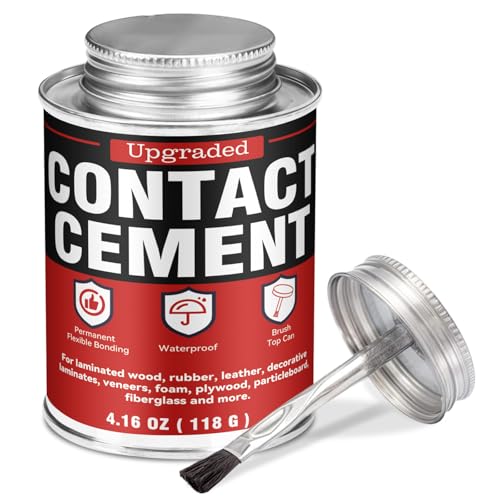
The mess-free brush-tip can for crafters gluing leather, foam, and neoprene.
Crafters who are tired of a glue-covered stick and a drippy can should look at this one. It uses a specialized chloroprene formula — chloroprene is the chemical name for the synthetic rubber that makes up neoprene — so it is built for the material you are bonding. The glue stays flexible after curing, which suits leather, foam, and rubber projects that need to bend without cracking. The built-in brush tip reaches tight seams and corners without a separate applicator.
What people notice is how well the formula performs when the technique is right. Effectiveness is the trait buyers praise most, and it holds a 4.0+ star rating across a solid pool of reviews. The application instructions are the key: apply to two clean, dry surfaces, wait about 10-15 minutes until the film turns tacky, press firmly together, then allow 24 hours for a complete cure. Press only once the film is tacky to the touch but still slightly glossy, and the bond holds.
The honest note is that adhesive strength splits among buyers. Some report a strong hold, others a weak one — and on a flexible material like neoprene, surface prep is often the deciding factor. Clean and lightly roughen the neoprene first, let it reach the glossy-but-slightly-dry stage, and press evenly. The 24-hour cure is relaxed compared to the DAP’s 2.5 hours, so plan the job a day ahead.
small patch jobs: leather, foam, and craft repairs where a clean brush application matters.
large surfaces: anyone wanting a same-day repair — the 24-hour cure needs planning.
5. Wonshine Contact Cement Adhesive with Brush (LDXJ-W01)
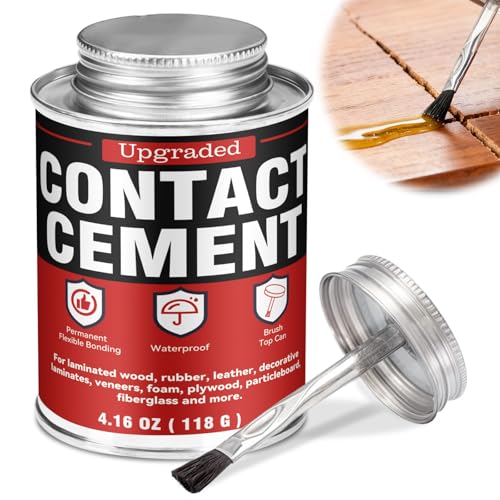
A thicker, high-viscosity cement that stays where you brush it.
The viscosity level here is set to high, which is the number that matters when you are gluing a vertical surface. A thin glue runs down the face before it tacks; a thick one holds its place under the brush. That makes this the Wonshine can to pick for a seam on an upright panel, a laminate edge, or a repair you cannot lay flat. The 4.16-ounce bottle uses the same brush-tip applicator, and the glue is waterproof and heat resistant.
The bond stays flexible after curing, so leather, rubber, and foam projects can flex without the joint splitting. It bonds a wide spread of surfaces — wood, leather, rubber, laminate, foam, plywood, particleboard, fiberglass, and decorative laminates — which makes it a sensible all-rounder for a workshop. Rating sits at 4.0+ stars across a smaller pool of buyers who mostly reach for it on mixed-material jobs.
What you give up is speed. Curing takes 24 hours, the same as the Bondtech and the first Wonshine, so this is a plan-ahead product, not a quick fix. Compared with the 3M 1300’s 10-minute cure, it is a slower road to a finished repair. The high viscosity also means you need a firm press to spread it evenly across a large flat surface.
thick no-drip gel: high thickness keeps the cement on a vertical face, which is where thinner formulas lose the job.
slow full cure: the 24-hour cure means a next-day job, so this suits planned repairs rather than urgent ones.
vertical repairs: upright and mixed-material repairs where a runny glue would slide.
fast turnaround: a dive trip tomorrow — the bond needs a full day.
6. Bondtech Contact Cement Adhesive 4.16 Ounce
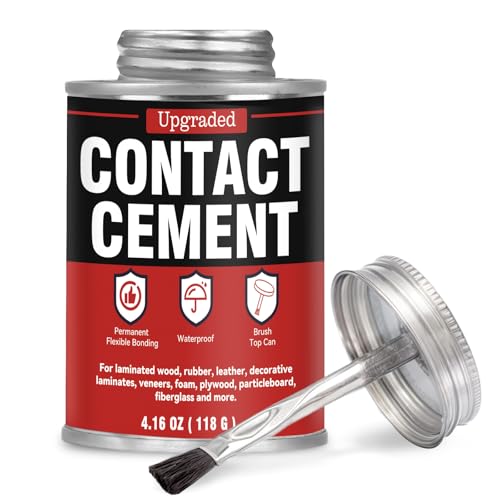
A clear, waterproof cement for repairs where a colored glue would show.
When the repair sits on a pale surface or a light-colored craft project, the clear color of this Bondtech can is the reason to reach for it. It dries flexible, so joints on leather, foam, rubber, and fiberglass can bend without cracking, and it is formulated to stay waterproof and heat resistant under tough conditions. The built-in brush keeps application controlled in tight or delicate spots.
The cure time is 24 hours, which puts it in the same plan-ahead camp as the two Wonshine cans. That is a full day from glue-up to final strength, compared with the roughly same-day speed of the DAP and the 3M. For furniture repair, leatherworking, and general crafts the wait is usually fine. For a repair at the end of the workday that you need the next morning, plan accordingly — though partial strength arrives well before the full cure. The 4.0+ star rating comes from a modest pool of buyers, so this is a newer name still building its track record.
starter kit: clear-finish craft, leather, and furniture repairs where color matters.
heavy daily use: you need same-day strength or want a long, heavily tested track record.
7. Trident Black Neoprene Cement 4 Ounce Can

Dive-shop black cement for spray skirts, gloves, and wetsuit seams.
Divers and paddlers who repair their own gear will recognize the appeal here — this is a black neoprene cement with a waterproof finish, sold by a dive specialty brand. The four-ounce can lets you coat a seam and blend the repair into black fabric, which suits spray skirts and similar dive gear well. The color does double duty, hiding the repair and matching the neoprene it sits on.
What buyers find most is simply that it works. Functionality is the trait people mention most, and the cement holds a 4.5+ star rating across a solid spread of reviews, frequently used on spray skirts and similar items. That ease of use matters when you are patching gear in a garage or a boat cabin. It has been on the market since 2014, so the formula has a long track record in dive shops.
Where buyer experience splits is adhesion. Some call it great glue; a few report poor adhesion results. That is the same split you see across most neoprene cements, and it often depends on surface prep — clean the neoprene, rough it lightly, and give the cement its tack time before joining. Use it for seam repairs on dive gear, not for structural bonds.
black color match: waterproof black finish built for gear that lives in the water.
small can volume: some buyers find adhesion inconsistent — prep the surface well to improve your odds.
dark neoprene: dive and paddle gear repairs where a waterproof, black bond is the priority.
light colored suits: you need a guarantee of structural strength over flexibility.
8. GEAR AID Wetsuit Repair Kit

The kit with an iron-on patch for holes a brush-on glue can’t cover.
When the neoprene itself is torn — a split knee, a punctured elbow, a slice in a wader — a fabric patch does what a liquid cement cannot. This kit ships with a black, 10”x6” iron-on Tenacious Tape neoprene patch you cut to size, plus a 1.5 fl oz tube of Aquaseal NEO Contact Cement. You use a household iron to bond the patch, repairing tears permanently in 30 minutes and reinforcing high-wear spots that need flexibility and durability. The patch also works on stretch fabrics like spandex and Lycra.
The Aquaseal NEO cement cures to a black, flexible rubber and bonds to latex, so the kit covers both a hole that needs fabric and a seam that needs glue. That combination is the reason this pick stands apart from the plain cans on this list — no other option here pairs a patch with a tube of Neoprene-specific cement. It is rated 4.0+ stars across a healthy pool of wetsuit and glove owners.
The catch is scope. This is a repair-shop-in-a-pack for a torn suit or a split seam, so the 1.5 fl oz tube is far less cement than the multi-ounce cans — if you have many seams to seal, you will run out. And it assumes you have a household iron ready. Neither is a dealbreaker for a one-tear repair, which is exactly what the kit targets.
wetsuit tear: a torn knee, a split elbow, or a hole that needs both fabric and glue.
large panel repair: sealing a dozen seams at once — the tube is small by design.
9. S-18 All-Purpose Adhesive 32 oz
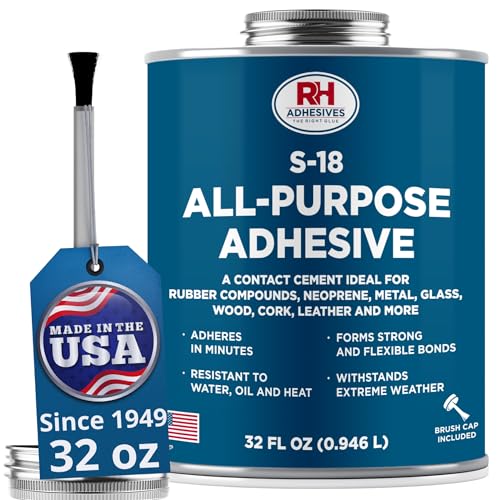
A big-can contact cement built for bonding neoprene and SBR rubber to metal.
This is the can for the job that ties neoprene down to a hard surface and needs it to stay. The S-18 formula bonds rubber to metal — affixing SBR rubber and neoprene to metal is a common use — and it also handles multiple types of plastic to other materials. It is a solvent-based neoprene contact cement that stands up in marine applications and difficult temperatures, with excellent peel strength and resistance to oil. The 32-ounce can carries far more cement than any other pick here for headliner, upholstery, and heavy flat-surface work.
The formula adheres both porous and non-porous materials, which gives it range across ceramics, cork, fabric, felt, glass, metals, rubber compounds, and tile. Made in the U.S. since 1949, it has a long commercial history behind it and earns a 4.0+ star rating across a large pool of buyers. For gluing a neoprene sheet to a metal panel or a headliner to a car roof, the big can and the rubber-to-metal strength are the reasons to buy it.
The recurring gripe is two-fold. The smell is strong, so plan on ventilation and let it off-gas before the repaired piece goes indoors. And adhesion splits — rubber-to-rubber bonding is reported as perfect, but some report it not sticking at all. On a solvent cement, that usually traces back to skipped surface prep or a film that was pressed before it went properly tacky. Clean both faces, watch the tack stage, and give it the 24-hour cure.
shop refill: neoprene-to-metal, headliner, and upholstery jobs that want a big can and a strong film.
one-time fix: a small patch in a closed room — the smell and the size are both heavy.
Know the Specs
Full cure time explained
Full cure time is how long the bond needs to reach its final strength — distinct from how quickly the glue turns tacky to the touch. The DAP Weldwood lists 2.5 hours, so a seam closed in the morning is ready by the afternoon. The Wonshine, Bondtech, and S-18 cans all list 24 hours, which is a proper next-day job. The 3M 1300 lists just 10 minutes, and the GEAR AID kit repairs in 30 minutes. A shorter cure suits urgent fixes; a longer one is fine when you have time to plan.
What “neoprene based” or “chloroprene” actually means
Neoprene is a synthetic rubber, and its chemical name is chloroprene. When a label says neoprene based or chloroprene formula, it means the glue is made from the same family of rubber you are joining, so it flexes and stretches alongside the neoprene instead of hardening and cracking. The DAP is neoprene based, the Wonshine can and the S-18 use a chloroprene or neoprene contact cement formula, and the GEAR AID kit’s cement cures to a flexible black rubber. That flexibility after curing is the property that holds a seam through repeated stretching.
Contact adhesive versus wet-bond adhesive
A contact adhesive is coated on both surfaces and allowed to go tacky before you press them together — the bond grabs at the moment of contact, with no clamping needed. A wet-bond adhesive is pressed while still wet, then held until it sets. The 3M 1300 can be used as either, giving you the choice. Most neoprene cements here follow the contact method: coat both edges, wait for the film to turn slightly glossy, press firmly. Getting the tack stage right is the difference between a strong bond and a weak one.
Sizing: what container volume tells you
The volume of the can or tube is a decision-maker, not just a spec. A single 4-ounce can or a 5-ounce tube suits a few seam repairs and a small craft project. A 32-ounce can like the S-18 handles large surface jobs like a car headliner or upholstery. The DAP listing ships as a 12-pack of 1 pt. cans, which is a bulk purchase. Match the container to the job: a modest repair wants a single small can; a big flat-surface project wants a large one.
Common Questions
Will contact cement damage a neoprene wetsuit when I repair a seam?
How long does a neoprene glue repair last?
Do I need a black cement for a black wetsuit?
Can I use a rubber contact cement on neoprene and metal together?
Is contact cement better than a glue stick or spray adhesive for neoprene?
How do I stop my neoprene glue from coming undone after a few uses?
What is the difference between the 2.5-hour DAP cure and the 24-hour cans?
Can I use neoprene cement on fabric like spandex or Lycra too?
Why does a neoprene cement smell so strong?
Is it cheaper to buy a big can or a small tube for a single neoprene repair?
The Bottom Line
For most people fixing a neoprene seam, the winner is the DAP Weldwood High Strength Rubber Contact Cement — a neoprene-based formula that sets in 2.5 hours and holds up to water, faster than the 24-hour cans and backed by a 4.5+ star rating across 100+ ratings. If heat and a quick single-tube fix matter, grab the 3M 1300 with its 10-minute cure and 300°F rating. And for a hole that needs fabric, not just glue, the GEAR AID Wetsuit Repair Kit pairs a 10″x6″ iron-on patch with Aquaseal NEO cement for a 30-minute fix.
Whichever cement you choose, surface prep decides whether the seam holds. Clean the neoprene, press at the tacky stage, and let the full cure finish, and the seam should outlast the suit.
How we choose
We do not accept paid placement. Every pick is matched to a real buyer and a real use-case; we do not hands-on test units.
Sources
Specifications: manufacturer listings and product documentation. Review insights: verified customer reviews, as of November 2026. Pricing: not shown on this page (it changes often); check the current price via the retailer link.
As an Amazon Associate, My Heart Lives Here earns from qualifying purchases. This does not affect which products we feature.