Heads up: This post contains affiliate links. As an Amazon Associate I earn from qualifying purchases, at no extra cost to you. Learn more
Specs are compiled from manufacturer listings and verified buyer reviews and can change over time — please confirm the key details on the product page before buying.
If you want one notebook that handles fountain pen ink without bleeding through and keeps your writing readable for decades, the LEUCHTTURM1917 120G Hardcover is the pick to beat. Acid-free paper resists yellowing and brittleness, so a journal you fill this year still reads cleanly years later. The six notebooks below all use acid-free stock, but they split sharply on paper weight, page count, and how they behave under a wet nib.
This guide is built by comparing the manufacturers’ published specifications and the patterns across verified customer reviews, so you get each pick’s real strengths and trade-offs instead of marketing spin.
Paper weight is the number that decides most of this: heavier stock resists bleed-through, while featherlight sheets stay portable but demand a drier pen. Below you’ll find the notebooks that get that balance right, ranked by how they actually behave on the desk. These are the acid free notebooks worth putting your name in.
Top Picks

How To Choose The Best Acid Free Notebooks
Every notebook here uses acid-free paper, so that part is settled. Your real choice depends on three things: paper weight, page count, and binding. Get those three right and the notebook stops getting in your way. Get them wrong and you fight bleed-through or a spine that won’t lie flat.
Start With Paper Weight, Not Cover Color
Paper weight is measured in gsm — grams per square meter — and it tells you how much ink the sheet can take before it soaks through. A 52 gsm sheet is featherlight and stays out of the way in a bag, but it rewards a light hand with a fountain pen. A 120 gsm sheet gives you a firmer surface and far more resistance to show-through. Neither weight is better in the abstract — 52 gsm suits a light hand and a bag, 120 gsm suits a wet nib and a desk.
Match Page Count To How Fast You Fill A Journal
A 365-page book can carry a full year of daily entries, while a 160-page book finishes faster and feels lighter in hand. If you journal every morning, a 365-page book like the ALKALO runs a full year before you restart. If you sketch and tear out pages or prefer a fresh book each season, a 160-page count like the Sakae keeps things tidy.
Check The Binding If You Write Across Two Pages
A lay-flat spine lets both pages sit level, which matters if you draw spreads, map out projects, or write longhand in a bound book. Thread-bound and sewn bindings tend to hold up better than glued ones when you press the book open repeatedly. If you mostly write single pages, paper weight matters more than whether the spine lies flat.
Side-by-Side Comparison
| Model | Best For | Paper Weight | Pages | Ruling | Amazon |
|---|---|---|---|---|---|
| LEUCHTTURM1917 120G Hardcover★ Best Overall | Fountain pen journaling | 120 gsm | 203 | Ruled | Amazon |
| IT OYA Oasis NotebookTop Performer | Note-taking on both sides | — | — | Plain | Amazon |
| Comix 8 Pack Lined Journal | Office and meeting notes | 70 gsm | 240 | College | Amazon |
| Blank Journal Notebook 365 Pages | Year-long daily journaling | 100 gsm | 365 | Blank | Amazon |
| ZEAYEA 4 Pack A5 Blank Journal | Students and sketching | 100 gsm | 240 | Plain | Amazon |
| Sakae Tomoe River FP Notebook | Fountain pen portability | 52 gsm | 160 | Unruled | Amazon |
Detailed Reviews
1. LEUCHTTURM1917 120G Hardcover Notebook Medium (A5)
Our pick — 4.5+★ from 2,000+ verified ratings; the strongest balance of quality and price.
The heavyweight that swallows wet ink and never flinches
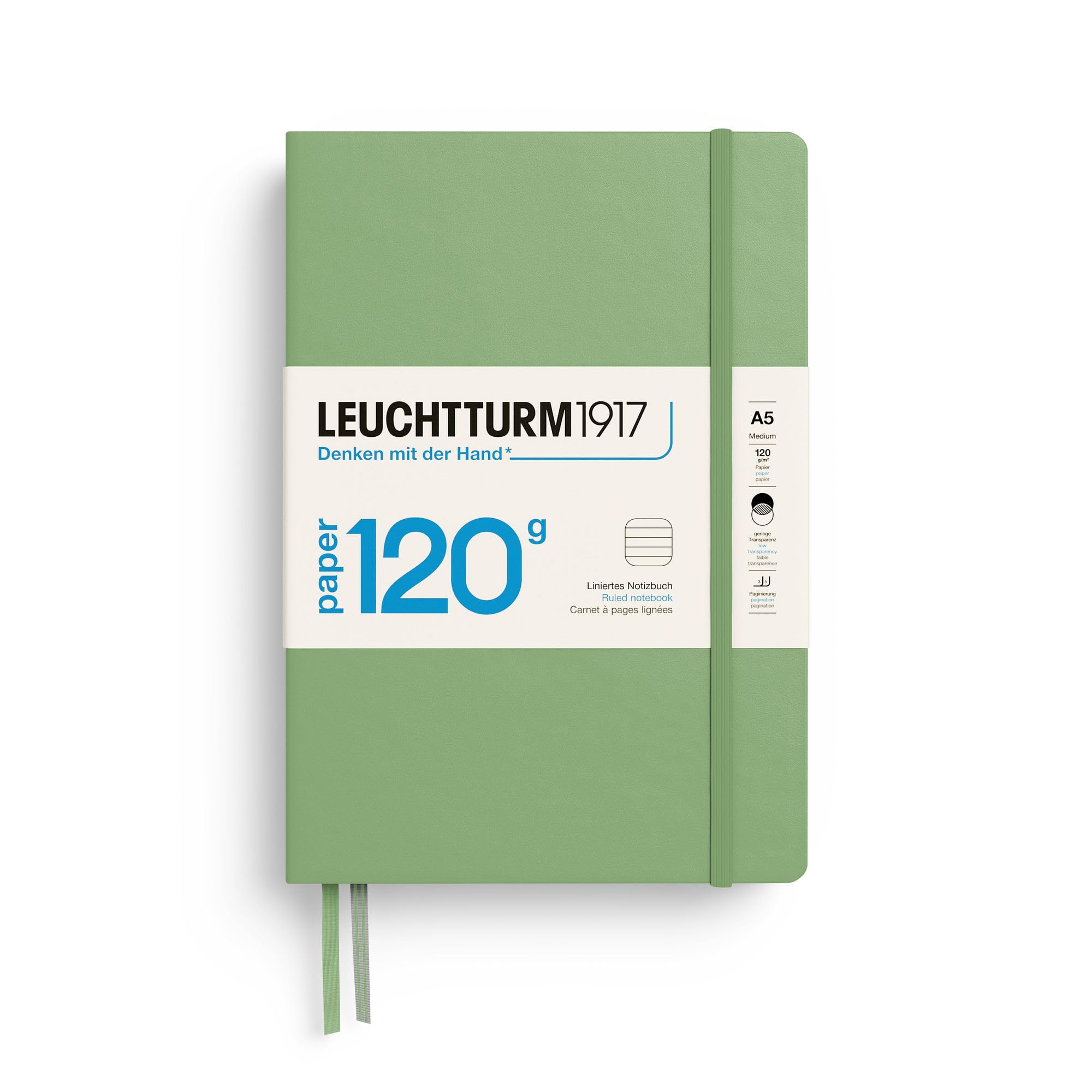
Write with a fountain pen, a marker, or a brush pen and stop worrying about the back of the page. That is what this one gives you. Its 120 gsm paper (grams per square meter, a measure of how dense and thick the sheet is) is thicker than most standard journal stock, so ink sits on the surface instead of soaking through. That 120 gsm sheet is why it takes the top spot: it resists bleed-through far better than the Sakae Tomoe River’s 52 gsm. And it does that inside a book small enough for an A5 (a 5.75 by 8.25 inch) slot in your bag.
The interior is built like a working tool. You get 203 individually numbered pages, a table of contents, an elastic closure band, two ribbon page markers, a back-cover pocket, and a sheet of stickers for labeling. That’s a full indexing system built in, so you can log entries or project pages without writing numbers by hand. The paper itself wins people over: the surface stays smooth and ink flow stays clean through a long entry or a sketched spread.
The catch is weight and structure, not performance. At 0.45 kg and 0.8 inches thick, this is a book that lives on a desk rather than in a jacket pocket. That 0.8 inch spine is honestly the thickest in this group — the Comix 8 Pack sits at 0.67 inches — and the extra depth buys you that heavy paper. If you carry a notebook everywhere and rarely use a wet pen, a lighter book will serve you fine. If you sit down to write, this one earns its place.
Where This Notebook Wins
- 120 gsm paper handles fountain pen, marker, and brush pen with low transparency
- 203 numbered pages plus a table of contents make indexing easy
- Two ribbon markers, elastic closure, and back pocket are all built in
- Hardcover faux leather shell protects pages through regular use
What To Weigh Before Buying
- At 0.45 kg and 0.8 inches thick it is a desk book, not a pocket book
- The 120 gsm stock makes it the heaviest-feeling pick in its size class
Made for the desk: journalers, bullet journalers, and anyone writing with a wet pen who wants a book that stays put and holds up.
Hold off if: you need a notebook that disappears into a pocket or you rarely use anything heavier than a ballpoint.
2. ITOYA Oasis Notebook (Charcoal, A5 (5.8″x8.3″) Medium)
The Japanese-paper standout that treats both sides of a page as usable
If you take notes in permanent ink and hate wasting the back of every page, this is the notebook you reach for. The Oasis uses soft, smooth paper made in Japan, and the owner feedback keeps circling back to the same point: it can be used on both sides without bleed-through. For a plain-paged A5 notebook, that turns every sheet into twice the usable writing room. Notes stay legible and dense rather than padded with blank backs.
What defines this pick is how it behaves on the desk. It lies flat, which makes a two-page spread easy to work with and suits left- and right-handed writers equally. The soft cover keeps the whole thing at 3.2 ounces — light enough to fan open one-handed without a struggle. Owners writing with permanent inks report it stays friendly to them, which is the real test for a notebook aimed at note-takers. The charcoal cover keeps a low profile in a meeting rather than drawing attention.
The honest trade-off: the paper size earns mixed reactions, so measure your writing setup against the 5.8 by 8.3 inch format before committing. This is a note-taker’s book, not a multi-year journal — it carries a plain ruling and no page numbers, so it suits freeform notes more than indexed daily logging. The Oasis trades page-count convenience for paper feel, and if your priority is a dense year-long record, a longer book serves better.
Reach for this if: you fill pages with fountain pen and permanent ink and want both sides usable at a light 3.2 ounces.
Look elsewhere if: you need numbered, indexed pages for a long journal.
3. Comix 8 Pack Lined Journal Notebooks A5

Eight matching workhorses that stock a whole office shelf
Buying eight notebooks at once sounds excessive until you’re the person running meetings and always out of paper. This Comix set gives you eight A5 hardcover books with 240 pages each, a college ruling (lined with slightly narrower spacing than wide-ruled), and a soft-touch vegan leather cover that holds up to daily handling. What you get is a year-plus of meeting notes without a second purchase — and the quality here is the whole story, since owners who are already filling these books keep coming back to the same set.
The practical details are built for office life. A 180° lay-flat spine with reinforced thread binding lets you write across a full spread without fighting the gutter, and a back pocket holds business cards, receipts, or loose notes. Silk ribbon markers track your place, and the elastic closure keeps everything shut in a bag. Assorted cover colors let you color-code projects or hand one to each team member. The value angle is what really lands here — you’re getting eight books for the price of what one premium notebook might cost.
Be clear-eyed about the paper. At 70 gsm, this is the lightest stock in this group, and the effect on ink is honest: heavier inks can show through more than they would on a 100 gsm or 120 gsm sheet. For a ballpoint or rollerball user, it’s perfectly fine. For a fountain pen person pushing a wet nib, it’s not the right book. Think of it as the everyday workhorse — the right tool for fast notes and business meetings rather than for archival journal entries.
Why Teams Keep Reordering
- Eight matching notebooks deliver a long run of everyday note-taking
- Lay-flat thread binding writes cleanly across both pages
- Back pocket plus silk ribbon markers keep you organized
- Assorted colors help separate projects and people
The Fine Print Worth Reading
- 70 gsm paper is the lightest here, so wet inks can show through
- Not the pick if archival journaling on heavy stock is the goal
Built for the boardroom and beyond: fast note-takers, meeting-heavy jobs, and anyone stocking an office or church notebook drawer.
Skip it for: fountain pen journaling that needs maximum bleed-through protection.
4. Blank Journal Notebook 365 Pages A5
A year of blank spreads bound in velvet-soft leather
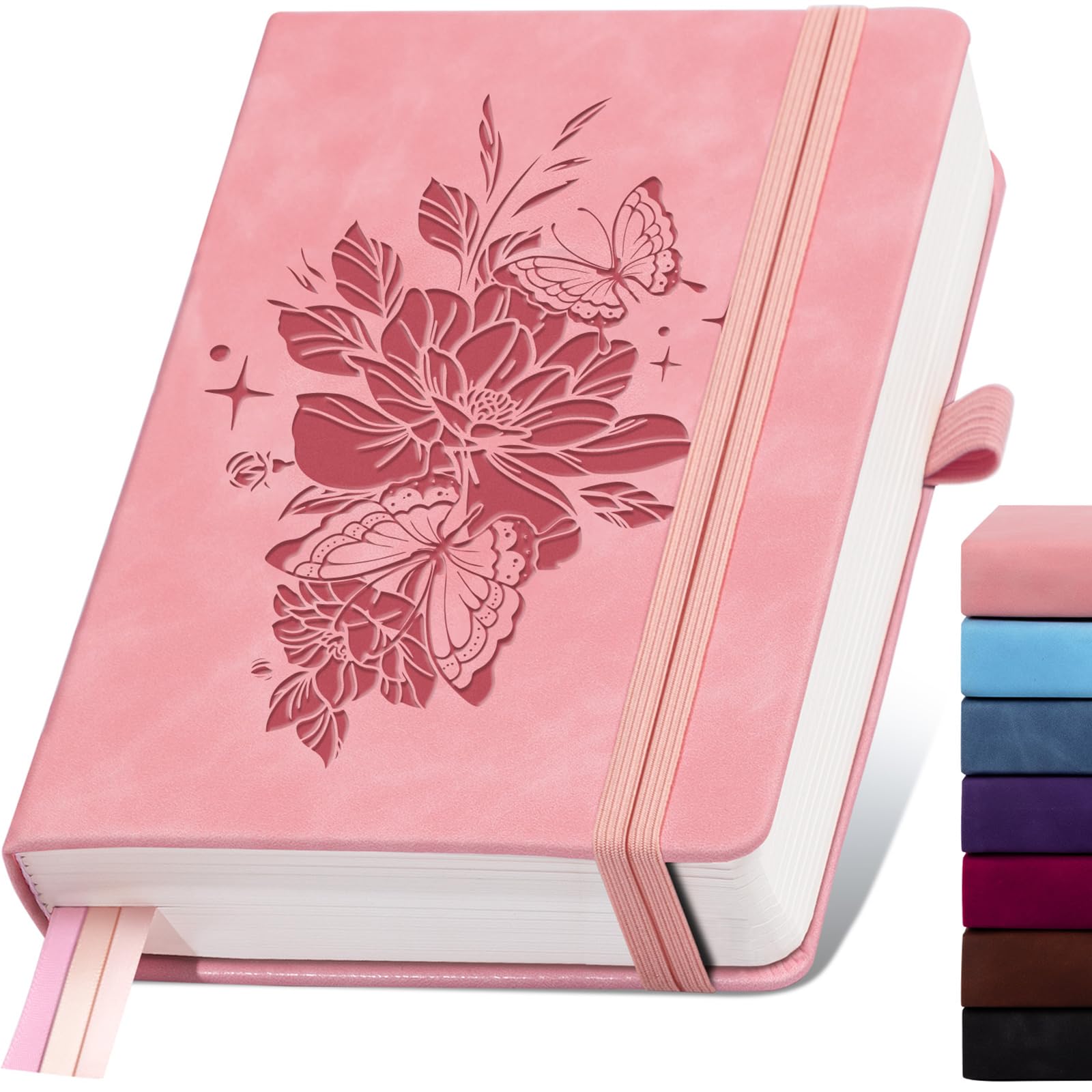
One page for every day of the year — that’s the promise of this ALKALO journal, and the paper backs it up. The 365 pages are 100 gsm acid-free light ivory stock, thick enough that standard pens don’t bleed, ghost (show through to the other side), or smudge. For someone journaling nightly, that page count means you won’t need to restart your record until the next calendar year. It’s the longest-running book here, and unlike the Sakae’s 160 pages, it keeps the same binding the whole way through.
The design details feel gathered rather than ticked off a list. An elastic pen holder keeps your pen attached, two elastic closures keep the cover shut, and three ribbon bookmarks let you hold several spots open at once. A 180° lay-flat design means the book sits level for lefties and righties alike. The hardcover wears a faux leather shell with a butterfly-flower pattern in pink, and the whole thing is put together like a gift — one that also works for sermon notes, bible study, or a sketch diary. What wins people over is the journal quality overall, and the soft velvet-feel cover is the detail that keeps getting singled out.
The honest caveat is in the binding, which draws mixed reports — some find it sturdy through daily use while others have had the binding give out. That’s a real durability variable to weigh if you beat your journal around in a bag. Treat the spine gently and the 365 pages give you a full year of record-keeping that a flimsier book wouldn’t. It’s also a blank book: if you need rules or grid, look elsewhere.
Who gets the most from it: daily journalers who want one long book instead of three short ones, and anyone giving a journal as a meaningful gift.
Worth knowing: the binding is the one variable to watch — a hardcover protects the pages, but treat the spine with care if you travel with it.
Best for year-round record-keeping: nightly journalers, bible-study note-takers, and gift-givers who want a single substantial book.
Not the fit if: you want ruled or grid pages, or need to toss it loose into a bag daily.
5. 4 Pack A5 Blank Notebook Journal

Four 100 gsm sketchbooks in one kraft-covered bundle
For a student or an artist who fills pages fast, four notebooks that are each this solid is the sensible buy. You get a 4-pack of 6 by 8.5 inch A5 books, each with 240 acid-free pages that resist feathering (ink spreading into fuzzy edges) and bleeding through. The paper is 100 gsm — heavier than the Comix 70 gsm and the Sakae 52 gsm — and the kraft cover keeps the whole set looking purposeful. Owners put these to work for drawings, study notes, and journal entries alike, and quality is the quality that comes through most in the feedback.
The specs favor flexibility. The hardcover uses an engineered wood shell with a lay-flat design, so you can sketch or write on a flat surface without the book fighting back. The 6 by 8.5 inch format fits into a schoolbag or handbag without hogging room — useful if you carry it between classes or to a desk job. Unlined plain paper makes these sketchbooks first, with room for notes second. Four books also make a sensible gift set, especially for kids heading back to school.
The durability picture: sturdiness gets a mixed read — most find the binding and cover sturdy through everyday use, while some report issues over time. It’s a value set, so the paper and price are the real value, not a lifetime guarantee. Also note these are blank pages; if you need lined or college-ruled writing space, a different pick serves better.
A strong pick for: students, sketchers, and anyone who needs several sturdy blank books at once.
Think twice if: you want ruled pages or you’re shopping for a single long-term journal.
6. Sakae Technical Paper Tomoe River FP Notebook A5

Barely-there paper that still refuses to feather
Fifty-two grams per square meter — that’s half the thickness of ordinary copy paper, and it’s the entire point of this notebook. The Tomoe River FP stock is made by SANZEN in Japan as a successor to the original Tomoe River paper, and despite being so thin it resists bleeding and feathering when you write with a fountain pen. If you’ve ever had ink spider out across cheap pages, this paper is the fix. The soft cover keeps the whole A5 book light enough to forget you’re carrying it.
This is a specialist’s book, not an all-rounder. You get 160 pages across 80 sheets of white, unruled paper, so it’s a blank canvas that suits writing, sketching, and diagramming equally. The A5 8.27 by 5.83 inch size is comfortable on a desk but still fits a bag. Compared with the LEUCHTTURM1917’s 120 gsm stock at the top of this list, this is the opposite philosophy — trading paper bulk for portability and a finesse that fountain pen users chase on purpose. It’s also the shortest page count here at 160, next to the 365-page ALKALO journal.
Know what you’re signing up for. At 52 gsm, heavier inks may still show through more than they would on a 120 gsm sheet, and the thin stock demands a lighter hand. It’s also a soft cover, so it won’t protect pages like a hardbound book. Buyers who prize paper feel over paper armor will love it. Buyers who want a rugged, page-numbered journal for daily logging should look at the heavier picks.
The paper-feel verdict: fountain pen people will notice the difference in how ink settles — this is paper built for that pen, not for a ballpoint doodle.
Where it gives ground: thin stock and a short page count mean it favors the careful writer over the rough handler.
The match for: fountain pen users and travelers who carry a notebook everywhere and want the lightest possible page.
Pass it by if: you need a hard cover and a heavy sheet that shrugs off rough treatment.
Know the Specs
Paper Weight in gsm (Grams Per Square Meter)
Paper weight is measured in gsm — grams per square meter — and it’s the single number that predicts how a notebook handles ink. A heavier sheet, like the 120 gsm LEUCHTTURM1917 or the 100 gsm options, holds a wet fountain pen or marker with less show-through. A featherlight 52 gsm sheet like the Sakae Tomoe River stays portable but rewards a lighter hand. If you write with wet ink every day, lean heavier; if you carry your notebook constantly, a lighter page may suit you.
What Acid-Free Paper Actually Does
Acid-free paper is made without the acidic compounds found in ordinary wood-pulp paper, which can turn pages yellow and brittle over time. That’s why it matters for journals, sketchbooks, and records you plan to keep or pass on. Every notebook here uses acid-free stock, so you get that protection across the board. The difference between them is paper weight and binding, not the acid-free treatment.
Bleed-Through vs Feathering
Bleed-through is when ink soaks all the way to the back of the page, making the reverse side unusable. Feathering is when ink spreads into fuzzy, uneven edges on the surface. Both are worse on thin paper and heavy ink, and both are eased by a heavier, denser sheet. Checking how a notebook handles these two issues tells you more about real writing comfort than any cover description.
Lay-Flat Binding & Page Count
A lay-flat spine lets both pages sit level, which makes two-page spreads easier to write, sketch, or map out. Thread binding tends to hold up better than a glued spine when you press a book open repeatedly. Page count is the other practical spec: more pages means a longer run before you restart, and shorter counts mean less bulk in a bag. Match the count to how fast you fill pages.
Common Questions
What does acid-free mean on a notebook?
Is 100 gsm paper thick enough for fountain pen ink?
Will a wet fountain pen bleed through a 52 gsm notebook?
How many pages should a daily journal have?
What is the difference between bleed-through and ghosting?
Is a lay-flat notebook better for left-handed writers?
Can I use a marker or brush pen in these notebooks?
How long will an acid-free notebook last?
Which is better for note-taking, ruled or blank pages?
Is a multi-pack notebook a better buy than a single premium book?
The Bottom Line
For most people, the acid free notebooks winner is the LEUCHTTURM1917 120G Hardcover because its 120 gsm paper handles wet ink without bleed-through and its numbered pages, dual ribbons, and back pocket make it a complete journaling tool. If you want paper feel in a featherlight book, reach for the Sakae Tomoe River at 52 gsm. And for a whole office or classroom shelf in one order, the Comix 8 Pack is the practical choice. Any of these six will keep your pages readable and unyellowed for the long haul — pick by how heavy a sheet you actually write on.
How we choose
We do not accept paid placement. Every pick is matched to a real buyer and a real use-case; we do not hands-on test units.
Sources
Specifications: manufacturer listings and product documentation. Review insights: verified customer reviews, as of November 2026. Pricing: not shown on this page (it changes often); check the current price via the retailer link.
As an Amazon Associate, My Heart Lives Here earns from qualifying purchases. This does not affect which products we feature.