Heads up: This post contains affiliate links. As an Amazon Associate I earn from qualifying purchases, at no extra cost to you. Learn more
Specs are compiled from manufacturer listings and verified buyer reviews and can change over time — please confirm the key details on the product page before buying.
Your smart lock does not die from being used too much. It dies from a battery that sags in the cold and gives up before the cell is empty. That is why the right pick here is a lithium AA, not the alkaline multipack you grab for TV remotes. Lithium cells hold voltage far better in a cold hallway or an unheated porch, which is exactly where a deadbolt works.
This guide is built by comparing the manufacturers’ published specifications and the patterns across verified customer reviews, so you get each pick’s real strengths and trade-offs instead of marketing spin.
Below you will find the cells that keep a motorized deadbolt and its keypad alive through winter, plus the plain-English specs that actually predict how long one set lasts inside your door. The short answer: the Energizer Ultimate Lithium AA is the strongest overall aa battery for door lock.
Top Picks

How To Choose The Best AA Battery for Door Lock
A motorized deadbolt is a hard device to feed. It sits idle for hours, then pulls a short, sharp burst of current to throw the bolt, and it often lives on an outside door where the temperature swings hard. That combination punishes ordinary alkaline cells faster than almost any other household job. Pick the cell around those conditions and the lock stops nagging you.
Go lithium before you go big
Lithium AA cells are built to keep their voltage steady as they drain, which is what a lock needs to run its motor at full strength. Plain alkaline cells fade gradually, so the lock weakens before it finally gives up. If your door faces an unheated porch, a lithium cell is the difference between a bolt that throws cleanly in January and one that grinds and stalls.
Match the sealed compartment
A deadbolt battery sits inside a sealed housing where a leaking cell can corrode the contacts and cost you the whole lock. Look for a stated leak-proof or leak-resistant design. A triple safety seal or a guaranteed leak-proof claim is worth more here than on a flashlight, because you cannot see the damage until the lock stops responding.
Read capacity as a fuel tank
Capacity is quoted in mAh (milliampere-hours, the amount of charge a cell holds), and it tells you roughly how long the cell can feed the lock before it is spent. A higher mAh number means fewer swaps. Compare it against the count in the pack, too: a huge capacity in a tiny pack and a modest capacity in a big pack cost you differently over a year.
Check the cold rating and the shelf life
The temperature range in Fahrenheit tells you the coldest morning the cell is built to handle. A lock on an exterior door wants a cell rated well below freezing. Shelf life matters just as much for a spare set kept in a drawer — a cell that holds power for years stays a usable backup, while a cheap one quietly drains before you ever open the pack.
Side-by-Side Comparison
| Model | Best For | Cell Type | Capacity | Count | Amazon |
|---|---|---|---|---|---|
| DURACELL Coppertop AA★ Best Overall | Everyday household stock | Alkaline | 1500 | 16 | Amazon |
| Energizer Ultimate Lithium AABest for Cold Weather | Cold-weather door locks | Lithium Manganese Dioxide | 8800 milliampere_hour | 8 | Amazon |
| Allmax AA Maximum Power Lithium | Long storage and spares | Lithium Metal | 3200 milliamp_hours | 12 | Amazon |
| NICEBATT Lithium AA 3500mAh | Mixed high and low drain gear | Lithium Ion | 3500 milliamp_hours | 12 | Amazon |
| Energizer Alkaline Power AA | Bulk household backup | Alkaline | 100 milliamp_hours | 32 | Amazon |
| Blinkspower Lithium AA | High-drain smart locks | Lithium Metal | 3700 milliamp_hours | 8 | Amazon |
| EBL Lithium AA Super Ⅲ | Smart lock and doorbell duty | Lithium Ion | 3700 mAh | 12 | Amazon |
Detailed Reviews
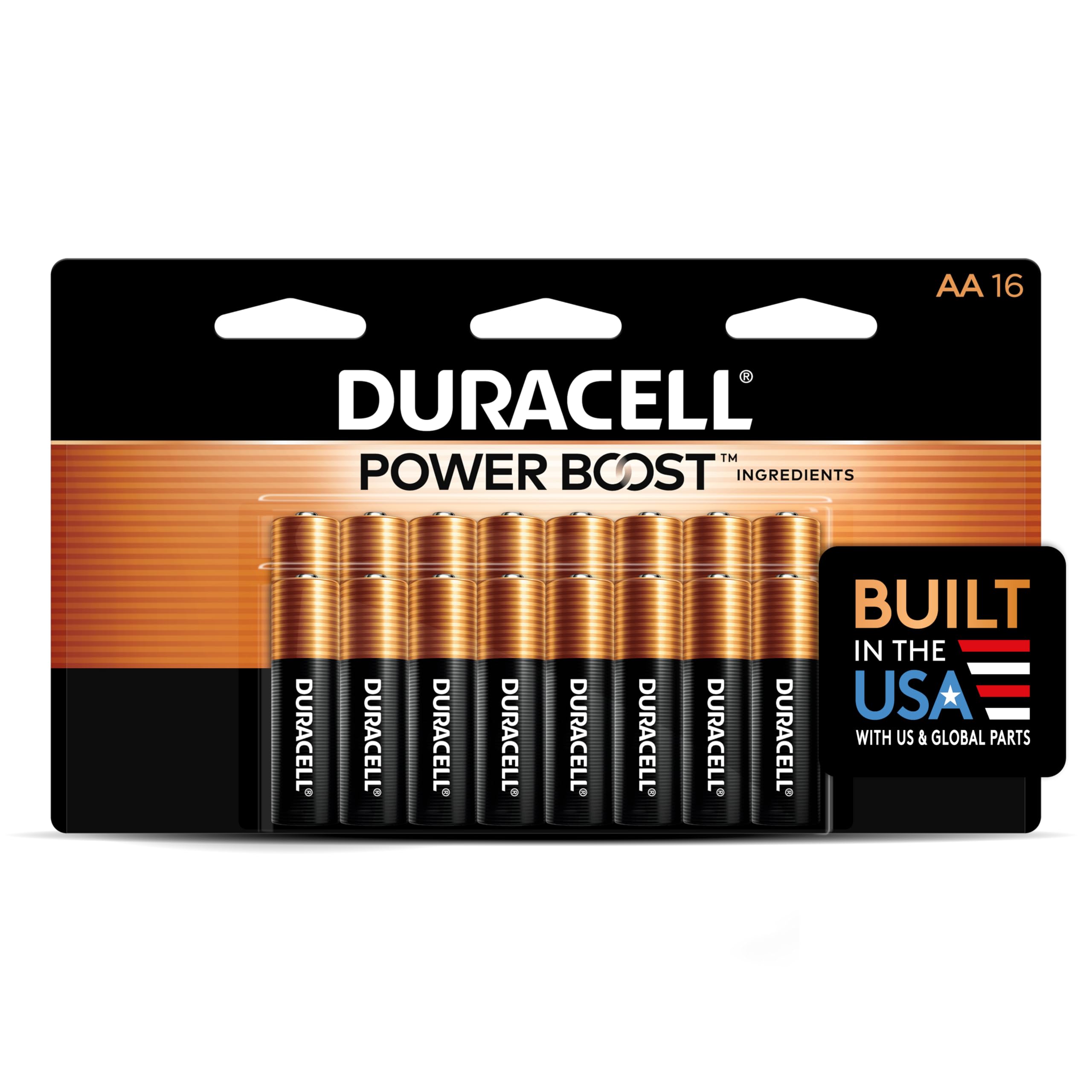
1. DURACELL Coppertop AA Batteries, 16 Count
Our pick — 4.5+★ from 130,500+ verified ratings; the strongest balance of quality and price.
The pack you buy for the whole house, door lock included, with a shelf promise that reaches twelve years.
The 12-year storage guarantee is what earns this pick the top slot. Store a set in a drawer and it is still meant to be ready to fire your deadbolt years from now. The pack holds 16 AA cells, and each one is a standard alkaline, the chemistry most entry-level locks are built to accept.
It is also the most-backed pick in the whole list. Owners run these through remotes, toys, smoke detectors and door hardware without drama. That versatility helps when the lock shares a drawer with a dozen other AA devices.
The catch is the battery life, and it is an honest one for a lock specifically. Alkaline chemistry fades as it drains, so the motor gets weaker before it stops. Some owners find these outlast other brands; others find they give up sooner than they hoped. For an interior door in a warm room the trade is easy. For a lock on a cold exterior porch, a lithium cell below is the safer match.
Why it takes the crown
- 12-year storage guarantee keeps spares usable for years
- 16 cells in one re-closable pack cover the whole house
- Reviewers praise the cell quality above all else
Where it asks for patience
- Alkaline drains gradually, so motor power weakens before the end
- Battery life draws mixed feedback — fine indoors, less sure outdoors
Reach for it when: your deadbolt lives on an interior door and you want one pack that feeds every device in the house.
Think again if: the lock sits on a cold exterior porch — lithium chemistry holds its voltage better there.
2. Energizer Ultimate Lithium AA Batteries (8 Pack)
A cell rated for 25 years in a drawer and a winter freeze on the same porch — the cold-weather workhorse.
Start with the temperature band: this cell is rated to perform from -40°F to 140°F. A deadbolt on an unheated exterior door never sees anything near that cold, which means you are working well inside the safe zone. The lithium manganese dioxide cell type (a lithium chemistry held in a stable solid compound) is what makes that range possible.
Capacity sits at 8800 milliampere_hour, the largest fuel tank in this lineup by a wide margin. It dwarfs the Energizer alkaline pack at 100 milliamp_hours, and the two should not be confused despite the shared brand name. That headroom is why a lock on this cell can go months between swaps rather than weeks.
The leak-proof guarantee is the other quiet win for a sealed battery compartment. Add the 25-year storage rating and you get a spare set that stays fresh far longer than the lock itself. The honest limit is the cost per cell — the 8-pack is priced against premium lithium, not bulk alkaline. Buy it for the door, not for the toy bin.
Cold-morning reliability: the -40°F floor keeps the motor throwing cleanly in a freezing entryway, which is the single most common reason a deadbolt fails.
The catch: 8 cells at premium lithium pricing means you want these reserved for the lock and the camera, not the kids’ controllers.
Built for: any deadbolt that faces real winter and needs to wake up on the first try.
Not for: replenishing the whole house — that job belongs to a bulk pack.
3. Allmax AA Maximum Power Lithium Batteries (12 Count)
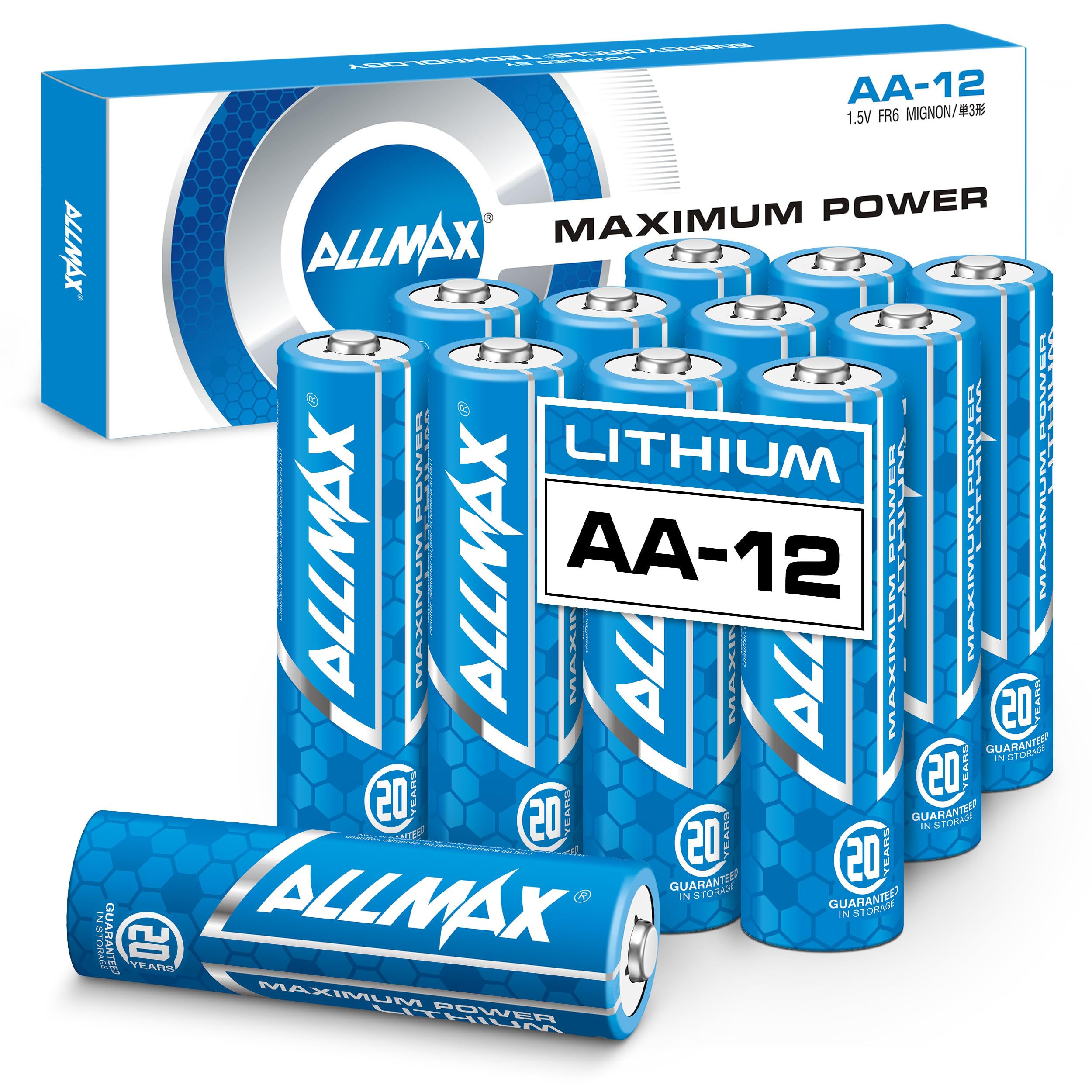
Twelve lithium cells with a twenty-year shelf life — the pack you leave waiting for an emergency.
A 20-year shelf life is a genuine comfort for a spare set kept for the deadbolt. A lock battery is a standby item, and standby items are exactly what go stale in a drawer. Allmax rates these to hold power for up to 20 years in proper storage. The cell type is lithium metal, and the pack carries 3200 milliamp_hours of capacity across 12 cells.
The leakproof claim here is built on a stated EnergyCircle seal designed to stop electrolyte leakage. That matters more inside a lock’s sealed housing than almost anywhere else. These are also listed for the smart door lock use case directly, in the same breath as outdoor cameras and smoke detectors.
The temperature band of -40°F to 140°F keeps these viable on a cold door. The honest caveat is endurance in the lock itself — some owners find these run less than two months in a busy device, while others find they beat ordinary cells. That spread makes them a strong standby choice and a fair choice for a heavily used front door.
The clear wins
- 20-year shelf life keeps your spare set fresh for years
- Leakproof seal protects the lock’s internal contacts
- 3500mAh-class value across 12 cells for the price tier
The honest limit
- Runtime in busy devices splits owners — some see well under two months
Pick it if: you want a long-stored backup pack that is ready whenever the lock starts chirping low.
Pair it with: a higher-capacity cell for the lock’s everyday slot if your door runs constantly.
4. NICEBATT Lithium AA Batteries 3500mAh
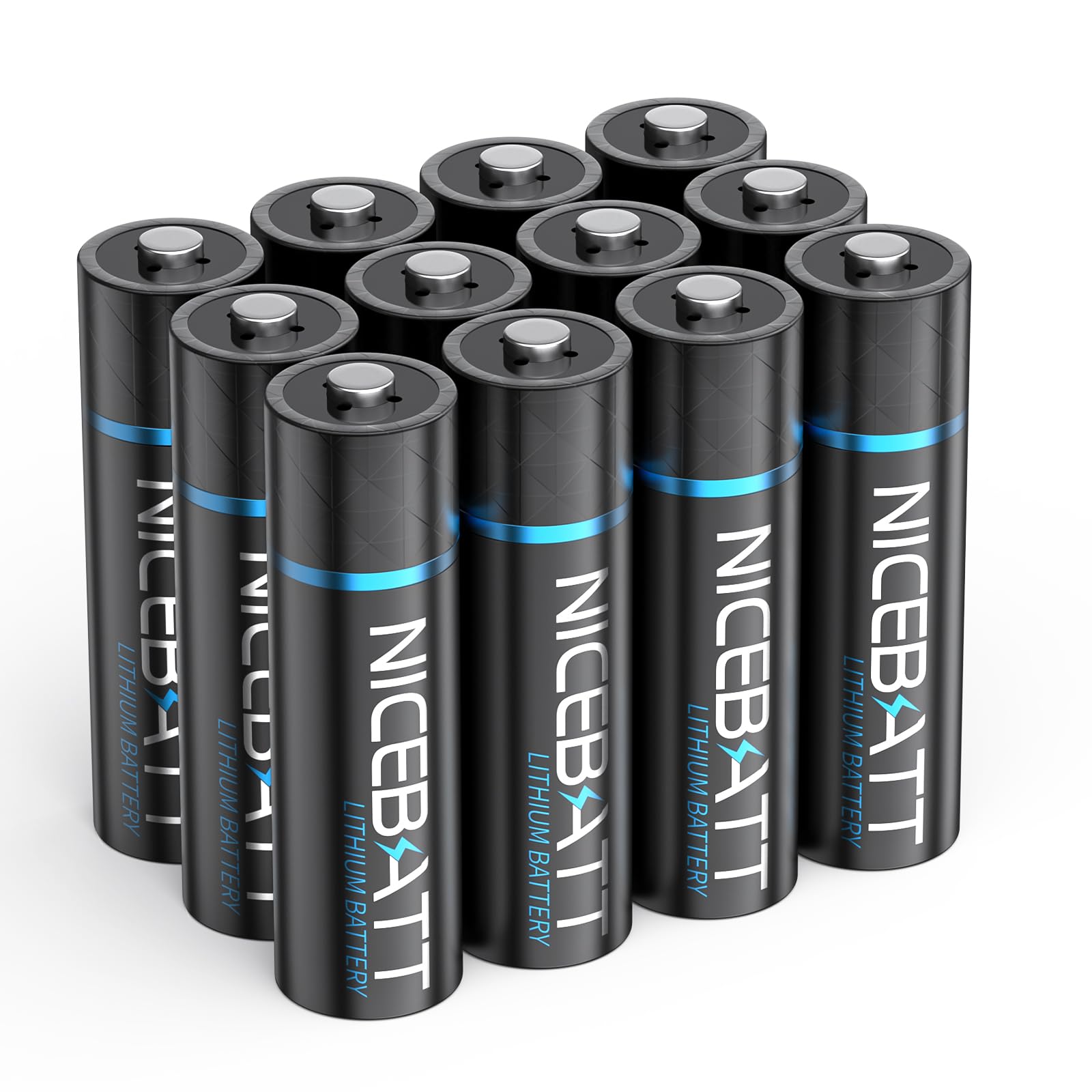
A 3500mAh lithium cell built with a three-layer seal and a 10-year promise in the drawer.
Where this one earns its place is the safe-cell design. A three-layer leak-proof construction is built to stop liquid from reaching the lock’s contacts, which is the long-term worry for any sealed deadbolt housing. Each cell packs 3500 milliamp_hours of charge in a 1.5 volt lithium package, and the pack gives you 12 of them.
The temperature range runs -40°F to 140°F, so a cold hallway or an outdoor door stays in range. It is also rated for both high-drain and low-drain devices, meaning one cell works in your deadbolt and in a remote or clock too. In a lineup of camera-first lithium cells, a lock-friendly one with real weather margins stands out.
The honest note is runtime. Battery life is the most-talked-about point here, and it draws mixed verdicts — some buyers report these run exceptionally well, while others find they run out far sooner than expected. For a lightly used secondary lock that is a fine match. For a front door that gets dozens of cycles a day, go in ready to test and recheck.
Seal quality that matters: three-layer leak protection is a strength worth weighing for any battery compartment you cannot see into.
Watch the runtime: with 12 cells in the pack you have spares on hand, which softens the mixed endurance reports.
A smart fit for: a back door or garage lock that cycles now and then, with spares already in the pack.
Look elsewhere if: your front door is the busiest lock in the house and you want the largest fuel tank available.
5. Energizer AA Batteries Alkaline Power, 32 Count
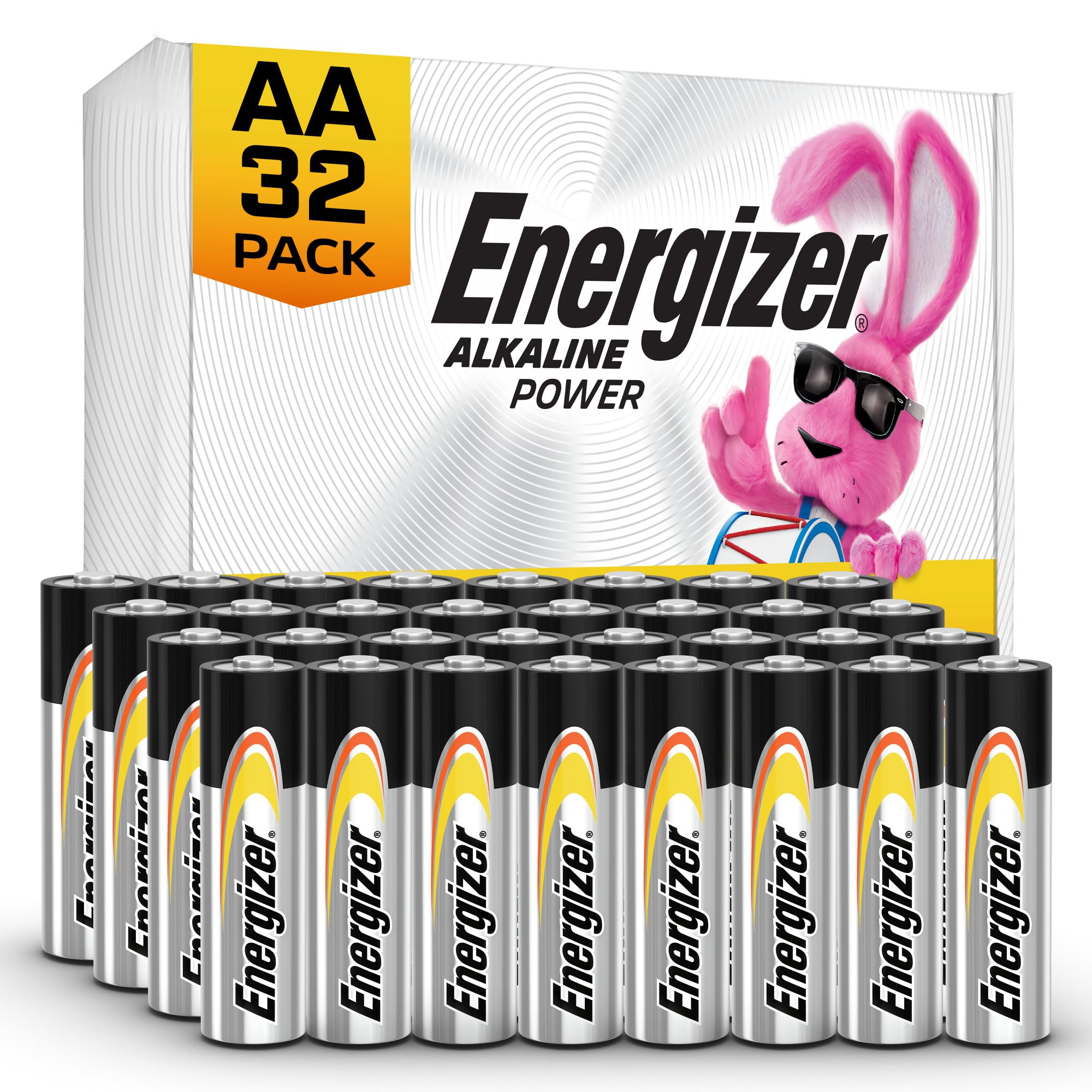
The thirty-two pack for the whole drawer — remotes, thermometers, toys, and the odd lock slot.
If a single set of batteries is meant to cover the whole house, this is the pack that does it. Thirty-two alkaline cells spread across every device that eats AA power, with a 10-year storage rating keeping the leftovers usable. The alkaline chemistry is compatible with most standard locks that accept AA cells, which is the easy part.
Owners mention the cells simply work, from a brand they trust to keep a door lock running. Reliability is the second most-cited strength in those reviews. That suits a bulk pack well, because you are stocking a dozen small devices rather than relying on one standout cell.
For a door lock specifically, the honest framing is this is a house pack, not a weather pack. Alkaline cells drop voltage gradually, so a motorized bolt feels weaker before the end, and runtime splits between owners who find it long and owners who find it short. Keep this as your inside-door and around-the-house stock.
What it brings
- 32 cells in one pack covers the whole house at once
- 10-year storage rating keeps the unused cells ready
- Reliability is a top-cited strength for the brand
Where it falls short for locks
- Alkaline voltage fades gradually, so lock motor power tapers
- Cold-weather behavior lags lithium chemistry
Grab it for: restocking a drawer that serves every room’s small devices, including an interior lock.
Save the lithium: for the exterior door, where the cold does the real damage.
6. Blinkspower Lithium Batteries AA 8 Pack, 3700mAh
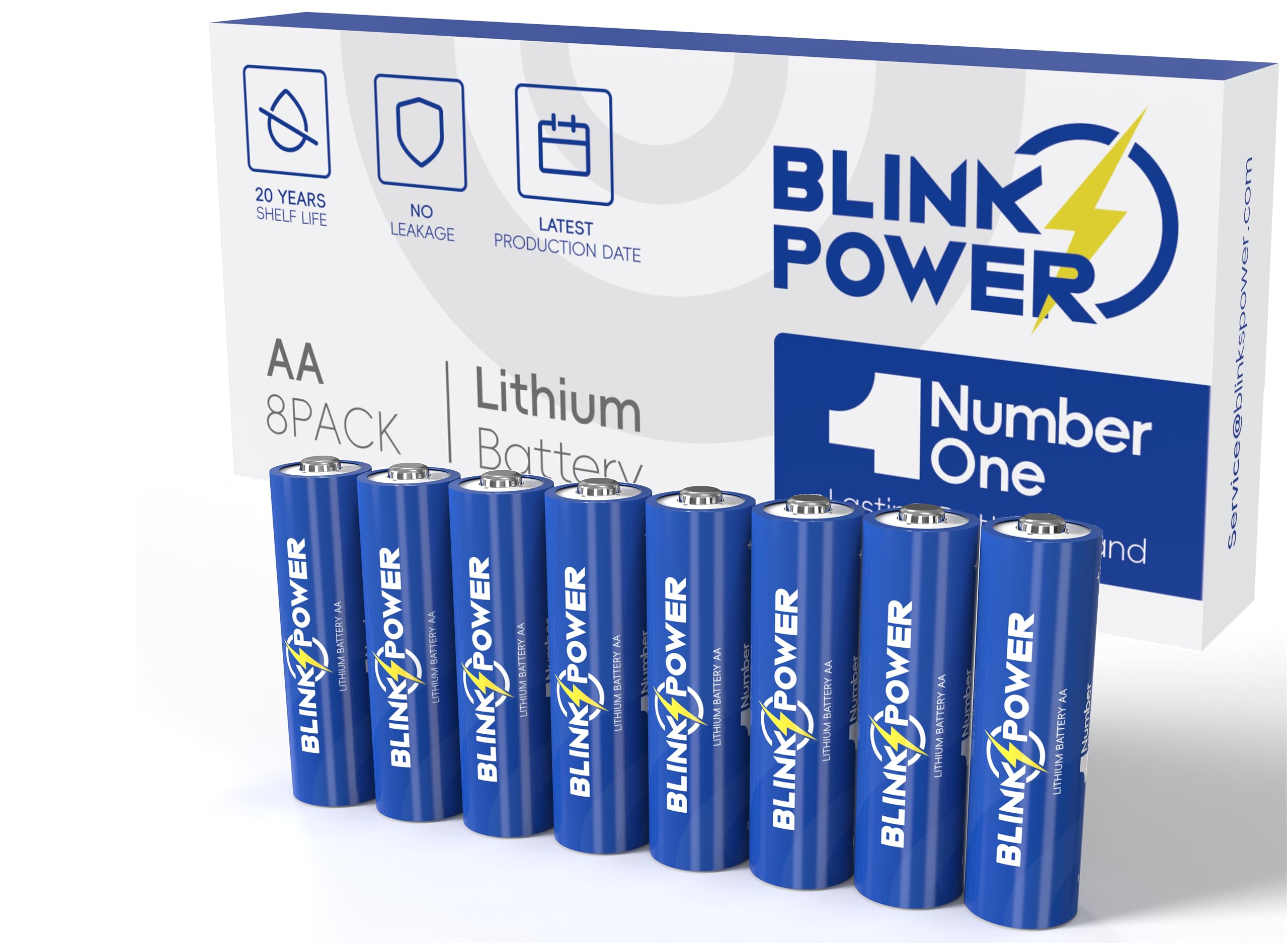
A 3700mAh lithium cell that names the door lock directly in its own compatibility list.
Notice the use-case list before anything else: this cell is listed for cameras, detectors, door locks and flashlights by the maker. A 3700 milliamp_hours capacity in a 1.5 volt lithium metal cell is genuine high-drain territory, the kind of power a motorized deadbolt wants when it throws the bolt. It is built for the devices that draw hard, not the ones that sip.
The physical format helps the lock install as much as the chemistry does. Each cell weighs 15 g, and the 8-pack occupies a compact 6.93 x 2.17 x 0.73 inches, which is smaller than the Energizer alkaline 32-pack at 7.56 x 4.21 x 1.22 inches. That means a smaller spare kit that tucks into a drawer or a lock’s own battery tray without bulk.
The 20-year shelf life and triple safety leak-proof design round out the peace-of-mind side. The honest trade-off is endurance in the field — battery life here draws mixed notes, with some owners seeing strong runs and a few finding them spent within about a week in demanding cameras. On a lock, treat these as a strong everyday choice and keep one spare in the tray.
Lock-first design: the 3700mAh juice and door-lock use listing put it right at home in a motorized deadbolt that draws hard when it cycles.
Scale the expectations: mixed endurance in busy cameras means this is a great pick for a moderate-use lock rather than a traffic-heavy smart lock.
Suits: a smart deadbolt that fires a few times a day and wants a high-drain lithium cell.
Be ready to swap: a heavily cycled lock may burn through these quicker than you would like.
7. EBL Lithium AA Batteries 12 Pack, 3700mAh
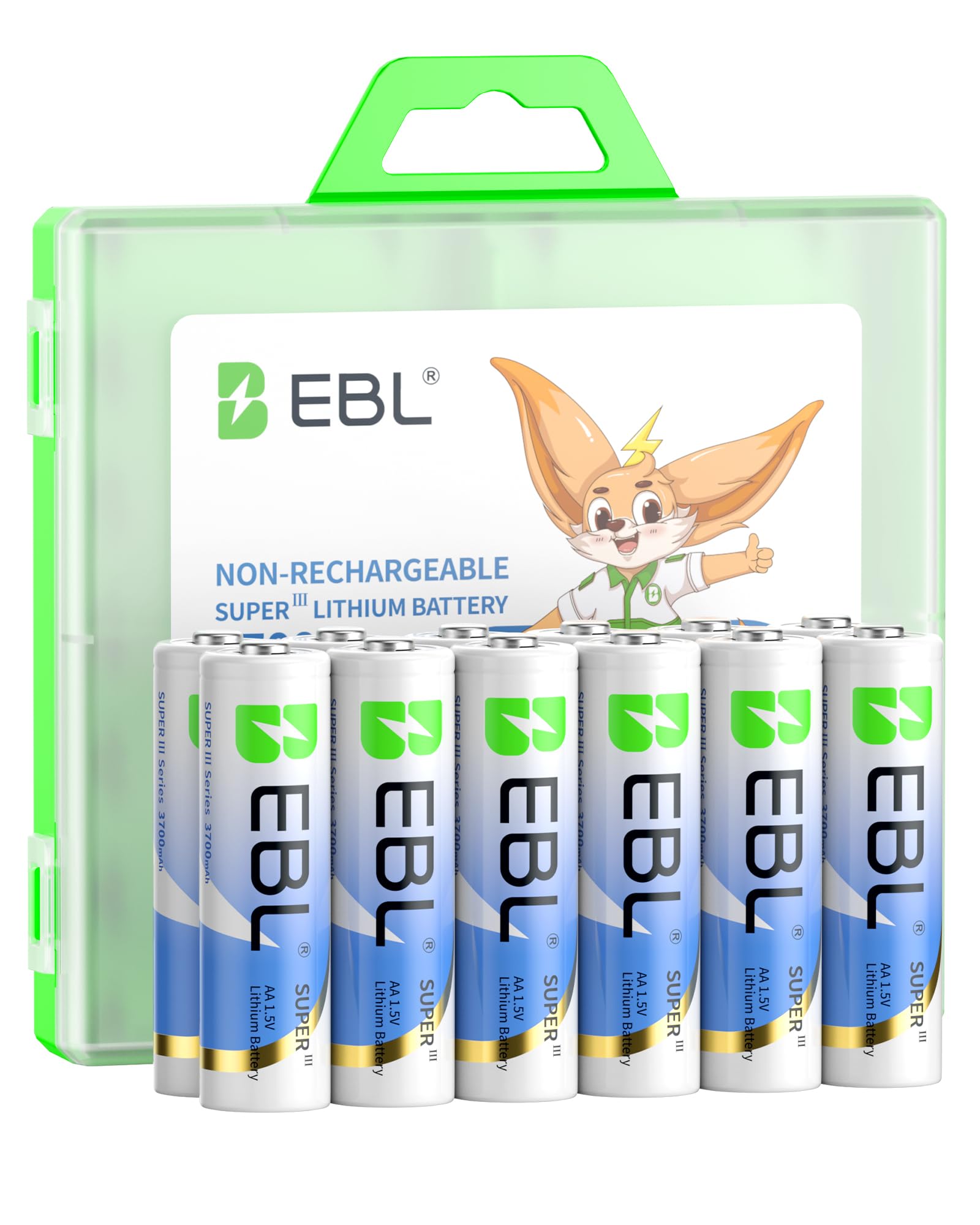
Twelve 3700mAh lithium cells built with the deadbolt and doorbell in the name.
Of all the cells here, this one is named for the exact job. The listing calls out a smart lock deadbolt and a doorbell directly, and it pairs that with a 3700 milliamp_hours capacity at 1.5 volts. Twelve cells in the pack also give you real spares, which is the difference between one low-battery nag and a full replacement set on hand.
The temperature spec is the standout: superior performance from -68°F to 140°F. That is a wider cold floor than the other lithium picks, and it gives a lock on a cold porch a lot of margin. A 100% leak-proof guarantee on the premium lithium-metal cells protects the sealed compartment, and a 25-year shelf life keeps the extras fresh.
The maker claims these outlast alkaline 7X and deliver 24% more power — a manufacturer figure, not a tested one. On real endurance, the reports split — many find them long-lasting, a few find they last around two weeks in hard-use devices. Quality draws the strongest praise, with value close behind.
The standout specs
- -68°F cold floor gives a cold door a wide safety margin
- 3700mAh across 12 cells means a full spare set
- 100% leak-proof guarantee protects the lock’s contacts
Weigh it honestly
- Runtime in hard-use devices splits owners — some see about two weeks
Made for: a smartphone deadbolt or doorbell that lives on an exterior door and hates the cold.
Keep spares close: because endurance can vary, the extra cells in the pack are your buffer.
Know the Specs
Capacity in mAh
Capacity is measured in milliampere-hours, which is the amount of charge a cell holds — think of it as the size of the fuel tank. A higher number means the cell can keep feeding your deadbolt’s motor for more cycles before it drains. Capacity and pack count work together: a big capacity in a small pack and a modest capacity in a big pack cost you differently over a year, so read both before you choose.
Temperature Range in °F
The temperature rating in Fahrenheit tells you the coldest and hottest conditions a cell is built to handle. A deadbolt on an outside door faces real winter, and a lithium cell rated well below freezing keeps its voltage where an alkaline one sags. If your lock sits on an interior wall, the range matters less, but the lock’s own motor still runs better on a steady-voltage cell.
Cell Chemistry: Lithium vs Alkaline
The chemistry is what makes a cell behave. Lithium cells hold their voltage steady as they drain and keep working in the cold, while alkaline cells fade gradually and weaken a motor before they die. For a lock’s sharp motor burst, the steady-voltage behavior of lithium is the useful trait. For a drawer full of remotes and toys, alkaline is the economical choice.
Shelf Life and Leak-Proofing
Shelf life is how long a cell stays usable in storage, and it matters here because lock batteries are often standby items sitting in a drawer. Look for a stated shelf life in years and a leak-proof or leak-resistant design. A leaking cell inside a sealed battery compartment can corrode the contacts, and you will not see the damage until the lock stops responding.
Common Questions
Are lithium AA batteries better than alkaline for a door lock?
Can I use standard alkaline AA batteries in my smart lock?
How long will one set of AA batteries last in a smart door lock?
Why did my door lock batteries die faster in winter?
Is a leaking AA battery dangerous for my lock?
Should I match battery brands inside the same lock?
Do higher mAh AA batteries actually last longer in a lock?
Can I use rechargeable AA batteries in a smart deadbolt?
Where should I store spare lock batteries?
What should I do when the lock starts warning of low battery?
The Bottom Line
For most doors, the aa battery for door lock winner is the Duracell Coppertop 16-pack because its 12-year shelf guarantee and 16-cell count cover the whole house, lock included, for an interior door. If your deadbolt faces real winter, grab the Energizer Ultimate Lithium 8-pack for its -40°F to 140°F range and its far larger fuel tank. And for a smartphone deadbolt or doorbell on an exposed door, the EBL Lithium 12-pack is the one to reach for, with a spare set already in the box.
The dependable move is simple: reserve a weather-ready lithium cell for the exterior lock, keep a bulk alkaline pack for everything else, and replace every cell in the lock at the same time.
How we choose
We do not accept paid placement. Every pick is matched to a real buyer and a real use-case; we do not hands-on test units.
Sources
Specifications: manufacturer listings and product documentation. Review insights: verified customer reviews, as of November 2026. Pricing: not shown on this page (it changes often); check the current price via the retailer link.
As an Amazon Associate, My Heart Lives Here earns from qualifying purchases. This does not affect which products we feature.