Heads up: This post contains affiliate links. As an Amazon Associate I earn from qualifying purchases, at no extra cost to you. Learn more
Specs are compiled from manufacturer listings and verified buyer reviews and can change over time — please confirm the key details on the product page before buying.
You want a plain screen that turns on to a picture, not a menu of adverts. Here is the trap: almost none of the big 50-inch sets sold today are genuinely non-smart. The ones below fall into two honest groups. Some are true non-smart televisions with a tuner and an HDMI port and nothing else. The rest are smart models you can run dumb, by never signing in and letting a streaming stick do the heavy lifting.
This guide is built by comparing the manufacturers’ published specifications and the patterns across verified customer reviews, so you get each pick’s real strengths and trade-offs instead of marketing spin.
The key is knowing which sets boot straight to an HDMI input, which pull free channels from a built-in ATSC tuner, and which demand an account before showing a picture. That single detail decides whether the set boots to a stick, a console, or an aerial without a prompt. It separates a genuine 50 inch non smart tv experience from a smart set that simply tolerates you.
Top Picks


How To Choose A 50 Inch Non Smart TV
Your first question is not which brand — it is if you want a television that has no smart system at all, or a smart one you intend to ignore. Those are different purchases. Confusing them is how people end up with a screen nagging them to sign into an account every time it wakes up.
True non-smart vs. smart-then-ignored
A genuinely non-smart set has no app store built in. You plug in a Roku, a Fire Stick, an Apple TV box or a games console, and the screen simply shows whatever that device sends it. Nothing else runs. The upside is no forced updates, no adverts on the home screen, and no account. The trade-off is that you must own a streaming device, because the television itself cannot fetch Netflix on its own.
The other route is a smart model you never connect to the internet. On most of these sets you can decline the network step during setup and go straight to an HDMI input. That gets you a brighter, newer panel than the small non-smart screens tend to offer, at the cost of a little patience at first setup.
Screen size and room distance
A 50-inch diagonal screen is the practical middle ground for a living room or a large bedroom. Sit roughly where the whole panel fits comfortably in your field of view and you will not be turning your head to follow the action. If the set is going in a kitchen, a spare room or a child’s bedroom, the smaller non-smart options on this list are the better fit — a 22-inch screen is a big, clear display at close range without dominating a wall.
The tuner question
If you want free local news, sport and emergency broadcasts with no monthly bill, look for a built-in ATSC tuner. That is the aerial receiver that picks up over-the-air digital channels. A set with one works as a complete television with just an indoor aerial attached; a set without one is only a monitor for whatever you plug into it.
Panel type and HDR
QLED is a layer of quantum dots behind the panel that widens and brightens colour. Local dimming means the backlight is split into zones that brighten and darken independently, which deepens blacks. HDR (high dynamic range) formats like Dolby Vision, HDR10 and HDR10+ let the screen show brighter highlights and darker shadows in the same frame. None of these depend on the smart system — they work exactly the same when a streaming stick feeds the set.
Side-by-Side Comparison
| Model | Best For | Screen Resolution | Panel / HDR | Key Extra | Amazon |
|---|---|---|---|---|---|
| Roku 50-Inch Select Series★ Best Overall | Everyday streaming with the simplest remote | 4K (2160p) | QLED, HDR10 | Roku OS, Bluetooth 5.2 | Amazon |
| Amazon Fire TV 50″ Omni QLEDHands-Free Pick | Hands-free Alexa control and art display | 4K UHD | QLED, Dolby Vision IQ, HDR10+ Adaptive | 48-zone local dimming, 4 HDMI | Amazon |
| TuTu 22 Inch FHDTrue Non-Smart | Small rooms, ad-free true non-smart viewing | 1080p Full HD | LED, Dolby Audio | ATSC tuner, no smart OS | Amazon |
| VIZIO V4K50M (Renewed) | Budget 4K with gaming features | 4K UHD | Direct LED, HDR | WiFi 6, Bluetooth 5.3, HDMI VRR | Amazon |
| VIZIO V4K50M-0810 | Dolby Vision on a 50-inch 4K panel | 4K UHD | Full Array Local Dimming, Dolby Vision / HDR10+ | 3000:1 contrast, WiFi 6, VRR | Amazon |
| FPD CG50-C3 | Google Cast built in, plenty of ports | 4K UHD (3840 × 2160) | LED, HDR10, 60Hz | 3 × HDMI 2.1, MEMC, ALLM | Amazon |
| Westinghouse Roku 50″ | Contrast hunters who want Mini-LED | 4K UHD (3840 × 2160) | Mini-LED QLED, Dolby Vision / HDR10 / HLG | DCI-P3 colour, 4 × HDMI 2.1 | Amazon |
| Hisense 50″ E6 Cinema Series | Cinema-style colour and motion | 4K UHD | Hi-QLED, Dolby Vision / HDR10+ Adaptive | Motion Rate 120, WiFi 6, AI 4K Upscaler | Amazon |
| Amazon Ember 50″ QLED | Alexa+ hands-free and next-gen Fire TV | 4K Ultra HD | QLED, Dolby Vision / HDR10+ Adaptive | Quad-core processor, WiFi 6, Omnisense sensors | Amazon |
Detailed Reviews
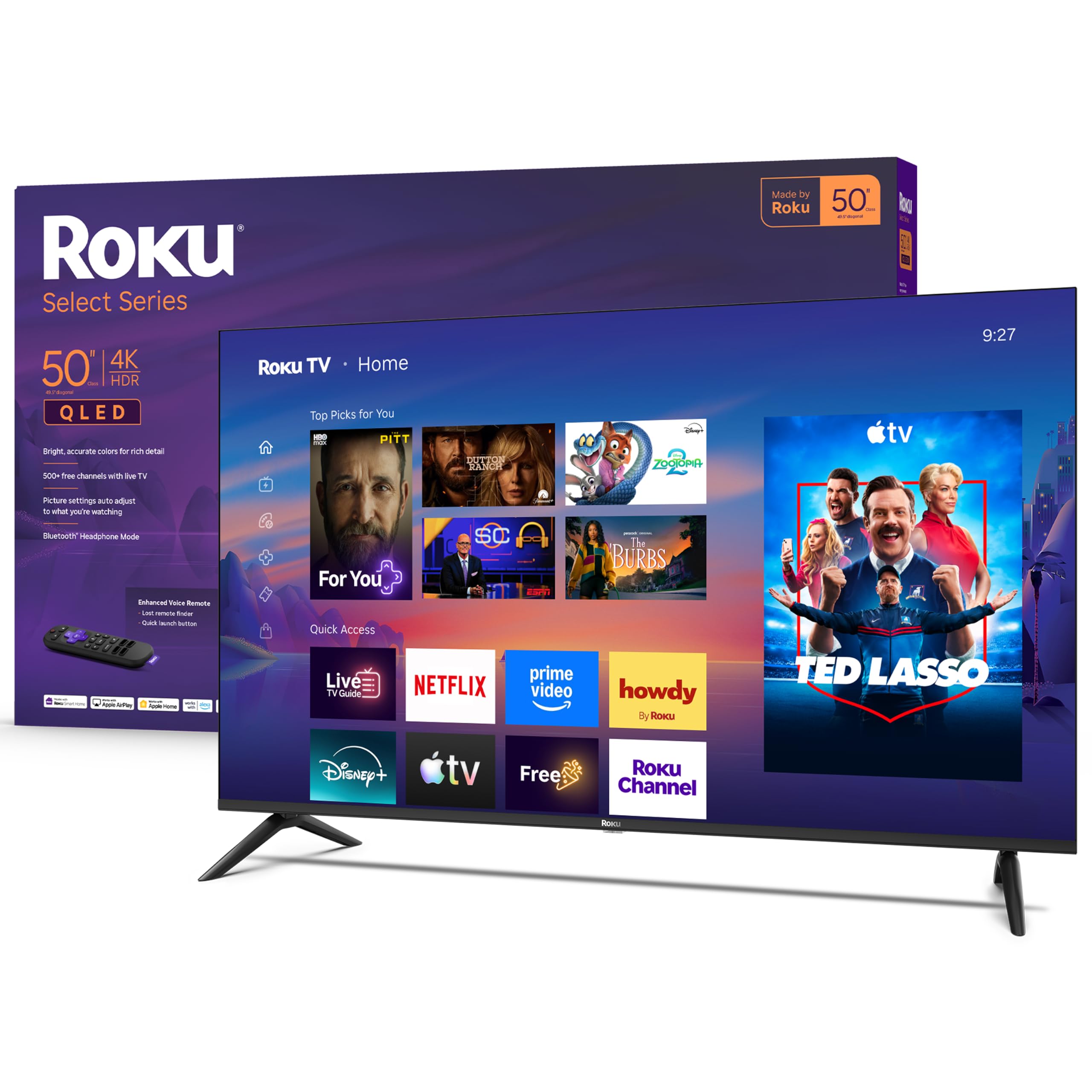
1. Roku 50-Inch Select Series Smart TV
Our pick — 4.5+★ from 1,500+ verified ratings; the strongest balance of quality and price.
The set that gets out of your way fastest — plug in, pick an input, watch.
If your plan is to run a stick or a console and never touch the smart menu, this is the screen to build that around. It is a 4K (2160p) QLED panel, which means a sharp picture plus a quantum-dot colour layer for brighter, richer tones, and Roku Smart Picture automatically cleans up and optimises incoming signals. Setup is measured in minutes, and the home screen is about as uncluttered as smart TVs get. The remote is short on buttons, which helps if you are handing it to someone who does not want a lesson.
What wins people over is the panel-and-brand combination itself — quality is the thing this set is praised for most, with picture quality close behind. The colour and sharpness hold up on live sport and daytime news, and the frameless design keeps the screen the star rather than a chunky border. Sound is a genuine surprise for built-in speakers, tuned for clear speech and louder output so dialogue lands without you straining. Bluetooth Headphone Mode is the quiet-hours trick: pair headphones and watch without waking the house.
The honest caveat is connectivity. That is the one area where opinions split, with a slice of owners running into wireless hiccups — so if your router lives two rooms away, plan on the Ethernet port rather than Wi-Fi. The other thing to know is that this is a smart TV by design. You can decline the network step and boot to an input, but the operating system is still there underneath. One detail note against a direct rival: this set carries Bluetooth 5.2, where the VIZIO V4K50M (Renewed) ships Bluetooth 5.3.
Where it earns its keep
- 4K QLED picture with HDR10, so bright scenes keep their colour instead of washing out
- Setup measured in minutes — plug in, pair the remote, done
- Bluetooth Headphone Mode for late-night watching
- Lost-remote finder, which matters more than it sounds
What to weigh first
- Wi-Fi is the weakest link — wired Ethernet is the safer setup
- It is still a smart TV underneath, so decline the account step on day one
- Bluetooth 5.2 rather than the 5.3 on the VIZIO (Renewed)
Reach for this if: you want a bright 4K QLED screen, a remote a guest can figure out, and a setup you finish before the kettle boils.
Think twice if: you need a television with no smart system at all — this one asks you to switch its network off manually.
2. Amazon Fire TV 50″ Omni QLED Series
A screen that turns into wall art when you are not watching anything.
Contrast is the number to care about here. Full array local dimming splits the backlight into 48 individual zones, so dark scenes go genuinely dark and bright highlights punch through — that zone count is the whole reason this set looks more expensive than it is. On top sits a QLED layer with Dolby Vision IQ and HDR10+ Adaptive, plus a sensor that reads your room light and adjusts brightness on its own. In a sunny front room, that last part means you are not diving for the remote at 4pm.
Fire TV Ambient Experience is the feature that changes how the room feels. Four HDMI inputs, with one eARC, gives you room for a cable box, two consoles and a soundbar without a switcher. Alexa is built in via microphones, so you can launch something without hunting for the remote — and a physical switch disconnects those microphones when you want it off.
Here is the trade-off, and it is a real one: reliability is the shadow over this set. Buyers report units that stop working and Alexa going unresponsive after about five months of use. As one put it: “the TV’s reliability is concerning.” Picture and sound draw consistent praise — it is the long-term dependability that gives pause, which is why a protection plan is worth considering at checkout.
The contrast maths: 48 dimming zones is more granular control than a plain direct-LED backlight gives you, and the difference shows up in letterboxed films and night scenes.
Run it dumb: skip the Amazon sign-in during setup and this becomes a very good 4K panel for a Roku or console — you keep the dimming and lose the prompts.
The deciding factor: the Ambient Experience art mode plus 48 dimming zones make this the pick for a living room where the TV is on display even when it is off.
Be realistic about: long-term reliability — some units have failed within months, so factor in cover.
3. TuTu 22 Inch FHD Non-Smart Television
The one on this list with no smart system inside it at all — and no adverts either.
Start with the sentence that defines it: there is no operating system here. No home screen, no account, no forced adverts, no updates. You plug in a Roku, a Fire Stick, an Apple TV box, a TiVo, a Xumo or a console and the screen just shows what it is given. If you searched for a non-smart TV to escape menu clutter and privacy worries, this is the only pick on the list with no operating system at all.
The panel itself is a 22-inch FHD screen at 1080p, which at desk or bedroom distance reads crisp and detailed. Dolby Audio handles dialogue, so in most rooms you will not need to add speakers. A built-in ATSC tuner (a free over-the-air TV receiver) is the sleeper feature — attach a basic indoor aerial and you get free over-the-air HD channels: local news, sport and emergency broadcasts with no monthly fee and no internet connection required. On sheer quality this set punches well above what its size suggests, and buyers also single out the value and the compact size — it is a favourite for a child’s room or a small flat where a 50-inch panel would swallow the wall.
Set your expectations on two fronts. Sound divides opinion sharply, with some finding it perfectly fine and others comparing it to a small transistor radio, so a cheap soundbar fixes the worst case. Reliability is the other mixed area, with a portion of units not performing as described. Bear in mind too that this is a 22-inch screen, not a 50 — it is the right buy for a tight space, not a substitute for a main-room television.
What it does that the smart sets cannot: it boots to whatever is plugged in, with nothing running behind the picture and nothing collecting data.
Buy it for the right room: kitchen counter, spare bedroom, kid’s room or a workshop — anywhere a 50-inch panel is simply too big.
The honest match: this is for the buyer who wants a television that behaves like a monitor and never phones home.
Size check first: at 22 inches it suits close viewing only — measure the room before you commit.
4. VIZIO V4K50M 50 Inch 4K UHD HDR Smart TV (Renewed)

A refurbished 4K panel with gaming features that usually cost more.
The word “Renewed” is doing real work in that title, so start there. This is a refurbished set — a returned or opened unit that has been checked and resold — which is how a 50-inch 4K UHD screen lands in the budget tier. If you are comfortable with that, you get a lot of picture for the outlay. The panel is direct LED with 4K UHD resolution, and the connectivity is genuinely modern: WiFi 6 dual-band for steadier streaming, and Bluetooth 5.3, which is the newer of the two Bluetooth versions in this comparison — the Roku Select Series uses 5.2.
Gamers get Auto Low Latency Mode and HDMI VRR, which together cut the delay between your controller and the screen and smooth out frame pacing. DTS Virtual X shapes built-in audio into something wider than the panel has any right to produce, and Bluetooth lets you pair wireless headphones for late sessions. Quality is what this set is praised for most, with value for money right behind it. Picture sharpness and colour get consistent credit — it does not look like a refurbished bargain.
The risk is physical. Screen condition is a mixed report, with some units arriving with cracked panels — that is a delivery and inspection issue rather than a design fault, but it is why you open the box and photograph it before the return window closes. Underneath, it is still a VIZIO smart platform, so decline the network step and feed it from a stick if a clean, non-smart feed is the goal.
Why it holds its slot
- 4K UHD direct-LED picture at a refurbished price
- WiFi 6 dual-band and Bluetooth 5.3 — current standards, not leftovers
- HDMI VRR and Auto Low Latency Mode for consoles
Where the gamble sits
- Renewed stock, so condition varies and cracked panels have been reported
- Still a smart platform — you must bypass setup to run it dumb
Good fit for: a gamer or streamer who wants 4K and current wireless standards without paying full price.
Inspect on arrival: a refurbished panel deserves a careful unboxing on day one.
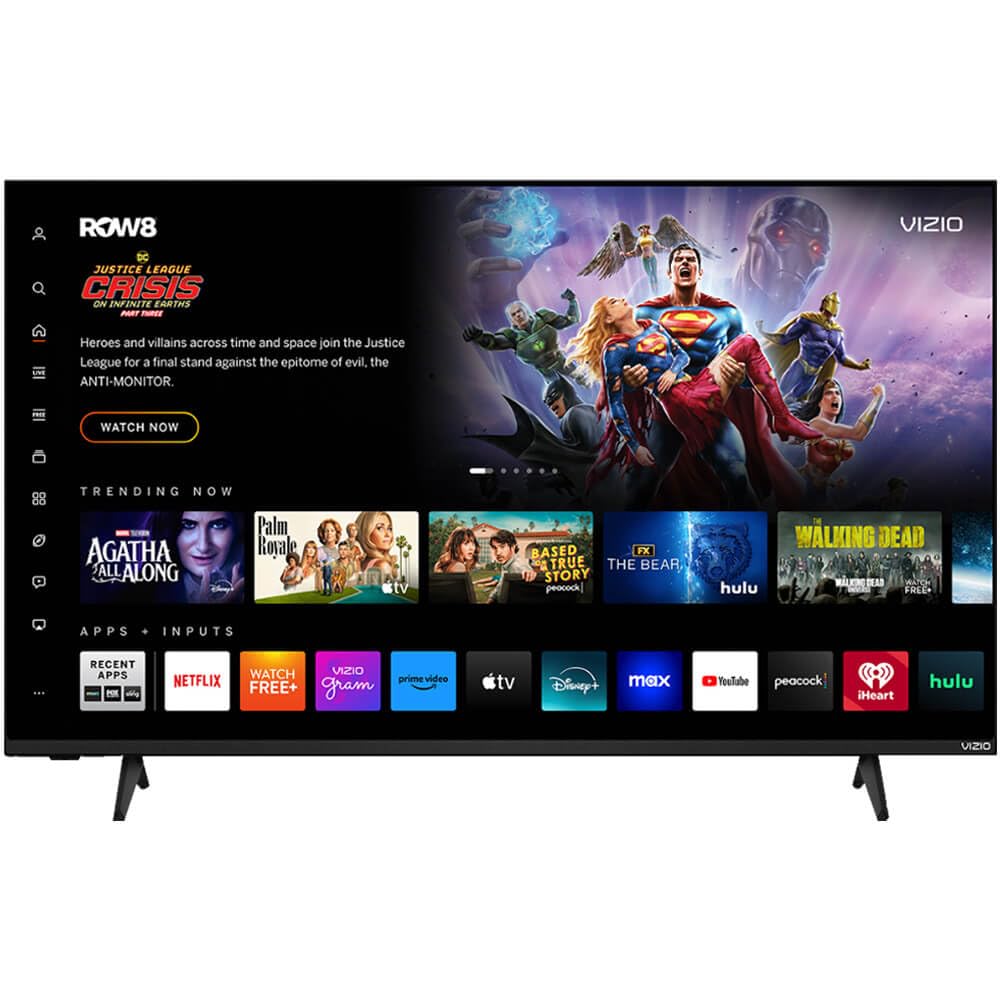
5. VIZIO 50 Inch V Series V4K50M-0810
Dolby Vision and a 3000:1 contrast ratio on a 50-inch 4K panel.
This is the new-condition sibling of the refurbished VIZIO above, and it buys you a specific step up: Dolby Vision HDR and HDR10+ support. Those formats let the screen adjust brightness and colour scene by scene rather than sticking to one setting, which is why night scenes and neon-lit city shots look more deliberate. Behind the panel sits Full Array Local Dimming, which darkens zones independently, and a 3000:1 contrast ratio gives you a stated starting point for how deep the blacks go against the brights.
Around that core sits WiFi 6 dual-band for steadier streaming, Bluetooth for wireless headphones or speakers, and HDMI VRR (variable refresh rate) with Auto Low Latency Mode to keep console gameplay responsive. Annual energy consumption is listed at 308 kwh, which is a useful figure if the set is going to run for hours every evening. What the owners who rate it highest keep coming back to is the quality of the picture itself — it is the pick here if Dolby Vision matters to you and you would rather not drop to a refurbished unit to get it.
Be clear-eyed about how you will run it. This is a smart TV, so if your plan is a permanent stick-fed, no-account setup, the initial setup is the one point where experiences split — declining the network step takes a little care. And if the price jump over the Renewed model is what made you pause, ask yourself honestly whether Dolby Vision and HDR10+ are worth it on the content you actually watch.
The format upgrade: Dolby Vision and HDR10+ are the reason to choose this over the Renewed VIZIO — the panel reads each scene instead of applying one blanket setting.
Set it up offline: skip the Wi-Fi step, connect your stick to an HDMI port, and the smart layer stays dormant.
Worth it for: anyone who watches a lot of film and wants Dolby Vision on a 50-inch 4K panel without refurbished caveats.
Ask yourself: if HDR formats are not something you notice, the Renewed VIZIO does the same core job for less.
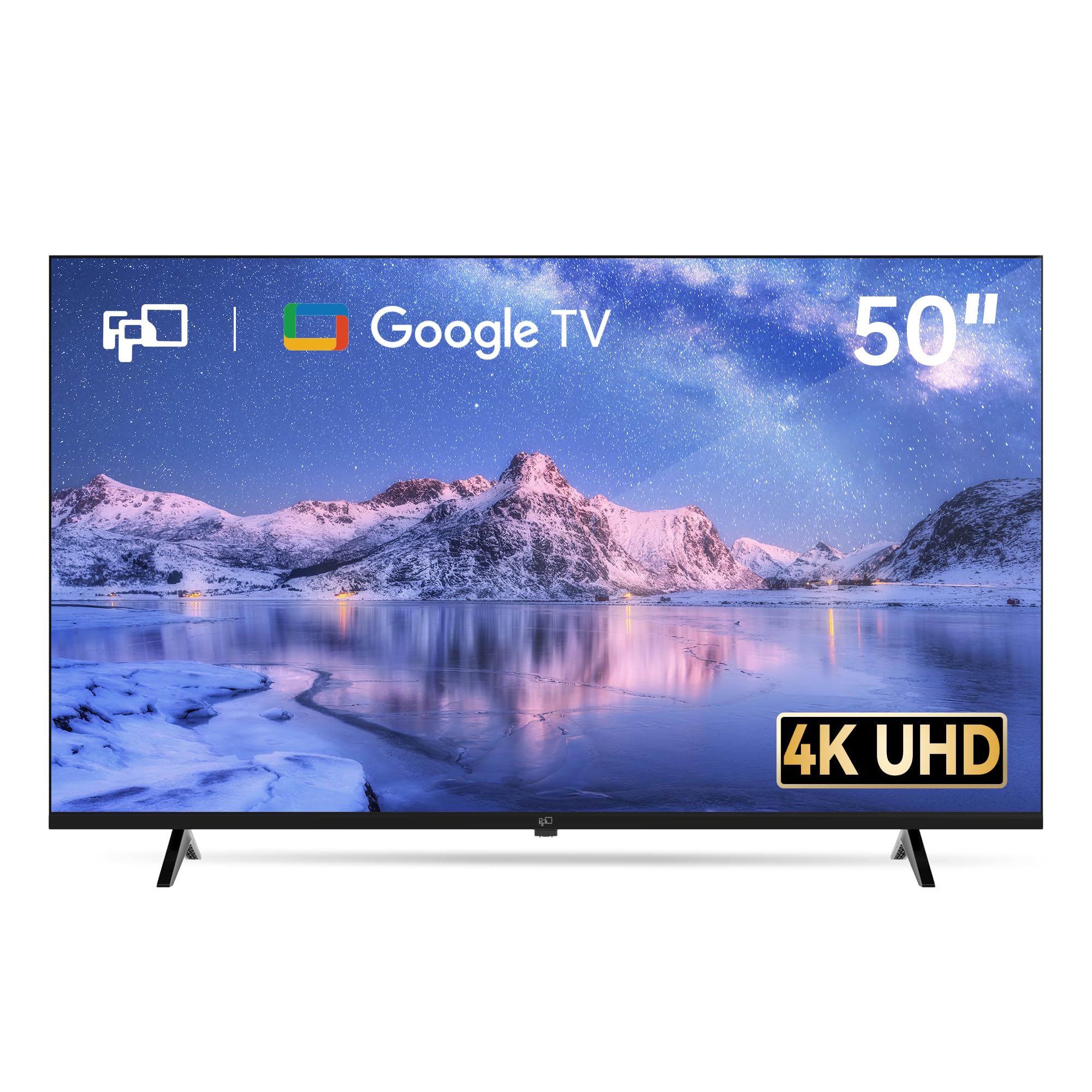
6. FPD 50 Inch 4K LED Google TV (CG50-C3)
Three HDMI 2.1 ports and a cast button — the connector’s set, not the app’s.
The connection count is the reason to look here. Three HDMI 2.1 ports (one of them eARC for high-bandwidth audio back to a soundbar), two USB inputs and multiple audio/video connections mean you can leave a console, a stick and a Blu-ray player permanently plugged in. The panel is 4K UHD at 3840 × 2160 with a 60Hz refresh rate, HDR10 for contrast and colour, and Dolby Audio for sound. MEMC motion smoothing cuts blur on fast action, and ALLM drops latency when a console is detected.
Google Cast built in is the quietly useful part: you can throw video from a phone, tablet or laptop straight to the screen without adding a streaming device. If “non-smart” for you just means casting from your phone with no extra box, this covers it. Picture quality is what draws the most praise among owners, and the 4K resolution holds fine detail — text on news tickers stays readable across the room.
The caveat is durability. Performance is the area that lets this set down, with a number of reports of the TV and its remote failing after roughly four months, and sound quality drawing very split opinions — from praise down to a three-out-of-ten verdict. That makes a protection plan sensible, and it makes this a set to buy for a spare room or a secondary space rather than the one television in the house.
Port maths: three HDMI 2.1 inputs plus two USB beats most 50-inch rivals on sheer sockets, which matters if you hate swapping cables.
Where it stumbles: longevity is the recurring theme — treat the cover as part of the purchase.
Best for: a multi-device setup — console, stick and disc player all wired at once — in a room where the TV is not the main event.
Weigh carefully: reports of units and remotes failing within months mean long-term cover is the sensible call.
7. Westinghouse Roku 50 Inch Mini LED QLED 4K

Mini-LED zones behind a QLED layer — this is where the contrast lives.
Put the headline spec on the table first: Mini-LED backlighting. Instead of a row of large LEDs, thousands of tiny ones sit behind the panel in dense local dimming zones, brightening highlights and deepening shadows independently. The result is less light bleed around bright objects on dark backgrounds and a stated 100000:1 contrast ratio to back it up. Add QLED quantum-dot colour rated up to 93% DCI-P3 — the wide colour range film grading uses — and you have the most colour-capable panel on this list.
Motion is handled by MEMC smoothing on a 3840×2160 4K panel, so fast sport and action lose the judder. Dolby Vision, HDR10 and HLG are all supported, which covers essentially every streaming service you might feed it. Roku is the operating system, which is the friendly one: a simple home screen, an uncluttered remote, and 350+ free live channels if you want something on without a subscription. Four HDMI 2.1 ports including eARC for Dolby Atmos audio round out the back, along with USB, Ethernet and optical digital output.
Two honest points. The stand has a 2.6-inch base width and depth, so check your furniture footprint — a narrow unit wants a wider top or a wall mount. And this is emphatically a smart TV; if you want it to behave as a plain display, you will be declining the network step and using an input as your front door. Owners rate the picture very highly, and it is the kind of set that makes a dark film look intentional rather than muddy.
The picture case
- Mini-LED local dimming for deep blacks and reduced light bleed
- QLED colour up to 93% DCI-P3 and a 100000:1 contrast ratio
- Dolby Vision, HDR10 and HLG all covered
- Four HDMI 2.1 ports with eARC for a soundbar
The practical notes
- Narrow 2.6-inch stand footprint — measure before you buy
- Roku smart platform is built in; bypass setup to run it dumb
Pick this one for: dark-room film nights where black levels and colour depth are what you notice first.
Do a tape-measure job: that slimmer stand base will not sit safely on every cabinet.
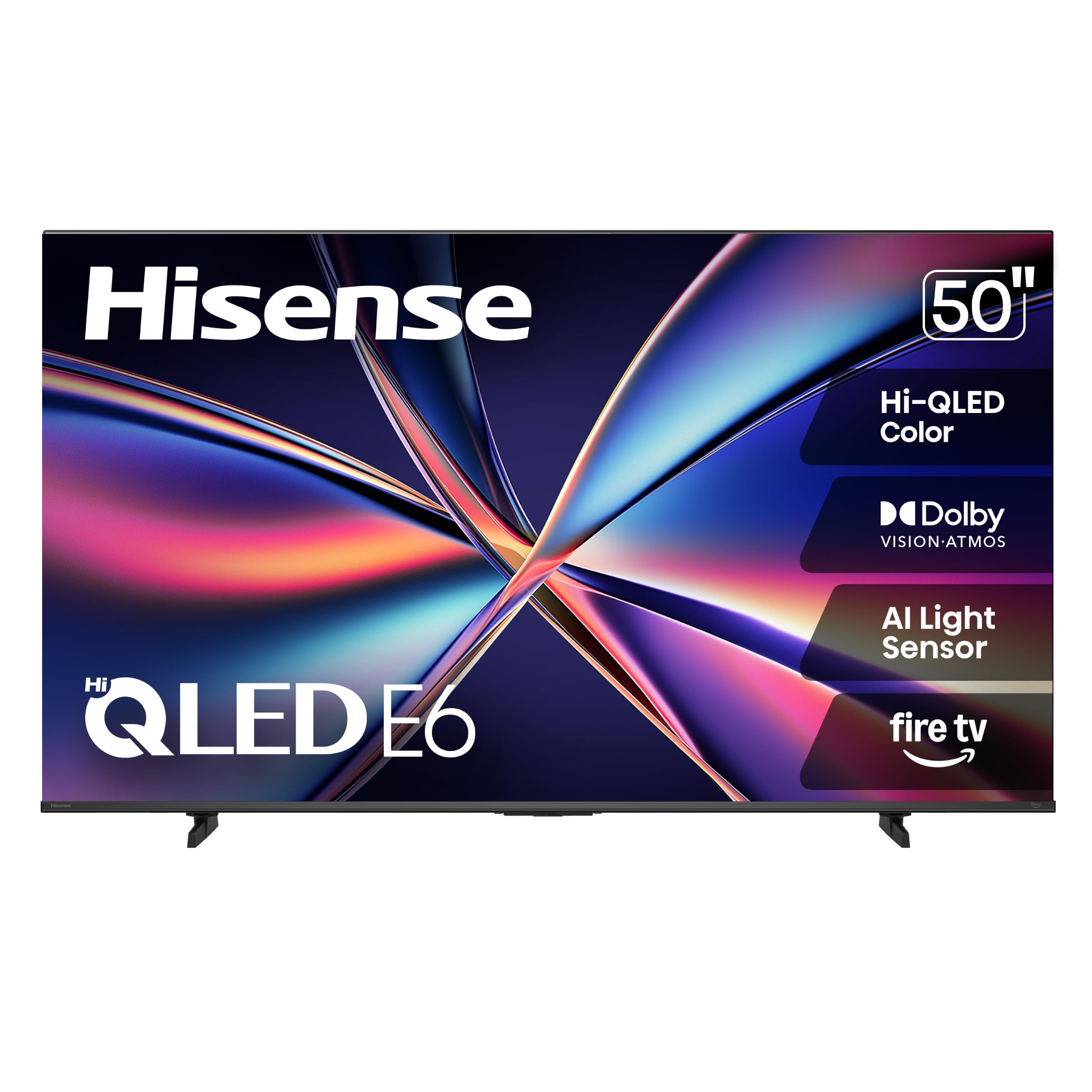
8. Hisense 50″ E6 Cinema Series Hi-QLED
Motion Rate 120 and Filmmaker Mode — built around how films are actually shot.
Films are the target here, and Motion Rate 120 with AI Smooth Motion is how Hisense keeps the panning shots steady — MEMC and AI Noise Reduction work the panel to keep fast movement crisp and blur-free. The panel is Hi-QLED 4K UHD with a “Total HDR Solution” that covers Dolby Vision, HDR10+ Adaptive, HDR10 and HLG. Dolby Atmos joins Dolby Vision for audio, and Filmmaker Mode strips out the processing so you see the frame as the director cut it. That is the difference between a set tuned to impress and one tuned to match the director’s cut.
Two practical features earn their place. An AI Light Sensor reads the room and adjusts screen brightness automatically through the day, which balances the picture in a bright front room. The AI 4K Upscaler uses machine learning to sharpen lower-resolution content — old broadcasts and home videos come up closer to 4K rather than looking soft. WiFi 6 keeps streaming stable when several devices share the network. Picture quality is the clear standout among owners, described as crisp with striking colour, and Dolby Vision content genuinely lifts.
Nothing here is hard to live with, but the smart system is a Fire TV one, so ignore the setup or use the built-in tuner. It also defaults to the usual account sign-in path, which is the bit to skip if you are building a clean setup with a separate stick.
Why film fans gravitate here: Filmmaker Mode plus Motion Rate 120 plus full Dolby Vision support is a combination aimed squarely at people who care about the source.
Bright-room bonus: the AI Light Sensor means you are not constantly adjusting the picture as the day shifts.
Matches up with: movie nights and sports fans who notice motion blur without actively looking for it.
Keep in mind: it is a Fire TV set at heart — decline the sign-in if you want a bare display.
9. Amazon Ember 50″ QLED Series with Fire TV
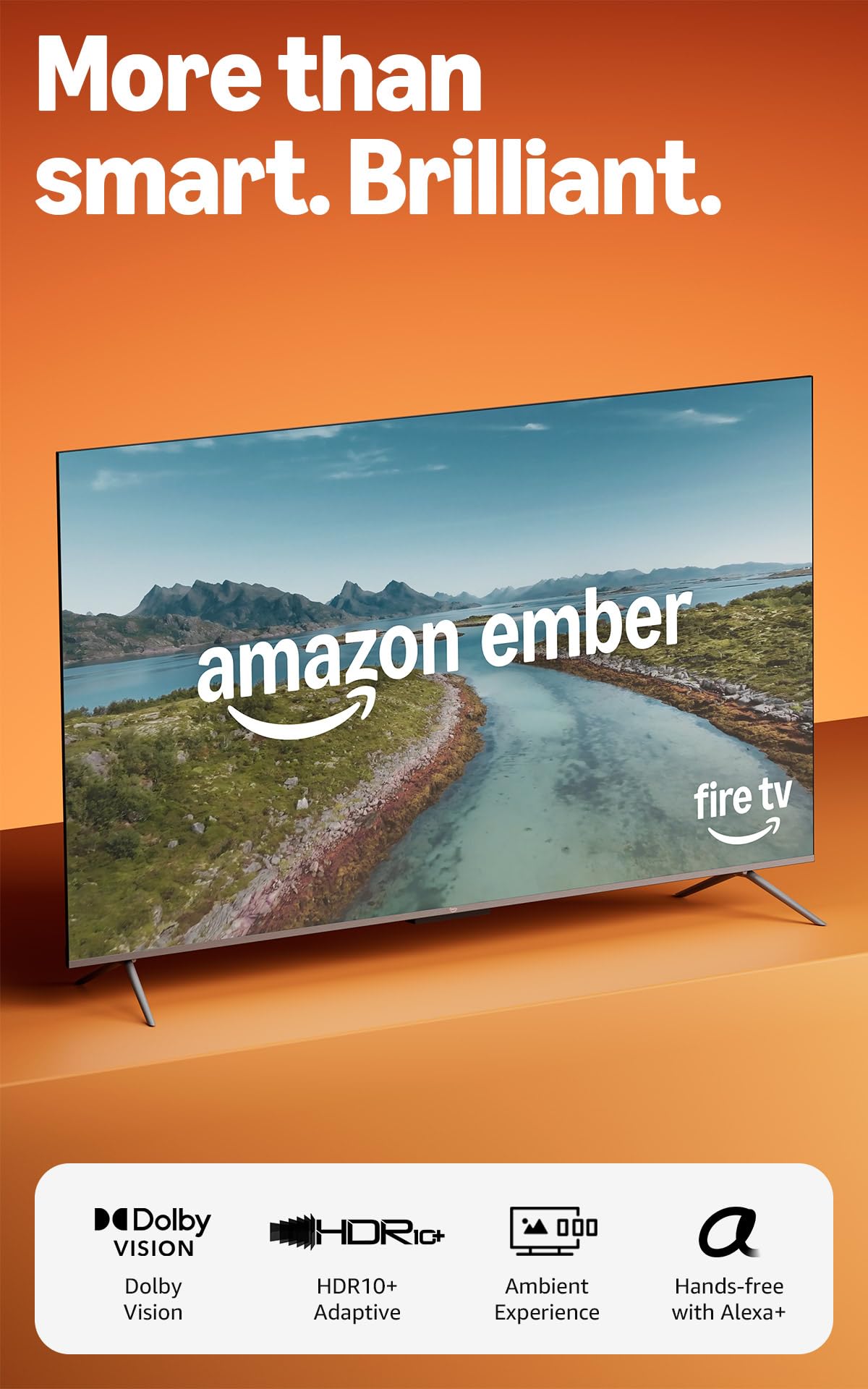
The newest Fire TV build, with a quad-core chip and no remote required.
Speed is the pitch. A quad-core processor paired with WiFi 6 means apps open and load quickly and the picture stays smooth while they do — the kind of hardware that makes a smart interface feel less like a browser tab. The display is 4K QLED with Dolby Vision and HDR10+ Adaptive, so bright scenes hold detail instead of clipping. Dolby Audio handles the sound, and four HDMI inputs give you room for a soundbar and consoles.
The genuinely different part is what happens when nobody is watching. Omnisense sensors wake the display as you walk in to show artwork, and Alexa can play shows, set timers and answer questions with no remote in your hand, even with the screen off. Alexa+ handles natural spoken requests across your apps, and Amazon Luna and Xbox Game Pass streaming run without a console. A microphone-disconnect switch gives you a physical off, which is the reassurance some buyers want from a set that listens.
Picture quality is where this set shines among owners, with Dolby Vision drawing the most enthusiastic notes, and the Alexa integration earns its place too. The one crack is compatibility — Alexa Home Theater setup has drawn complaints, so if your plan is to wire it to Echo speakers, budget some fiddling. Run it as a plain display and you skip the smart layer entirely, which is the trick for anyone who wants the picture without the assistant.
The speed argument: a quad-core processor plus WiFi 6 is why this one feels quicker than most 50-inch sets in this list when loading apps.
For the Alexa household: hands-free control and the Omnisense wake-up are the differentiators, not the panel alone.
Built for: an Alexa-led home where hands-free control and instant-on art are genuinely wanted, not just tolerated.
Pause if: you plan to pair it with Echo speakers — Alexa Home Theater setup has been the friction point.
Know the Specs
ATSC tuner (free over-the-air TV)
An ATSC tuner is the aerial receiver built into a television that picks up free digital broadcast channels with no subscription and no internet. Attach a basic indoor aerial, run a channel scan, and you get local news, sport and emergency broadcasts. This is the feature that lets a non-smart set work as a complete television rather than a display that needs a streaming box. If a set has one, it works even in a power cut to the router — which is worth knowing.
HDR formats (Dolby Vision, HDR10, HLG)
HDR, or high dynamic range, lets a screen show brighter highlights and deeper shadows in the same frame. Dolby Vision and HDR10+ are dynamic formats — they adjust brightness and colour scene by scene, so a dim interior and a sunlit street both look right. HDR10 and HLG are fixed formats. On a non-smart setup, HDR is handled by the panel itself, so a streaming stick feeding the set still delivers the format if the content and the screen both support it.
Local dimming and contrast ratio
Local dimming means the backlight is divided into zones that brighten and darken independently, which deepens blacks and stops light bleeding around bright objects. Mini-LED takes that further with thousands of tiny LEDs behind the panel. Contrast ratio is the stated measure of the brightest white against the deepest black. The higher the ratio, the more cinematic a dark scene looks — but note it is a panel specification, not an indication of how it will perform in your room.
Running a smart TV in dumb mode
Most modern sets ship with a smart system, but you can usually decline the network connection during setup and go straight to an HDMI input. That keeps the panel, the HDMI ports and the tuner while skipping the app store, the account and the home-screen adverts. You then use a streaming stick, a console or an aerial as your source. It is not a truly non-smart set underneath, but in daily use it behaves like one — no prompts, no updates, no sign-in.
Common Questions
Are there still genuinely non-smart 50-inch TVs being made?
How do I set up a smart TV so it never shows me adverts?
Will a streaming stick work with a non-smart TV?
Do I need an aerial for free local channels?
What is the difference between QLED and a standard LED panel?
Does a non-smart TV still need an internet connection?
What refresh rate should I look for on a 50-inch set?
Is a refurbished 50-inch 4K TV worth considering?
Can I use wireless headphones with these TVs?
The Bottom Line
For most buyers the easiest route to a 50 inch non smart tv is the Roku 50-inch Select Series — a 4K QLED panel with HDR10, a remote anyone can use and a setup you finish in minutes; it is the crowd favourite here, with a 4.5+ star average across thousands of ratings. If you want the picture to do the heavy lifting and cannot stand a dull black screen when the set is idle, the Amazon Fire TV Omni QLED with its 48 local dimming zones and art mode is the better fit. And if you genuinely want a television with no smart system inside it — no account, no adverts, just an HDMI port and a tuner — the TUTU 22 inch is the only pick on this list that answers that question literally.
One nudge before you decide: the Roku’s 4K QLED picture plus that uncluttered remote is exactly the combination that keeps most people happy on day one, and ratings alone do not tell you that.
How we choose
We do not accept paid placement. Every pick is matched to a real buyer and a real use-case; we do not hands-on test units.
Sources
Specifications: manufacturer listings and product documentation. Review insights: verified customer reviews, as of November 2026. Pricing: not shown on this page (it changes often); check the current price via the retailer link.
As an Amazon Associate, My Heart Lives Here earns from qualifying purchases. This does not affect which products we feature.