Heads up: This post contains affiliate links. As an Amazon Associate I earn from qualifying purchases, at no extra cost to you. Learn more
Specs are compiled from manufacturer listings and verified buyer reviews and can change over time — please confirm the key details on the product page before buying.
If a printed part has to sit in a hot car, near an engine, or out in the sun, ordinary filament will sag and warp on you. Everything below survives real heat, and the names on this page tell you what each spool is actually good for.
This guide is built by comparing the manufacturers’ published specifications and the patterns across verified customer reviews, so you get each pick’s real strengths and trade-offs instead of marketing spin.
Heat ratings, spool weight and the nozzle a filament demands all change the choice. Here is the practical shortlist that makes the 3D Filament for Heat Resistance decision simple.
Top Picks


How To Choose Heat-Resistant 3D Filament
Three things decide whether a spool actually holds its shape when the temperature climbs.
Check the heat-deflection temperature
This is the temperature where a printed part starts to soften under load, so a part rated to 215°C holds up far better than one that only claims “heat resistant.”
Match the material to your printer
Carbon-fiber blends and nylons need a hardened steel nozzle and, for most of them, an enclosed machine to stop warping and cracking.
Plan for moisture and annealing
Nylon and polycarbonate soak up water from the air, so drying before printing and a controlled cool-down are part of getting the strength the spool promises.
Side-by-Side Comparison
| Model | Best For | Material | Spool Weight | Nozzle Range | Amazon |
|---|---|---|---|---|---|
| SUNLU ASA 1KG★ Best Overall | Outdoor parts on any printer | ASA | 1 kg | 230–260°C | Amazon |
| FLASHFORGE ASAUV Stability Star | UV-stable outdoor parts | ASA | 1 kg | — | Amazon |
| Polymaker PolyLite PCClear Strength | Clear, stiff functional parts | Polycarbonate | 1 kg | 260–270°C | Amazon |
| Polymaker Fiberon PA6-CF20 | Rigid tooling and fixtures | Nylon + 20% carbon fiber | 0.5 kg | 280–300°C | Amazon |
| ELEGOO PAHT-CF | Hot environments up to 194°C | Nylon + carbon fiber | 1 kg | 260–300°C | Amazon |
| yxpolyer PC-CF | Fast structural prints | Polycarbonate + 15% carbon fiber | 1 kg | 280°C | Amazon |
| iSANMATE ASA-CF 3KG | Big outdoor batches | ASA + carbon fiber | 3 kg | 240–270°C | Amazon |
| Creality PPA-CF | Extreme-heat engineering parts | PPA + 15% carbon fiber | 1 kg | — | Amazon |
Detailed Reviews
1. SUNLU 3D Printer ASA Filament 1.75mm, 1KG (Black)
Our pick — 4.5+★ from 600+ verified ratings; the strongest balance of quality and price.
The everyday spool that brings outdoor-grade toughness to a stock printer.
SUNLU’s ASA (a tougher cousin of ABS that shrugs off sunlight) is the pick when you want heat and weather resistance without a fussy setup. It runs at a nozzle temperature of 230-260°C and a bed of 80-120°C. The 1.75mm diameter holds within +/- 0.02mm, so it feeds almost any FDM printer without grinding.
You get a full 1KG spool, and the multi-hole spool design helps it dry evenly. What wins people over is consistency — the same smooth result spool after spool. The catch is bed adhesion: getting it to stick can take some tuning, and a hardened few find their setup brittle inside the nozzle. Neither is a fault of the material as much as a fit with your printer. It’s a strong first heat-resistant filament. Check the current spool on Amazon.
Grab it if: you want ASA heat resistance on an open-frame printer with minimal setup.
Hold off if: your build plate fights every adhesive — this one wants a tuned first layer.
2. FLASHFORGE ASA Filament 1.75mm Black, 1kg
Built for parts that live outdoors and take the sun head-on.
FLASHFORGE rates this ASA to hold its shape and integrity up to temperatures near 93°C. The filament is UV stable, so prints don’t shrink and crack the way plain ABS does in sun. It’s dried for 24 hours and vacuum-sealed before it ships, then checked so 99% of the strand sits at 1.75mm within +/- 0.02mm.
The finish is the draw — a glossy, clean surface that owners admire. Expect some tuning though: bed adhesion and quality control draw a mixed reception, and a few prints come out weaker than hoped. It’s a fair trade for a UV-stable spool at a mid-range spot. See it on Amazon.
The sunny-day case: near-93°C heat tolerance plus UV stability makes it a natural for RC planes and car accessories.
The honest caveat: first-layer grip can be fussy, so budget time for bed prep.
3. Polymaker PolyLite PC Filament 1.75mm 1kg Transparent
Polycarbonate that stays strong and slightly see-through where you need it.
Polycarbonate is the stiff, heat-tolerant choice for functional parts, and this one adds a light-diffusing transparency. Prints come clean at 260-270°C, and the low-shrink formula keeps parts dimensionally stable — the maker points to a black car in desert heat as the kind of abuse it takes.
Owners rate the print quality highly, and the low odor during printing is a genuine bonus. The trade-off is durability: some sections arrive brittle, and a few parts crack or delaminate rather than bend. If flex matters more than stiffness, that’s the honest limit. Check the spool on Amazon.
Where it earns its keep: clear, rigid brackets and light covers that see heat.
Where it bites: brittle sections mean careful drying and a steady cooling profile.
4. Polymaker Fiberon PA6-CF20 Carbon Fiber Nylon 1.75mm, 0.5kg
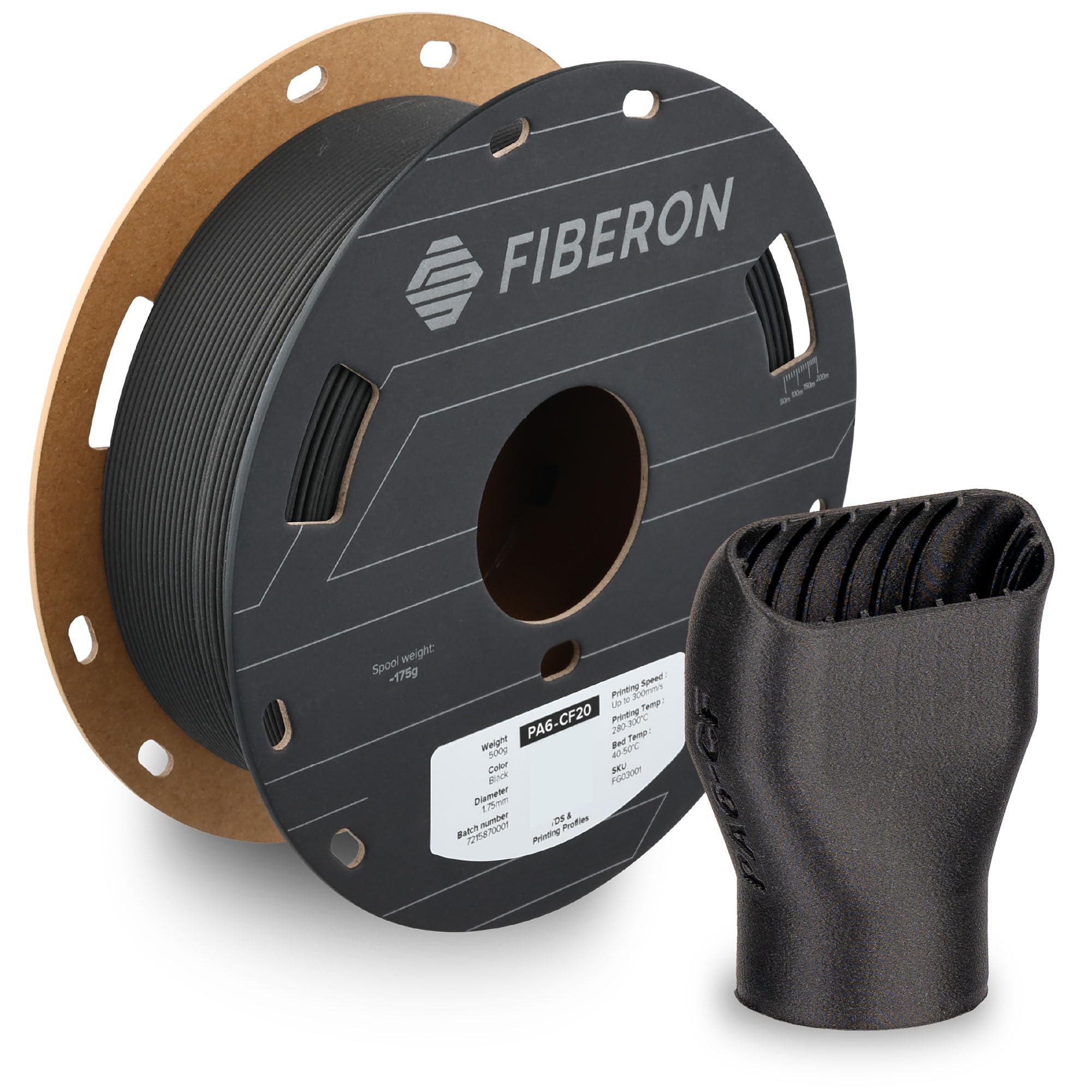
Nylon reinforced with carbon fiber that holds its shape well past boiling point.
This blend of Nylon 6 and 20% carbon fiber hits a heat deflection temperature of 215°C at 0.45 MPa once you anneal it, which means rigid parts that stay rigid in hot service. It prints up to 300 mm/s with a tuned profile — far quicker than the SUNLU ASA’s 50-100mm/s window. Note the spool: it’s 0.5 kg, half the weight of the PolyLite PC, so you’re buying less material per roll.
Quality is the headline — owners call it excellent and surprisingly easy to print for a nylon. Nylon is thirsty, though, so dry it and print below 20% relative humidity or you’ll get stringing and weak layers. See it on Amazon.
Worth the setup if: you’re building tooling, fixtures or automotive prototypes that must stay stiff at heat.
Not for you if: you don’t own a hardened steel or ruby nozzle — this abrasive blend will chew a brass tip.
5. ELEGOO Carbon Fiber PAHT 3D Printer Filament 1.75mm 1KG
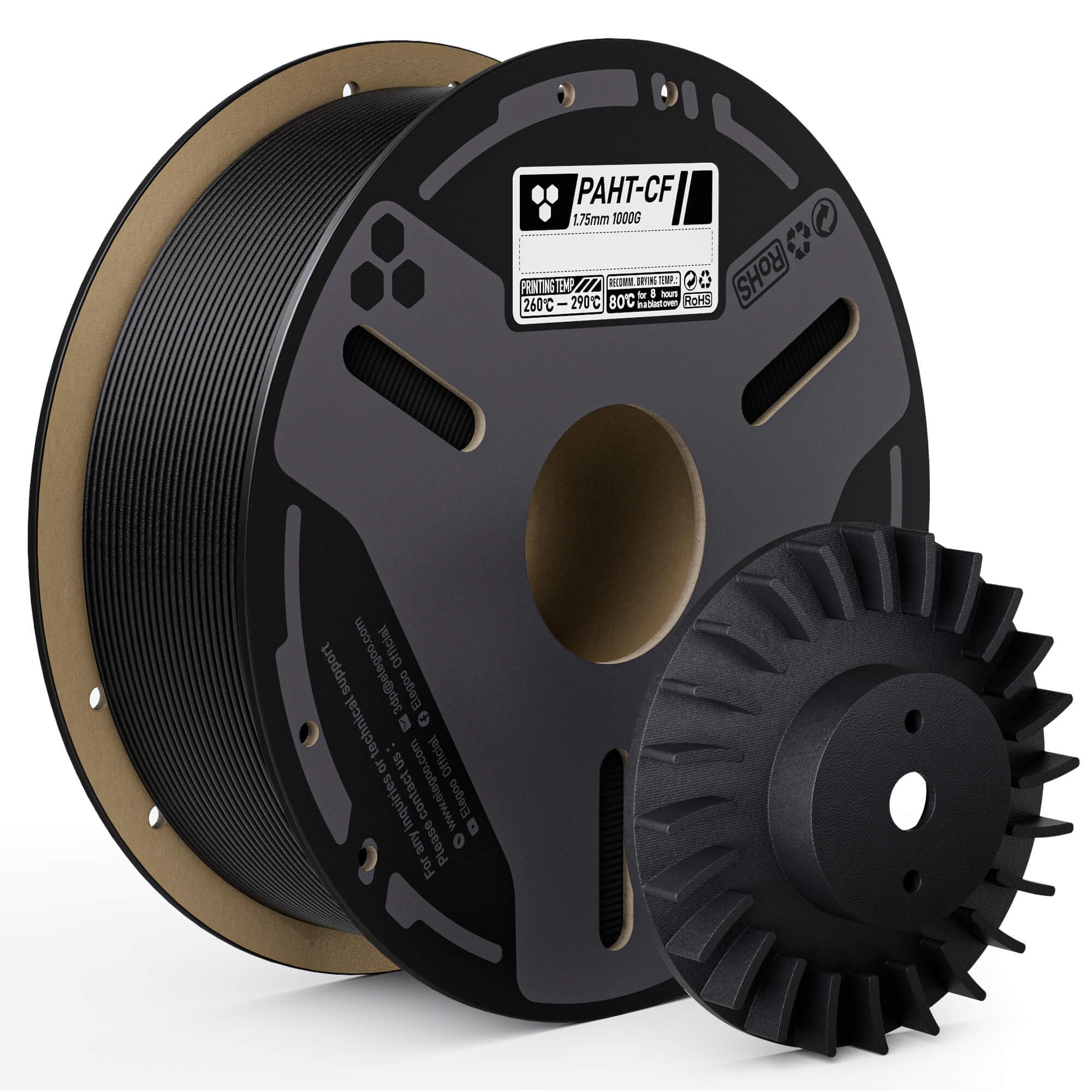
A carbon-fiber nylon that tolerates ambient heat most spools only dream about.
ELEGOO rates this PAHT-CF to withstand ambient temperatures up to 194°C while keeping its structural strength. It soaks up water more slowly than regular PA-CF, which keeps performance consistent between prints. Print it at 260-300°C on a 100-120°C bed with a hardened steel nozzle of at least 0.4mm.
The carbon fibers add stiffness and abrasion resistance, so gears and bearings hold a precise fit. Owners find it strong and tough with a rock-solid layer bond. The one wrinkle is tangling — a few spools need careful re-spooling — so check the feed before a long print. Check it on Amazon.
The strong suit: abrasion resistance and dimensional accuracy make it a natural for gears and bearings.
The watch-out: a handful of spools arrive tangled, so spool it clean before a long run.
6. yxpolyer PC-CF Polycarbonate Carbon Fiber Filament 1kg

The polycarbonate blend that wants to be printed fast and structural.
With 15% chopped carbon fiber, this PC-CF holds up to 140°C and resists warping and shrinking. The maker claims more than 100% higher flowability than other PC-CF filament, with infill speeds up to 350 mm/s. Print at 280°C for the strongest layer bond, backed off to 200 mm/s max on overhangs and first layers.
The finish is a clean matte black that owners like, and durability with no warping is the recurring strength. It’s self-supporting too, so complex shapes print on one nozzle. Reliability is mixed, so dial in your profile first. See the spool on Amazon.
Speed pick: that 350 mm/s infill ceiling makes it the quickest structural spool here.
Slow down for: bridges and bottom layers, capped at 200 mm/s for stable results.
7. iSANMATE Carbon Fiber ASA Filament 1.75mm, 3KG Black
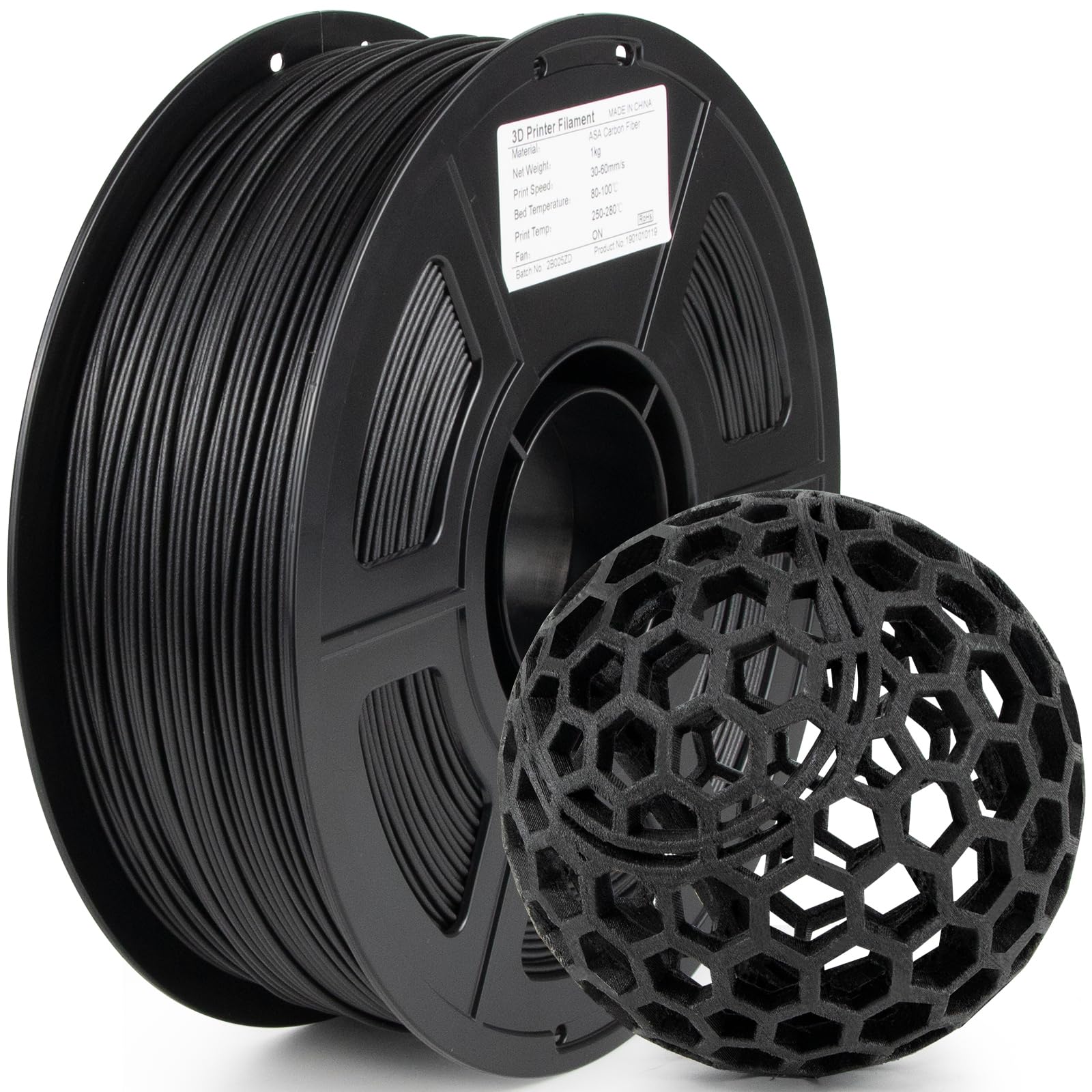
Three kilos of carbon-toughened ASA for outdoor batches that keep going.
This ASA-CF fuses ABS-like toughness with carbon-fiber reinforcement and strong UV and weather resistance. It runs at 240-270°C on an 80-100°C bed, with 30-100mm/s print speeds. The matte black carbon-texture finish gives outdoor parts a professional look, and the 3KG spool keeps a long run going.
Owners find it holds up well in southern conditions and prints reliably across machines. Bed adhesion is the mixed note — the maker itself recommends an enclosure and a bed adhesive to stop warping and cracking, so plan for that. Check it on Amazon.
Built for: outdoor equipment housings, garden fixtures and RC parts in volume.
Earns a hardened nozzle: that carbon fiber is abrasive, so a steel tip is the safe route.
8. Creality PPA-CF Filament 1.75mm, 15% Carbon Fiber, 1KG
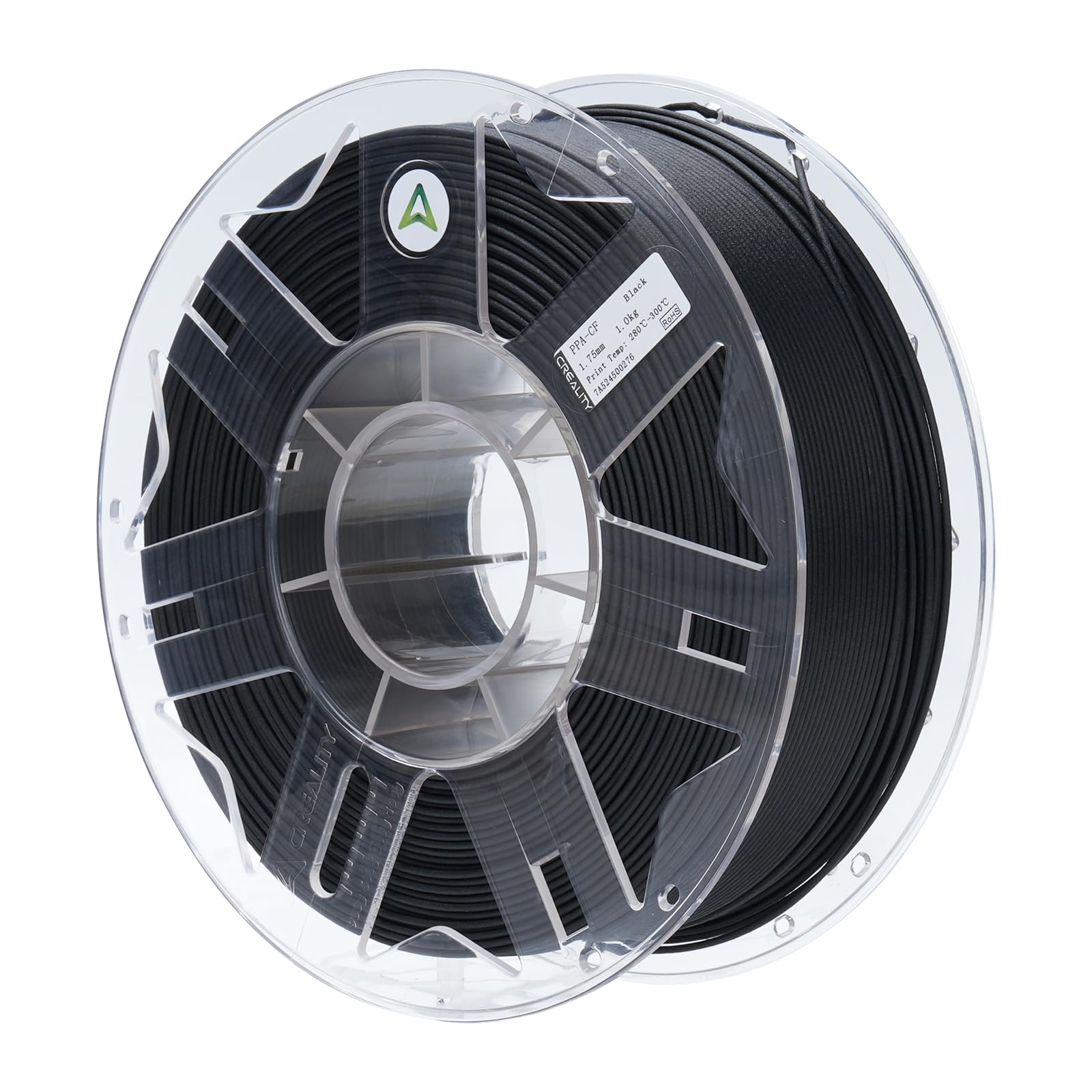
The spool that holds structural integrity at 220°C for the long haul.
Creality’s PPA-CF pairs 15% carbon fiber with a smart reinforcement structure for quasi-metallic strength. It holds up at 220°C for extended periods and resists warping on large parts. The maker says it is 48% stronger than ordinary PA6-CF. It needs only a sealed print space and hardened steel nozzles, and prints at 30-600mm/s with RFID recognition for the K2 series.
Models even stay stable in humid or underwater settings, keeping stiffness and thermal properties over time. Owners rate quality and print quality highly, though tangling is a mixed note worth checking before a big job. See it on Amazon.
For extreme duty: propeller and surfboard-style parts that face heat and water both.
Set up right or skip it: this one wants a sealed space and a hardened nozzle, so it’s not a plug-and-play spool.
Know the Specs
Heat Deflection vs Ambient Rating
Some spools quote the temperature a part withstands while loaded (heat deflection), others an ambient ceiling. Higher figures mean a part keeps its shape in hotter surroundings.
Nozzle & Enclosure Needs
Carbon-fiber blends are abrasive and need a hardened steel or ruby nozzle. Most nylons and ASA also print better inside an enclosure to stop warping.
Common Questions
Does carbon fiber filament need a special nozzle?
Why does nylon filament print badly and string?
Is ASA better than ABS for outdoor heat?
The Bottom Line
For most people, the 3d filament for heat resistance winner is the SUNLU ASA because it delivers outdoor-grade heat and UV resistance on a stock printer with minimal fuss. If extreme heat is your target, reach for the 220°C-rated Creality PPA-CF. And when you need clear, rigid parts, the Polymaker PolyLite PC is the one to grab.
How we choose
We do not accept paid placement. Every pick is matched to a real buyer and a real use-case; we do not hands-on test units.
Sources
Specifications: manufacturer listings and product documentation. Review insights: verified customer reviews, as of November 2026. Pricing: not shown on this page (it changes often); check the current price via the retailer link.
As an Amazon Associate, My Heart Lives Here earns from qualifying purchases. This does not affect which products we feature.