Heads up: This post contains affiliate links. As an Amazon Associate I earn from qualifying purchases, at no extra cost to you. Learn more
Specs are compiled from manufacturer listings and verified buyer reviews and can change over time — please confirm the key details on the product page before buying.
If your amp sounds flat, hissy, or just plain dull, the tube sitting in the socket is usually the cheapest thing to change — and often the thing that fixes it. A 12AU7 (also sold as an ECC82) is a small glass preamp valve with nine pins that shapes the tone before the power stage ever sees the signal. Buy the wrong one and you get microphonics (the tube ringing when you tap the chassis), mismatched halves, and noise you cannot dial out with any knob.
This guide is built by comparing the manufacturers’ published specifications and the patterns across verified customer reviews, so you get each pick’s real strengths and trade-offs instead of marketing spin.
The short answer: the JJ Electronics 12AU7 / ECC82 is the safest all-round buy, while the Genalex Gold Lion is the strongest build if your preamp deserves it. Below, seven tubes ranked by what they actually do in a socket, so you can match one to your amp instead of guessing at a label. This is the shortlist I would hand anyone shopping for the 12au7 ecc82 tube.
Top Picks


How To Choose The Best 12AU7 ECC82 Tube
Start with the socket, not the tone description. A 12AU7 is a nine-pin miniature tube, and it only drops into gear that expects that pinout and that gain level. Getting this wrong is the most common way people waste money on a valve that never leaves its box.
Confirm the tube your amp actually wants
A 12AU7 has notably lower gain than a 12AX7, which is the tube most guitar amps use in their first stage. If your manual says 12AX7, dropping in a 12AU7 will usually just make the amp quieter and cleaner rather than hotter. The ECC82 label is the European designation for the same valve, so the two names are interchangeable on the box.
Decide if you need a single or a matched pair
One tube per socket means you buy a single. A stereo preamp or a phase inverter position often wants a pair whose two halves behave the same, so the left and right channels stay balanced. Matched pairs are graded for gain and, on better pairs, conductance — the tube’s ability to pass current — so both bottles in the box track each other.
Weigh noise and microphonics against tone
Microphonics is the tube picking up physical vibration and turning it into sound, which shows up as a ringing or howl in a combo amp sitting near the speaker. Low-noise triodes matter more in a high-gain preamp than in a clean hi-fi stage. Look for the maker or seller stating low microphonics rather than assuming all new tubes are quiet.
Plan for break-in and long-term reliability
New production tubes often settle in over the first hours of use, and some makers burn them in before shipping. A long warranty tells you the seller expects the valve to survive real use. Reliability matters most in gear you cannot easily open mid-gig.
Side-by-Side Comparison
| Model | Best For | Format | Stated Noise / Matching | Weight | Amazon |
|---|---|---|---|---|---|
| JJ Electronics 12AU7 / ECC82★ Best Overall | Most players and hi-fi owners | Single tube | — | — | Amazon |
| Tung-Sol 12AU7 SingleQuietest Single | Replacing a tired tube in a tube amp | Single tube | Extra low microphonic; factory selected for closest tolerances | 0.639 ounces | Amazon |
| 12AU7 Preamp Vacuum Tube, Single | Quiet preamp stages | Single tube | Low noise and microphonics | 0.317 ounces | Amazon |
| Tung-Sol Reissue GAIN MATCHED Pair | Bass amps and matched-pair swaps | Matched pair | Gain matched | 4 ounces | Amazon |
| Genalex Gold Lion 12AU7 / ECC82 | Owners chasing the best build | Single tube | Low noise; balanced triodes | — | Amazon |
| PSVANE Horizon 12AU7-AT | Listeners wanting a dense, warm tone | Matched pair | Manual pairing; at least 24 hours burn-in test per valve | 1.76 ounces | Amazon |
Detailed Reviews
1. JJ Electronics 12AU7 / ECC82 Preamp Vacuum Tube
Our pick — 4.5+★ from 250+ verified ratings; the strongest balance of quality and price.
The default answer for a socket that just needs a good, honest tube in it.
If you have no idea which 12AU7 to buy, buy this one. It is a single ECC82-compatible preamp valve (a small glass tube that boosts the signal before it hits the power stage) from JJ Electronics. It carries the strongest buyer consensus in this whole group — 4.5+ stars on a deep pile of ratings — which is why it takes the top spot rather than a fancier bottle. What wins people over is the sound: extended, clear highs without the gritty edge that makes cheaper valves tiring to listen to for an hour.
The second thing you notice is how little fuss it asks for. It drops into a Bravo Audio-style headphone amp, a small desktop preamp, or an older integrated amp and simply works, which is why functionality draws almost as much praise as the tone itself. Owners describe a rich character rather than a clinical one, and the general read is that the valve delivers more than its modest outlay suggests.
The honest catch: this is a single tube with no gain matching stated, so if you are replacing a pair in a stereo preamp you are relying on two separate bottles landing close to each other. For mono stages, single-tube positions, and casual swaps, that is a non-issue. For a phase inverter where balance matters, step up to a matched pair instead.
What earns it the top spot
- Extended, clear highs that stay easy to listen to over long sessions
- Drops straight into common small amps and desktop preamps
- Rich, full tone rather than a thin or clinical sound
- The lowest-risk introduction to swapping a preamp tube
Where it gives ground
- Sold as a single, so there is no stated gain matching for stereo pairs
- Buying twice for a pair costs more than a bundled matched set
The sensible first swap for: anyone replacing one preamp tube who wants a clear, rich tone without rolling the dice.
Buy the pair instead if: your amp runs two of these and you need both halves balanced.
2. Tung-Sol 12AU7 Preamp Vacuum Tube, Single
Extra low microphonics in a bottle small enough to vanish behind the chassis.
What sells this one is the stated “extra low microphonic” build (microphonic means the tube picks up vibrations and rings like a microphone), paired with factory selection for the closest tolerances and most consistent performance. In plain terms, the tube is picked at the factory to resist ringing and to behave like the next one off the line — exactly what you want in a combo amp where the speaker shakes the chassis. It also has high linearity (it boosts the signal evenly across the range), so the valve adds gain without bending the tone shape in odd directions.
Physically it is the compact option here: 1 x 1 x 2.75 inches versus 7 x 5 x 7 inches on the plain 12AU7 single further down this list, so it slips into tight sockets and crowded point-to-point wiring without a fight. It is a nine-pin miniature tube (a small glass bottle with nine pins that push into the socket), and the ECC82 equivalent label means it fits the same sockets as every other pick in this article. Buyers here mostly frame it as a solid replacement that freshens up a tube amp and cleans up the tone.
Know what you are buying, though. Two aspects of a good tube — a handful of quality comments and a nearly equal number on sound — are steady rather than glowing, and this is a single bottle. If you need a pair with matching paperwork, this is not the box. What it is: a quiet, tight-tolerance single for someone who wants the noise floor dropped, not a tone overhaul.
Best read on the spec sheet: factory tolerance selection is the underrated line here — it is what separates a swap that just works from one you send back.
The fair trade-off: a quieter, more consistent valve than some rivals, but a single unit with no matched partner included.
Reach for it when: your combo amp rings or hums and you want the noisiest suspect out of the chain.
Look past it when: you are buying two and want a factory-matched set in one box.
3. 12AU7 Preamp Vacuum Tube, Single
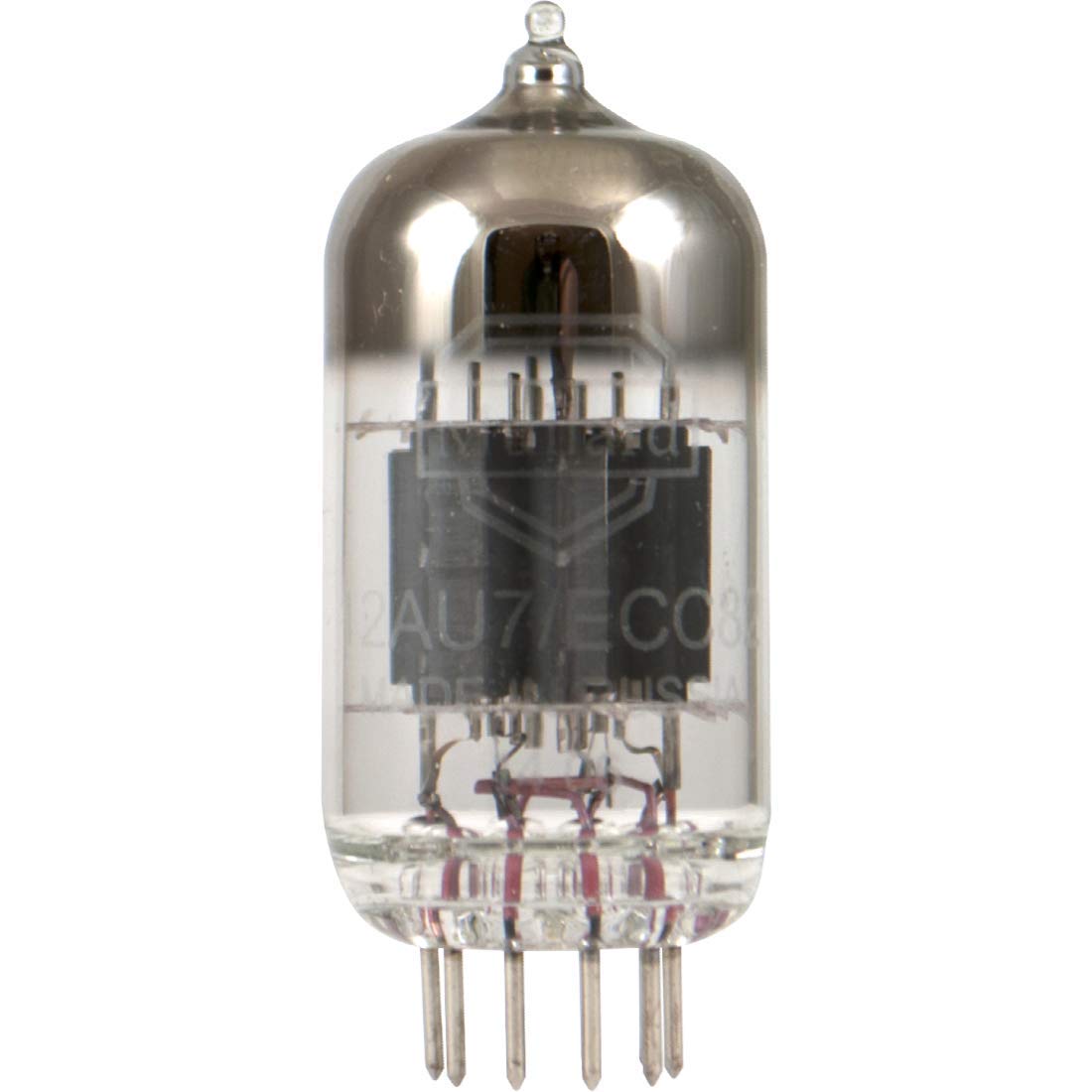
A warm-tone single with a genuine reputation for quiet operation.
Here is a plain single 12AU7, listed as the ECC82 12AU7 model, and it is built around two promises: great sound and low noise with low microphonics. The tone people describe is warm, with a nice low growl underneath — the kind of character that flatters clean channels and low-gain drive rather than high-gain crunch.
What makes it interesting against the others is the weight: 0.317 ounces, roughly a fifth of the Tung-Sol’s 0.639 ounces above. That is not a spec you should read as fragile — it just reflects a very light, compact bottle. It is also the smallest footprint by far on paper, at 7 x 5 x 7 inches listed versus the Tung-Sol Reissue pair’s 4 x 2 x 1 inch package, so keeping a spare in the gig bag costs you nothing.
The recurring theme in buyer feedback is improvement — people swap this in and feel they have moved up a tier rather than sideways. The noise spec is the other draw, since microphonics are the usual reason a swap gets buyers nowhere. Treat it as a tone-first single for a clean preamp, not as a matched pair for a stereo stage.
Why it earns its place
- Warm tone with a low growl that suits clean and low-gain stages
- Stated low noise and low microphonics
- Very light at 0.317 ounces, so a spare travels easily
- Read across owner feedback as a genuine step up
What to weigh first
- Single tube only, with no matched partner in the box
- Warm character is a preference, not a universal win
The match for: a clean channel, a small preamp, or anyone chasing warmth and a low noise floor together.
The mismatch: a stereo rig that needs two halves matched for balance.
4. Electro-Harmonix 12AU7A / ECC82, Matched Pair

Two bottles graded for both gain and conductance, not just a sticker on a box.
This is the pick for anyone whose amp runs two 12AU7s side by side. The pair is matched for both gain and conductance (conductance is how well the tube passes current), which is a step beyond the usual gain-only grading — the two halves are selected to pass current in a comparable way, so a stereo preamp does not drift left or right as you turn the volume. Add low microphonics (resistance to vibration ringing) and excellent linearity to the spec sheet and you have a pair built to behave predictably.
The physical build is straightforward: two glass-bodied valves on a nine-pin miniature socket, 1.2 ounces per tube, and the 12AU7A / ECC82 designation covering the same sockets as everything else here. The ECC82 equivalence means it drops into hi-fi preamps and guitar amps that specify the European name without adapters or guesswork.
What this pair is not is cheap in the way a single is — you are paying for the grading process itself. If you only have one socket to fill, that matched documentation is money spent on a problem you do not have. The trade-off is worth naming plainly: matched pairs cost more, but they remove the guesswork of two random bottles.
What the grading buys you: a left and right channel that track together — the difference between a balanced stereo image and one that drifts.
Where a single serves you better: one socket, one tube, no need for the matching premium.
Built for: stereo preamps, phase-splitter positions, and any amp that takes two of these together.
Overkill for: a single-tube position where balance between halves never comes into play.
5. Tung-Sol 12AU7 Pair

Two gain-matched Tung-Sol reissues built for amps that work the output valves hard.
Owners of big bass rigs tend to be the ones who light up about this pair. Buyers report that the sound is impressive and the build holds up, with the standout note being how well they suit an SVT-style bass amplifier — an amp that asks a lot of the tubes in front of it. This is a two-tube box carrying the 12AU7, 6189, and ECC82 designations, so it covers a wide spread of sockets that all accept the same pinout (the pin layout that plugs into the socket).
Weight is where it separates from the others: 4 ounces for the pair, against 0.317 ounces on the single 12AU7 further up this list — that heavy figure is two glass bottles plus the packaging, and it does not tell you anything about tone. The set is gain matched, so both bottles are graded to behave alike, which matters when the amp’s balance depends on the pair.
The catch: gain matching is not the same as conductance matching, so if you specifically need both specs graded, the Electro-Harmonix pair goes further. Here you get the Tung-Sol voicing and the bass-amp reputation, and you give up the extra conductance grade.
Right for: bass players and anyone replacing a pair in an amp that runs the valves hard.
Not the one for: buyers who specifically need conductance matching alongside gain matching.
6. 12AU7 B749 / ECC82 Preamp Gold Plated Vacuum Tube – Single

The gold-pin Genalex that buyers describe as the tube the amp should have shipped with.
Step into the top tier and the spec sheet starts talking about build first: low noise, balanced triodes (a triode is one amplifying section inside the tube; balanced means both halves are matched), and extremely reliable, consistent production under the Genalex Gold Lion name, made by New Sensor to the 12AU7 / ECC82 / CV4003 designation. Balanced triodes mean both halves of the single bottle are matched to each other — important in a preamp stage that splits the signal internally. This is a low-gain preamp tube by design, so it stays clean and composed rather than pushing grit.
The consensus from people who run it is that it outpaces the stock valve their amp arrived with, delivering a rich, full sound and, in the most evocative description on the page, a holographic soundstage. That phrase is doing a lot of work — it means the presentation spreads out rather than sitting flat between the speakers. The build quality draws the most consistent praise of any single attribute here, which is a good sign in a part that lives with heat and vibration.
This is a single valve, not a pair, so an amp needing two means buying two and trusting that a matched-build line keeps them close. The gold plating is cosmetic as much as anything; the real reason to pay up is the triode balancing and the consistency of the production.
What the money actually buys: internally balanced triodes and tightly held production, so the tube behaves the same way twice.
An honest limitation: one valve per box, with no paired grading for stereo use out of the same package.
Pick it for: a preamp you plan to keep, where consistency and a wide, open stage matter more than cost.
Pass when: you need a matched set for two channels in one purchase.
7. PSVANE Horizon 12AU7-AT Pair

A pair graded by hand and burned in before it ever reaches your amp.
The Horizon series 12AU7-AT earns its place on process. Each valve is manually paired and goes through at least 24 hours of burn-in testing under controlled voltage and temperature before it ships, and the maker backs it with a 12-month warranty. Burn-in matters because a tube that has settled before it arrives gives you the sound you paid for on day one instead of drifting for a week. It is a pair, matched, and it carries the ECC82, 5814A, CV4003, and E82CC equivalents for socket compatibility.
Tonally this is the fullest, densest option of the seven. The maker claims strong, full flavor with the bass and mid-range full and smooth, a high-frequency extension, good separation, and composure even under a messy mix — and owners mention deep bass with beautiful highs and midrange. At 1.76 ounces for the pair, it is the heaviest of the pairs listed, which again just reflects two bottles in the box.
Where it asks patience: the lower star average tells you this is the most divisive pick here, and a dense, forward tone is a taste, not a universal upgrade. The 30% longer lifespan claim is the maker’s own figure, not a measured spec — the 24-hour burn-in test and the 12-month warranty are the concrete parts of the pitch.
Arguments for the Horizon
- Manually paired set, so both halves are graded to match
- At least 24 hours of burn-in test on every valve before shipping
- 12-month warranty behind the pair
- Deep bass and a full, dense mid-range
Arguments against pulling the trigger
- Most divisive reputation of the group
- A forward, full tone is a preference, not a safe default
Worth it if: you want a rich, weighty presentation and value a pre-burned, hand-paired set.
Shop elsewhere if: you want a neutral reference tone or the safest crowd-pleasing valve.
Know the Specs
Gain and conductance matching
Gain matching means the two bottles in a pair are graded to amplify by a comparable amount, so neither side is louder than the other. Conductance matching goes further, comparing how each tube passes current. A pair graded on both tracks more closely, which is what a stereo preamp or phase inverter wants when the left and right channels need to stay even.
Microphonics and noise
Microphonics is the tube converting physical vibration into sound — the ringing or howl you hear when a combo amp rattles a failing valve. Noise is the steady hiss a tube adds to the signal. Low microphonic and low noise tubes matter most in high-gain and combo setups. A single-tube, low-noise bottle fixes a rattly or hissy socket without touching the rest of the chain.
Singles versus matched pairs
A single tube fills one socket. A matched pair suits amps that run two together, or a phase-inverter position where both halves must behave alike. Buying two singles to make a pair usually costs more than a bundled matched set and gives you no guarantee that the two bottles were graded against each other.
Socket compatibility and the ECC82 name
The 12AU7, ECC82, 6189, CV4003, and 5814A designations all describe valves that fit the same nine-pin miniature socket. If your manual lists any of those, this family of tubes drops in. Confirm the gain your amp wants too — a 12AU7 is a lower-gain valve than the 12AX7 many guitar amps use in their first stage.
Common Questions
Is a 12AU7 the same as an ECC82?
Can I put a 12AU7 in a socket that takes a 12AX7?
Do I need a matched pair or just two singles?
What does gain matched actually mean?
What are microphonics and why should I care?
How long does a 12AU7 tube last?
Does burn-in make a difference?
Will a gold-plated tube sound better?
Which 12AU7 suits a bass amplifier?
The Bottom Line
Most people upgrading a 12au7 ecc82 tube should start with the JJ Electronics 12AU7 / ECC82, because it carries the strongest buyer consensus in this group and delivers a clear, rich tone in a single bottle. If your amp runs two valves and you want both graded for gain and conductance, the Electro-Harmonix Matched Pair removes the guesswork. And if you play bass or push your valves hard, the Tung-Sol Reissue matched pair is the set built for that job. Match the tube to your socket count and your amp’s gain spec, and the tone follows.
How we choose
We do not accept paid placement. Every pick is matched to a real buyer and a real use-case; we do not hands-on test units.
Sources
Specifications: manufacturer listings and product documentation. Review insights: verified customer reviews, as of November 2026. Pricing: not shown on this page (it changes often); check the current price via the retailer link.
As an Amazon Associate, My Heart Lives Here earns from qualifying purchases. This does not affect which products we feature.