Heads up: This post contains affiliate links. As an Amazon Associate I earn from qualifying purchases, at no extra cost to you. Learn more
Specs are compiled from manufacturer listings and verified buyer reviews and can change over time — please confirm the key details on the product page before buying.
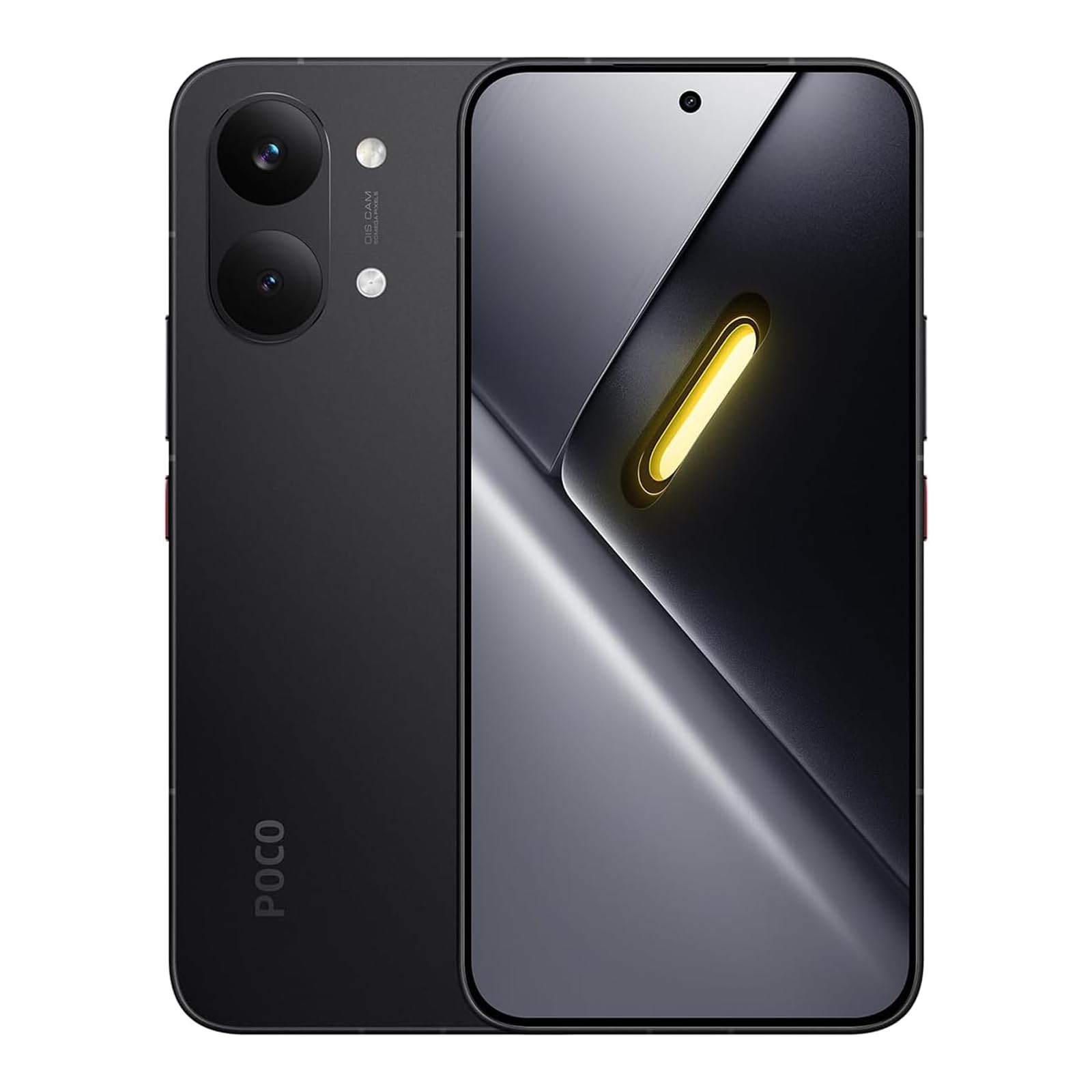
If choppy scrolling and laggy swiping annoy you, the phone that makes the fewest compromises is the Xiaomi Poco X8 Pro Max. Its 6.83-inch AMOLED screen runs at up to 120Hz (it redraws the picture 120 times a second, so motion looks glassy instead of choppy). An 8500mAh battery and a mid-range price round it out. The rest of this list covers a rugged workhorse with a 25,500mAh cell, a paper-textured display built to be kind on your eyes, a phone with a built-in projector, and a stylish performer with a light-up back. Every phone here hits 120Hz, so the real decision is battery, build, and carrier support.
This guide is built by comparing the manufacturers’ published specifications and the patterns across verified customer reviews, so you get each pick’s real strengths and trade-offs instead of marketing spin.
First decide if you want a slim everyday phone or a tank that shrugs off drops. That one choice splits the list into slim AMOLED phones and 765-gram rugged tanks. The breakdown of the best 120Hz Phone options below shows which display and battery pairing fits your day.
Top Picks

How To Choose The Best 120Hz Phone
A 120Hz refresh rate means the screen redraws the image up to 120 times every second, twice as often as the standard 60Hz rate. That is why a fast panel makes flick-scrolling through a feed and quick thumb-swipes in a game feel smoother and more immediate. But refresh rate alone tells you almost nothing about battery size, panel type, or carrier support, and these five picks diverge sharply on all three.
Refresh rate is only half the story — check touch sampling too
A fast screen still feels laggy if it takes too long to register your finger. Touch sampling rate is how many times per second the screen reads your input, and a high figure makes an on-screen joystick feel tight. The Poco X8 Pro Max lists an instant touch sampling rate of 2560Hz in Game Turbo Mode, so your taps land where you aim. The Nothing Phone (3) lists 1000Hz for the same goal.
Do you want a slim phone or a rugged tank
A gorgeous AMOLED is little comfort if the phone cannot survive a job site or a hiking trail. Rugged models here back the 120Hz panel with water, dust, and drop protection ratings, but they do it by adding a much heavier body. Decide up front if you want a slim pocket phone or a rugged tank rated for drops, and the shortlist shrinks straight away.
Side-by-Side Comparison
| Model | Best For | Refresh Rate | Battery | Display Type | Amazon |
|---|---|---|---|---|---|
| XIAOMI Poco X8 PRO MAX★ Best Overall | Everyday all-rounder | Up to 120Hz | 8500mAh | AMOLED | Amazon |
| 8849 Tank 4 ProProjector Pick | Built-in projector | 120Hz | 11600mAh | AMOLED | Amazon |
| Nothing Phone (3) | Style and cameras | 120Hz adaptive | 5150mAh | AMOLED | Amazon |
| TCL NXTPAPER 70 Pro | Eye-friendly reading | 120Hz | — | LCD (NXTPAPER) | Amazon |
| Ulefone Armor 33 | Extreme battery life | 120Hz | 25500mAh | LCD | Amazon |
Detailed Reviews
1. XIAOMI Poco X8 PRO MAX 5G
Our pick — 4.0+★ from 1,000+ verified ratings; the strongest balance of quality and price.
A 6.83-inch 120Hz AMOLED and an 8500mAh battery, without a premium price tag.
The headline here is the 6.83-inch 1.5K AMOLED display, and those numbers do real work. The 1.5K resolution (2772 x 1280 pixels) keeps text and icons sharp even on a panel this size, so spreadsheets and subtitles stay crisp. The 120Hz refresh rate is what you actually feel — feed scrolling glides instead of stutters, and supported apps can run at the full rate. Peak brightness reaches 3500 nits covering 25% of the display area, which is the figure that matters outdoors: it means the screen stays readable in direct sun rather than washing into a grey blur. Corning Gorilla Glass 7i covers it against the everyday pocket-and-keys reality.
Where it pulls ahead of the Nothing Phone (3) is pure endurance. The battery is rated 8500mAh (milliamp-hours, the size of the fuel tank) next to the Phone (3)’s 5150mAh, so this is a phone built for heavy use and travel days without a charger nearby. Charging runs at 100W, and that figure dwarfs the 33W on the TCL NXTPAPER 70 Pro lower down this list — a big jump when you need a top-up before heading out. Storage sits at 256GB with 12GB of RAM, and buyers report getting up to 2 days of use before reaching for a cable.
What wins people over most is the overall build quality — the sense that this is a finished, well-made object rather than a budget compromise — and value comes close behind. The honest catch is network support. Inside the USA it works on T-Mobile, Mint, Tello, or any network under the T-Mobile umbrella, and needs a SIM card that is already activated. It will not simply drop into every American carrier, so check yours before ordering. The camera earns mixed feelings too: the 50MP main sensor with OIS (optical image stabilisation, which steadies your hand in low light) does well, but expectations should stay realistic for the price.
What makes it the top pick
- 6.83″ 1.5K AMOLED panel at up to 120Hz keeps motion smooth and text sharp
- 8500mAh battery and 100W charging — the biggest charging figure on this list
- 3500 nits peak brightness, so the screen holds up in direct sunshine
- MediaTek Dimensity 9500s on a 3nm process plus Wi-Fi 7 and Bluetooth 6.0
- Stereo-ready feature set with NFC, IR blaster, and an ultrasonic in-display fingerprint sensor
Where you should think twice
- USA use is limited to T-Mobile and its partner networks — no broad AT&T or Verizon support
- No microSD slot, so 256GB is your ceiling
- Camera quality draws a mixed reception compared with the rest of the package
Buy it if: you want a large, fast, bright screen paired with a battery that keeps going, and you are on T-Mobile or one of its networks.
Pass if: you need a Verizon or AT&T line as your daily driver.
2. 8849 Tank 4 Pro Projector Phone
A rugged phone with a 100-lumen projector and a 11600mAh battery to spare afterwards.
You buy this one for a feature no other phone here has: a built-in 100-lumen DLP projector that outputs a 1280 x 720 image. A lumen is a unit of brightness, and 100 of them is enough to throw a film, a document, or an engineering drawing onto a wall or a tent side. Auto focus and keystone correction (which squares up a tilted image) do the alignment for you. It is an odd but genuinely useful trick for camping trips and site meetings where a shared screen would help.
Fine text and game detail look razor-edged on the 6.73-inch AMOLED display, thanks to a 1440 x 3200 resolution at 570 pixels per inch — the sharpest panel on this list by far. It runs at 120Hz, and up to 1800 nits of brightness (a nit is a unit of screen brightness) keeps it readable in direct sunlight. Inside, the MediaTek Dimensity 8300 5G chipset pairs with 32GB of RAM (16GB plus 16GB virtual) and 512GB of storage, expandable to 2TB via a TF card. That RAM stands well clear of the 8GB in the TCL NXTPAPER 70 Pro, and the storage is four times what that phone offers. Those two figures matter most if you keep a lot of files and apps open at once.
Owners consistently praise the build quality most of all, with the display clarity and battery life close behind. The 11600mAh cell with 120W fast charging means you are rarely hunting an outlet, and it can reverse-charge other devices over an OTG cable like a power bank. There is even a 1200-lumen camping light and emergency warning lights built in. The trade-offs are real, though. This is a heavy, chunky rugged phone, and in the USA it supports only T-Mobile and Verizon — other carriers need a band check first.
Why it earns its place: the 1440 x 3200 AMOLED and the 100-lumen projector are two things you cannot get anywhere else on this list, and the 120W charging rounds out a genuinely capable outdoor tool.
The honest caveat: if you carry your phone in a slim front pocket all day, the bulk of a rugged body this size will wear on you quickly.
Reach for this if: you work or travel outdoors and want one device that doubles as a screen and a light source.
Look elsewhere if: a slim, light everyday phone matters more to you than projector tricks and drop protection.
3. Nothing Phone (3)

Four 50MP cameras and a back that lights up — a phone you actually notice.
The smooth centerpiece here is the 6.67-inch FHD+ 1.5K AMOLED display. Its 120Hz adaptive refresh rate speeds up for fast motion and slows down when the screen is static, which helps battery life too. The maker claims it is 181.2% brighter than the Phone (2), reaching 4500 nits, and 316% faster in touch response at 1000Hz. In practice that means a screen you can read on a bright pavement and a tap that lands the instant you make it. Unlike the LCD panels on the two rugged phones here, this AMOLED produces deep blacks that make video and the Glyph animations pop.
Then there is the Glyph Interface — the light strips and matrix on the back that animate for notifications, tools, and even small games. It is the kind of detail that gets comments at a table. Underneath, the Snapdragon 8s Gen 4 chipset on a 4nm process pairs with LPDDR5X RAM and UFS 4.0 storage, which is a fast combo for gaming and heavy multitasking. The battery is 5150mAh with talk time rated at 33.43 hours, so a single charge comfortably covers a full day. Storage is roomy at 512GB.
What people enjoy most is how much this phone does — the functionality and features come in for steady praise, alongside a camera system with four 50MP sensors that handles everything from portrait to periscope zoom. The wrinkle is carrier support. It handles AT&T and T-Mobile bands well, but the maker explicitly does not recommend Verizon, and even then you would need to have the IMEI whitelisted first. Some owners also report performance quirks over time, so it rewards a little patience with software updates.
Who it is built for: someone who wants their phone to feel like an object of design, with four 50MP cameras and a genuinely fast 120Hz AMOLED to match.
What to know first: check your carrier. AT&T and T-Mobile are supported; Verizon is not recommended by the manufacturer.
The right fit: you pick phones partly for personality and want distinctive design without giving up camera flexibility or screen speed.
The mismatch: you are locked to Verizon, where this phone is not a recommended pairing.
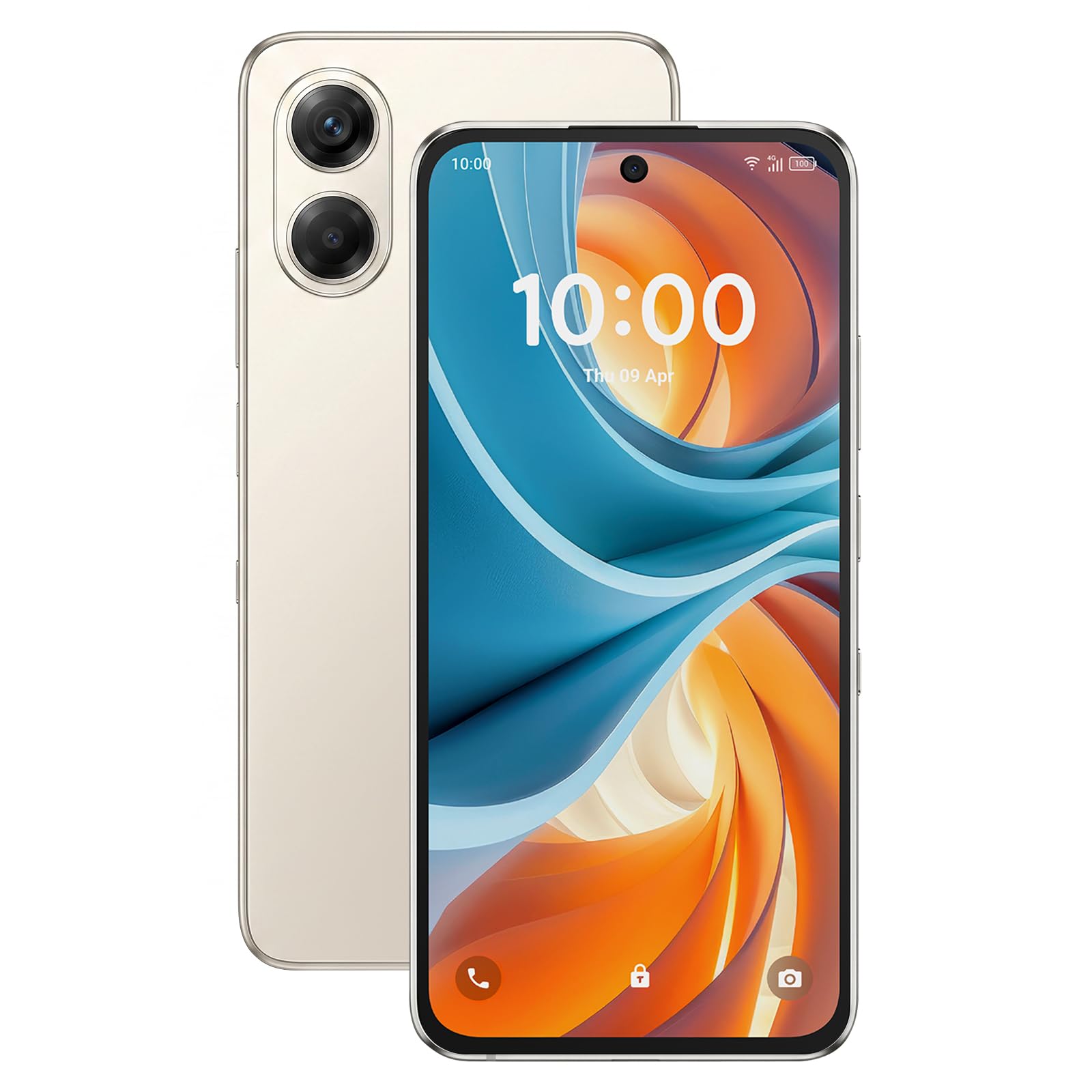
4. TCL NXTPAPER 70 Pro
The 120Hz screen you can read for hours without your eyes complaining.
This is the biggest display on the list at 6.9 inches, and it is a 120Hz NXTPAPER 4.0 panel built around a matte, paper-like surface. Hardware-level blue light is reduced to 3.41%, and the TCL Eye Care Assistant adjusts settings automatically for videos, reading, and nighttime scrolling. The NXTPAPER Key switches between four modes — Standard for daily use, Color Paper for comics and artwork, Ink Paper for reading, and Max Ink for a longer-lasting e-reader feel. If you read on your phone more than you game on it, that flexibility is the whole point.
The rest of the hardware is aimed at everyday versatility rather than raw speed. The MediaTek Dimensity 7300 chipset runs Android 16 with 8GB RAM plus 16GB expandable RAM, 128GB of storage, and microSD support up to 2TB. That 128GB is the smallest storage figure here — worth knowing if you shoot a lot of video — but the card slot makes it easy to add more. Battery is described as all-day, with 33W charging reaching 50% in 38 minutes and reverse charging for topping up other devices. Note that a charger is not included, so plan accordingly.
For the price, the camera setup is solid: a 50MP main with OIS (optical image stabilisation, which physically steadies the lens), an 8MP ultra-wide, and a 32MP front camera. Super Night Mode and combined OIS + EIS stabilisation (electronic stabilisation, a software assist) give you steadier low-light video. It also carries IP68 water and dust resistance (rated to survive a dunk), 5G, WiFi 6E, and dual speakers. This is the newest addition here with the fewest owner reviews so far, so treat the long-term picture as emerging rather than settled. On paper, though, the eye-comfort features are class-leading in this group.
Why readers will like it
- 6.9″ 120Hz NXTPAPER 4.0 display with blue light reduced to 3.41%
- Four display modes switchable with the NXTPAPER Key
- IP68 water and dust resistance for commutes and outdoor days
- 50MP OIS main camera plus 32MP front camera
- microSD expandable up to 2TB
Worth knowing before you buy
- 128GB internal storage is the smallest on this list
- 33W charging is well below the fast-charging rivals here
- Charger not included in the box
Made for: heavy readers, note-takers, and anyone whose eyes tire quickly on a bright glossy screen.
Not for: gamers who need top-tier chipset speed and the fastest charging available.
5. Ulefone Armor 33
A phone with a battery so large it could arguably charge your friends’ phones too.
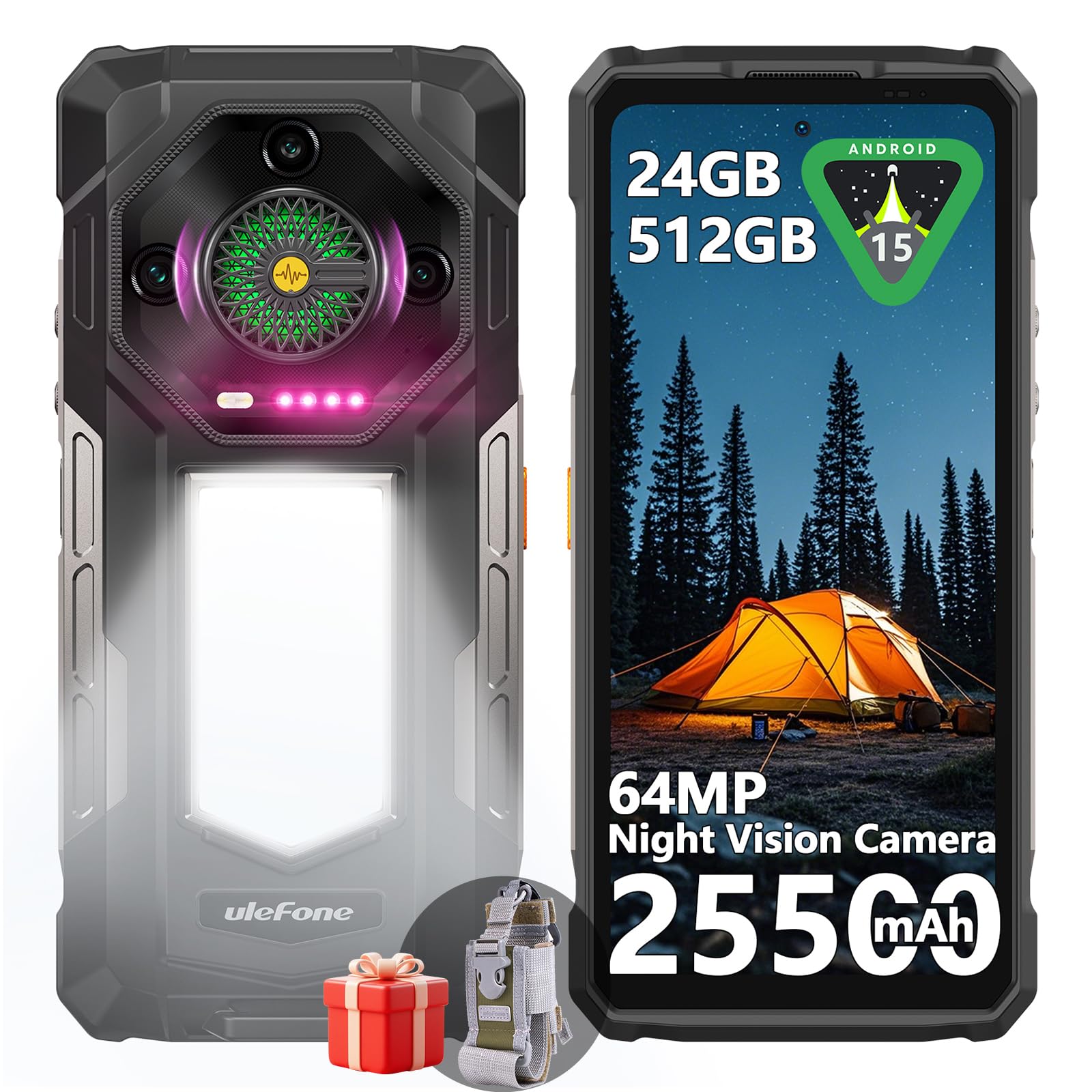
Nothing else in this group comes close on endurance. The 25500mAh battery is described as keeping you powered for up to 10 full days, with 66W fast charging to top it back up and 10W reverse charging to push power into other devices. Set that against the 8500mAh cell in the Poco X8 Pro Max and the gap is obvious — this is the phone you take on a multi-day trip where wall sockets are a rumor. It carries Android 15 and a 6.95-inch 120Hz FHD+ display with a 2460 x 1080 resolution, Corning Gorilla Glass 5, and 700 nits of brightness.
It exists to survive drops, and the rugged ratings prove it. It is certified to IP68 and IP69K (water and dust ratings that cover submersion and high-pressure spray) plus MIL-STD-810H (a military drop and shock standard), which is why construction crews and outdoor workers favour it. Around that sit a 118dB speaker that is genuinely loud enough for a campsite, a 1100-lumen LED beam, an emergency warning light, and a 50MP + 50MP + 64MP + 32MP camera setup that includes an infrared night-vision sensor. Under the hood, the MediaTek Helio G100 pairs with 24GB of RAM (12GB plus 12GB extended) and 512GB of storage.
What owners value most is how reliably the whole package functions, with the battery life and durability close behind. The obvious cost is weight: this phone is stated at 765 grams (about 1.7 pounds) and considerably larger than a normal handset, so it is not a slim pocket companion. It also runs on 4G rather than 5G and is not compatible with AT&T or Cricket, so confirm your carrier before committing.
The standout: a 25500mAh battery and IP68/IP69K plus MIL-STD-810H toughness make it the survivor of this list.
The catch: at 765 grams, you will feel it every time you pick it up — this is a tool, not a featherweight.
Choose it when: you need a phone that survives drops, dust, and days away from a charger.
Skip it when: you want a light daily phone or need AT&T or Cricket service.
Know the Specs
Refresh Rate and Touch Sampling
Refresh rate is how many times per second the screen redraws — 120Hz means up to 120 redraws, which is what makes scrolling and motion feel fluid. Touch sampling rate is separate: it is how often the screen checks for your finger, and a high figure like the 2560Hz on the Poco X8 Pro Max in Game Turbo Mode makes taps feel instant. Some panels, like the one on the Nothing Phone (3), adapt the refresh rate to the content to save battery.
Battery Capacity and Charging Wattage
Battery capacity in mAh is the size of the tank — 25500mAh on the Ulefone Armor 33 versus 5150mAh on the Nothing Phone (3) tells you roughly how much longer one lasts away from a socket. Charging wattage is the speed of the refill: 120W on the 8849 Tank 4 Pro and 100W on the Poco X8 Pro Max are fast top-ups, while 33W on the TCL NXTPAPER 70 Pro is more modest. A bigger cell usually means a heavier phone, so balance the two against how you actually use it.
Common Questions
Does a 120Hz phone really feel smoother than a 60Hz one day to day?
Will the XIAOMI Poco X8 PRO MAX work on my carrier in the USA?
Is the Ulefone Armor 33 too heavy for everyday use?
Can I use the 8849 Tank 4 Pro with AT&T or Verizon?
What does the Nothing Phone (3) Glyph Interface actually do?
Is the TCL NXTPAPER 70 Pro screen good for reading in bed?
Do any of these phones support expandable storage?
Which of these phones is best for gaming?
Do these rugged phones come with a charger in the box?
Can I use the projector phone as a normal phone every day?
The Bottom Line
For most people shopping for the best 120Hz Phone, the XIAOMI Poco X8 PRO MAX is the one worth starting with. Its 6.83-inch 1.5K AMOLED at up to 120Hz, 8500mAh battery, and 100W charging form the most balanced package here, provided you are on T-Mobile or a partner network. If a bright, distinctive design and four 50MP cameras matter to you, the Nothing Phone (3) delivers that with a 120Hz adaptive AMOLED and a Glyph Interface you will not find elsewhere. And when you need a phone that survives the outdoors and days without a socket, reach for the Ulefone Armor 33 with its 25500mAh battery — just accept the 765-gram weight that comes with it.
How we choose
We do not accept paid placement. Every pick is matched to a real buyer and a real use-case; we do not hands-on test units.
Sources
Specifications: manufacturer listings and product documentation. Review insights: verified customer reviews, as of November 2026. Pricing: not shown on this page (it changes often); check the current price via the retailer link.
As an Amazon Associate, My Heart Lives Here earns from qualifying purchases. This does not affect which products we feature.