Heads up: This post contains affiliate links. As an Amazon Associate I earn from qualifying purchases, at no extra cost to you. Learn more
Specs are compiled from manufacturer listings and verified buyer reviews and can change over time — please confirm the key details on the product page before buying.
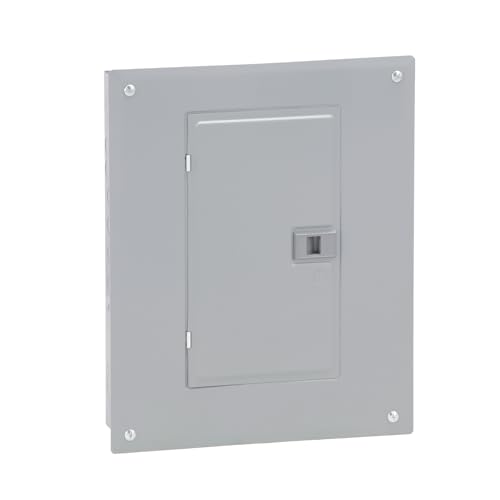
Buying a 100 Amp Sub Panel means answering one question before you spend a cent: how many breaker spaces do you need three years from now, not today? That single decision separates a tidy garage setup from a panel you outgrow the moment you add a hot tub or an EV charger. This guide covers seven real load centers and enclosures, plus the one breaker that keeps showing up in every one of them.
This guide is built by comparing the manufacturers’ published specifications and the patterns across verified customer reviews, so you get each pick’s real strengths and trade-offs instead of marketing spin.
You will learn how space count, plug-on neutral wiring, and indoor versus outdoor enclosures decide which box belongs on your wall — and which one belongs in your cart. Read on for the strongest picks in 100 amp sub panel shopping today.
Top Picks

How To Choose The Best 100 Amp Sub Panel
You are adding a second breaker box to feed a garage, a workshop, or a detached space. The box has to hold breakers for every circuit you plan, accept the wire size running back to the main, and survive whatever room it hangs in. Get those three right and the rest is detail.
Spaces versus circuits: the number that trips most buyers
A space is a physical slot in the panel. A circuit is one branch feeding something. Tandem breakers let two circuits share one space, which is why a 20-space panel can be rated for 40 circuits. If you want to leave room for a future circuit, count spaces first and circuits second — spaces are what you run out of.
Plug-on neutral: what it actually saves you
Plug-on neutral sends the neutral path into the breaker through a bar instead of a separate pigtail wire. That means fewer wires to land in a crowded panel and less chance of a loose neutral. Panels built for it will accept plug-on neutral combination arc fault breakers on any space, which matters if your local code calls for arc fault protection on most branch circuits.
Indoor enclosure or outdoor — they are not interchangeable
A NEMA 1 enclosure is designed for indoor installations only, so it is the wrong choice on an exterior wall in weather. If you need the panel outside, look for an outdoor load center or breaker enclosure instead. Getting this backwards means replacing the whole box, not just the cover.
Side-by-Side Comparison
| Model | Best For | Spaces | Circuits | Amp Rating | Amazon |
|---|---|---|---|---|---|
| Square D HOM2100 Breaker★ Best Overall | Main or feeder breaker | 1 breaker slot | 2 poles | 100 A | Amazon |
| Square D HOM1224M100PCBest for Garages | Standard indoor garage subpanel | 12 spaces | 24 | 100 A | Amazon |
| Siemens E0816ML1125S | Fitting between wall studs | 8 spaces | 16 | 125 A | Amazon |
| Siemens W0202MB1100CU | Outdoor disconnect enclosure | 2 spaces | 4 | 100 A | Amazon |
| Leviton LP210-BPD | Wiring the panel before breakers go in | 20 spaces | 20 | 100 A | Amazon |
| Siemens SN2040B1100 | Maximum future circuit count | 20 spaces | 40 | 100 A | Amazon |
| Siemens PN3030B1100C | Copper bus with two ground bars | 30 spaces | 30 | 100 A | Amazon |
Detailed Reviews
1. Square D Hom2100 2P-120/240V-100A Cb
Our pick — 4.5+★ from 900+ verified ratings; the strongest balance of quality and price.
The two-pole breaker that turns a 100 Amp panel into a working feeder.
Here is the piece most sub panel write-ups skip entirely. A load center is just an empty box until a main breaker sits in it, and this Square D HOM2100 is that breaker — a 100 A, 2-pole plug-in unit rated for 120/240 volts. Two poles means it grabs both hot legs at once, which is exactly what a 240-volt feed to a sub panel needs. It snaps into a plug-in mount, so there is no screw-terminal fuss at the bus.
At 8 ounces and roughly 3 inches wide by 3.6 inches tall, it is a compact part you can hold in one hand. Do not let the size fool you into thinking it is a light-duty gadget — a 100 A breaker is the gatekeeper for everything downstream. Reviewers consistently report it installs and trips as expected. Functionality is the standout theme by a wide margin, with value and fit trailing behind it, and the recurring buyer sentiment boils down to “exactly what I needed.”
You are really buying compatibility. Square D Homeline is among the most common residential lines in North America, so if your panel is Homeline, this breaker drops straight in and matches the bus stabs (the metal contacts that carry power). If your box is a different brand, it will not fit — breaker brands are not interchangeable, and forcing one is a genuine hazard. The honest catch: this is one breaker, not a panel, so pair it with a load center that accepts Homeline plug-on breakers before you check out.
What earns its keep
- 100 A rating on a 2-pole body — feeds a full 120/240V sub panel circuit
- Plug-in mount snaps onto Homeline bus stabs without terminal screws
- 8 ounces and compact enough to drop in one-handed during a panel swap
Where it stops short
- Brand-locked — it will not seat in a non-Homeline panel
- Sold as a single breaker, so it is not a standalone panel solution
Right call for: anyone with a Square D Homeline panel who needs a 100 A two-pole main or feeder breaker.
Wrong call for: Siemens, Leviton, or Eaton panel owners — check your bus brand first.
2. Square D by Schneider Electric Homeline HOM1224M100PC
Twelve spaces, twenty-four circuits, and a main breaker already in the box.
Most sub panel shoppers want a box that arrives ready to mount and wire — main breaker included, no separate purchase. That is this Square D. It is a 100 A, single-phase, 120/240 VAC load center with 12 spaces and a rating for 24 circuits once you use tandem breakers. The plug-on neutral design is the quiet hero: it lets you land Homeline plug-on neutral combination arc fault breakers on any space, so you are not juggling pigtail neutrals in a tight panel.
The welded steel enclosure and baked enamel finish suit a garage or utility room. The bus bar is tin-plated aluminum, the enclosure is welded sheet steel with a baked enamel gray finish, and the neutral bars are distributed to keep wiring tidy. The cover handles flush or surface mounting, so you are not stuck with one install style. Terminals accept 6 AWG to 2/0 AWG copper or aluminum wire, which gives you real flexibility on the feeder coming from the main panel.
Buyers describe the steel enclosure as solid and single out garage subpanel duty as its main use. It has a 22 kA breaking capacity (the amount of fault current it can interrupt safely) and a NEMA 1 indoor enclosure (a rating meaning it is for indoor use only), which is the honest limit here: this box belongs indoors. Mount it outside and you are asking for trouble. It weighs 18.3 pounds, so plan for two hands and a stud to anchor to.
Wiring flexibility wins: the 6 AWG to 2/0 AWG aluminum-or-copper lugs and the distributed neutral bars mean a cleaner rough-in, and the flush/surface combo cover covers both wall styles without ordering parts. The tin-plated aluminum bus resists corrosion better than a bare aluminum bus in a damp garage.
The indoor boundary: NEMA 1 means indoor use only — this is a garage, basement, or utility room panel, not a weather-rated exterior box.
Reach for this if: you are finishing a garage or basement and want 12 spaces with a 100 A main breaker already installed.
Look elsewhere if: the panel has to live outdoors — you need a weather-rated enclosure instead.
3. Siemens E0816ML1125S EQ 125 Amp Load Center

The slim box that slides into a stud bay and clears the drywall.
Here is where the numbers flip in an interesting way. This Siemens carries a 125 A rating — more headroom than the 100 A panels around it — yet it is the compact one. The footprint is 15.4 inches long by 13 inches wide by 5.3 inches deep, and buyers repeatedly point out it is skinny enough to sit between wall studs. If you are finishing a workshop wall and want the panel recessed rather than surface-mounted on the drywall, this shape is the reason to pick it.
It is a main lug panel, which means no main breaker is included — the feeder lands on lugs directly. That is standard for subfeed applications and is exactly what this unit is advertised for. You get 8 spaces and a 16-circuit rating, single phase, 120/240 V, with an aluminum bus bar and galvanized carbon steel construction for corrosion resistance. It meets UL and ANSI safety requirements and arrives in a NEMA type-1 enclosure for indoor installations.
Buyers cite value most often, with functionality a close second. Buyers also rate it on fit and versatility — food truck builds come up as a real use case. The one honest gap: the grounding bar is not included, and feedback on that point is genuinely split. Budget for a ground bar kit if your install needs one, because it is a separate part. Fitting this into a stud bay is easy; remembering the ground bar is not.
Go this route if: you need a recessed sub panel that fits inside a stud bay and want 125 A of headroom on a main lug box.
Think first if: you expect a main breaker in the box or a grounding bar in the package — neither is included.
4. Siemens W0202MB1100CU Circuit Breaker Enclosure

Not a load center — a compact outdoor disconnect with two spaces and a main.
This is the pick buyers misread most often, so let us be blunt about what it is. The Siemens W0202MB1100CU is an outdoor circuit breaker enclosure rated 100 A, with 2 spaces and a 4-circuit rating. That is a fraction of the circuit capacity in the SN Series box further down this list — 40 circuits there versus 4 here. This one exists for a specific job: a weather-rated spot to house a two-pole breaker, often as a disconnect near a hot tub, a shop feed, or an AC unit.
The dimensions tell you the story. It measures 7.99 inches long by 5.2 inches wide by 17.72 inches tall — tall and narrow, so it mounts flat against a wall without eating much horizontal space. At 11.6 pounds it is manageable solo, and it is built from copper. Single phase, 100 A, and outdoor rated, which is the entire reason to choose it over an indoor load center.
Most buyers use it to replace an existing outdoor unit, and compatibility ranks second in the feedback. That tells you the smart move: match this enclosure to the panel brand and breaker type you already have rather than swapping brands mid-install. If you are building a full branch-circuit layout with a dozen circuits, this is not your box — and no amount of outdoor rating fixes that.
Where it earns its place: a genuine outdoor enclosure at 100 A, with a narrow 5.2-inch-wide profile that hugs an exterior wall and enough depth to land a two-pole breaker cleanly.
Capacity ceiling: 2 spaces and 4 circuits is a disconnect, not a distribution panel — plan a separate load center for real branch circuits.
The right buyer: someone replacing an outdoor disconnect or adding a weather-rated two-pole breaker point outside.
The wrong buyer: anyone counting on feeding ten circuits from one outdoor box.
5. Leviton LP210-BPD 20 Space Indoor Load Center

A panel you can rough in completely before a single breaker exists.
Twenty spaces and twenty circuits is the headline, but the real feature is the wiring order. Leviton designed this load center so the entire box can be wired at rough-in with no circuit breakers present at all. For anyone running cable before the drywall goes up, that is a meaningfully different workflow — you land your wires, then add breakers later. Tin-plated copper bussing runs through the panel for conductivity, and notches are stamped into the enclosure so cable ties have somewhere to grab.
You get a 100 A main circuit breaker included, so you are not buying that separately. The finish is a white powder coat, which is a rare thing in a category full of gray steel — if the panel is going in a visible spot like a finished garage, that matters more than you would think. At 25.8 pounds it is the heaviest box on this list, compared with the 11.6-pound outdoor Siemens enclosure, so plan your lift and your anchor points.
Buyers praise build quality first and installation second, calling setup straightforward and breaker swaps low-effort. One thing to catch before ordering: the door sells separately. What ships is the enclosure and interior only, so if you expect a cover in the carton, add it to the order. The box also carries a 10-year limited warranty, which is the longest stated coverage on this list.
Ticks the boxes
- Wire the full panel at rough-in before any breakers go in
- Tin-plated copper bussing and stamp-notched cable tie points
- 10-year limited warranty — the longest stated coverage here
Order the extras
- Door is sold separately — enclosure and interior only
- 25.8 pounds makes it the heaviest panel on this list
Worth it when: you are roughing in a new wall and want the cleanest possible wire-then-breaker sequence.
Pause when: you need a complete covered panel in one order, or you are lifting it alone.
6. Siemens SN2040B1100 20-Space 40-Circuit Load Center

Forty circuits of future-proofing in a 100 Amp panel you can expand into.
Count the circuits and the reason to buy this becomes obvious. Twenty physical spaces stretch to a 40-circuit rating once tandem breakers go in — the highest circuit count of any load center on this list, ten times the 4-circuit rating of the outdoor Siemens enclosure above. If you are wiring a workshop you intend to grow, or a garage where you keep finding new things to power, that headroom is the whole pitch.
Plug-on neutral wiring makes the install faster and cleaner, since the neutral path runs through the breaker rather than a pigtail. The enclosure is sized generously, with over 4 inches of wire bending space — which is the difference between a calm rough-in and wrestling stiff 6-gauge wire into a corner. You get a factory-installed ground bar, a 1-phase 3-wire 120/240 V system, a 22,000 AIC interrupt rating, and a NEMA type-1 enclosure for indoor use only.
It fits between studs neatly because the footprint is 14.25 inches long by 3.88 inches wide by 21 inches tall — a tall, slim panel. At 100 A with 40 circuits available, the honest caution is about what you load it with, not the box itself — this is a sub panel, so the feeder breaker back at the main has to be sized to match. Think of it as: the box you buy so you never have to buy another box.
Why the space math wins: 20 spaces rated for 40 circuits beats every other panel here on expansion, and the over-4-inch wire bending space keeps a full rough-in from turning into a knuckle-buster.
Keep it inside: NEMA type-1 means indoor only, so exterior walls need a different enclosure entirely.
Pick this one if: you want to wire once and never run out of breaker slots, and the panel lives indoors.
Better matched elsewhere: a small dedicated feed with four circuits, where 40 spaces is capacity you pay for and never touch.
7. Siemens PN3030B1100C 30-Space 30-Circuit Load Center

Thirty spaces, a copper bus, and two ground bars straight from the factory.
If you are the type who lands every wire before mounting anything, this panel rewards that habit. Thirty spaces and thirty circuits give you more physical slots than the 20-space SN Series above, and the copper bus is the material upgrade serious installers look for. Two ground bars come factory installed, so you are not sourcing or adding a second bar for a busy panel — which is the exact gap that catches buyers on the E0816ML1125S.
Plug-on neutral is here too, so the neutral lands through the breaker instead of a pigtail. Over 4 inches of wire bending space gives stiff feeder cable room to turn without kinking. The electrical basics are a 1-phase, 3-wire, 120/240 V system with a 22,000 AIC interrupt rating, housed in a NEMA type-1 enclosure meant for indoor use. It is UL Listed and finished with a gray trim.
Thirty spaces is the number that separates this from the 20-space panels, and it costs you nothing in wall space — this is still an indoor, stud-friendly box. The trade-off is that you are paying for capability you may not need if your circuit plan is modest. For a full house rewire or a garage with a long future, though, two ground bars and thirty slots means you stop improvising halfway through.
The upgrade that counts
- Copper bus instead of aluminum for the main current path
- Two factory-installed ground bars from the start
- 30 spaces and 30 circuits — the most slots of the indoor panels here
- Over 4 inches of wire bending space for stiff feeder cable
Worth knowing
- 30 spaces is more capacity than a simple four-circuit outbuilding feed needs
- NEMA type-1 enclosure keeps it indoors
Take this home if: you want a copper bus, two ground bars, and enough slots to stop worrying about future circuits.
Leave it on the shelf if: you only need a handful of circuits and an aluminum bus would do the job.
Know the Specs
Spaces and circuits — the two-number system
A space is one physical breaker slot in the panel. A circuit is one branch run feeding a load. Tandem breakers let two circuits share a space, which is how a 20-space panel earns a 40-circuit rating. When you size a sub panel, count spaces against your realistic circuit plan and leave a couple open for the future. If you plan to add a hot tub, an EV charger, or a welder later, those need spaces and poles, not just amps.
Amps, voltage, and interrupt rating
Amp rating is the current the panel is built to carry, so a 100 A sub panel handles a 100 A feed. The interrupt rating (measured in AIC or kA) is how much fault current the panel can safely interrupt; a 22 kA rating is the number you will see on the panels here that list it. Your local inspector cares about all three, so match them to the feeder breaker at your main panel.
Common Questions
Can I use a 100 amp sub panel as my main panel?
What is the difference between 12 spaces and 24 circuits on a Square D panel?
Will a Siemens breaker fit in a Square D Homeline panel?
What does plug-on neutral actually change during install?
Can I mount an indoor NEMA 1 load center in my garage?
Does the Leviton LP210-BPD include a cover or door?
How many circuits can the Siemens outdoor enclosure handle?
Do I need a grounding bar with the Siemens E0816ML1125S?
What wire size do the Square D HOM1224M100PC lugs accept?
Is a 125 amp main lug panel better than a 100 amp main breaker panel?
The Bottom Line
The strongest pick for most garages and workshops is the Square D HOM1224M100PC. It arrives with the 100 A main breaker installed, gives you 12 spaces and a 24-circuit rating, and its plug-on neutral design keeps arc fault wiring tidy. Add the feeder lugs that take 6 AWG to 2/0 AWG copper or aluminum and you have a complete sub panel in one box.
If expansion is your priority, the Siemens SN2040B1100 turns 20 spaces into 40 circuits, which is the most headroom on this list. Want a copper bus with two factory ground bars? The Siemens PN3030B1100C is thirty spaces of exactly that. And if the box hangs outside, the Siemens W0202MB1100CU is the weather-rated enclosure built for the job. Pick your spaces, match your breaker brand, and the panel will outlast the project that prompted it.
How we choose
We do not accept paid placement. Every pick is matched to a real buyer and a real use-case; we do not hands-on test units.
Sources
Specifications: manufacturer listings and product documentation. Review insights: verified customer reviews, as of November 2026. Pricing: not shown on this page (it changes often); check the current price via the retailer link.
As an Amazon Associate, My Heart Lives Here earns from qualifying purchases. This does not affect which products we feature.