Heads up: This post contains affiliate links. As an Amazon Associate I earn from qualifying purchases, at no extra cost to you. Learn more
Specs are compiled from manufacturer listings and verified buyer reviews and can change over time — please confirm the key details on the product page before buying.
If you are running power to a shed, a post lamp, or a well pump, the wire you bury is the one part of the job you cannot easily fix later. The good news: every 10/3 UF cable on this list carries 3 conductors plus a ground, is rated 600 volts, and carries a 30-amp allowable ampacity. What actually separates these seven cuts is length, jacket stiffness, and how easily each one pulls through a trench. The Southwire 13059122 50-foot cut takes the top spot because it balances a 50-foot run with a jacket that stays workable in cool weather.
This guide is built by comparing the manufacturers’ published specifications and the patterns across verified customer reviews, so you get each pick’s real strengths and trade-offs instead of marketing spin.
You will see how gauge, burial depth, and jacket stiffness change what a run actually feels like to install, and which length keeps you from splicing mid-trench. Here is the honest breakdown of the 10/3 uf wire options worth trenching into your yard.
Top Picks
How To Choose The Best 10/3 UF Wire
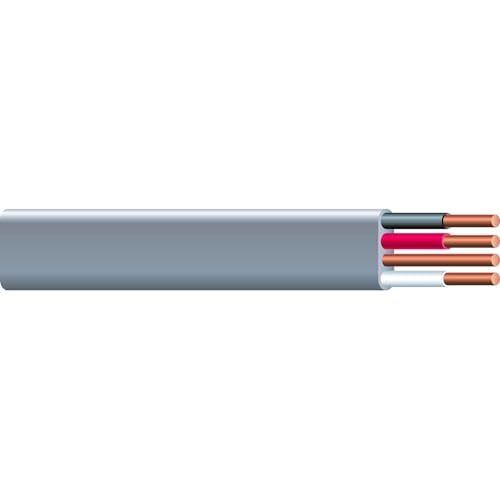
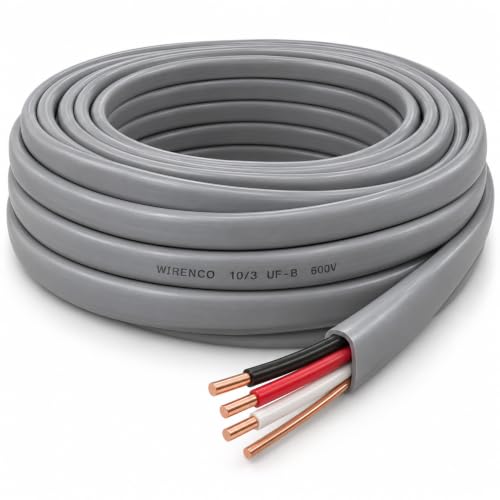
The label “10/3 UF” packs three separate promises into six characters. The 10 is the wire gauge — thicker copper means more current capacity and less voltage drop over distance. The 3 means three current-carrying conductors, and the UF means the outer jacket is built for underground feeder duty. Miss on the gauge and the circuit is undersized; miss on the UF jacket and the soil destroys the cable.
Gauge first, length second
A 10 AWG copper cable is commonly used for 30-amp circuits, which covers a subpanel feed, a well pump, or a detached garage. The farther your run travels, the more voltage you lose in the copper, so long runs sometimes call for a heavier gauge. Measure the trench path you will actually dig, then add a few feet at each end for slack and terminations.
Why the UF jacket matters underground
Standard indoor Romex will not survive direct contact with damp soil. UF cable is built for direct earth burial, and it resists sunlight and moisture damage when it is exposed above grade too. If the cable passes through a wet or corrosive area indoors — a crawlspace or a basement corner — the same jacket still protects it.
Stiffness is the trade-off nobody warns you about
Underground feeder cable is deliberately tough, and tough jackets fight back when you bend them. Cold weather makes that worse. If you are working in a trench in November, uncoil the spool in a warm spot first and give yourself a helper on the far end. Reviews on this cable split on exactly that stiffness — some call it manageable, others call it a wrestling match.
Side-by-Side Comparison
| Model | Best For | Length | Ampacity | Voltage Rating | Amazon |
|---|---|---|---|---|---|
| Southwire 13059122 10/3 UF-B★ Best Overall | Short runs and generator feeds | 50 ft | 30 A | 600 V | Amazon |
| wirenco 10/3 UF-B 50Ft CutBest Value | Budget-minded direct burial | 50 ft | 30 A | 600 V | Amazon |
| Stock Wire 10/3 UF-B 75ft Cut | Mid-length trench runs | 75 ft | 30 A | 600 V | Amazon |
| Stock Wire 10/3 UF-B 100ft Cut | Going the distance to an outbuilding | 100 ft | 30 A | 600 V | Amazon |
| wirenco 10/3 UF-B 100Ft Cut | Long runs with a wet-location pass-through | 100 ft | 30 A | 600 V | Amazon |
| Southwire 13059123 10/3 UF-B 100 Ft | Subpanel feeder to an outbuilding | 100 ft | 30 A | 600 V | Amazon |
| Southwire 13059155 250 ft UF Cable | Big jobs with minimal splicing | 250 ft | 30 A | 600 V | Amazon |
Detailed Reviews
1. Southwire 13059122 Romex SIMpull 10/3 UF-B 50 Ft
Our pick — 4.5+★ from 800+ verified ratings; the strongest balance of quality and price.
The 50-foot coil that turns a weekend trench job into one clean pull.
Here is the number that decides your whole layout: 50 feet. That is enough for a generator hookup, a post lamp 30 feet from the house, or a short run to a detached shed — and it is short enough that you are not hauling a heavy drum across the yard. The cable inside is multi-strand copper at 10 gauge, three conductors plus a ground, which is the standard build for a 30-amp underground feed rated at 600 volts.
What makes this one the pick is not a headline spec — it is how the jacket behaves. The SIMpull outer layer is built to slide, so pulling through a run of conduit or a curve in the trench takes less grunt than the older stiff stuff. Owners reward the build quality more than any other quality of this cable, and the money saved versus buying a bigger spool you do not need comes up next most often. It shows up in generator installs specifically, which tells you something about how forgiving the jacket is in tight trench corners.
The honest catch is jacket stiffness in the cold. Some buyers report this cable fights every bend; others say it bends fine — that split runs right through the reviews. In cold weather it gets worse, so uncoil it somewhere warm the night before. One more thing worth noting: the manufacturer lists item weight as 16 ounces, which reads light for a 50-foot cable, so plan on the spool having real heft when the box lands.
What holds up in the trench
- Three conductors plus ground in a multi-strand copper build
- 600-volt rating and direct-burial jacket in a 50-foot cut
- Sliding jacket eases pulls through conduit and trench curves
- Proven in generator installs, where the run has to bend and terminate cleanly
Where it pushes back
- Cold weather stiffens the jacket — warm it before you pull
- 50 feet leaves no margin on longer paths to a far outbuilding
Grab this one when: your run lands somewhere between a generator pad and a shed, and you want the jacket to cooperate on the pull.
Step up in length if: your trench measures past 50 feet, because splicing underground is the job you want to avoid.
2. 10/3 UF-B Wire 50Ft Cut
Three soft bare copper conductors, a 30-amp ceiling, and no frills on the label.
If you want the electrical facts without a brand story, this wirenco cut lists them plainly. The cable is 10 AWG with three annealed (soft) bare copper conductors, which means the copper bends more easily than hard-drawn wire when you are making terminations in a cramped box. It carries a 30-amp allowable ampacity and a 600-volt rating, with a 90°C heat capacity — that last number is the temperature the insulation is built to tolerate, and it matters most when the cable sits in a hot attic pass-through before it dives underground.
The jacket is the selling point for site work. It is rated for direct earth burial and resists sunlight and moisture, so the same cable that runs under the lawn can emerge and run up a post in full sun without degrading. Indoor wet or corrosive locations are on the list too, which is useful for a basement wall penetration or a crawlspace crossing.
The one thing to plan around is color. The listing states the wire color may not match the photo, so do not build a color-coded labeling scheme around what you see. Run your own tags at both ends instead — cheap insurance on any underground feeder.
Plain-spoken build: Annealed copper, 30 amps, 600 volts, and a jacket that handles sun, soil, and damp — all stated directly rather than dressed up.
Fit note: The listing openly warns the delivered color can differ from the picture, so label your conductors yourself before the trench closes.
Good match for: a DIYer trenching a short feeder who wants the electrical ratings spelled out and nothing extra.
Look past it if: matching jacket color to your existing run is part of your plan, since that is not guaranteed here.
3. 10/3 UF-B Wire 75ft Cut

Seventy-five feet is the awkward length most people actually need.
Most trench paths land somewhere between “short hop to the lamp post” and “full run to the barn,” and that middle zone is exactly where a 75-foot cut earns its place. This Stock Wire cable gives you 10 AWG copper with three annealed conductors, a 30-amp allowable ampacity, and a 600-volt rating — the same electrical footing as the shorter cuts, just with 25 more feet of reach.
Where it earns trust is in the plainness of the job it does. The build quality is the strongest signal in what owners mention about it, with its ability to simply work as expected a close second. Nothing about the listing oversells it. It is PVC-jacketed for direct burial, and it lists indoor use in wet or corrosive locations, so the cable can pass through a damp basement wall on its way out to the yard.
The trade-off is the one every UF cable carries: the jacket and the 30-strand conductor build make it a firm cable to route. Give yourself room at the bends rather than forcing a tight radius at the corner of a trench, and the pull goes a lot smoother.
Why it fits the middle: At 75 feet it covers the runs that a 50-foot spool cannot reach without a splice, and the 600-volt, 30-amp ratings match the rest of the line.
The bend you will make: Multi-strand copper gains you flexibility at the termination, but the PVC jacket still wants generous curves in the trench.
Reach for this if: your measured path is in the 60-to-75-foot range and you want a single unbroken run.
Consider the longer cut if: your trench has any chance of growing during the dig — slack disappears fast at the panel end.
4. 10/3 UF-B Wire 100ft Cut
A full 100-foot run built on copper and nylon, with the ratings to match.
This is the length that gets you to a real outbuilding. A hundred feet gives you the reach for a detached garage or a barn panel, and the layered copper-and-nylon construction is stated right in the specifications — the nylon is a sheath layer that helps the jacket stand up to abrasion as it drags through soil and stone.
The electrical numbers are consistent with the rest of this line: 10 AWG, three annealed bare copper conductors, 30-amp allowable ampacity, and 600 volts. It is built for direct earth burial, resists sunlight and moisture, and is also listed for indoor wet or corrosive spots. That combination means one spool can cover the outside run and the damp wall penetration at the same time.
What limits it is the length itself. A hundred feet of multi-strand feeder cable is a real coil to manage, and it does not coil small. If you are working solo, plan on a second pair of hands at the far end, or lay it out straight before you start the pull instead of dragging a tight spool behind you.
Worth the longer spool
- 100 feet of reach for a detached garage or barn panel
- Copper and nylon construction for abrasion resistance in soil
- 30-amp ampacity and 600-volt rating for a proper subpanel feed
- Listed for direct burial and for indoor wet or corrosive locations
What the length costs you
- A 100-foot coil is heavy and awkward to handle alone
- Multi-strand feeder cable resists tight coiling, so storage takes space
Pick this for: a subpanel feed to a detached garage where the run genuinely measures a hundred feet.
Skip past it if: you are feeding a post lamp 40 feet away — you will fight the coil for footage you never use.
5. wirenco 10/3 UF-B Wire 100Ft Cut
The hundred-footer with the soft bare copper and a stripped-down spec sheet.
Two things define this cut: the length and the copper. You get 100 feet of 10 AWG cable with three annealed (soft) bare copper conductors, a 30-amp allowable ampacity, and a 600-volt rating with a 90°C heat capacity. Soft bare copper is the part that makes terminations easier — the strands take a set instead of springing back at you when you land them on a lug or a breaker.
Installation duty here is direct earth burial, with the added note that the cable is built for outdoor use. Compared with the Stock Wire hundred-footer above, this one’s listing is leaner on the jacket details — you are getting the burial-rated build and the electrical ratings, and not much more documentation. If your inspector wants the full printed spec sheet, save the listing details before the package arrives.
The thing to watch is the count on the spool. The specification lists a unit count of one, so confirm you are ordering the hundred-foot cut you actually need rather than reading the image as the product. Measure twice, order once — the trench does not care how confident you were.
The soft-copper advantage: Annealed bare copper makes the terminations at the panel and the fixture far friendlier than stiff hard-drawn conductor.
What to check before ordering: Confirm the footage on the order line, since the listing states a unit count of one and the pictures can read ambiguously.
Best for: a hundred-foot burial run where the easier terminations at the box matter more than a rich spec write-up.
Think twice if: you want detailed jacket documentation from the listing itself to hand to an inspector.
6. Woods 13059123 Romex SIMpull 10/3 UF-W/G 100 Ft

Half the haul of the big drum, with the same sliding jacket.
Weight is the number that changes your day here: 16.5 pounds for a 100-foot spool. That is meaningful when you are carrying the coil from the truck to the trench alone, and it is the clearest physical contrast against the 250-foot drum on this list, which lists at 46 pounds. Same jacket family, far less wrestling.
What it is built for is spelled out clearly — a feeder from a distribution point in an existing building to outside post lamps, pumps, and other loads as specified in the NEC. It carries a 600-volt rating and is designed for underground use including direct burial, which is the whole reason you are buying UF instead of indoor cable. The SIMpull jacket is the same sliding outer layer that makes this family easier to pull through conduit.
The consistent note across this SIMpull jacket family is stiffness, and buyers split on how much it fights the bend. Some find it perfectly workable, others find the cold makes it fight. This hundred-foot spool also sits at the premium end of the tier, so if your run is genuinely short, the shorter cut gives you the same electrical performance without paying for footage that coils in the garage. Where this one wins is the middle ground between reach and handling.
The handling story: 16.5 pounds is a one-person carry to the trench, and the 100-foot reach covers a real subpanel feed without the bulk of a warehouse spool.
The honest limit: The jacket still stiffens in cold, and this is the priciest path to 100 feet on the list — worth it only if the sliding pull and the post-lamp and pump duty list match your job.
Worth it for: the installer who values an easier pull and a carried-not-dragged spool over the lowest cost per foot.
Better served elsewhere if: your run is under 50 feet and the extra footage would just sit in the garage.
7. Southwire 13059155 250 Ft 10/3 W/G UF Cable

Two hundred fifty feet on one drum, built to keep splices out of your trench.
The case for this one is arithmetic. Five 50-foot cuts is what you would need to match a single 250-foot drum, and every one of those joints is a buried splice waiting to be a problem. One continuous pull from the panel to the far end of a large property is the cleanest underground run you can install, and that is what this spool buys you. It lists 4 wires versus the 3 on the 50-foot Southwire cut, matching the same three-conductor-plus-ground layout in a longer build.
It is a heavy-duty underground cable by design, built for direct burial and described for outdoor electrical and utility work. The multi-strand copper build carries the same 600-volt rating as the rest of the family, and the listing notes suitability across residential, commercial, and agricultural settings. On a farm or a long commercial run, that reach matters more than any other spec on the page.
Then there is the weight: 46 pounds. This is a drum, not a coil, and it does not travel casually. Plan for a second person or a cart to get it to the trench, and expect to pay for 250 feet even if your job finishes at 180. It is the right buy only when the run is genuinely big.
Why the drum earns its keep
- 250 feet continuous, so long runs avoid buried splices entirely
- Multi-strand copper with a 600-volt rating for outdoor and utility work
- Listed for residential, commercial, and agricultural applications
- Built for direct burial, which is the whole point of a UF jacket
What comes with the size
- 46 pounds is a two-person lift, not a solo carry
- Buying 250 feet for a 150-foot job leaves a lot of expensive coil behind
The right drum when: your property run is long enough that splicing would be the riskiest part of the job.
Come down a size if: you can measure your trench at under a hundred feet — the shorter cuts cover it cleanly.
Know the Specs
Gauge and Ampacity
The gauge is the thickness of the copper inside the jacket, and the number runs backwards — 10 AWG is thicker than 12 AWG. Thicker copper carries more current with less voltage loss, which is why 10 AWG is commonly paired with 30-amp circuits. The allowable ampacity figure on these cables is 30 amps, and that is your ceiling for the circuit, not a suggestion. If your load sits near that ceiling over a long run, the voltage drop across the copper becomes the thing to calculate before you dig.
UF Jacket and Direct Burial
UF stands for underground feeder, and it describes the outer jacket rather than the copper. This jacket is built to sit in direct contact with soil, and it resists damage from sunlight and moisture when it emerges above grade. Indoor cable is not made for that. The same jacket also qualifies these cables for indoor wet or corrosive locations, which is why the same spool can handle a damp basement wall penetration and the run out to the yard.
Voltage Rating and Heat Capacity
The voltage rating is the maximum the insulation is built to withstand, and these cables are rated at 600 volts — well above the 120 and 240-volt circuits most homeowners run. The heat capacity figure, 90°C on several of these cuts, is the temperature the insulation tolerates. It matters most when the cable passes through a hot attic or a sun-baked conduit before it goes underground, because heat is what ages insulation.
Conductor Count and the Ground
The “3” in 10/3 means three current-carrying conductors, and the W/G on the label means the cable also includes a ground. That gives you two hots and a neutral plus the ground — the layout a 240-volt subpanel feed or a 120/240 split circuit needs. One cable on this list specifies 4 wires rather than 3, which accounts for that ground conductor being counted separately in the listing.
Common Questions
Can I use 10/3 UF wire indoors?
How deep does 10/3 UF cable need to be buried?
What does the 30-amp allowable ampacity actually cover?
Is 10/3 UF the same as 10/2 UF?
Why is UF cable so stiff to work with?
Can I splice two shorter cuts together underground instead of buying one long run?
What does the 600-volt rating mean for a normal house circuit?
Do I need conduit if I use direct-burial cable?
Is the jacket color on these cables guaranteed to match the photo?
How much slack should I leave at each end of the run?
The Bottom Line
For most underground jobs, the best 10/3 uf wire is the Southwire 13059122 50-foot cut, because it pairs the sliding SIMpull jacket with the 30-amp, 600-volt ratings that make a legal burial feed — without hauling a drum you do not need. If your trench runs long enough that a splice becomes the weak link, the Woods 13059123 100-foot spool gives you the same jacket family at 16.5 pounds, a one-person carry. And when the property is genuinely big, the Southwire 13059155 250-foot drum is the one to reach for — one continuous pull keeps every joint above ground where you can find it.
How we choose
We do not accept paid placement. Every pick is matched to a real buyer and a real use-case; we do not hands-on test units.
Sources
Specifications: manufacturer listings and product documentation. Review insights: verified customer reviews, as of November 2026. Pricing: not shown on this page (it changes often); check the current price via the retailer link.
As an Amazon Associate, My Heart Lives Here earns from qualifying purchases. This does not affect which products we feature.