Heads up: This post contains affiliate links. As an Amazon Associate I earn from qualifying purchases, at no extra cost to you. Learn more
Specs are compiled from manufacturer listings and verified buyer reviews and can change over time — please confirm the key details on the product page before buying.
Wide feet and cross training shoes are a bad match more often than they should be. Most trainers are built on a narrow last, so your toes get pinched during lunges and your pinky toe rubs raw by the third round. The fix is a shoe with real room up front plus a stable base for lifting, and the seven picks below are the ones that get that balance right. The New Balance 608 V5 takes the top spot as the crowd favorite — 4.5+ stars across 90,000+ owners — because its wide-friendly fit and cushioned IMEVA midsole keep a broad foot comfortable through a full day of walking and errands.
This guide is built by comparing the manufacturers’ published specifications and the patterns across verified customer reviews, so you get each pick’s real strengths and trade-offs instead of marketing spin.
You will see which trainers actually leave room for a broad forefoot and which only claim to. What matters most is the toe box shape, the width options, and how stable the sole feels under a barbell. Every pick here earns its place as a serious cross training shoe for wide feet.
Top Picks

How To Choose Cross Training Shoes for Wide Feet
Start with the shape of the front of the shoe, not the number on the box. A wide foot needs room at the widest part of the forefoot — the ball of your foot — or your toes curl inward every time you squat. Cross training adds a second demand: the base has to stay planted while you press overhead or pull heavy. Get both right and the shoe stays out of your way through squats and overhead presses.
Check the toe box before anything else
The toe box is the front section that houses your toes. A shoe built with a wide toe box lets your toes splay out flat, which is exactly what you want when you load a barbell. A traditional tapered toe pinches the outer toes together. On a wide foot, that pinch is what turns a good session into a painful one.
Know your width label
Some brands sell specific widths instead of a single fit. Gravity Defyer, for example, labels its Medium as standard, its W as roughly a quarter inch wider than standard, and its XW as roughly half an inch wider. If you already wear wide shoes or want extra room up front, that is the W or XW end of the scale. Read the label on the listing before you pick a size.
Match the sole to how you train
A low, firm platform keeps you grounded for lifts. A rocker sole, by contrast, curves from heel to toe to roll your foot forward as you walk. That curve is great for long days on your feet and less ideal for balance on an incline. Think about whether your week is mostly barbells or mostly walking, then pick the sole that fits it.
Side-by-Side Comparison
| Model | Best For | Toe Box / Width | Drop | Weight (per data) | Amazon |
|---|---|---|---|---|---|
| New Balance Men’s 608 V5 Cross Trainer★ Best Overall | All-day comfort and long walks | Wide-friendly fit, mixed sizing | — | — | Amazon |
| adidas Men’s Kaptir 4.0 SneakersBest Everyday | Everyday wear and treadmill work | Sizing runs 1/2 to 1 size large | — | — | Amazon |
| NORTIV 8 Men’s Trail Running Shoes Wide Toe Box | Trails and hiking without boots | Wide toe box, ample toe room | — | — | Amazon |
| Under Armour Men’s TriBase Reign 6 Trainer Shoes | Lifting and explosive workouts | Wide toe box, true to size | Low to the ground | — | Amazon |
| Gravity Defyer Energiya Cross Training Shoes | Walking and high energy return | W and XW widths available | — | — | Amazon |
| ALTRA Men’s Solstice XT 3 Cross Training Shoe | Natural toe splay and flexibility | FootShape roomy toe box | 0 mm | 9.5 oz | Amazon |
| Reebok Nano X5 Men’s Shoes | CrossFit and functional workouts | Toe box width, some find narrow | — | — | Amazon |
Detailed Reviews
1. New Balance Men’s 608 V5 Cross Trainer
Our pick — 4.5+★ from 90,500+ verified ratings; the strongest balance of quality and price.
The cushioned all-rounder that treats a wide foot to a full day of comfort.
The 608 V5 is the pick if your week mixes long walks, errands, and light gym sessions more than heavy barbell work. Its leather upper sits on a soft IMEVA midsole (a lightweight foam that cushions each step) so your feet do not ache by late afternoon. Under the heel there is an ABZORB crash pad, a cushioning insert that absorbs impact when you pick up the pace. If your wide foot usually ends up bruised after a full day standing, the ABZORB heel pad and soft IMEVA midsole are what take the sting out of it.
What wins people over is the sheer breadth of comfort praise — cushioning and overall quality both draw thousands of positive comments, and the arch and side support wins particular credit on long walks. The dual-density collar foam around the ankle (a two-layer padding that softens the edge of the shoe) keeps the top of the shoe from chafing your ankle bone. Deep flex grooves in the rubber outsole let the shoe bend where your foot bends, and an internal shank adds stiffness under the midfoot so the platform does not fold in half under you.
Here is the honest catch. Durability is the one topic where opinion splits cleanly in half, with a chunk of owners reporting soles wearing through within weeks rather than months. Sizing is also uneven — plenty of wide-footed buyers call the fit perfect, while others find it runs small. If you plan to log heavy mileage on pavement, keep an eye on the outsole; if you want a comfortable daily shoe, this is a strong bet. For an all-day shoe at the entry level, it is a genuinely good value.
Where it earns its keep
- Soft IMEVA midsole plus an ABZORB heel pad for all-day cushioning
- Leather upper holds its shape and looks tidy with anything
- Deep flex grooves and an internal shank balance flex with support
- Dual-density collar foam eases ankle chafing
What to weigh first
- Sole durability draws split feedback from owners
- Sizing runs uneven — some wide feet need to go up
- Better for daily wear than for heavy barbell days
Made for: anyone who wants one comfortable shoe for walking, errands, and light training without breaking a budget.
Think twice if: you log serious road mileage and need the outsole to outlast a season.
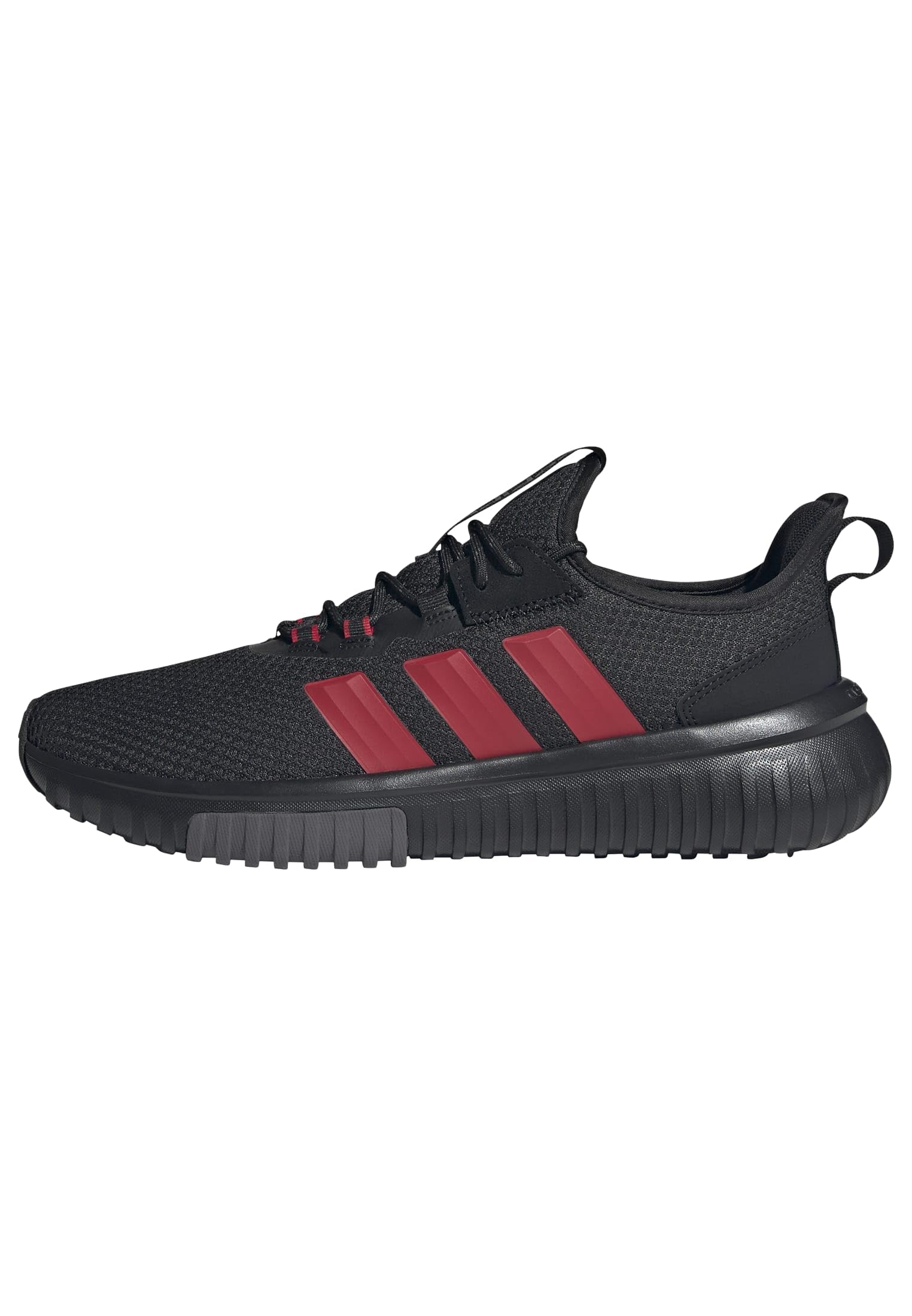
2. adidas Men’s Kaptir 4.0 Sneakers
A clean-looking trainer that handles treadmill miles and school-run errands without fuss.
This is the shoe for the wide-footed buyer who wants a trainer that looks sharp in the gym and on the street. The Kaptir 4.0 leans on the classic Adidas build, and owners consistently call out the quality of the construction and the simple design that attracts compliments. It slides into working out, walking, and treadmill running without complaint — a genuinely versatile pick if you want one pair for everything.
Comfort is the other pillar here, with owners finding them comfortable right through a full session. Compared with the New Balance 608 V5 above, this one is lighter on the cushioning story and heavier on style — the Adidas silhouette reads cleaner under jeans. The trade-off arrives in the fit.
That is your real caution. As buyers report, the fit is mixed — while some find it true to size, others mention they run 1/2 to 1 full size large. For a wide foot that sounds like good news, but the same reviews call the shoe somewhat narrow. Pair that with arch support that draws a mixed verdict and you have a shoe that suits some feet beautifully and frustrates others. Try to confirm sizing before you commit. Durability also splits, with some pairs lasting well and others starting to come apart early on.
The look-and-quality angle: quality and comfort are the two things owners talk about most, and the styling earns praise for being simple and clean. If appearance matters as much as function, this delivers.
The sizing risk: running large yet still reading narrow is an odd combination — it means a wide foot could need a smaller size than usual and still want more room across the ball. Order with a return plan in mind.
Reach for this if: you want a good-looking everyday trainer for light workouts and treadmill walks.
Look elsewhere if: you need a guaranteed wide fit — the sizing here is the least predictable on this list.
3. NORTIV 8 Men’s Trail Running Shoes Wide Toe Box
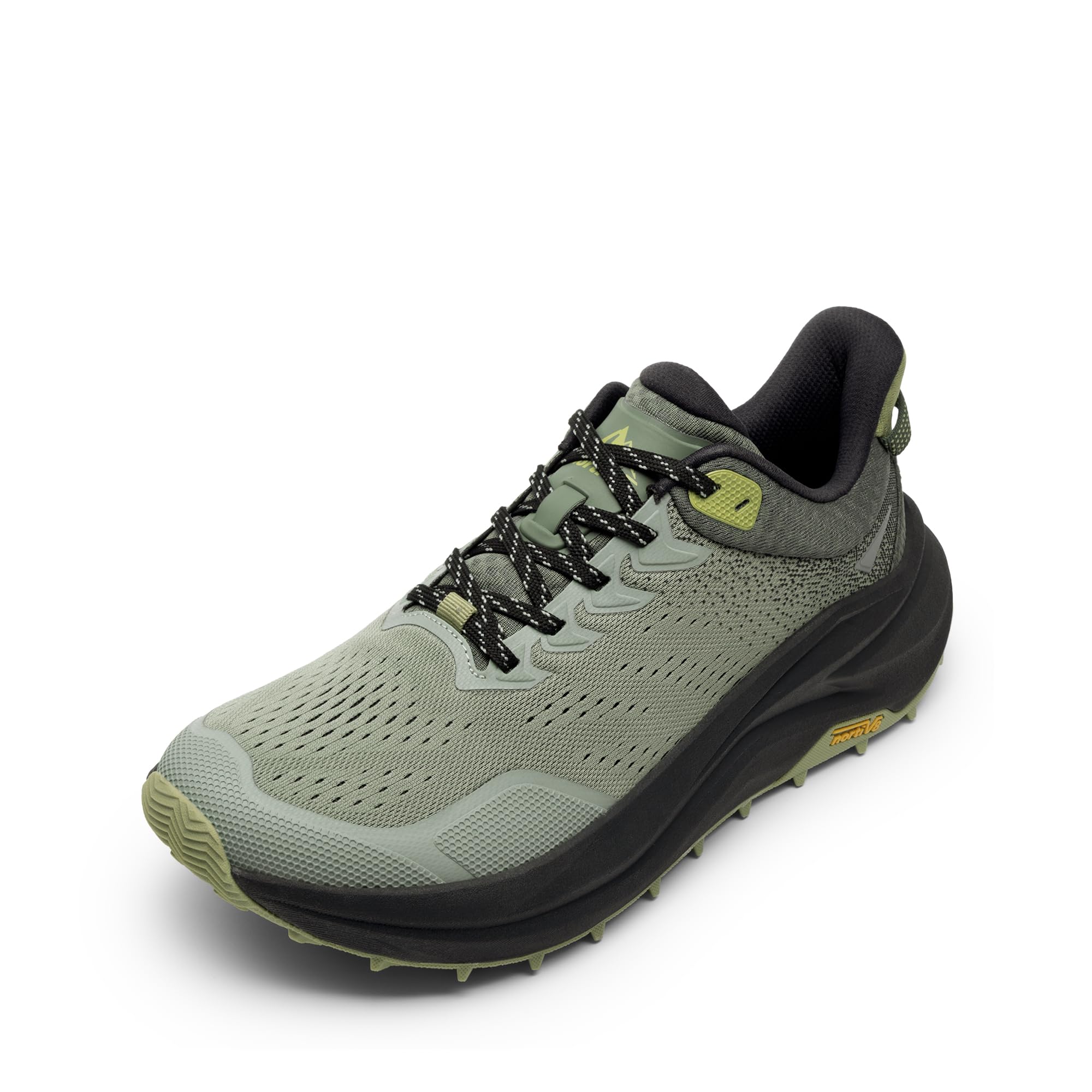
Trail-ready room up front — the toe box here does the heavy lifting for broad feet.
If the front of your foot is the problem area, the NORTIV 8 puts its effort exactly there. The toe box is built wide, and owners describe the ample toe room as the thing that makes the shoe work for them — including people who want to hike without dragging out a pair of big boots. For a wide foot, that extra room translates to toes that stay flat instead of curling under on a descent.
Comfort and quality carry the most praise, with the fit close behind. Traction gets specific credit for grip on dirt and dry dusty trails, which is where a shoe built for this kind of ground should shine. Arch support also draws warm words for stability and cushioning, so you get support along the whole foot rather than just at the toe. At this price tier, owners say it beats expectations.
The thing to know before ordering: durability is the one point where feedback divides. Some owners say the soles hold up as long as costly alternatives, while others find they wear down quickly. Treat these as a training and trail shoe rather than a lifetime purchase. Weighed against the price, the toe room and trail grip still make it a smart buy for a broad forefoot.
Why wide feet land here: the wide toe box is the headline, and it is not marketing gloss — the room up front is what owners bring up in the reviews that matter.
The honest limit: sole life is unpredictable. If you are hard on outsoles, plan on replacing these sooner than you might like.
Pick this for: trail runs, dusty paths, and hikes where toe room beats boot bulk.
Pass it over for: heavy barbell work — this is a running-first shoe, not a lifting platform.
4. Under Armour Men’s TriBase Reign 6 Trainer Shoes
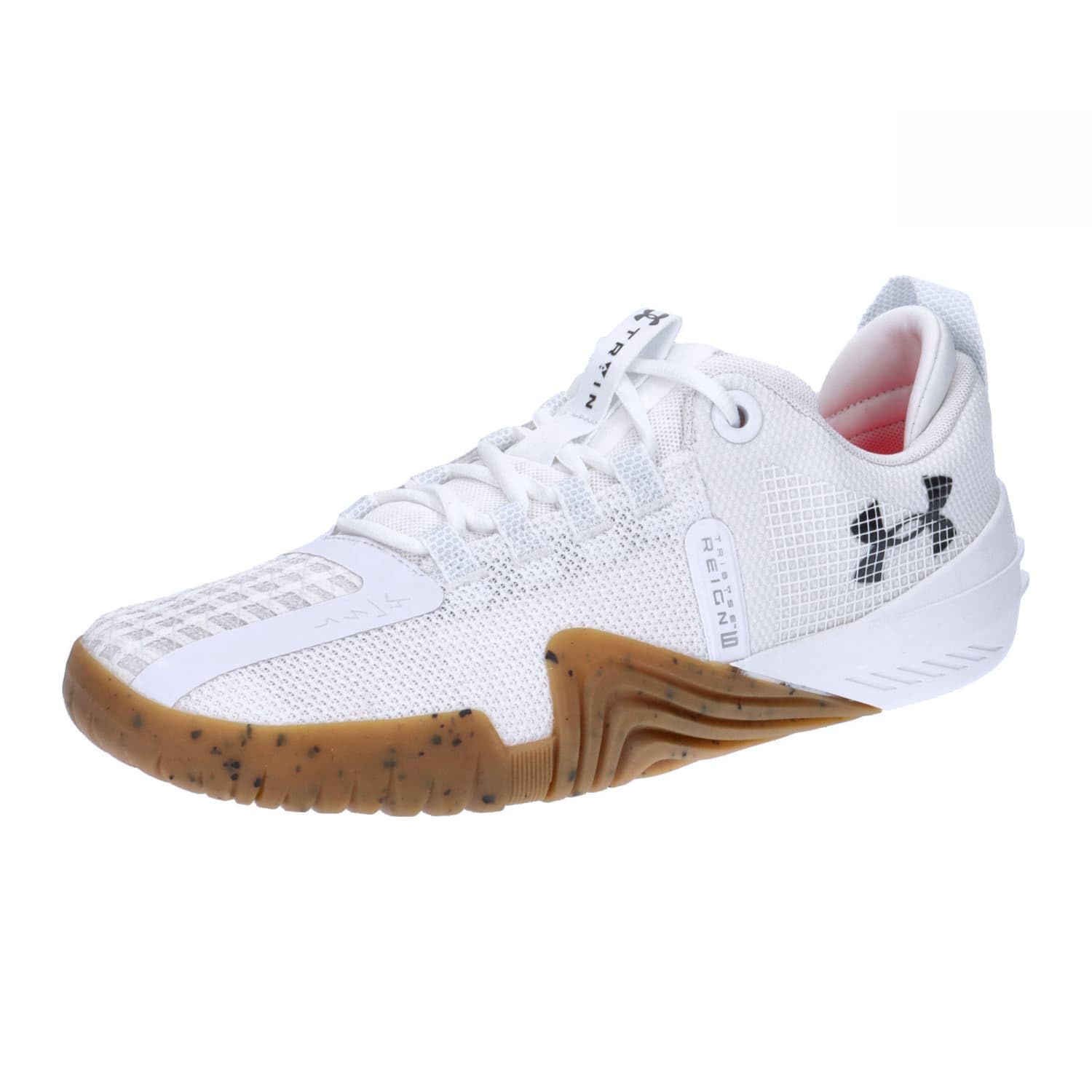
Built low and planted, with a wide toe box that keeps a broad foot steady under a bar.
The TriBase Reign 6 is for the wide-footed lifter who needs the ground to feel solid. The updated UA TriBase (three points of ground contact under the sole) boost contact with the floor and promotes natural motion, while the low-to-the-ground build gives you more feel and power transfer through the lift. Add a full-rubber outsole that wraps up the sides with medial rope grip, and you have a shoe that handles rope climbs as well as squats.
Stability is the theme owners keep returning to, and the wide toe box runs true to size — a meaningful detail when so many wide-footed shoes run tight. The dual-density midsole is softer in the forefoot and firmer in the heel, which keeps you cushioned at the front while staying locked and supported at the back. An external heel clip and internal heel counter hold the rear of your foot in place during lateral moves, and the TPU mesh upper breathes while it supports.
The one thing to plan around: this shoe is happiest in the gym, not on a long walk. The firm, low platform that makes lifting feel good is the same thing that makes pavement miles feel flat. If your training is mostly floor work — squats, deadlifts, rope climbs — the firm, low platform is exactly what you want. If your week is mostly walking, look at the New Balance 608 V5 instead.
What makes it stable
- UA TriBase sole with three contact points for grip under load
- Dual-density midsole — soft forefoot, firm heel
- External heel clip and heel counter lock the rear of the foot
- Full-rubber outsole with medial rope grip for climbs
- Wide toe box that owners say runs true to size
The part to expect
- Low, firm ride is gym-focused, not suited to long walks
- Heavier build than a pure walking shoe
Your match if: you lift, do rope climbs, and want your toes to stay spread through every rep.
Not your shoe if: you need cushioning for hours on hard pavement.
5. Gravity Defyer Energiya Cross Training Shoes
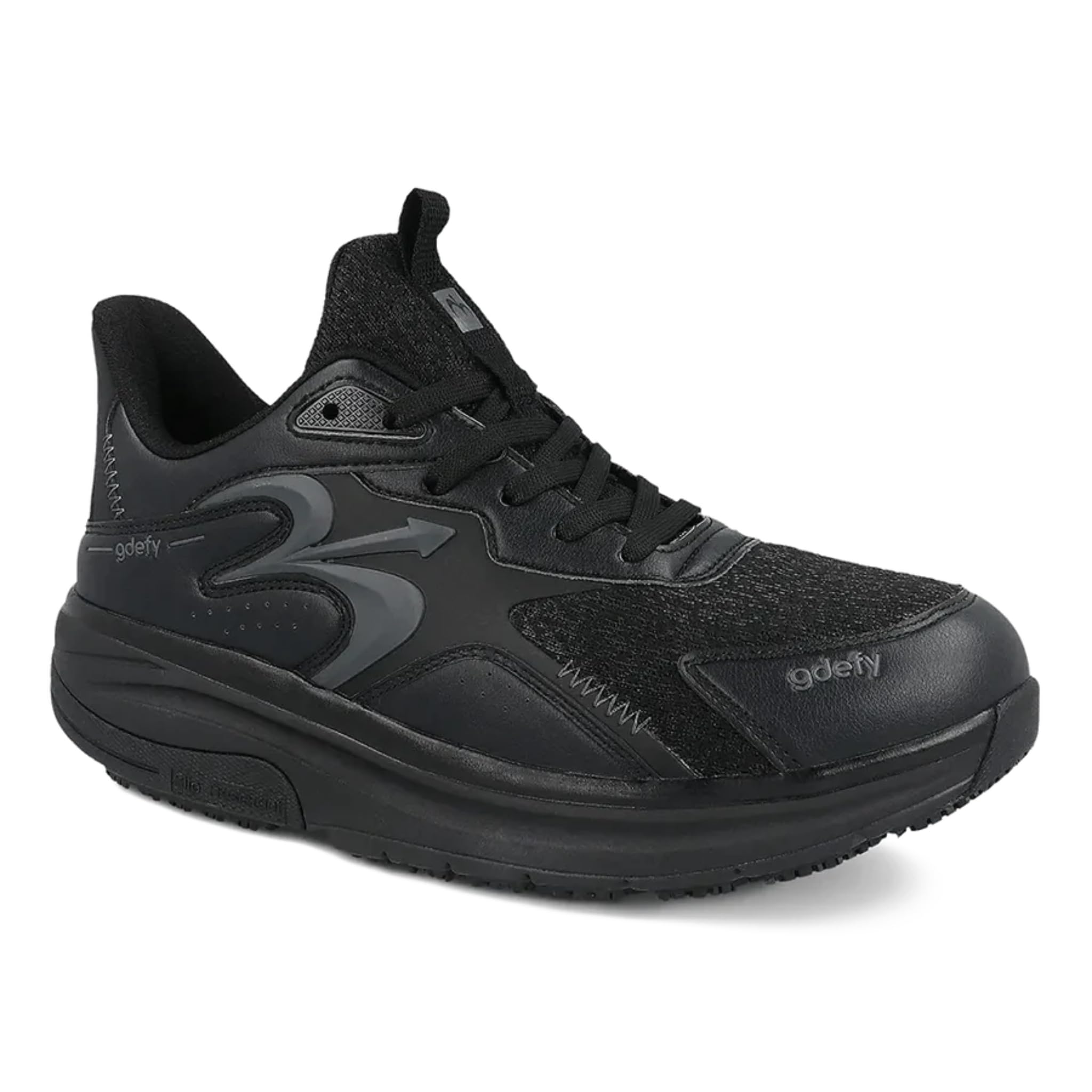
The only pick that lets you dial in an actual width, from standard up to extra wide.
You get to pick your width instead of hoping one fit works. The Energiya comes in three widths: Medium (standard), W (roughly a quarter inch wider than standard), and XW (roughly half an inch wider than standard). So if you already wear wide shoes, or just want more room in the toe box (the front section around your toes), you order the W or XW and get that room. If single-width trainers have left your wide foot cramped, this is the most direct fix on the list.
The rocker sole is the other big difference. It curves from heel to toe to roll your foot forward through each step, which is what gives the shoe its energy-return feel for walking and staying active all day. It also means there is an adaptation period. The maker recommends wearing them 1–2 hours daily for the first 3–5 days to let the materials adapt to your feet and your body to adjust to the rocker design, starting on flat surfaces and taking stairs slowly. Comfort and overall quality are what owners praise most, with many describing them as the best walking shoes they have owned.
Here is where you should be clear-eyed. Fit draws mixed feedback despite the width options, with some finding the shoe runs narrow. Durability also splits, with several owners reporting the sole separating from the upper at the heel. And because the rocker changes your balance, a few find it tricky on inclines. Order the right width, ease into the curve, and this is a comfortable, distinctive walker.
Best for: wide-footed walkers who want a genuine width choice and a rolling stride for long days on their feet.
The caveat: the rocker takes days to get used to, and the sole-to-upper bond is the weak point to watch.
6. ALTRA Men’s Solstice XT 3 Cross Training Shoe

A roomy, zero-drop trainer that lets your toes spread the way nature intended.
Your toes get room to spread out, and your midfoot stays locked in. Altra’s signature FootShape fit gives you a roomy toe box (the front section around your toes) with space for your toes to move freely, held by a secure midfoot — so you get width where you need it without the shoe sliding around. That pairing is rare, and it is exactly what a wide forefoot wants. The shoe weighs 9.5 oz and sits on a 0 mm drop (heel and forefoot at the same height, so your foot stays level).
That zero drop changes how you stand. Instead of a raised heel tipping you forward, you stand flat and even — which many lifters prefer for squats. An A-frame quarter panel adds stability for lateral movements, and the InnerFlex midsole uses grid-like grooves to keep the sole flexible as you move. A redesigned mesh upper breathes, a padded heel collar keeps the ankle comfortable, and a rubber outsole brings the durability. Owners call out the stability during dynamic moves and the heel cushioning.
Two things to weigh before you order. The fit is mixed — some owners mention the size is right and love the wide toe space, while others say it is very tight across the top of the foot (the dorsal area) and does not stay put. If you have a high instep (a tall arch on top of your foot), note that. Durability also divides, with some buyers reporting the outsole (the bottom tread) peeling. Still, for a natural-feeling trainer, this is among the most committed designs here.
The zero-drop advantage: a 0 mm drop with a 9.5 oz build gives you a flat, light platform for lifting and lateral work alike.
Watch the instep: the same snug midfoot that keeps the shoe secure can press down on a tall arch. Know your foot shape before committing.
Choose this if: you want maximum toe splay and a level, flat platform for lifting.
Skip the risk if: you have a high instep that hates pressure across the top of the foot.
7. Reebok Nano X5 Men’s Shoes, Cross Training Sneakers for Men

The functional-fitness specialist that keeps a wide foot steady through burpees and cleans.
If your training is CrossFit, HIIT, and functional circuits, the Nano X5 is the shoe that was designed for exactly that. Owners describe it as an excellent workout shoe, and the build quality is what gets the most praise — a sturdy, gym-first construction that holds up to jumping, sprinting, and heavy pulling. Stability earns specific credit for HIIT-style sessions, and the wide toe box suits a broad foot through the swings and side-to-side moves those workouts demand.
Compared with the Under Armour TriBase Reign 6 above, the Nano leans more toward all-around circuit work than pure barbell lifting. This is the pick for someone whose class has rope climbs, box jumps, and kettlebell swings in the same hour. Owners call it suitable for gym sessions and weight lifting, and say it is worth the money, with several noting they would definitely buy it again.
The tension is in the fit. It draws mixed feedback — some owners praise the toe box width while others find the shoe too narrow. For a wide foot, that means this is a pick to try rather than assume. Durability also splits, with some reporting the sole falling apart while others say it holds up well. If the toe box width suits your foot, it is a strong CrossFit shoe; if it does not, the narrow fit shows up in the first session.
Why functional athletes trust it
- Build quality is what owners praise most, and it is made for gym use
- Steady stability for HIIT and dynamic workouts
- Wide toe box suits a broad foot through side-to-side moves
- Owners call it worth the money and would buy it again
The real unknowns
- Fit is mixed — some wide feet find it too narrow
- Durability splits, with some soles wearing out early
Made for: the CrossFit regular who wants one shoe for swings, jumps, and lifts in the same session.
The question to answer: whether the toe box is wide enough for your specific foot — the reviews do not agree.
Know the Specs
Toe Box and Width
The toe box is the front compartment that holds your toes. When it is built wide, your toes sit flat and spread, which takes pressure off the outer edge of a broad foot. Width labels work alongside this — Gravity Defyer’s W runs roughly a quarter inch wider than standard and its XW roughly half an inch wider, so you can size the room you need instead of guessing.
Drop and Heel Height
Drop is the height difference between the heel and the forefoot. A 0 mm drop, like on the ALTRA Solstice XT 3, means the shoe sits level under you — a flat stance many lifters prefer. A rocker sole, by contrast, curves heel to toe to roll your stride forward as you walk. Neither is better; one suits lifting, the other suits long days on your feet.
Stability Features
Look for a heel clip or heel counter that cradles the back of your foot, plus a firm rear midsole so the platform does not wobble under load. A full-rubber outsole that wraps up the sides adds grip and abrasion resistance for rope climbs and lateral work. These are what keep a wide foot secure when you move side to side.
Break-In
Some shoes feel right on day one; others need time. A rocker design typically takes days of short wear to feel natural, and the maker of the Gravity Defyer suggests 1–2 hours daily for the first 3–5 days. Leather uppers tend to hold their shape, while mesh uppers breathe more. Plan a short adaptation window before you judge any new pair.
Common Questions
Will a wide toe box shoe fit my extra-wide foot without a size up?
Is a zero-drop shoe good for cross training with wide feet?
How long is the break-in period on the Gravity Defyer Energiya?
Can I use trail running shoes in the gym for cross training?
Do the adidas Kaptir 4.0 sneakers run large or small?
Which shoe on this list is most stable for lifting?
What does the W and XW width difference actually mean?
Are these cross training shoes built to last?
Can a wide-footed lifter wear these for all-day walking too?
Should I size up in cross training shoes for wide feet?
The Bottom Line
The strongest cross training shoes for wide feet starting point is the New Balance 608 V5, because it pairs a wide-friendly fit with all-day cushioning and a comfortable leather upper at the entry level. If lifting stability is your priority, the Under Armour TriBase Reign 6 gives you a wide toe box with a low, planted platform. And if you want the choice of an actual wide width, the Gravity Defyer Energiya lets you order W or XW and ride a rocker stride all day.
The one honest nudge: the New Balance 608 V5 is the most-tested pick here, with tens of thousands of owners behind it, so its sizing and durability feedback is the most reliable on this list. That breadth of experience is the safest place to start if you are unsure which fit will suit your foot. Whichever you choose, confirm the toe box shape and width label first — on a wide foot, those two specs decide whether a trainer works at all.
How we choose
We do not accept paid placement. Every pick is matched to a real buyer and a real use-case; we do not hands-on test units.
Sources
Specifications: manufacturer listings and product documentation. Review insights: verified customer reviews, as of November 2026. Pricing: not shown on this page (it changes often); check the current price via the retailer link.
As an Amazon Associate, My Heart Lives Here earns from qualifying purchases. This does not affect which products we feature.