Heads up: This post contains affiliate links. As an Amazon Associate I earn from qualifying purchases, at no extra cost to you. Learn more
Specs are compiled from manufacturer listings and verified buyer reviews and can change over time — please confirm the key details on the product page before buying.
If your cold-water pipes sweat in summer or your hot-water lines bleed heat before the tap, the fix is usually a wrap — not a plumber. The right pipe insulation stops condensation dripping onto stored boxes and keeps hot water hot between the heater and the faucet. The wrong one peels off by spring. This guide separates the wraps that stay put from the ones that need a second layer of tape just to survive the season.
This guide is built by comparing the manufacturers’ published specifications and the patterns across verified customer reviews, so you get each pick’s real strengths and trade-offs instead of marketing spin.
The picks below split into rubber tape, slit foam tube, and foil-faced outdoor wrap — each built for a different pipe, fit, and season. Here are the five worth your time in pipe insulation.
Top Picks


How To Choose The Best Pipe Insulation
Start with the shape of your pipe and the shape of the problem. A long straight run of copper in a basement wants a slit foam tube. A bundle of elbows and short couplings wants tape that bends around corners. An outdoor line exposed to sun and freezing nights wants a foil face on the outside. Picking the wrong format is the most common reason a wrap fails, long before the material itself does.
Match the inner diameter to your pipe
A foam tube only insulates when it hugs the pipe. The stated inner diameter needs to sit close to your pipe’s outside measurement. An oversized tube leaves an air pocket, and that pocket becomes the very place where condensation forms and heat escapes. Measure the pipe with a tape, then read the inner-diameter figure on the listing before you buy.
Thickness and R-value: what they actually do
Thickness is the single spec that separates a real thermal barrier from a thin sleeve. R-value is the number that tells you how well a material resists heat flow — higher means a better barrier for the same material. A half-inch wall with an R-value of 3.3 does meaningful work on a copper line. A thin tape mostly stops condensation from dripping but adds little thermal resistance on its own.
The adhesive question
Self-adhesive backing sounds like a shortcut, but it is where these products most often divide. Tape and wrap formats rely on sticking to themselves or to the pipe, and a damp or dusty surface weakens any adhesive. If you are wrapping outdoors or in a humid crawlspace, plan on a layer of quality foil tape over the seam regardless of what the listing promises.
Side-by-Side Comparison
| Model | Best For | Format | Length | Thickness | Amazon |
|---|---|---|---|---|---|
| Frost King IT30/8 Rubber Tape★ Best Overall | Wrapping sweat-prone cold lines | Rubber tape | 30 ft | 0.13 in | Amazon |
| cSeao Foam Tube (3/8″ x 2-3/8″ x 6FT)Best for AC Lines | AC and irrigation lines | Foam tube | 6 ft | 0.38 in | Amazon |
| Pipe Wrap Insulation 2″ x 33FT | Outdoor winter freeze protection | Foil-faced wrap | 33 ft | 0.2 in | Amazon |
| M-D Building Products 50215 | Half-inch copper and PVC lines | Slit foam tube | 6 ft | 0.5 in | Amazon |
| PATIKIL Foam Tube 2″ ID x 6Ft | Two-inch AC and cooling pipes | Foam tube | 6 ft | 9 mm | Amazon |
Detailed Reviews
1. Frost King IT30/8 Rubber Insulation Tape
Our pick — 4.5+★ from 850+ verified ratings; the strongest balance of quality and price.
The roll that bends around every elbow your foam tube cannot reach.
Thirty feet of rubber tape, 2 inches wide and 0.13 inches thick, gives you 60 square inches of coverage on a roll that weighs 6.4 ounces. The format is the whole point: where a rigid tube has to be cut and mitered at every joint, this tape wraps straight around the fitting and keeps going. If your basement plumbing looks like a maze of copper elbows rather than a clean straight run, this is the format that actually finishes the job.
What wins people over is that it simply works, and the wrapping takes very little fuss. It bends to the contour of the pipe and holds its temperature barrier once it is down. That flexibility is why it handles a hot-water line and a sweating cold-water line with the same roll.
The honest catch is tackiness. Adhesion draws a notably divided reaction compared with the praise for how well it functions, and the rubber can tear like soft foam if you pull it hard against a sharp edge. Give the pipe a clean, dry wipe first, pull the tape snug rather than stretched, and finish the seam with a strip of foil tape. Size it against the M-D tube below by coverage: this roll reaches across 30 feet of wrapping, while that tube protects a single 6-foot run.
Where this roll shines
- Bends around elbows and couplings that a straight tube cannot follow
- 30 ft on a 6.4-ounce roll, so it handles a long wrapping session without fatigue
- Rubber keeps a thermal barrier on both hot and cold lines
What to plan around
- Adhesion splits opinion — a dry, clean pipe matters more than the backing film
- Pull it gently; the rubber tears like soft foam against a sharp edge
Reach for this when: your pipes have more joints than straight runs and you want one roll to cover them all.
Think twice if: you need heavy thermal resistance from a single pass — this tape is a condensation barrier first.
2. cSeao Pipe Insulation Foam Tube (3/8″ x 2-3/8″ x 6FT)
A nitrile rubber sleeve for refrigerant lines that need a moisture barrier, not just bulk.
The specs here are a two-inch-plus outside read: a 2-3/8 inch inner diameter feeding a 3-1/8 inch outer, with a 3/8 inch wall over 6 feet of tube. That makes it the widest-bore pick in this lineup — 3.13 inches across the outside versus 1.63 inches on the M-D tube below, so it slides over fatter lines than either of the slit foam options can swallow. The nitrile rubber is the other draw. It is listed as waterproof and moisture-proof, and it is described as not flammable — it recedes once the flame is gone and puts itself out.
Buyers report the insulation does its job, and the rubber outside doubles as a cushion on spa covers, cargo racks, and guitar stands. That rubber skin also works as a cushion where a metal frame meets something you would rather not scratch.
Be straight with yourself about the thickness before you order. This is the pick with the most divided quality and thickness feedback in the group, and the tube is thinner in the hand than the spec sheet implies once you compare it to a half-inch wall. Check the measurements before you buy and expect the actual sleeve to look different from the listing photos. If your run needs a half-inch of real thermal mass, the M-D tube is the better fit; if you need a waterproof moisture barrier over an AC line, this nitrile sleeve earns its spot.
What holds up: the waterproof, self-extinguishing nitrile skin is the standout — it shrugs off condensation and outdoor exposure in a way bare foam cannot.
What to check first: the wall reads 0.38 inches, and owner feedback on thickness is the loudest concern in this block — measure your pipe and your expectations against it before ordering.
The right size for: a wider refrigerant or AC line that needs a waterproof rubber barrier rather than a fat thermal sleeve.
Look elsewhere if: you are insulating a twin run of heating pipe — the thickness will leave you wanting more.
3. Pipe Wrap Insulation 2″ x 33FT Foil-Faced Wrap

Foil on the outside, adhesive on the back, thirty-three feet of winter armor.
Outdoor pipe runs are where ordinary foam gives up. This wrap puts a layer of aluminum foil on the surface over 0.2-inch rubber plastic cotton, and that foil face reflects sun and adds a claimed fire-retardant layer the bare foam tubes cannot match. Length is the headline for a long exterior run — 396 inches, versus 72 inches on the M-D tube, so one roll covers more than five times the distance through a single continuous wrap.
Getting it on is quick when it behaves. Peel the film backing, wind it around the pipe, press it down, and the self-adhesive back is meant to hold firm over the long haul. Owners mention the insulation works, and the self-adhesive backing makes application quick. Cut it to length or bend it around curves, and it follows.
The seam is where you should slow down. Adhesion draws more negative feedback than anything else in this block, and the plastic backing film is fiddly to peel — some wraps come loose over a season rather than holding. Apply it on a dry, cool pipe, press the overlap firmly, and expect to add a strip of foil tape at the ends where the wind catches. skip it if your pipe run is short — you will be cutting most of this roll off unused.
The outdoor case: foil-faced 0.2-inch wrap in 33-foot runs is built for sun, frost, and a long exterior line you would rather not redo.
The honest limit: sticking power is the weak link — this wrap rewards a dry surface and a firm press, and punishes a rushed install.
Best matched to: outdoor plumbing exposed to summer sun and winter freeze, where a foil face behind a long roll does the most work.
Skip the splurge if: your run is short and indoors — a slit tube is faster there.
4. M-D Building Products 50215 Foam Tube
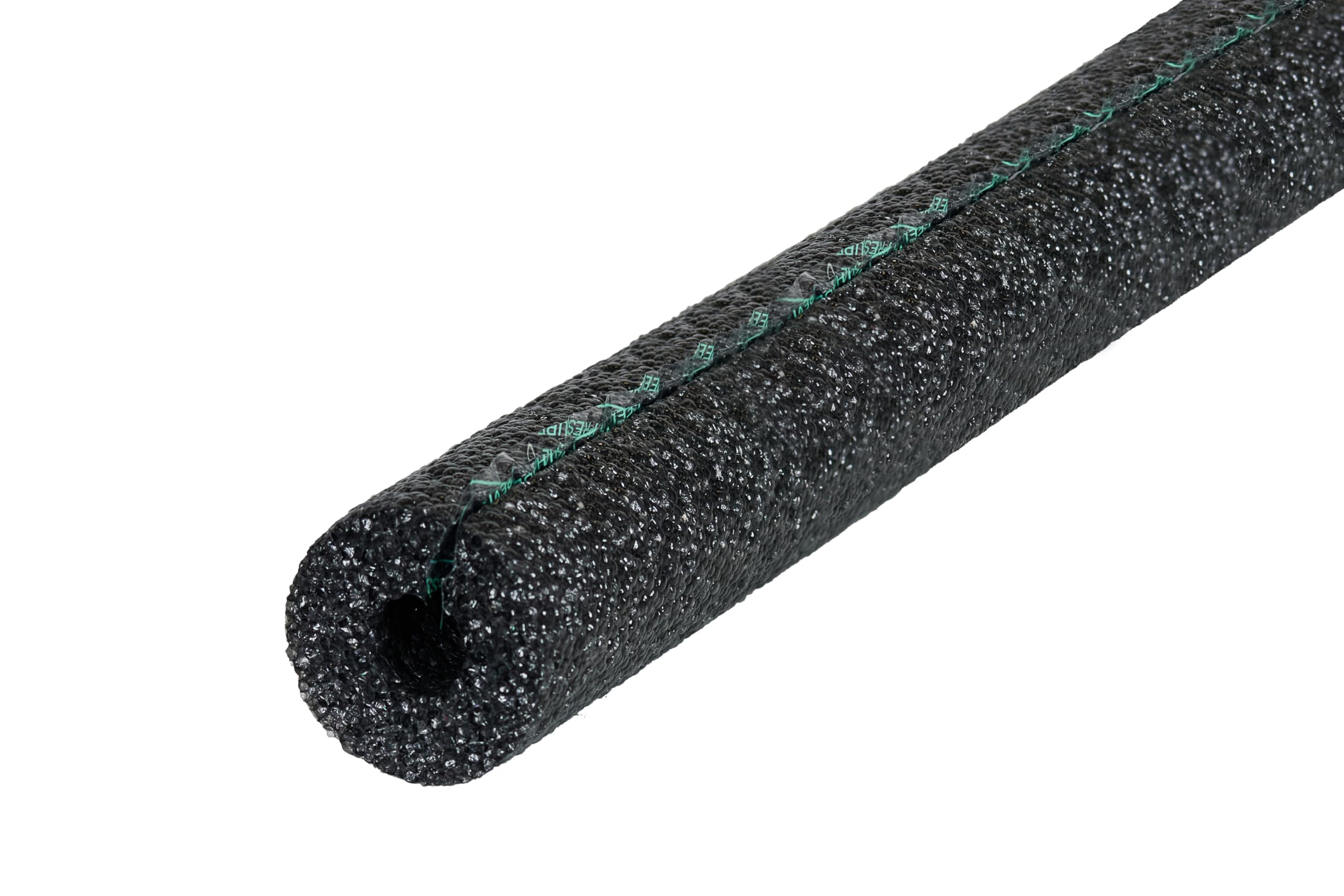
Half an inch of wall and an R-value of 3.3 — the thinnest-insulating tape cannot touch it.
If your goal is thermal value rather than just stopping drips, this is the one to reach for. It packs a 0.5-inch wall of polyethylene foam with an R-value of 3.3, on a 6-foot tube whose 1.63-inch outside makes it far narrower than the 3.13-inch cSeao. It fits 1/2-inch copper and 1/4-inch PVC or iron pipe, and the pre-slit design means you peel the seam and press it closed instead of fishing a pipe through a closed sleeve. Scissors cut it to length if your run is shorter.
Reviews here are the most consistently positive in the set on thermal performance. Customers rate effectiveness highest, reporting it does exactly what the label says, with ease of installation and value close behind. It stops condensation from causing water damage and holds heat in on hot lines as well as cold.
Adhesion is the caveat you should set expectations around. The self-adhesive seam divides the crowd — some find it grabs and holds on its own, others find it needs help. A cool, dry, dust-free pipe and a firm press along the slit make the difference, and a strip of foil tape over the seam takes the risk out entirely.
Why it earns its place
- R-value of 3.3 from a 0.5-inch wall — real thermal resistance, not just a drip barrier
- Pre-slit self-adhesive tube installs without threading a pipe through
- Fits 1/2-inch copper and 1/4-inch PVC or iron lines precisely
What to watch for
- The seam adhesive is the weak point — press firmly or tape it
- Short 6-foot length only covers one run
Choose this for: copper or PVC lines that need genuine thermal insulation from a half-inch wall with an R-value of 3.3.
Not the pick for: a fat refrigerant line — the 0.63-inch inner bore is sized for narrower pipe.
5. PATIKIL Pipe Insulation Foam Tube 2″ ID x 6Ft

A two-inch inner bore for the fat pipe your slim sleeves will not fit.
Most foam tubes top out around half an inch of inner bore. This one is built around a 2.01-inch inner diameter — 51-mm ID with a 2.72-inch outer and a 9-mm wall over 6 feet of rubber foam — so it slides over an AC refrigerant or cooling line with room to spare. The closed-cell structure is the spec that matters here: it holds heat back and acts as a moisture barrier in the same material, which is why it suits outdoor AC and irrigation work as readily as indoor plumbing.
Customers rate the insulation quality highest, describing it as well made and as advertised, with a fit owners call good. It also takes on a second life as a bumper around furniture legs and a grip sleeve around fitness handles, where a closed-cell rubber does exactly what you would want a cushion to do.
Rated to a temperature range of -40°C to 120°C, it holds up across the outdoor seasons, but the sizing note is real: a tube only insulates when it hugs the pipe. A tube this wide on anything much thinner leaves an air gap, so measure your line’s outside diameter before you order and cut the length cleanly with a sharp knife.
The spec that sells it: a 2.01-inch inner diameter closes over a two-inch AC or cooling line — a bore none of the slim tubes in this group can offer.
The fit caveat: a wide bore on a thin pipe leaves an air pocket that defeats the insulation — this is a match to the pipe, not a one-size wrap.
Made for: two-inch AC and cooling lines, where the closed-cell bore and waterproof rubber do the most for you.
Wrong match if: your pipe is under two inches — the air gap will cost you the insulation value.
Know the Specs
Wall thickness and R-value
Wall thickness is how much insulating material sits between the pipe and the air, and R-value is the number that tells you how well that material resists heat passing through it. A 0.5-inch wall carrying an R-value of 3.3 gives you genuine thermal resistance on a copper line. A 0.13-inch tape, by comparison, is a condensation and drip barrier first — useful, but less of a heat stopper. Buy thickness for the job: thin tape for joints and drip control, thick tube for real heating and cooling runs.
Inner diameter and fit
A foam tube insulates only when it touches the pipe. A 2.01-inch inner bore slides cleanly over a 2-inch line; an oversized bore on a thinner pipe leaves an air gap, and that gap becomes the spot where moisture collects and heat leaks out. Read the inner-diameter figure and match it to your pipe’s outside measurement before ordering. Slit tubes and pre-slit designs save you the trouble of sliding a sleeve over a closed end.
Common Questions
Will the Frost King tape seal around an elbow that a foam tube can’t reach?
How do I pick the right inner diameter for a foam tube?
Which pipe insulation works best outdoors in winter?
Does thicker insulation always mean better performance?
Can I cut foam pipe insulation to fit a shorter run?
Why does self-adhesive pipe insulation peel off after a while?
Is one brand of foam tube warmer than another to the touch?
Will pipe insulation stop condensation dripping onto stored boxes?
Can I use a foam tube on heating and cooling systems both?
What is the difference between the cSeao and PATIKIL tubes?
The Bottom Line
If your plumbing is more elbows than straight runs, the Frost King IT30/8 Rubber Tape is the pick that finishes the job — 30 feet of bendable rubber that reaches where a rigid tube cannot. Need real thermal resistance on a copper line? The M-D Building Products 50215 brings a 0.5-inch wall and an R-value of 3.3. And for an outdoor line facing winter, the Pipe Wrap Insulation 33 ft wraps 396 inches behind a foil face that shrugs off sun and frost.
Whichever you choose, match the inner diameter to the pipe, press the seam firmly, and seal the ends — that is where insulation either holds for years or peels off by the next season.
How we choose
We do not accept paid placement. Every pick is matched to a real buyer and a real use-case; we do not hands-on test units.
Sources
Specifications: manufacturer listings and product documentation. Review insights: verified customer reviews, as of November 2026. Pricing: not shown on this page (it changes often); check the current price via the retailer link.
As an Amazon Associate, My Heart Lives Here earns from qualifying purchases. This does not affect which products we feature.