Heads up: This post contains affiliate links. As an Amazon Associate I earn from qualifying purchases, at no extra cost to you. Learn more
Specs are compiled from manufacturer listings and verified buyer reviews and can change over time — please confirm the key details on the product page before buying.
If your first step out of bed feels like stepping on a sharp stone, heel drop decides how much load that sore arch takes with every stride. The angle between your heel and your toes — called the heel drop — is the number that decides how much load lands on that sore arch with every stride. A lower drop spreads the work forward. A higher drop takes pressure off the calf and Achilles. Which one helps you is the whole buying decision, so get it wrong and you will fight the shoe all day.
This guide is built by comparing the manufacturers’ published specifications and the patterns across verified customer reviews, so you get each pick’s real strengths and trade-offs instead of marketing spin.
Below you will find nine shoes, each with its heel drop stated plainly, plus the cushioning and width details that decide how it feels on a sore foot. The picks are grouped so you can match the drop to your own arch, your weight and how far you walk each day, and the table lets you compare them side by side. These are the shoes worth starting with when you are shopping for the best heel drop for plantar fasciitis.
Top Picks
How To Choose The Best Heel Drop for Plantar Fasciitis
Heel drop is simple arithmetic: the height of the shoe at the heel minus the height at the forefoot. A 12 mm drop shoe tilts you slightly forward-to-back, so your calf stays longer and your heel absorbs less angle. A 0 mm shoe — often called zero drop — puts heel and forefoot at the same height, so your foot sits flat and your toes and midfoot do more of the work. Neither is “right” for everyone. What matters is picking the drop your body is ready for and pairing it with enough cushioning under the sore spot.
Start with your current shoe, not a number
Pull out the pair you walk in most and look at the heel. If you already wear a higher-drop trainer and you suddenly switch to zero drop, your calves and Achilles get a new stretch they are not used to. The sane path is to move one step at a time — high drop to mid, mid to zero — over a few weeks of short walks. Splitting the difference keeps the change gentle while your arch adapts.
Stack height decides how soft the landing feels
Drop tells you the tilt; stack height tells you the cushion. A shoe with 30 mm of foam under the heel lands softer than one with 25 mm, even when they share the same drop. If your soreness hits hardest on hard pavement, chase stack height. If your soreness comes from a tight calf that pulls on the arch, chase a lower drop and give the foam time to break in.
Toe box width is the silent half of the decision
Your toes need room to splay when you push off. A narrow toe box squeezes them together, and that changes how your whole foot rolls — which is exactly the motion that irritates a sore arch. Look for a roomy toe box or an explicit wide and extra-wide option. Several of the picks below are built around that space, and it matters more on long days than on a quick trip to the shop.
Match the drop to your mileage, not the marketing
A low drop shoe that feels wonderful on a twenty-minute walk can feel thin on a twelve-mile day. If you walk long distances or stand all shift, higher stack height plus a moderate drop usually carries you further before your arch complains. Shorter daily walks can handle zero drop comfortably. Be honest about your day length before you commit.
Side-by-Side Comparison
| Model | Best For | Heel Drop | Cushion Level | Weight | Amazon |
|---|---|---|---|---|---|
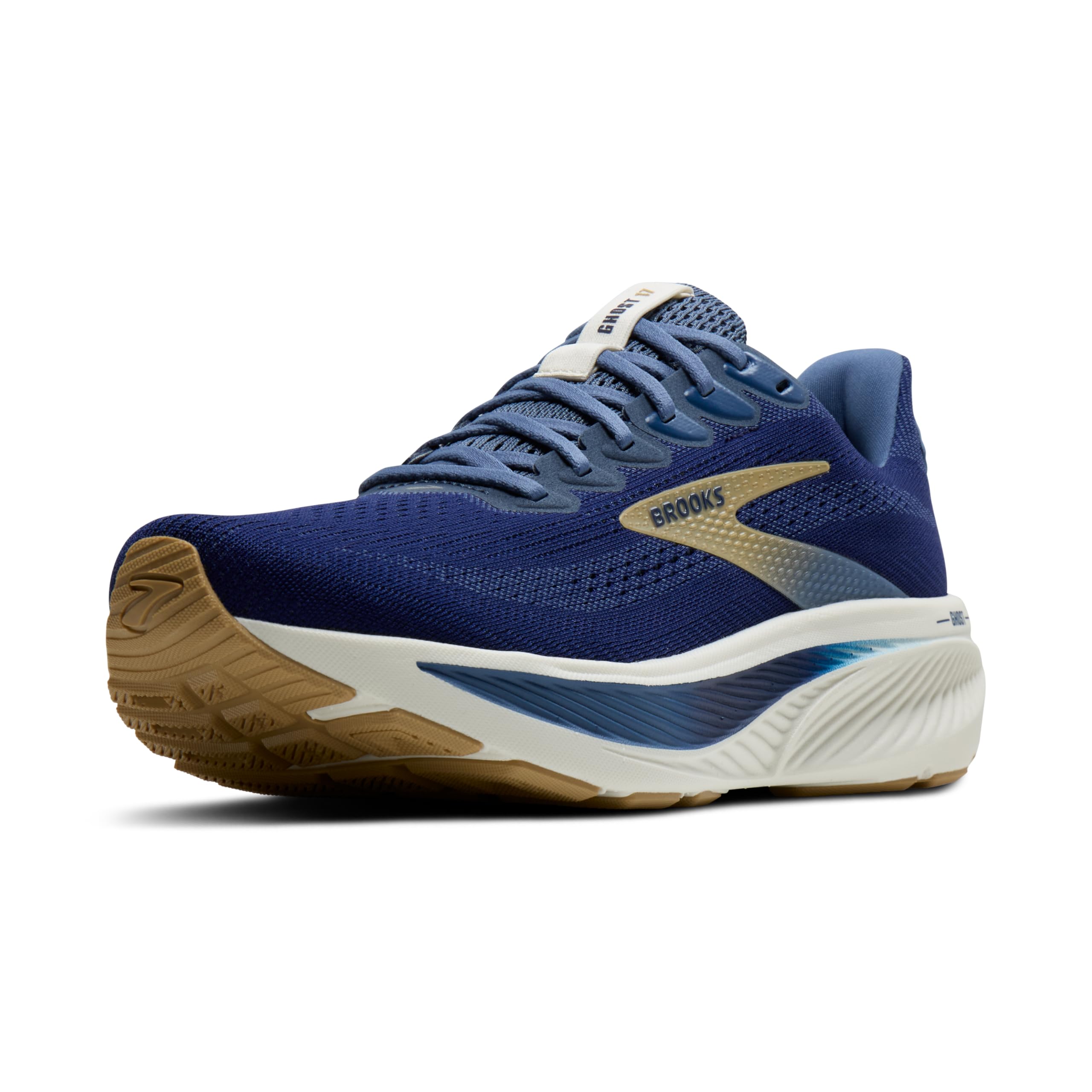
| Brooks Men’s Ghost 17★ Best Overall | Everyday road walking and running | — | — | 1.5 lb (package) | Amazon |
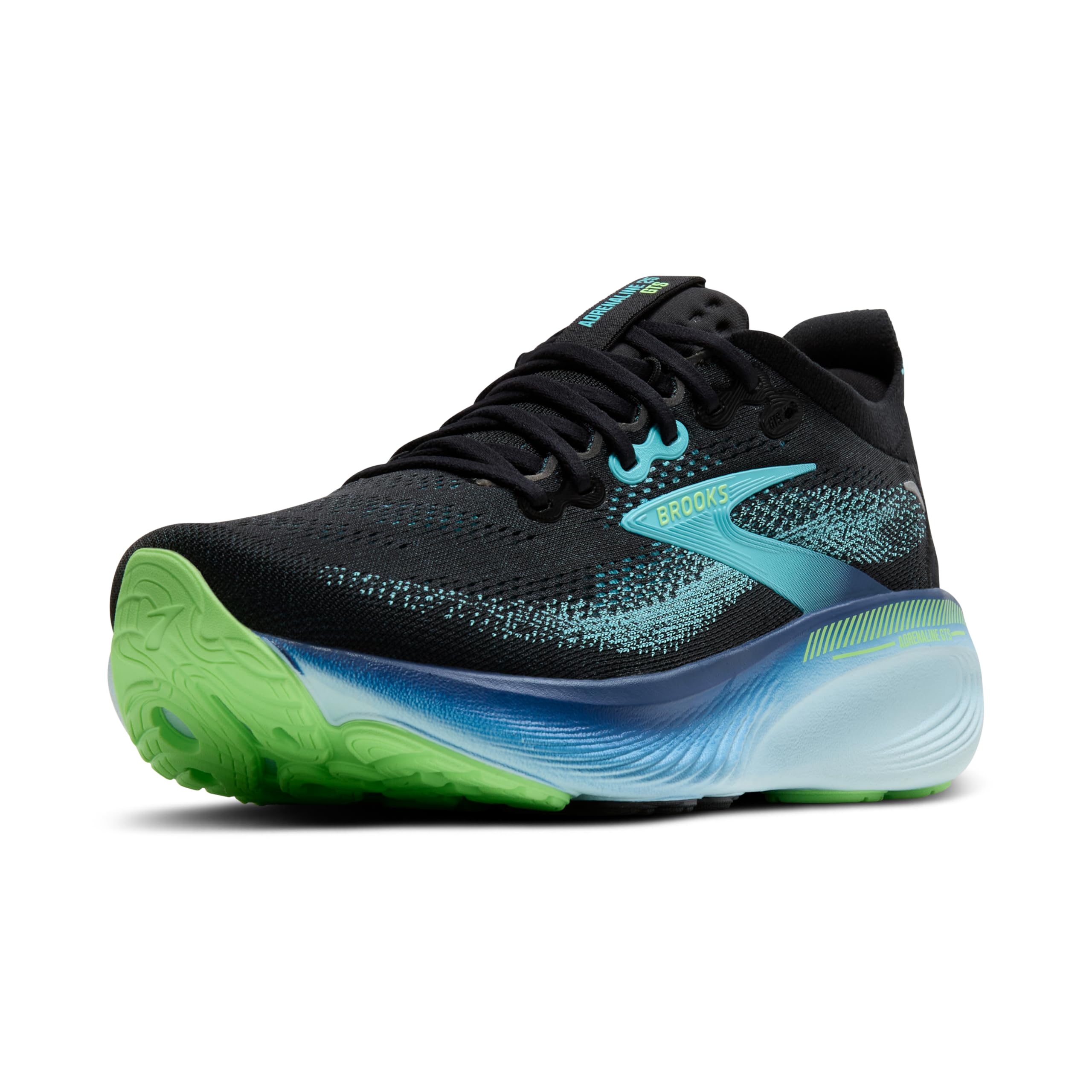
| Brooks Men’s Adrenaline GTS 25Best Support | Stability for a rolling arch | — | — | 1.5 lb (package) | Amazon |
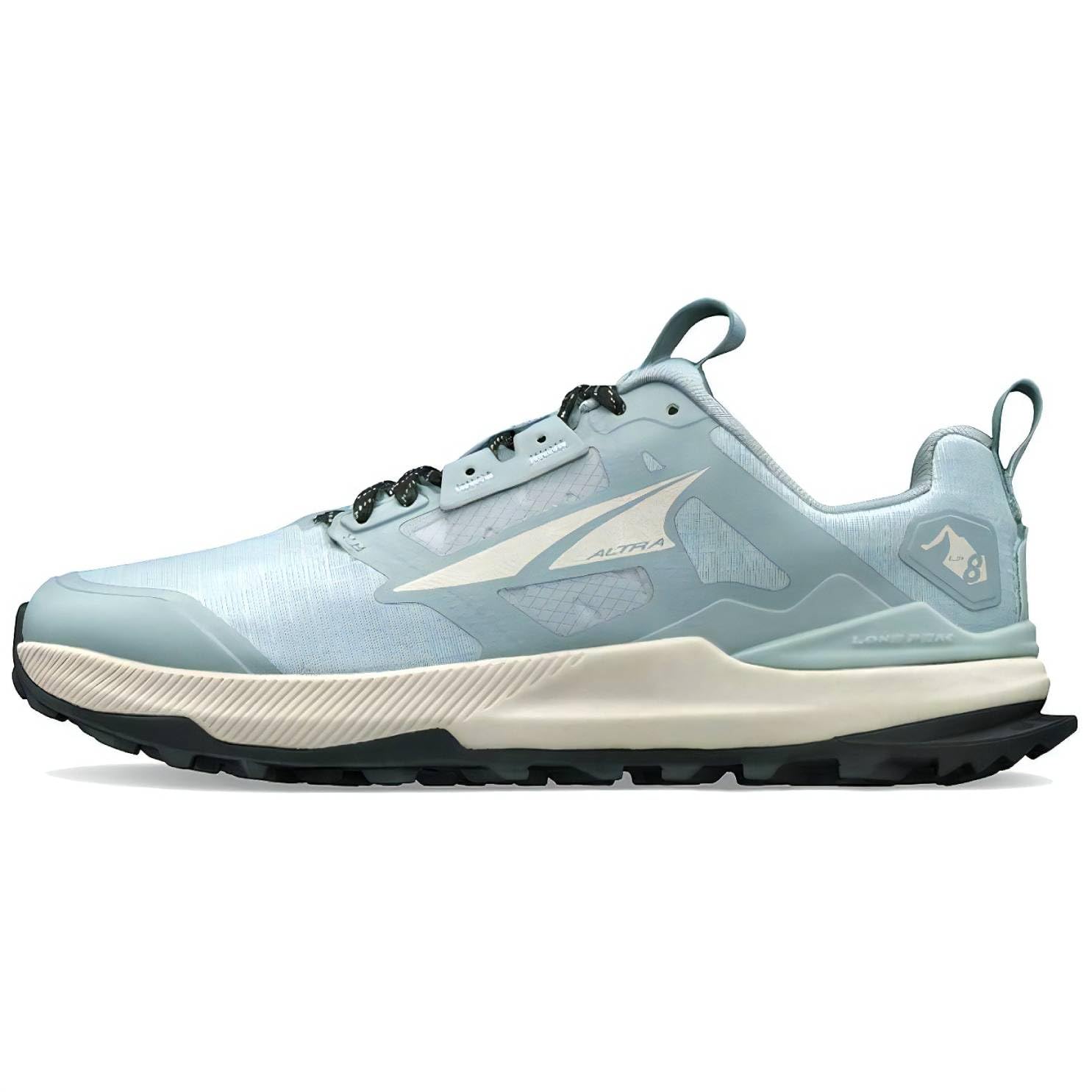
| ALTRA Women’s Lone Peak 8Zero Drop Trail | Trail days and wide toes | 0 mm | Mid | 10.7 oz | Amazon |
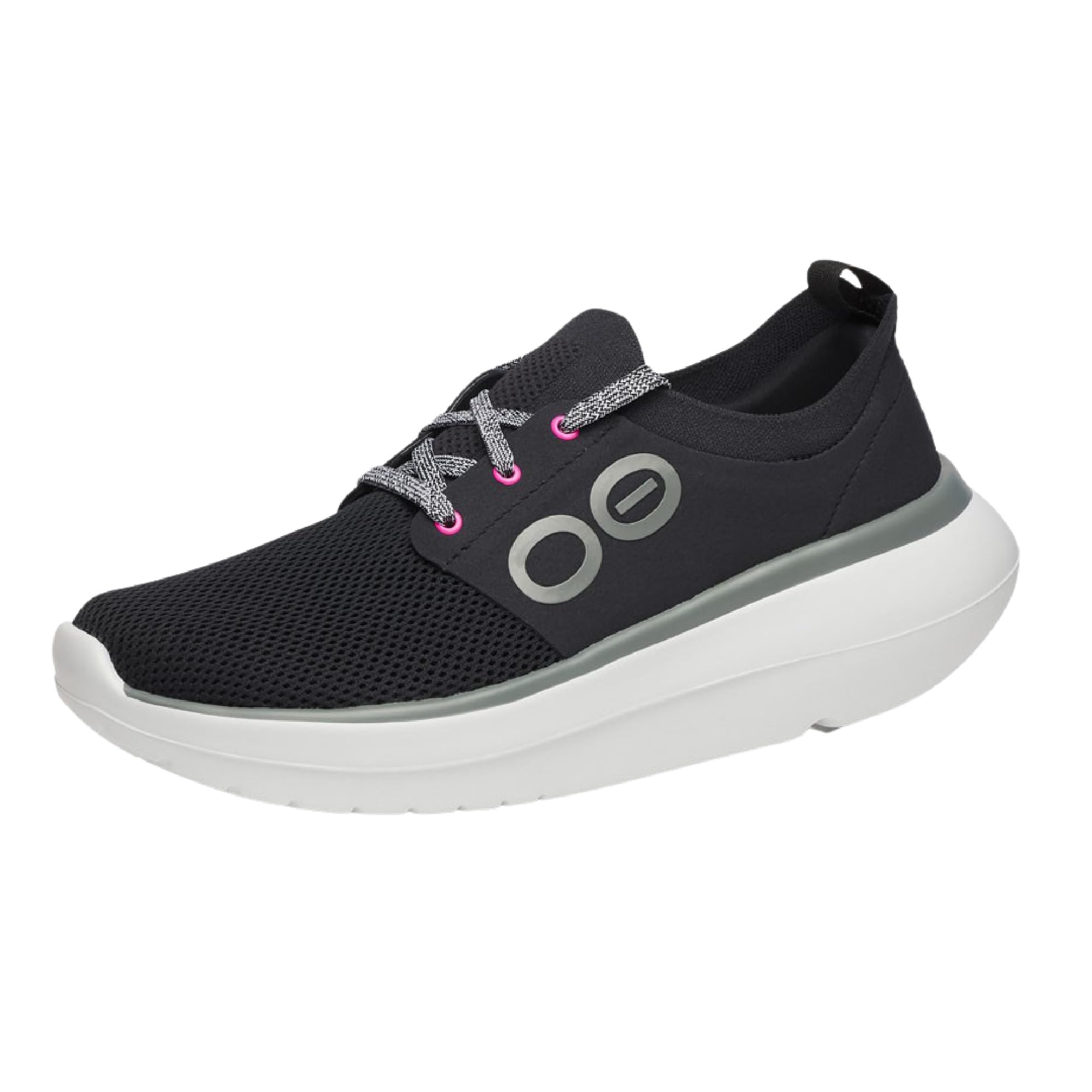
| OOFOS Women’s Oomy Stride | Recovery days around the house | — | — | — | Amazon |
| ASICS Women’s GT-2000 14 | Stability for flat feet | — | — | 1.44 lb (package) | Amazon |
| Gravity Defyer Mighty Walk | All-day standing with a rocker sole | — | — | — | Amazon |
| New Balance Fresh Foam X More V5 | Plush cushioning for sore heels | — | — | 2.1 lb (package) | Amazon |
| Orthofeet Tilos | Custom orthotics and slip-on ease | — | — | — | Amazon |
| ALTRA Women’s Torin 8 | Zero drop road miles | 0 mm | High | 8.4 oz | Amazon |
Detailed Reviews
1. Brooks Men’s Ghost 17 Neutral Running Shoe
Our pick — 4.5+★ from 3,500+ verified ratings; the strongest balance of quality and price.
The neutral workhorse that softens the heel strike most sore arches dread.
The Ghost 17 wins this list because it solves the problem most arch-pain buyers actually have: they need a heel that lands softly, over and over, for a full day on their feet. Its cushioning concentrates at the heel, which is exactly where a sore arch takes its first hit on every step. The fit runs generous too. Wide feet and morning-swollen toes get room in the toe box instead of getting pinched, and for a sore foot that space is worth as much as the foam.
What wins people over is the comfort itself — it is the single thing the review pages keep coming back to, far more than any other quality. Support shows up most in the long-walk crowd: errands, full shifts, marathon training blocks. Running performance is the quiet overachiever here, with owners treating it as a daily trainer that never feels like a compromise. The shoe arrives at 1.5 pounds in its package, so it has real substance underfoot rather than feeling papery.
Here is the honest catch. The soles are the one place this shoe divides opinion, with some owners finding the material breaks down sooner than they would like on heavy rotation. That makes it a shoe you rotate, not one you grind through every single day forever. Set against that, the buy-in is modest for a name-brand neutral trainer and the fit is forgiving enough that even a slightly wrong size still walks fine.
What walks away with the win
- Heel-focused cushioning softens the first strike of every step
- Roomy toe box and available wide width keep sore toes from crowding
- Support holds up across long walks, runs and all-day wear
Where it asks patience
- Sole life is the recurring split — heavy daily rotation wears it faster
- Neutral build, so a strongly rolling foot may want more stability
Reach for this if: you want one neutral shoe that lands softly on the heel and fits a wide foot without a break-in fight.
Think twice if: you log huge daily miles on one pair and expect the sole to outlast a full season.
2. Brooks Men’s Adrenaline GTS 25 Running Shoe
Built for a foot that rolls inward, with an X-Wide cut that finally fits.
The Adrenaline GTS 25 is the stability answer to the Ghost above. Where the Ghost stays neutral, this one is engineered for feet that roll inward, and the arch support is the feature owners lean on hardest after comfort. The X-Wide width is a genuine match for broad feet rather than a nominal wide that still squeezes. At 1.5 pounds in its package, it sits a shade heavier than the ASICS GT-2000 14 at 1.44 pounds — a difference you feel only if you are counting grams at the starting line.
Cushioning is the second pillar. It wraps the foot without feeling tight or squishy, and the softer feel is a step change from the earlier GTS 24. For an arch that wants a soft landing plus inward-roll guidance, that cushioning and stability work together. Quality is the most-praised quality overall by a clear margin, and the shoe holds its shape well for most owners. Appearance earns passing compliments too, with the white and black colorway matching the listing photos.
The trade-off is durability at the dollar end of the conversation. Value and lifespan both split opinion, with some owners finding the shoe holds up to daily use and others feeling it wears faster than they expected. If you walk one pair hard every day, this is a shoe to retire on schedule rather than to keep until the tread is gone. Fit a wide foot well and the support does the rest.
Where the support shows: built to steady a foot that rolls inward, with an arch that keeps the midfoot planted on long walks.
The honest limit: cushioning runs softer than the GTS 24, so owners who liked a firmer ride will notice the change.
Pick it when: your foot rolls inward and your normal width has always felt a size too tight.
Pass on it if: you want a neutral, firm-underfoot trainer for daily mileage.
3. ALTRA Women’s Lone Peak 8 Trail Running Shoe
Zero drop with the widest toe box on the list, so every toe gets to spread.
If you want to feel exactly how a flat footbed changes your stride, the Lone Peak 8 is the clearest demonstration on this page. Heel and forefoot sit level at a 0 mm drop, which Altras call Balanced Cushioning. Your heel does not sit above your toes, so the arch takes its load more evenly and you land with a flatter, lower-impact foot. The roomiest toe box in the Altra lineup is the other half: toes fan out and push off naturally instead of curling against the front of the shoe.
At 10.7 ounces and 303 grams, it stays light enough to move quickly on uneven ground. The MaxTrac outsole and TrailClaw lugs sit beneath the metatarsals to bite into loose dirt. Quality is the most-praised trait here, with owners calling these their favorite walking shoes, and the wide toe box earns steady praise for giving crowded feet room. Nobody complains about a break-in period, which is rare for a trail shoe with this much structure.
Two things to know before you commit. Zero drop is a real adjustment if you have only worn lifted shoes, so build up with short walks first. And the fit does not suit every foot: some find it tight enough to want to size up. That snugness is a sizing note, and a wide or splay-prone foot still gets a roomy toe box here.
The flat-footed case in its favor
- 0 mm drop levels the heel, so the arch is not sitting above the toes
- Roomiest toe box lets toes spread on every push-off
- Light at 10.7 oz and ready to hit the trail with no break-in
What to know before you lace up
- Zero drop takes a few weeks of short walks to adapt to
- Runs snug for some foot shapes — size up if you are between sizes
Best matched to: a wide, splay-prone foot that wants to feel the ground and try a flat-footed stride on trails.
Look elsewhere if: your calves and Achilles have never walked in a zero drop shoe and you can only give it one day.
4. OOFOS Women’s Oomy Stride
The pair you slip on after a long day, when the arch needs a soft landing.
The Oomy Stride is not the shoe you run a half marathon in. It is the recovery shoe you wear around the house, on errands, and after the walk when your heels are done for the day. Its arch is built up to cradle the foot and take pressure off the base of the heel, and the build is genuinely light — owners describe it as feather light and not one buyer argues with that. Comfort is the headline strength by a wide margin, and the arch is the supporter people come back for.
The catch sits in the fit. Some women find it perfect and others find it runs small, which makes size selection the one thing worth getting right. If you are between sizes, go up. The other honest note is sole life: the material wears thin faster than a training shoe, which is expected for a recovery clog that sees hard indoor floors rather than gravel. It is built for indoor floors and errands, not gravel or trail.
What it does best: a soft, arched landing for the hours after the walk, in a build light enough to forget you are wearing it.
The fair caution: sizing is the most-discussed topic, so measure your foot and consider going up half a size before you choose.
Wear it for: the wind-down hours when your arch wants soft support and your day is already over.
Do not buy it as: a running or long-distance shoe — it is built for recovery comfort, not mileage.
5. ASICS Women’s GT-2000 14 Running Shoes
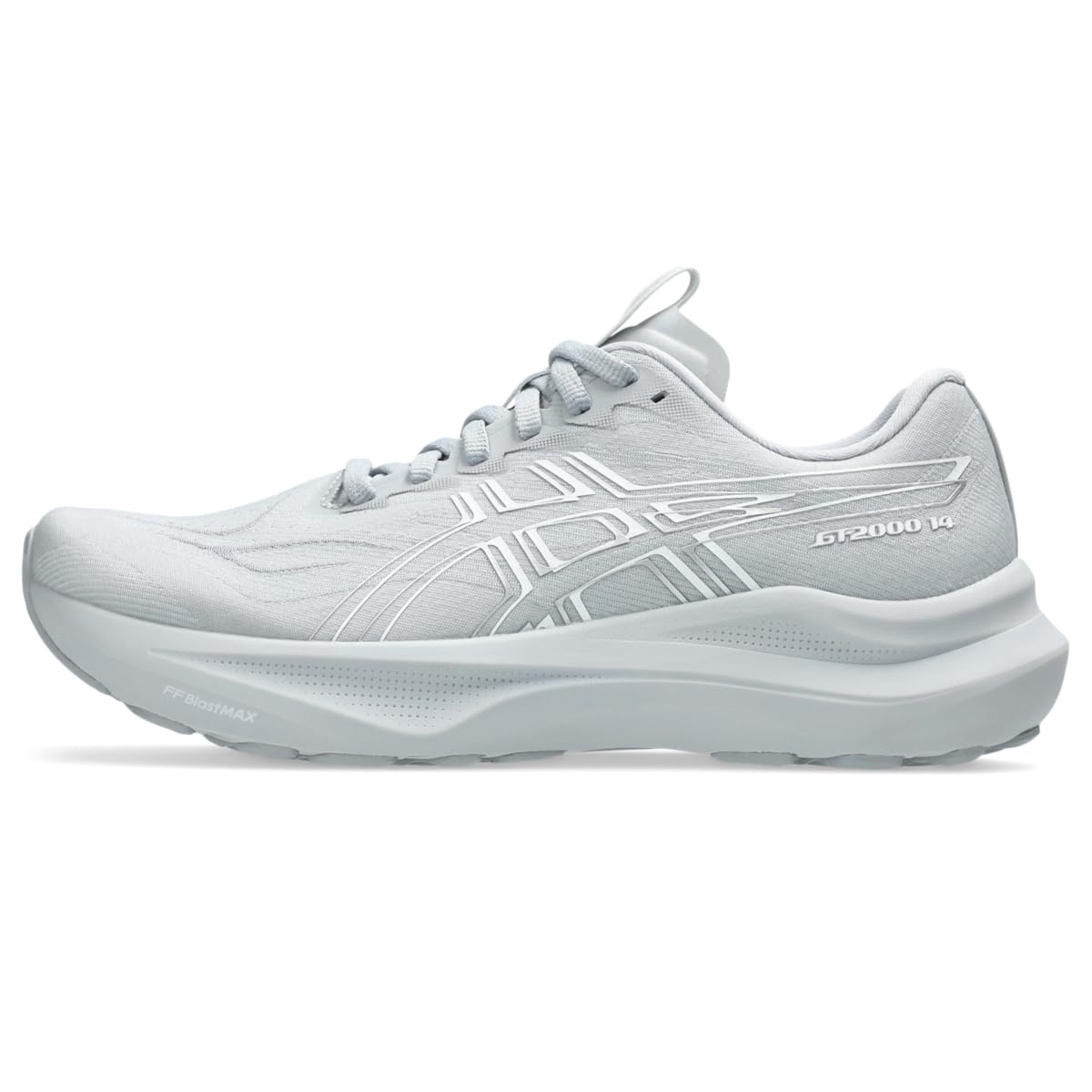
Stability for a foot that rolls inward, with a footprint that trims down for travel.
The GT-2000 14 targets one specific foot: the one that rolls inward too much and needs the shoe to steady it. It is designed for overpronation — the inward roll that aggravates a sore arch — and the package is compact at 13.3 x 8.6 x 4.8 inches. Compare that to the Brooks Ghost 17 at 12.17 x 7.05 x 4.69 inches and you get the same basic footprint, which makes it no harder to pack. It also carries APMA acceptance, meaning the American Podiatric Medical Association found it promotes good foot health.
Comfort is the most-praised trait, and owners point to speed walking and jogging as where it shines. The arch and ankle support is a genuine plus for flat feet and hyper mobility, and the shoe happily crosses over from running to walking to all-day wear. At 1.44 pounds in its package it is just under the Adrenaline GTS 25 at 1.5 pounds — light enough for a full day of standing without noticing the weight.
The honest wrinkle is width. The medium runs snug for some and the toe area is roomy enough that others move up to wide. Cushioning and durability also split opinion, with a few finding the tongue thin and the insoles breaking down on heavy rotation. Try your width before committing, and if you are between sizes, treat this as a shoe that wants a thinner sock.
Standout spec: APMA acceptance and a design built for inward-rolling feet, in a compact 13.3 x 8.6 x 4.8 inch package.
Watch the width: the medium fits snug for some feet while the toe runs roomy, so choose your width carefully.
Made for: a flat or hyper-mobile foot that needs the shoe to steady an inward roll on walk-and-jog days.
Skip if you: wear a wide shoe in every brand — the medium here runs snug.
6. Gravity Defyer Mighty Walk
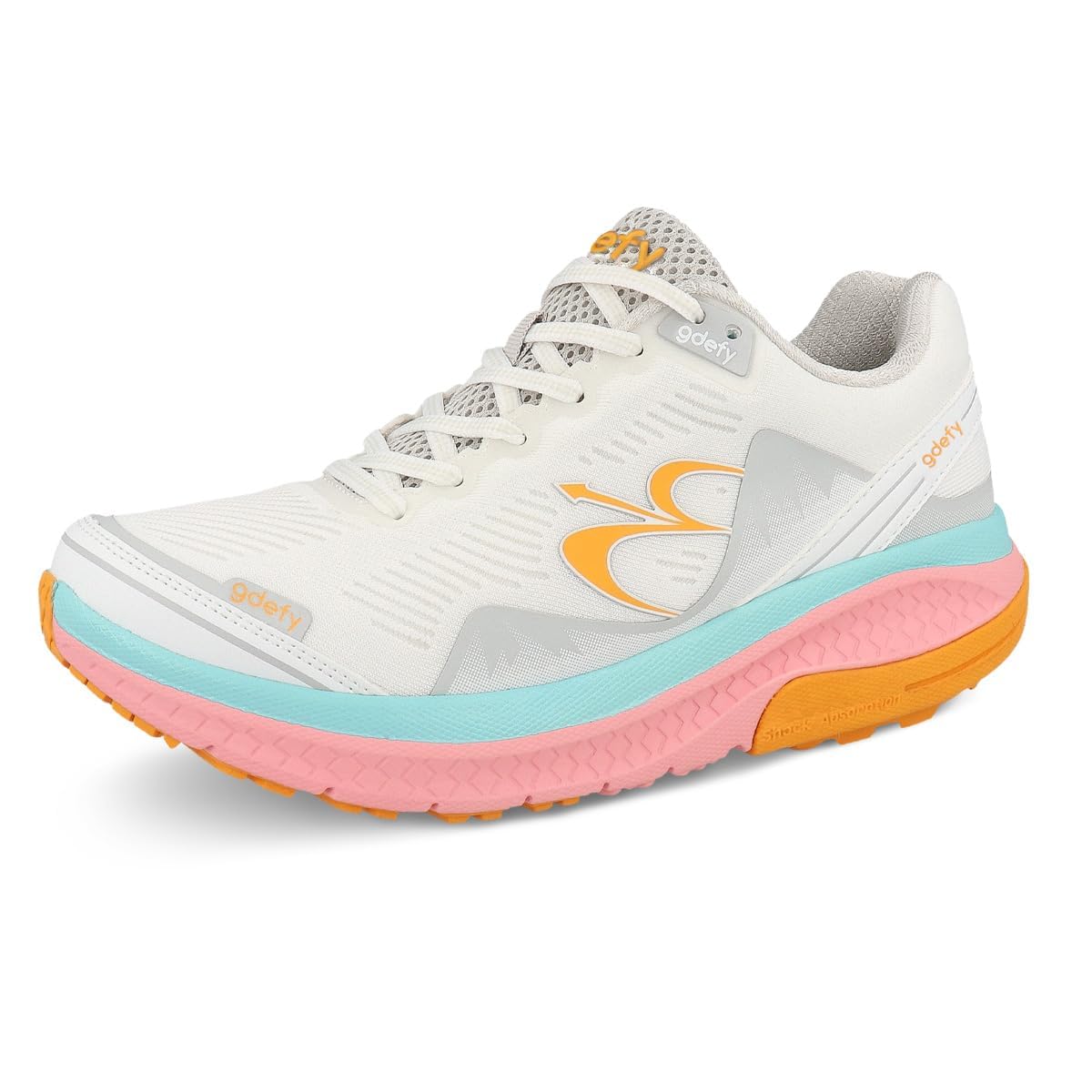
The rocker sole gives the walk a smooth roll, with a toe box you can genuinely spread in.
Gravity Defyer builds the Mighty Walk around a rocker sole — a curved outsole that rolls your step from heel to toe without the hard stop at the front. For an arch that is sore from standing, that curve rolls you through the step instead of stopping hard at the toe. The wide toe box is real, and it comes in M, W and XW widths, with W roughly a quarter of an inch wider than standard and XW about half an inch wider. If your feet have outgrown standard width, that choice solves it.
This is also the most-reviewed shoe on the list, by a country mile, and the comfort reports match the volume. People walk all day and describe their feet feeling better. The arch support is the third most-discussed quality, and effectiveness is a real strength — this is a shoe owners credit with getting them moving again rather than just another sneaker. The maker advises a gentle break-in: one to two hours a day for the first three to five days, on flat ground, while your body adapts to the rocker.
One honest note on the ride: the cushioning is the most-debated quality, with some finding it very cushiony and others finding the sole too hard underfoot. That split is about preferred firmness, not a defect. Durability also splits, so treat heavy daily use as a rotation shoe rather than a workhorse that lasts forever.
Why it fits a hard-working foot
- Rocker sole rolls heel to toe for a smoother walking motion
- Wide toe box in M, W and XW widths, so wider feet get their own fit
- Arch support that helps a foot stay steady through a full day
The fine print to read
- Rocker takes a few short-lease daylight days to get used to on stairs
- Cushioning divides opinion — softer and harder readings both show up
Choose it for: a wide or extra-wide foot that wants a rolling walk and a toe box with real breathing room.
Leave it if: you want a neutral sole directly under your heel rather than a rocker curve.
7. New Balance Women’s Fresh Foam X More V5

The pillow under your foot — soft from heel to toe, with a stable landing.
If hard pavement is your enemy, the More V5 is the softest landing on this list. The Fresh Foam X build is tuned for 360 degrees of comfort — a plush underfoot feel that still keeps the foot stable. For a sore heel on a long day, the plush Fresh Foam X landing stays stable instead of squishing sideways. At 2.1 pounds in its package it is the heaviest here, so it is a comfort shoe first and a racing shoe never.
Comfort is the trait buyers praise most, and it shows up in the same sentence as reduced heel and knee discomfort. Cushioning is described as plush and very padded, while support holds the arch. The fit is where you have to read the shoe carefully: some women find the 8-wide cut comfortable around the ankle, while others find it narrow and tight across the top of the foot. Try your width before you commit, and if you are close to the line, size up rather than down.
Durability splits opinion, so this is one to rotate rather than wear every single day. Value holds up for a premium-cushion shoe once you factor in the padding itself. It is the pick for someone who spends long hours on their feet and would happily trade the lightness of a race shoe for a softer landing.
What makes it worth a look: a plush, 360-degree underfoot comfort that takes the sting out of a heel strike.
Size carefully: the fit is split — wide and comfortable for some, narrow across the top for others.
Built for: the long day on your feet, where soft cushioning matters more than light weight.
Not for: a nimble road mile or a foot that prefers a firm, thin sole.
8. Orthofeet Tilos Orthopedic Men’s Sneakers

The orthopedic build that takes your own insoles and slides on without a fight.
Orthofeet builds the Tilos for the foot that needs help from the ground up. The Ortho-Cushion system pairs a built-in orthotic insole with a shock-absorbing sole and a pressure-free fit. The detail that matters most is depth: the insole is removable and the shoe has extra room, so a custom orthotic slips in without crushing your foot. That removable insole plus extra depth is what makes this the pick for a custom orthotic.
Comfort is the most-praised trait and buyers report real relief through the day. Arch support is a real strength for a plantar fascia that needs steady lift, and the slip-on design earns its own praise — putting the shoe on is a simple step in, not a lace-up fight. Quality is the second most-discussed quality, with owners calling it excellent and easy to recommend.
The one thing to check is size. Some men find the fit exactly as advertised, while others find it runs a size or two larger than expected. Read the sizing notes and consider going down rather than up. Durability splits as well, so if you walk for hours daily, treat it as a shoe to rotate rather than one to grind through.
Best reason to buy: extra depth and a removable insole, so your custom orthotic fits and works instead of getting squashed.
Mind the fit: some buyers find it runs a size or two large, so confirm your size before ordering.
A natural match for: a foot already using a custom orthotic or a slip-on shoe that needs arch support from inside.
Look elsewhere if: you want a snug, true-to-size athletic cut straight from the start.
9. ALTRA Women’s Torin 8 Road Running Shoe
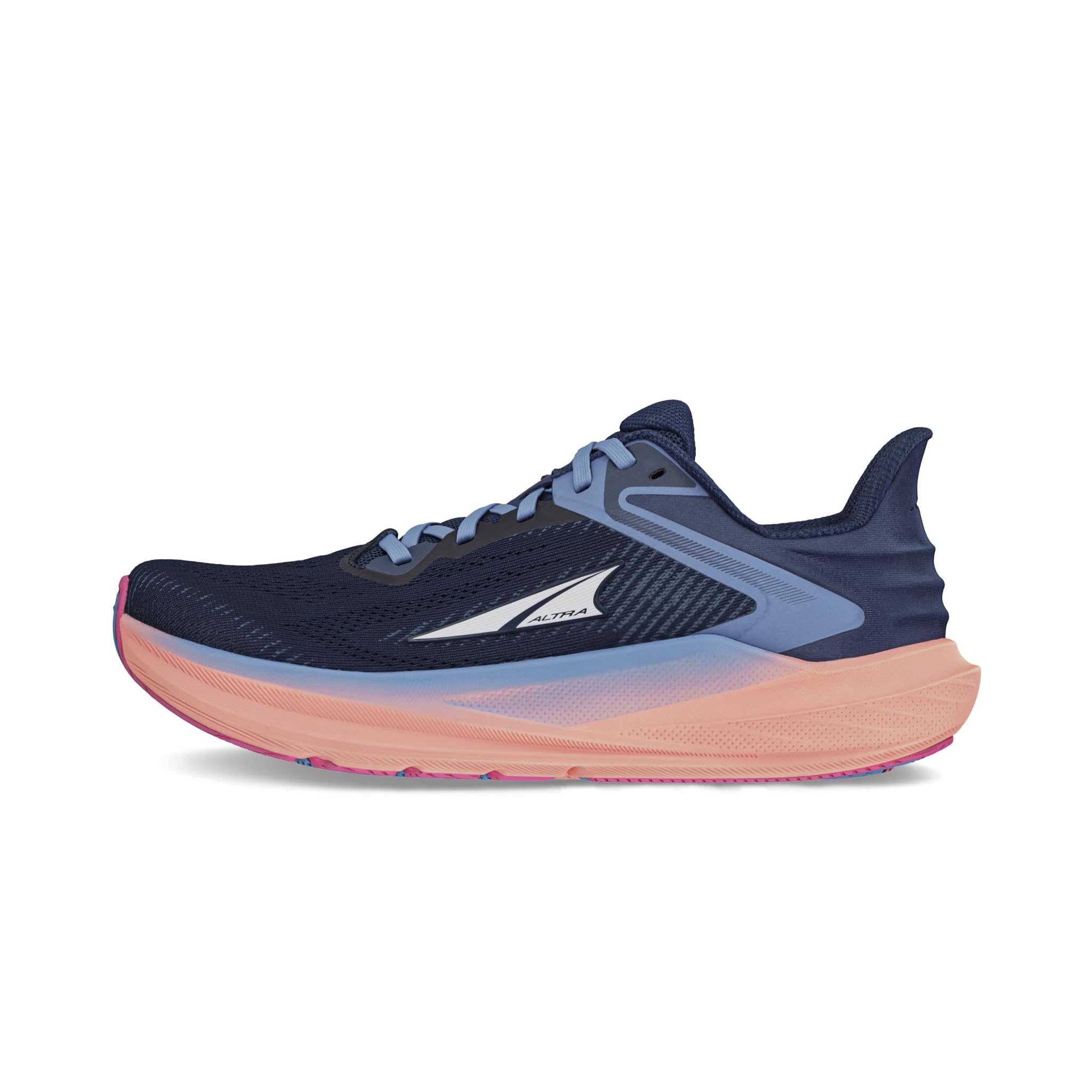
Zero drop and high cushion at once — a flat footbed that still feels soft.
Most zero drop shoes ask you to give up cushion. The Torin 8 does not. It sits at 0 mm drop with a high cushion level and 30 mm of stack, so your heel and forefoot are level while the foam stays thick. That is the combination a sore arch rarely gets: a flat, natural footbed and a soft landing under the heel. It is also the light one of the pair — 8.4 ounces against the Lone Peak 8 at 10.7 ounces — so the ease of a flat stride does not come with a heavy shoe.
The fit is what owners praise most, and the wide toe box is the reason. Toes move freely, the midfoot stays secure, and the jacquard mesh upper molds around the foot at step-in. The Altra EGO MAX foam adds a little bounce, and the FootPod outsole keeps the shoe flexible so it moves with your foot rather than against it. For a road walker who wants to try a lower drop without giving up padding, this is the softest entry point here.
Two honest notes. Zero drop is still an adjustment if you have worn lifted shoes your whole life, so build up gradually. And durability is the quality that splits — a few owners mention the shoe coming apart within a month of heavy use. Wear it as a road shoe, ease in slowly, and the comfort and room make it a natural daily walker.
Why the flat footbed feels good here
- 0 mm drop with 30 mm of stack keeps the footbed flat without a hard landing
- 8.4 oz build stays light for a zero drop shoe
- Roomy toe box lets toes move freely while the midfoot stays locked
Before you switch from your old pair
- Zero drop wants a gradual ramp-up over a few weeks
- Durability divides owners — some report early wear on heavy use
The one to pick if: you want to try a flat-footed stride on pavement but refuse to lose the cushion under your heel.
Hold off if: you need a shoe that survives constant hard use without a rotation partner.
Know the Specs
Heel Drop
Heel drop is the height difference between the heel and the forefoot of the shoe. A higher drop tilts you back slightly toward the heel, which can ease a tight calf. A 0 mm drop levels the shoe, so your heel and toes sit at the same height and your foot does more of the work. If you have only worn lifted shoes, move to zero drop over a few weeks of short walks rather than all at once.
Stack Height
Stack height is the amount of material between your foot and the ground, measured at the heel and forefoot. More stack means a softer landing. The Torin 8, for example, carries 30 mm of stack with a 0 mm drop, while the Lone Peak 8 carries 25 mm. Pick a higher stack for long days on hard pavement, and a lower stack for a more grounded, connected feel.
Common Questions
Is zero drop or a higher heel drop better for plantar fasciitis?
How do I know what heel drop my current shoes have?
Can I switch straight from a high drop shoe to a zero drop shoe?
Do I need a wide or extra-wide width with a sore arch?
Can I put my own custom orthotic in any of these shoes?
How long should I wear a zero drop shoe each day at first?
Is a rocker sole like the Gravity Defyer hard to get used to?
Which shoe on this list is best for standing all day?
Will a wide toe box alone fix a sore arch?
Do any of these shoes come with APMA acceptance?
The Bottom Line
For most people shopping the heel drop for plantar fasciitis question, the Brooks Men’s Ghost 17 is the safe default because it pairs a soft heel landing with a roomy toe box and a wide width. If you want a flat, natural stride on the road, the ALTRA Torin 8 gives you 0 mm drop with 30 mm of high stack. And for long days of standing on hard floors, the Gravity Defyer Mighty Walk is the rocker-sole pick that keeps your foot rolling. Buying advice worth remembering: the right drop for you is the one your foot can build into, not the one that sounds boldest on the listing.
How we choose
We do not accept paid placement. Every pick is matched to a real buyer and a real use-case; we do not hands-on test units.
Sources
Specifications: manufacturer listings and product documentation. Review insights: verified customer reviews, as of November 2026. Pricing: not shown on this page (it changes often); check the current price via the retailer link.
As an Amazon Associate, My Heart Lives Here earns from qualifying purchases. This does not affect which products we feature.