Heads up: This post contains affiliate links. As an Amazon Associate I earn from qualifying purchases, at no extra cost to you. Learn more
Specs are compiled from manufacturer listings and verified buyer reviews and can change over time — please confirm the key details on the product page before buying.
Your skin after fluorouracil treatment is not “just dry” — it is raw, tight, and often stinging, and the wrong jar makes it worse. The right cream is gentle enough to layer on compromised skin, rich enough to ease the flaking, and light enough to reapply several times a day. Below are five picks that real patients and their caregivers keep coming back to, sorted by what each does best.
This guide is built by comparing the manufacturers’ published specifications and the patterns across verified customer reviews, so you get each pick’s real strengths and trade-offs instead of marketing spin.
You want a formula that soothes without stinging and a texture that glides over tender skin. The picks here cover both, and the guide explains which one fits your stage of healing, so you can settle on the cream after fluorouracil that suits your skin best.
Top Picks
How To Choose A Cream For Skin After Fluorouracil
During and after fluorouracil, the outer layer of your skin is weakened. That changes what a good cream looks like: you want something that adds moisture back without a long list of irritants, and you want a texture you can apply without dragging across sore patches.
Look for a short, gentle ingredient list
Ingredients like panthenol (a moisture-binding form of vitamin B5), hyaluronic acid (a humectant that helps skin hold water), calendula, and aloe are the ones that show up again and again in this category. Formulas described as steroid-free and free of alcohol, parabens, and artificial colors are the safer starting point. A cream packed with heavy fragrance is more likely to sting on skin that is already raw.
Match the texture to your skin stage
Right after treatment, when skin feels tight and tender, a spray foam or thin lotion spreads with less friction than a thick balm. As the skin settles and starts to flake, a richer cream can hold moisture longer. A stick format is handy for small, awkward areas like the lips or the edges of the face. Think about where you are in the healing process before you pick a format.
Check how often you can reapply
Post-treatment skin usually needs moisturizing morning and night. A cream you can layer several times without a greasy film makes twice-daily reapplication easy. Non-greasy, fast-absorbing formulas get reapplied more often, and that consistency is what keeps skin comfortable.
Side-by-Side Comparison
| Model | Best For | Format | Size | Key Ingredient | Amazon |
|---|---|---|---|---|---|
| Rejuvaskin Skin Recovery Cream★ Best Overall | Overall radiation recovery | Cream | 100 mL | Hyaluronic Acid, Calendula | Amazon |
| 9% Panthenol FoamBest For Large Areas | Large, tender areas | Foam | 5 fl oz | 9% Panthenol, Aloe | Amazon |
| PhysAssist Oncology Cream and Lip Balm | Cream-plus-balm kit | Cream + Balm | 4 oz | Calendula, Lavender | Amazon |
| PhysAssist Oncology Lip Balm | Chapped lips | Balm stick | 0.45 oz | Organic Calendula | Amazon |
| ECZEMA HONEY Lotion Stick | Small flare-up patches | Lotion stick | 2.2 Oz | Colloidal Oatmeal, Honey | Amazon |
Detailed Reviews
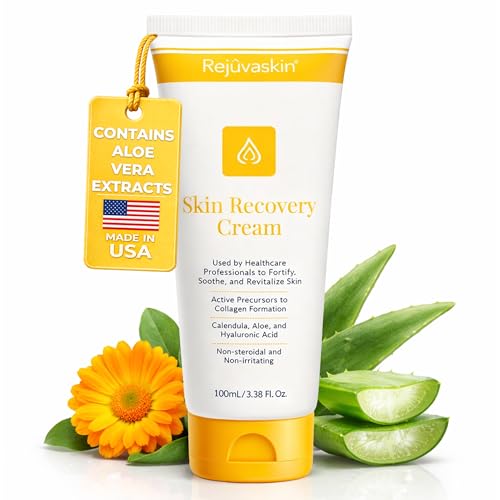
1. Rejuvaskin Skin Recovery Cream 100 mL
Our pick — 4.5+★ from 750+ verified ratings; the strongest balance of quality and price.
The one skin clinics reach for first, with a formula built for radiation dermatitis from day one.
This is the pick that most closely matches the job: a steroid-free recovery cream with hyaluronic acid to hold moisture in and calendula and aloe to comfort irritated skin. What wins people over is the moisturizing — it is the single most-discussed quality in its reviews by a wide margin, and the recurring theme is skin recovering through radiation rather than just feeling soft for an hour. It also carries the National Eczema Association Seal of Acceptance, which tells you the formula was reviewed for reactive skin.
The texture is the quiet advantage. It is described as lightweight and non-greasy, so you can layer it several times a day over tender areas without a slick film sitting on your clothes. One 100 mL tube covers a full routine without needing a second jar. And unlike the PhysAssist Oncology Cream and Lip Balm, this is a single cream rather than a cream-and-balm kit — so pair it with a balm separately if your lips are also affected.
The honest catch is value. A genuine split of opinion exists on whether the tube is worth what it costs, and a small number of people find their skin reacts rather than calms. It is also a cream rather than a stick, so awkward spots like the lip line need a different format. If your skin is extremely reactive, patch-test a small area first — that is sensible with any new formula on treated skin.
Where It Earns Its Place
- Steroid-free formula the National Eczema Association recognizes with its Seal of Acceptance
- Hyaluronic acid plus calendula and aloe for moisture retention and comfort
- Lightweight, non-greasy feel you can reapply through the day
- Designed specifically for radiation dermatitis from start to finish
Where To Think Twice
- Opinions split on whether it is worth the spend
- A few sensitive-skin users find it irritates rather than calms
- Cream only — no balm included for lips
Reach for this if: you want one gentle, steroid-free cream to carry you through radiation dermatitis, before, during, and after treatment.
Patch-test first if: your skin has reacted badly to new formulas before.
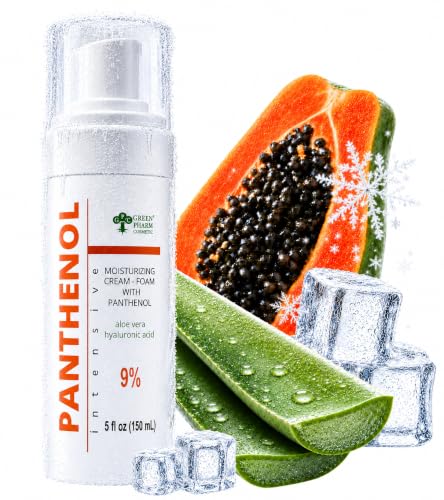
2. 9% Panthenol Foam
A spray-on foam that skips the rubbing — ideal when touching sore skin is the last thing you want.
Here is the format that solves a real problem: when a wide area is tender, dragging a cream across it hurts. This is a 9% panthenol cream-foam (panthenol being a moisture-binding form of vitamin B5) with aloe and hyaluronic acid, released from a spray dispenser so it lands on the skin without your hands pressing into it. Quality is what owners talk about most, and the overall read is a formula people rate highly and rebuy.
The foam texture is the standout. It is airy, spreads easily, and absorbs fast without the heavy feel of a traditional cream — the recurring comment is that it sinks in quickly and leaves no sticky layer. That makes it practical for large areas like a chest or back, and the cooling feel is welcome after sun exposure or procedures. At 5 fl oz it is sized for daily face-and-body use over a stretch of time.
The trade-off is scent sensitivity. The fragrance is described as light and pleasant by most, but a scent-sensitive user may still notice it on freshly treated skin. It is also a foam, so it offers lighter hydration than a rich cream — if your skin is deeply dry and flaking, you may want to layer it under something heavier.
Why the format matters: the spray dispenser means no friction on sore patches, which is exactly what feels wrong about dragging a cream over tender skin.
The one caveat: fragrance-light is not fragrance-free, so smell-sensitive skin should test a small spot before covering a large area.
Best matched to: broad areas of redness and tenderness where you want moisture without touching or rubbing.
Layer under a cream if: your skin is deeply dry and needs a heavier seal on top.
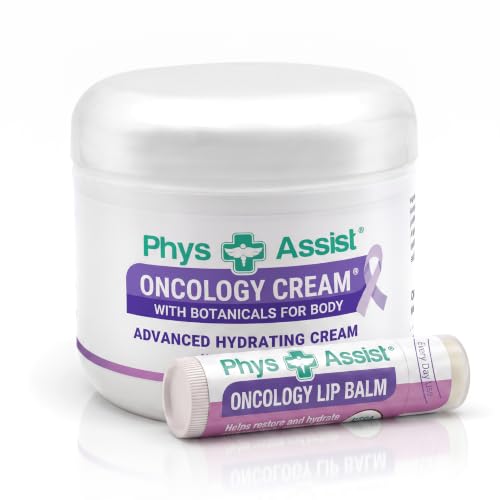
3. PhysAssist Oncology Cream and Lip Balm 4oz
One jar for the skin, one balm for the lips — a complete care package in a single buy.
Fluorouracil does not only affect the main treatment area; lips and edges of the face often need attention too. This kit pairs a rich calendula cream with a lip balm, so both are covered in one purchase. The cream uses calendula, lavender, and peppermint and is free of alcohol, parabens, and artificial colors. Effectiveness is the top theme in its reviews, and the pattern is people finding the formula genuinely useful for dry, tender skin.
The texture is where it separates from a heavy balm-style cream. It is described as sinks-in-fast, non-greasy, and non-staining — no white residue, so it will not mark clothes or bedding. That last point matters if you are applying it at night. Flip the jar over and you can see the difference in footprint against the Rejuvaskin tube: this one measures 3.5 x 3.15 x 2.83 inches, a tidier shape for a bedside table or a chemo bag. The 4 oz jar is sized for twice-daily use.
The caution is the botanical scent. Lavender and peppermint give it a clear smell, which most people like but a scent-sensitive user may not. And it is a jar rather than a tube, so you dip fingers in — keep hands clean if the skin is broken.
What it solves: you get cream and lip balm together, so you are not hunting for a second product while your skin is at its most sensitive.
What to watch: the lavender-and-peppermint scent is noticeable, and a jar means fingers go in — wash up first.
Go for this if: you want a cream-and-balm combo in one purchase to cover skin and lips together.
Look elsewhere if: you prefer a tube you can squeeze out without touching the product.
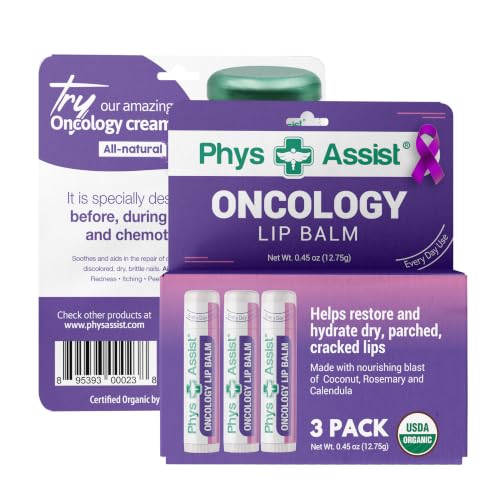
4. PhysAssist Oncology Lip Balm 3 Pack
The lip-specific answer for chapped, tender lips when a body cream is too much.
When fluorouracil leaves lips rough and parched, a dedicated balm beats smearing body cream on them. This is a USDA Organic formula built on organic sunflower oil, organic beeswax, and organic coconut oil, with organic calendula extract and vitamin E. Effectiveness is the quality people single out most — it is rated above a standard drugstore chapstick by a clear margin, and the balm glides on smoothly for a lightweight, non-waxy feel.
Compare this 0.45 oz balm with the 6 ounce PhysAssist cream-and-balm kit: this one is a far smaller, lip-only product, which is exactly the point — you carry it in a pocket or bag and reapply through the day. The 3-pack means one for home, one for the car, and one for a care bag. Scent is a clear peppermint, which most people find fresh and a few find strong.
The honest limit is longevity and sensitivity. Some users say it does not last all day and needs frequent reapplication. A small share of sensitive lips report a burning sensation from the peppermint, so if your lips are cracked and raw, start with a thin layer to see how it feels.
The lip-first advantage: organic beeswax and coconut oil hold moisture on the lips specifically, and the non-waxy glide keeps it comfortable on chapped skin.
Know before you buy: the peppermint is strong, and a small number of users find it stings on badly cracked lips.
Add this if: your lips need their own dedicated balm alongside your body cream.
Try a thin layer first if: your lips are cracked and peppermint has stung you before.
5. ECZEMA HONEY Gentle Face & Body Lotion Stick (2.2 Oz)
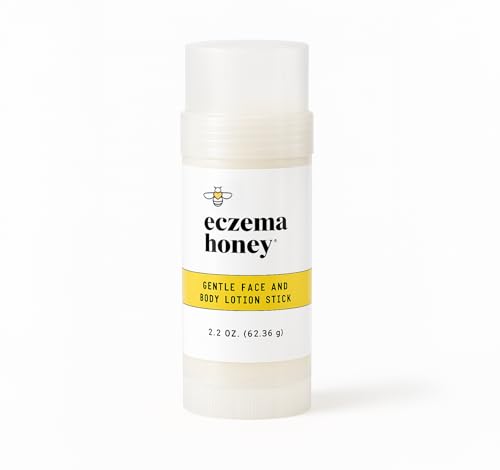
A solid lotion stick you can dab on a small patch without touching the rest of your skin.
Not every post-treatment spot is big. For a small irritated patch on the face or edge of the arm, a stick format keeps the product where you want it. This one is a thin protective barrier made with mango butter, beeswax, honey, coconut, and vitamin E, plus colloidal oatmeal — a finely milled oat that skin-care formulas use to comfort itching. It is made with no parabens, sulfates, phthalates, or fragrances and is Leaping Bunny Certified.
Moisturizing is the quality people praise most, and the pattern is skin staying smooth through flare-ups on hands, arms, and legs. The fragrance-free formula is the practical win here: unlike the peppermint-heavy PhysAssist lip balm, there is nothing in the scent department to sting reactive skin. It is also small enough to keep in a bag for midday touch-ups.
The trade-off is the greasiness. Opinions split sharply on texture — some find it light and non-greasy, others find it oily and rough to spread. Application draws similar mixed feedback, with some finding it easy and others hard to work in. That makes it a fit question: it suits small targeted patches, less so a large area where you want a cream that spreads and absorbs evenly.
What Works In Its Favor
- Fragrance-free, with no parabens, sulfates, or phthalates
- Colloidal oatmeal plus honey and mango butter for a protective barrier
- Stick format targets small patches without spreading product elsewhere
- Leaping Bunny Certified and tested for sensitive skin
Where It May Not Suit You
- Texture divides opinion — some find it oily or rough to apply
- Better for small spots than broad treatment areas
- Not a substitute for a full-body cream routine
Worth choosing when: you have a small, awkward patch that needs product dabbed on precisely.
Not the right fit for: covering a wide area — a spreadable cream handles that better.
Know the Specs
Panthenol and Hyaluronic Acid
Panthenol is a moisture-binding form of vitamin B5 that helps skin hold water and feel less tight. Hyaluronic acid is a humectant — it draws and holds moisture near the surface. Together they are the backbone of most post-treatment moisturizers. Look for a stated percentage on the label, like the 9% panthenol in the foam pick, so you know how concentrated the formula is.
Steroid-Free and Fragrance-Free
Steroid-free means the cream relies on moisturizers and botanicals rather than a steroid drug, which matters if you are layering it repeatedly on compromised skin. Fragrance-free means no added scent at all, while “fragrance-light” or a botanical scent like peppermint or lavender can still sting reactive skin. If your skin is at its rawest, a fragrance-free formula lowers the chance of a reaction.
Calendula and Aloe
Calendula is a marigold-derived botanical that appears in many oncology skin products for its comforting properties, and aloe is a soothing plant gel. Both show up in the Rejuvaskin and PhysAssist formulas. They are not drugs, but they are the ingredients people associate with a calmer feel on dry, irritated skin.
Format: Foam, Cream, and Stick
Format changes how a product behaves on tender skin more than the ingredient list does. A foam sprays on without friction, a cream spreads and seals, and a stick deposits product on a precise spot. Right after treatment, less rubbing is better, so a spray foam or thin lotion beats a thick cream. As skin settles and starts to flake, a richer cream holds moisture longer.
Common Questions
Can I use a regular body lotion on skin after fluorouracil?
Is it better to use a foam or a cream on tender skin?
How often should I reapply cream during treatment?
What is the difference between the Rejuvaskin cream and the PhysAssist kit?
Can I use a lip balm on chapped lips after fluorouracil?
Are these creams safe to apply before, during, and after treatment?
What does steroid-free mean, and does it matter here?
Is a lotion stick any good for larger treatment areas?
Will a scented cream make treated skin worse?
How much cream do I need for a full course of treatment?
The Bottom Line
For most people dealing with raw, tight skin after treatment, the winner is the Rejuvaskin Skin Recovery Cream — steroid-free, built around hyaluronic acid and calendula, and designed for radiation dermatitis from start to finish. It is the most flexible single cream on this list, and it holds up as your skin moves from sore to peeling. If you are covering a large, tender area and want to skip the rubbing, grab the 9% Panthenol Foam. And if your lips need their own care alongside the cream, the PhysAssist Oncology Lip Balm is the simple add-on. One practical nudge: start with one cream and one balm rather than a shelf full of jars, since consistency with a gentle formula is what actually keeps treated skin comfortable.
How we choose
We do not accept paid placement. Every pick is matched to a real buyer and a real use-case; we do not hands-on test units.
Sources
Specifications: manufacturer listings and product documentation. Review insights: verified customer reviews, as of November 2026. Pricing: not shown on this page (it changes often); check the current price via the retailer link.
As an Amazon Associate, My Heart Lives Here earns from qualifying purchases. This does not affect which products we feature.