Heads up: This post contains affiliate links. As an Amazon Associate I earn from qualifying purchases, at no extra cost to you. Learn more
Specs are compiled from manufacturer listings and verified buyer reviews and can change over time — please confirm the key details on the product page before buying.
You want to jump higher without your shins paying for it. A foam plyo box (a padded platform for jump training) solves exactly that: the padded edges give when you clip them, so a missed jump stings instead of tearing skin. One box also rotates into three heights, so you can progress without buying three separate platforms. The picks below cover every budget tier and training style, from a deeply padded family box to a compact youth-size model and a hefty gym-floor workhorse.
This guide is built by comparing the manufacturers’ published specifications and the patterns across verified customer reviews, so you get each pick’s real strengths and trade-offs instead of marketing spin.
You will see which boxes stay planted at their tallest setting and which ones you should brace against a wall. You will also learn how foam density changes the landing feel and where a soft edge actually saves you. The picks below show which foam plyo boxes earn their floor space in a home gym.
Top Picks


How To Choose The Best Foam Plyo Boxes
Start with the height range, because that single number decides whether the box grows with you. A three-sided box rotates to give you three jump heights, so you buy one platform instead of three. Check the highest setting against your current jump, then make sure the lowest setting is low enough for step-ups and rehab work.
Density and the landing feel
A foam box protects you by giving slightly on impact. High-density foam stays firm enough to push off from, while softer foam cushions a missed jump more. Too soft and your foot sinks in, which robs you of spring and can make the box feel wobbly. Look for high-density foam in the listing, then read how owners describe the firmness at the tallest setting.
Weight capacity and stability
The weight capacity tells you how much load the foam core is built to take. A box rated for 440 lbs or more is aimed at heavier athletes and aggressive landings, while a lighter-rated box suits youth training and bodyweight drills. Heavier boxes tend to sit more planted, but they are harder to drag around between exercises. A built-in handle or a lighter shell makes repositioning easier.
Cover material and grip
A PVC or vinyl cover resists tears and wipes clean after sweaty sessions. Textured or non-slip surfaces help your feet grip the top edge during step-ups and jumps. Smooth-finished edges matter too, because rounded corners snag less on clothing and shins than sharp wooden edges do.
Side-by-Side Comparison
| Model | Best For | Height Settings | Weight Capacity | Box Weight | Amazon |
|---|---|---|---|---|---|
| RitFit 3 in 1 Extra Firm Soft Plyo Box★ Best Overall | All-round home gym default | 16″, 20″, 24″ (or 20″, 24″, 30″ in large) | 440 lbs (large) | 60 lbs (large) | Amazon |
| Sunny Health & Fitness Foam Plyo BoxBudget Leap | Budget-friendly height range | 20″, 24″, 28″ | 550 lbs | 11 lbs | Amazon |
| Fitvids Plyo Box | Light daily jump sessions | 16″, 20″, 24″ | 150 lbs | 10 lbs | Amazon |
| CAP Barbell 3-in-1 Plyometric Box | Small-space home gyms | 16″, 18″, 20″ | 300 lbs | 29.1 lbs | Amazon |
| Titan Fitness 3-in-1 Heavy Foam Plyometric Jump Box | Youth and beginner progression | 12″, 14″, 16″ | 120 lbs | 66 lbs | Amazon |
| REP Soft Plyo Box | Firm, stable foam landings | 16″, 20″, 24″ | 400 lbs | — | Amazon |
| 3-in-1 Foam Plyometric Jump Box (Epic Fitness) | Tallest jump shelf for HIIT and MMA | 20″, 24″, 30″ | — | 16 lbs | Amazon |
Detailed Reviews
1. RitFit 3 in 1 Extra Firm Soft Plyo Box
Our pick — 4.5+★ from 500+ verified ratings; the strongest balance of quality and price.
Three heights, three load ratings, one box that anchors a whole plyo corner.
RitFit sells this box in three separate builds, and the big one is a genuine gym-floor piece: 20″x24″x30″, 60 lbs, rated to 440 lbs. The medium steps down to 16″x20″x24″ at 35 lbs and a 300 lb capacity, and the small comes in at 16″x18″x20″ and 26 lbs with a 200 lb rating. Pick by your jump height first, then by how hard you land — the three weight capacities are set per size, not one blanket number.
Where this one pulls ahead is stability at the tallest shelf. Against the Fitvids box, which lands at 10 lbs with a 150 lb limit, the RitFit large carries 60 lbs of mass and a 440 lb rating. That extra heft keeps the platform planted when your landing drifts forward. Owners consistently call out the quality and sturdiness here, and the weight itself reads as a plus for staying put rather than a chore.
The cushioning splits opinion. Some owners find the foam nicely padded while others call it too soft and not firm enough for hard push-offs, and a few notice it rocking when they jump squarely on top. A zippered PVC cover takes care of grip and cleanup — unzip it and wipe the shell down after a sweaty session. Rotation between heights needs no assembly, so you flip the box and go.
What earns it the top spot
- Three size tiers with matching 200, 300 and 440 lb capacities
- 60 lbs on the large model keeps the platform from skating
- Zippered PVC shell comes off for a quick wipe-down
- No assembly — rotate the box to switch height
Where it asks for a trade-off
- Firmness splits opinion: some find it too soft to push off hard
- At 60 lbs the large is a two-handed drag to reposition
- A few notice a slight rock when landing dead-center
Reach for this if: you want one box that spans beginner step-ups to 30″ jumps and you plan to leave it in place.
Better elsewhere if: you need something you can tuck into a closet between sessions.
2. Sunny Health & Fitness Foam Plyo Box
An 11 lb shell rated to 550 lbs — the specs read like a typo until you open the box.
Two numbers on this Sunny box do all the talking: 11 lbs of carry weight and a 550 lb load rating. That is the highest capacity in this lineup, and it sits in a shell one person can lift with two fingers. Against the Fitvids box and its 150 lb limit, the Sunny carries over three times the rated load.
The three heights are 28″, 24″ and 20″, so you get a genuinely tall top shelf for step-up conditioning and a friendlier 20″ face for starters. The PVC fabric cover is tear-resistant, and the foam interior softens the blow to your shins on a missed jump. Owners speak well of the overall build — the quality side draws the strongest response, with the functionality of the rotating design close behind.
Here is the catch: at 11 lbs, the box is light enough that the tall faces can shift. At the 28″ top face the platform draws more wobble complaints than at the 20″ and 24″ faces, and a few owners simply brace it against a wall. Treat it as a box that wants a wall or mat behind it for the tallest drills. For step-ups, squats and moderate jumps it holds up fine.
What stays planted: the 550 lb rating and dense foam core give you a load ceiling well above most bodyweight work.
The honest caveat: its 11 lb shell is the lightest thing about it, so tall-setting jumps call for a braced position.
Best fit: a lifter who wants a tall step-up platform and rarely maxes out jump height.
Think twice if: your main drill is explosive max-effort jumps off the top face.
3. Fitvids Plyo Box, 3-in-1 Foam Plyometric Jump Box

Ten pounds of foam you can sling onto a shelf after every session.
If portability is the whole point, this Fitvids box is the lightest proper 3-in-1 in the group at 10 lbs. It rotates through 16″, 20″ and 24″ faces, so a beginner can start low on step-ups and climb as confidence grows. The anti-slip PVC cover has a textured surface to keep your forefoot from skating on takeoff.
The trade-off hides in the load rating. That 150 lb capacity is the lowest here, and against the Sunny’s 550 lb ceiling it sits in a different class. This is a bodyweight and light-load box — great for box jumps, step-ups, foot switches, push-ups and lateral drills. Stack a barbell across it for hip thrusts and you would be pushing past what the foam core is spec’d to handle.
For HIIT circuits where you hop on and off the same face and move to the next station, the light shell is an asset. It is easy to shift between exercises, easy to store, and the resilient foam soaks up a clipped landing on the shin. Choose the 24″ top end only if you are already comfortable landing at height.
Made for: apartment lifters and anyone who has to clear floor space after a workout.
Look past it if: you plan to load a barbell across the box.
4. CAP Barbell 3-in-1 Plyometric Box
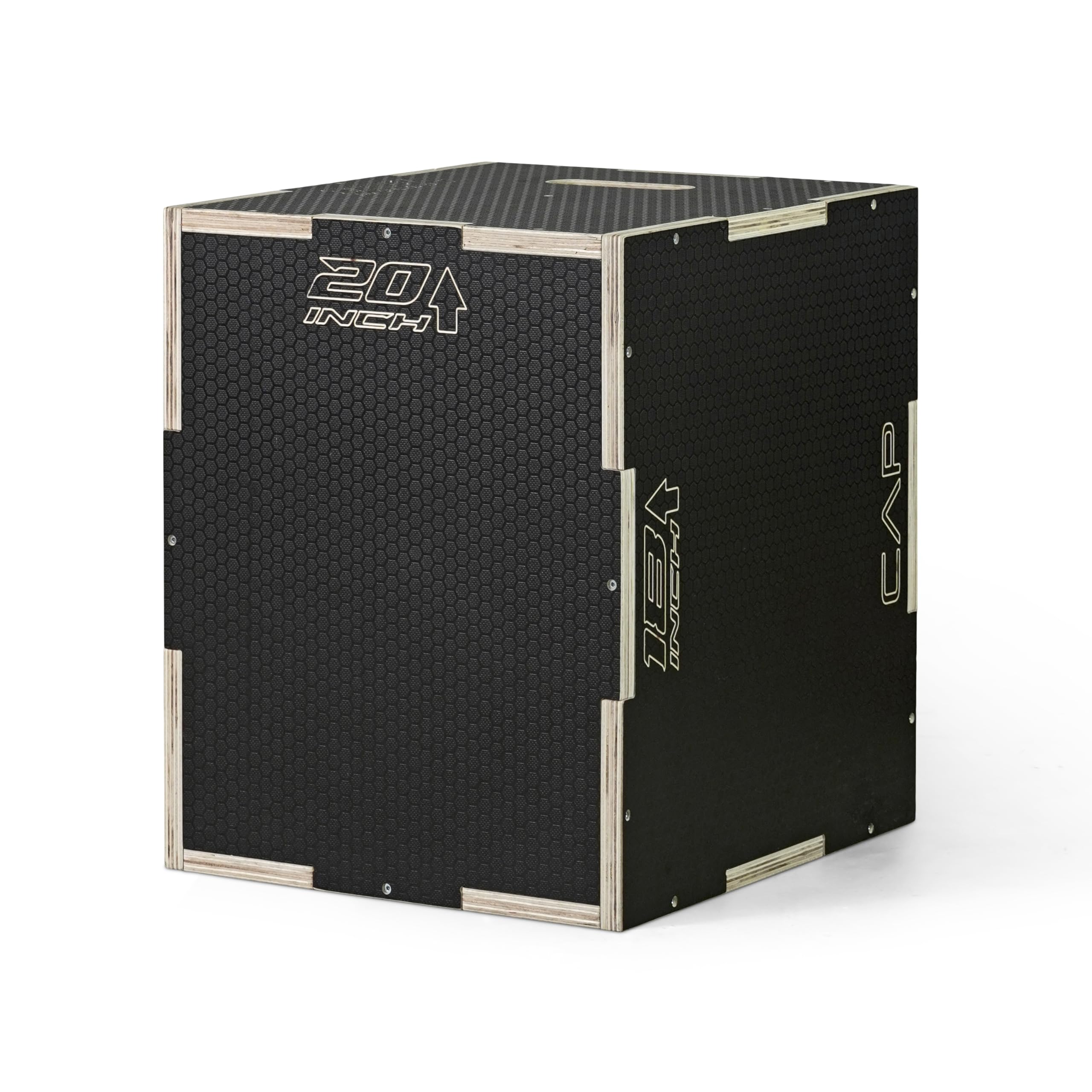
A compact wood build with handles — the small-gym anchor that trades padding for a rock-solid top.
This CAP box is not the soft-foam style the rest of this list runs on. It is engineered wood with interlocking panels and countersunk screws, which is why it feels planted in a way light foam simply cannot. The three faces give you 20″, 18″ and 16″ — a shorter range than the padded boxes, aimed squarely at step-ups, agility drills and progressive jumps.
Where it shines is the small-space home gym. Wide integrated carry handles let you swing it out of the way between sets, and the textured non-slip surface gives real traction underfoot. The smooth-finished edges and recessed hardware cut down on snag points. Build quality is the loudest signal in the reviews — the sturdiness of the assembled platform draws more praise than any other trait, with assembly ease right behind it.
The real limit is the 20″ footprint. Several owners find the 20″ footprint on the small side for long-limbed jumpers, and wood means a missed jump meets a hard edge rather than forgiving foam. If shin safety is your top priority, the padded RitFit or REP boxes suit better. If you want a compact, rock-steady step platform with a 300 lb load limit, this is a strong buy.
Why it earns a slot
- Carry handles make shuffling it aside mid-workout quick
- Interlocking panels and countersunk screws hold a firm platform
- Textured top adds grip for jumps and step-ups
- 300 lb max weight recommendation covers most home lifters
What you give up
- Wood edges are unforgiving on a clipped shin
- The 20″ footprint feels small to taller jumpers
- Shorter height ceiling than the padded 24″ and 30″ boxes
Suits you when: a compact, dead-stable platform matters more than cushioned landings.
Skip the swap if: you want a soft top face for high-rep jumping.
5. Titan Fitness 3-in-1 Heavy Foam Plyometric Jump Box

Low heights, forgiving foam, and 66 pounds of core that is not going anywhere.
Titan labels this a youth-size box, and the numbers back that up: 12″, 14″ and 16″ faces with a 120 lb load rating. It is the lowest-reaching box here, which makes it the right first platform for a young athlete or a returning adult learning to land soft. The high-density EPE foam core feels giving underfoot for hip thrusts, and the textured vinyl exterior adds grip on takeoff.
Then there is the weight. At 66 lbs this is the heaviest box in the lineup, well above the 29.1 lb CAP. That mass keeps a low, wide platform steady through repeated landings — you do not chase it across the floor. Because it is specced for hip thrusts and squat work too, the foam gives a soft surface for leg drive with a barbell across the hips.
Two things to know before you buy. The top face at 16″ is the lowest ceiling of any foam box here — a strong jumper will outgrow it fast. And the platform wobbles when you stand it longways, so line up your landings square to the box. Owners who train hip thrusts and low step-ups on it are the happiest.
Straight talk on the foam: the soft core is a comfort win for hip thrusts and knee-friendly landings.
What to watch: keep landings centered and square — the longways position is the wobbly one.
Ideal owner: a teen athlete or a beginner who wants a low, safe box for hip thrusts and step-ups.
Keep looking if: you already clear a 20″ jump and want headroom to grow.
6. REP Soft Plyo Box

The firm, no-tip foam box that lets you jump at 24″ without second-guessing your footing.
REP builds this small-size box at 20″x20″x24″ with faces at 16″, 20″ and 24″, and rates it for 400 lbs. That 400 lb capacity sits well above the Fitvids 150 lb figure and just shy of the RitFit large’s 440 lbs — right in the balance for a serious home lifter. The dense foam core is paired with an anti-slip vinyl cover, so the landing zone grips as your feet come down.
What owners clearly value most here is that the box stays put. The sturdiness is the headline — it does not tip during box jumps, squats or step-ups, which is the exact fear that keeps people jumping timidly at height. A textured shell adds grip and shrugs off scuffs, and the shell is light enough to shift around the floor without a struggle.
The shin-scrape claim holds up too: no sharp wooden corners means a missed jump meets foam instead of a hard edge. That makes the 24″ top face approachable for beginners and youth training. If your training is high-rep CrossFit jumping, this is the sort of platform you leave out and trust.
The confident call: a lifter who wants a firm 24″ jump shelf that will not slide or tip mid-set.
The one caveat: it is available in the small 20/18/16 configuration, so a taller jumper should confirm the height they need.
7. 3-in-1 Foam Plyometric Jump Box (Epic Fitness)
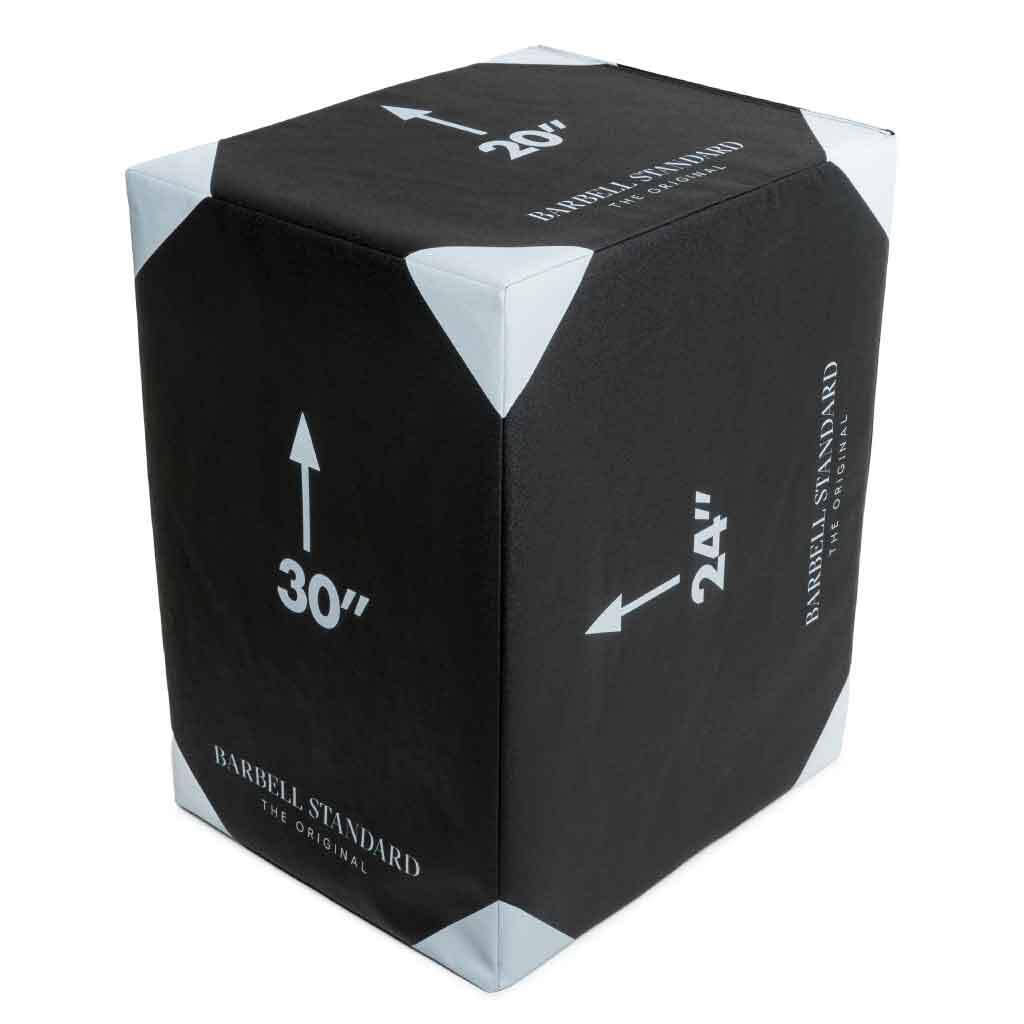
Thirty inches of EPE foam for the jumper who has outgrown the beginner boxes.
This box goes where most foam boxes stop. Its three faces are 20″, 24″ and 30″, so the tallest shelf tops out at 30 inches — a full 6 inches higher than the 24″ ceiling on the Fitvids and REP boxes. The high-density EPE foam core and PVC leather cover keep it far less punishing than a wooden platform when you clip the edge, and the shell is easy to wipe clean between sessions.
The 16 lb weight tells you part of the story. That lightness makes the box easy to move around the floor and store against a wall, which helps in a busy home gym. The height options draw near-universal approval, and the quality and functionality of the build earn strong marks too. For HIIT, MMA and CrossFit-style circuits, a 30″ platform gives you room to escalate intensity without buying another box.
Weight is the catch. Because the shell is on the light side, it can tip if you land off-center at the tallest setting — a few owners brace or weight it down for the 30″ face. Keep landings centered, set it on a non-slip mat, and reserve the top shelf for jumps you have already earned.
Why taller jumpers shortlist it
- 30″ top face gives real headroom over 24″ boxes
- EPE foam softens a clipped landing versus wood edges
- PVC leather cover wipes down after sweaty sessions
- 16 lb shell is light to reposition and store
The reality check
- Light shell can tip off-center at the 30″ face
- Stability splits opinion across the review pages
- Peak height demands solid landing technique first
Built for: a confident jumper who wants the highest foam face here and can land cleanly.
Not the pick if: you want a heavy, self-planting box you can jump on without thinking.
Know the Specs
Height settings (the three faces)
A 3-in-1 box rotates so each side gives a different jump height. Lower faces like 12″ or 16″ suit step-ups and beginners, while a 24″ or 30″ face is where advanced jump work lives. Check both ends of the range — you want a low face you can start on and a high face you can grow into.
Weight capacity
This is the load the foam core is rated to handle, from light bodyweight boxes up to a 550 lb ceiling. A higher rating usually means a firmer, denser core built for heavier athletes and aggressive landings. Pair it with the box weight — heavier boxes tend to stay planted but are harder to move.
Foam density and landing feel
High-density foam stays firm enough to push off while still giving on impact. Softer foam cushions more but can feel mushy underfoot at the tallest setting. The listing density and how owners describe the firmness are your best read on which feel you are buying.
Cover material and grip
PVC, vinyl or faux-leather covers resist tears and wipe clean, while textured surfaces add foot grip for takeoff and landing. Rounded, smooth-finished edges snag less than sharp wooden corners, which is why padded covers feel friendlier on a missed jump.
Common Questions
What is the difference between a foam plyo box and a wooden one?
How do I choose the right height for my jump?
Can I do hip thrusts and step-ups on a foam plyo box?
Why does my foam box rock or wobble when I jump on it?
Is a softer foam box safer than a firmer one?
How much weight can a foam plyo box hold?
Are foam plyo boxes easy to store?
Can a foam box replace a wooden box for CrossFit box jumps?
Do foam plyo boxes need assembly or special cleaning?
The Bottom Line
For most people setting up a home gym, the foam plyo boxes winner is the RitFit 3 in 1 — its 440 lb cap on the large, 60 lb heft and 16″/20″/24″ to 20″/24″/30″ range covers step-ups through tall jumps in one box. If firm, do-not-tip jumping at 24″ is the goal, the REP Soft Plyo Box earns its premium billing. And for a lifter who wants the highest face on the list, the Epic Fitness 3-in-1 tops out at 30 inches — just land centered and set it on a mat.
How we choose
We do not accept paid placement. Every pick is matched to a real buyer and a real use-case; we do not hands-on test units.
Sources
Specifications: manufacturer listings and product documentation. Review insights: verified customer reviews, as of November 2026. Pricing: not shown on this page (it changes often); check the current price via the retailer link.
As an Amazon Associate, My Heart Lives Here earns from qualifying purchases. This does not affect which products we feature.