Heads up: This post contains affiliate links. As an Amazon Associate I earn from qualifying purchases, at no extra cost to you. Learn more
Specs are compiled from manufacturer listings and verified buyer reviews and can change over time — please confirm the key details on the product page before buying.
If you have a chipped teacup, a cracked saucer, or a porcelain figurine sitting in two pieces, the first decision that matters is the type of glue, not the brand printed on the tube. A thin liquid super glue runs down a curved porcelain edge and makes a mess. A two-part epoxy lets you align the pieces before it grabs. For most household china repairs you want a glue that sets clear, holds strong, and gives you a moment to line the break up correctly — and that is exactly what the picks below are sorted on.
This guide is built by comparing the manufacturers’ published specifications and the patterns across verified customer reviews, so you get each pick’s real strengths and trade-offs instead of marketing spin.
You will see which formula suits a hairline crack and which suits a load-bearing chip, because the difference decides whether the repair survives a wash. Below you will find the honest comparison and a clear pick for your repair shelf.
Top Picks

How To Choose The Best Glue for China
China is a glazed ceramic, and glaze is a smooth, non-porous surface. That single fact explains almost every failed repair: a glue that cannot grip a slick glaze will peel off the moment you wash the piece. Your job is to match the formula to the crack shape, then match the working time to how steady your hands are.
Gel or liquid — the first fork in the road
A gel glue stays where you put it, so it will not creep down the side of a cup. A thin liquid wicks into a hairline crack by itself, which is ideal for a split that has almost no gap. If your break is a clean vertical split with an open gap, gel gives you control. If the crack is nearly invisible, a low-viscosity liquid travels further into it.
Working time versus full cure time
Working time (sometimes called open time) is how long you have to slide the two pieces into alignment before the glue grabs. Full cure time is how long before the join reaches its final strength. A five-minute epoxy gives you minutes to adjust; an instant gel grabs in seconds. Note the difference clearly, because a fast grab rewards a confident hand and punishes a hesitant one.
Why “dries clear” is not the whole story
Clear drying matters on white porcelain because a yellow or cloudy line shows through. Look for “no whitening” and “low bloom” in the description — bloom is the chalky haze some cyanoacrylate glues leave around a joint. On china, that haze is often more visible than the crack itself.
The food-contact question
If you plan to eat off the repaired plate or cup, check the manufacturer’s own label for a food-contact claim first. Many household adhesives are not labelled for direct food contact. This guide cannot make that call for you, and the products here do not carry a food-contact statement in their data.
Side-by-Side Comparison
| Model | Best For | Form | Full Cure Time | Pack Size | Amazon |
|---|---|---|---|---|---|
| Beacon 527 Multi-Use Glue★ Best Overall | All-round china repair | Liquid | 24 hours | 2-pack | Amazon |
| Araldite Clear Epoxy AdhesivePremium Pick | Invisible joins on fine china | Stick (2-part epoxy) | 3 hours | 2 x 15ml | Amazon |
| LET’S RESIN 5 Minute Epoxy Glue | Filling gaps on broken pieces | Liquid (2-part epoxy) | 1 hour | 2 pieces | Amazon |
| Super Glue and Cement for Shoes | Fast grab on small chips | Gel | 24 hours | 1 bottle | Amazon |
| Welding Glue Oily Super | Flexible bonds that stay soft | Liquid (oily) | 30 seconds | 4-pack | Amazon |
Detailed Reviews
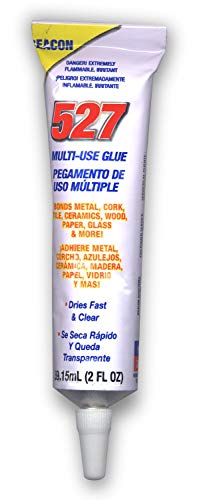
1. Beacon 527 Multi-Use Glue 2-Pack
Our pick — 4.5+★ from 350+ verified ratings; the strongest balance of quality and price.
A household glue that grabs fast, dries clear, and keeps its grip on a teacup handle.
Here is the pick that earns the top spot on the strength of what it does after the tube is closed. It dries clear and it cures fully in 24 hours, so the repair line on a white cup stays white instead of turning amber six months later.
It also covers more materials than most china glues. The maker lists ceramic, china, glass, metal, shells and tile among the materials it bonds, so a saucer, a broken mug handle and a metal cabinet fitting can all be handled from one tube. A thin layer on one side is enough — press gently and it bonds without squeezing glue out over the glaze. When you do get a smear, it wipes away with toluene while still wet.
What keeps it at the top is durability under stress. The formula is listed as shock resistant, waterproof and UVA resistant, so a drop on a hard floor won’t loosen the join. It is also paintable, so a ceramic figurine you plan to touch up can take paint right over the joint. The caveat: the two-pack costs more per bottle, and the liquid won’t wick into a nearly invisible hairline crack the way a thin cyanoacrylate will.
Where it wins
- Fully cures in 24 hours at the cut-out and stays clear
- Bonds ceramic, china, glass, metal and tile from a single tube
- Shock, water and UVA resistant, so a drop or a long soak does not loosen the join
- Two tubes in the pack means a backup for a second chip
What to plan around
- Liquid viscosity won’t wick into an invisible hairline crack
- Needs toluene for cleanup, not water
- The pair costs more than a single-tube budget pick
My pick if: you want one tube that handles china, glass and metal without extra shopping for any of them.
Think twice if: your break is a perfectly closed seam and you need a thin liquid to reach inside it.
2. Araldite Clear Epoxy Adhesive 5 Minute
The invisible-join specialist — a crisp epoxy built for china, porcelain and fine jewellery work.
Fine china usually fails at the seam, not at the body of the piece. Araldite’s answer is a two-component epoxy measured at a 1:1 mix that sets in five minutes and reaches full strength in three hours. That three-hour finished cure is the detail that matters most when you compare it to the fast gel picks below, which take a full 24 hours to finish. You can handle the piece again long before dinner.
What the formula is tuned for is invisibility. The manufacturer calls out crisp bonds for jewellery, ceramics, china and porcelain, and it will also fix eyeglasses and a wine glass stem. A solvent-free two-component epoxy also resists water and oil, so a repaired cup that sees washing stays put. The temperature band is a wide one: it holds between -30 and 80 degrees Celsius, which covers a normal kitchen and a garage in winter.
The catch is the five-minute working window. Five-minute setting rewards a steady hand — you push, hold, and commit. It also needs clean and slightly rough surfaces to bite properly, so a polished glaze benefits from a light scuff before you glue. If you want more patience, the Beacon above gives you a slower grab and a longer cure in exchange for a little less image clarity on the join.
What wins people over: the finished bond genuinely looks like the original — clear, no whitening, no tell-tale line across a white saucer.
The trade you accept: five minutes is a short window on a fiddly break, so practise your dry alignment first before you mix.
Reach for this if: you are fixing fine china, a porcelain figurine or a wine glass where the seam must not show.
Look elsewhere if: your hands shake or your break needs slow, careful nudging into place.
3. Welding Glue 50g 4pcs
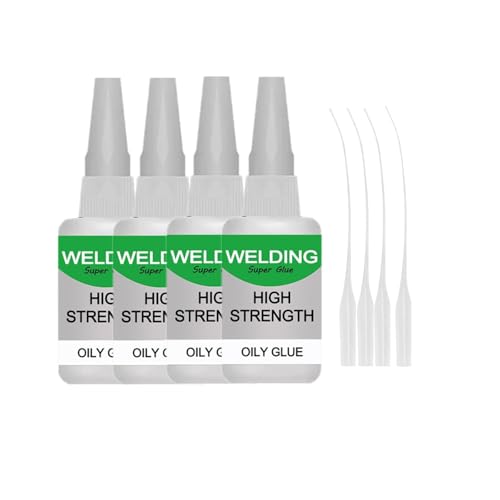
Four bottles of oily glue that bond without hardening into a brittle, cracking joint.
Most china failures come back because the glue sets hard. Porcelain and ordinary super glue do not move at the same rate when the room warms, so a rigid joint can crack free. This oily formula was built the other way: it stays soft and elastic after drying, and it does not yellow or whiten on the joint. That flexibility is why it keeps its grip when something knocks the repaired piece.
The speed claim holds up: it reaches maximum bonding strength in 15 to 30 seconds. It also suits awkward angles — you can apply it on a flat, vertical, uneven or overhead surface without it running off. It is listed for metal, wood, rubber and most plastics, and the adhesion is described as holding up even after repeated washing.
Where it falls short on china is precision. Oily formula is not designed for an invisible join — expect a visible soft line rather than a glass-clear seam. The four-pack also leaves you with more glue than a single repair needs, which is fine if you fix household items often and frustrating if you wanted one small tube. If a truly invisible seam on a porcelain piece is the goal, the Araldite epoxy is the better-matched tool.
The thing buyers rave about: how the bond stays elastic instead of turning brittle — a repaired joint that survives being knocked around rather than a hard, glassy line.
Honest limitation: there is no clear, invisible result here; this is a functional bond, not a cosmetic one.
Best fit for: a household with ongoing china and mixed-material repairs that wants four bottles on the shelf and a bond that flexes rather than cracks.
Not the one for: a display piece where the join line must disappear completely.
4. LET’S RESIN 5 Minute Epoxy Glue 3.4 oz
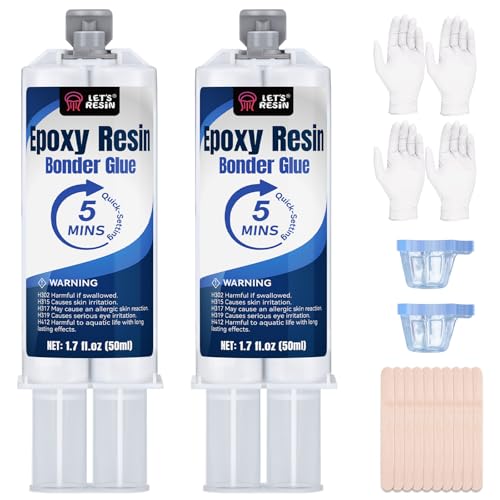
A complete repair kit for the chipped piece that is missing a chunk, not just split.
When a porcelain handle snaps off and takes a small piece with it, you cannot simply glue the two halves — there is nothing to press together. This is where a thick two-part epoxy earns its place. The formula is high viscosity, so it stays in the gap and hardens into solid filler. You can then drill, sand or paint over the hardened epoxy to restore the shape of the piece.
Speed is the second selling point. The working window is two minutes, initial curing takes about five, and the whole thing is done in an hour. Compare that with a 24-hour full cure on the Beacon and gel picks above — on this one you can be sanding the repair the same afternoon. Once cured it hardens significantly, so it works as a structural fill rather than a surface bond.
The kit itself deserves a mention: two epoxy tubes, twenty mixing cups, ten stirrers, two push rods for exact 1:1 mixing and four gloves. Nothing extra to buy, which is the main reason this beats a bare tube for a first-time epoxy user. The honest trade is the two-minute window — the maker’s own advice is to mix small batches several times rather than one larger batch, so you stop wasting glue that sets before you get to it.
Worth the counter space
- High viscosity holds in a gap instead of running out of it
- Full cure in 1 hour — sand, paint or drill the repair the same day
- Push rods make exact 1:1 mixing straightforward
- Includes 20 cups, 10 stirrers and 4 gloves, so a first repair needs nothing else
Where it asks more of you
- Two-minute working window is tight for a complicated break
- Mixing small batches takes more patience than squeezing a tube
- Bulkier kit than a single-bottle glue for a one-off hairline crack
The right call when: a piece is missing a chunk and you need to fill, rebuild and repaint the break.
Skip it when: your crack is a clean, closed seam — this epoxy is overkill and wants a gap to work into.
5. Super Glue and Cement for Shoes 5g Gel
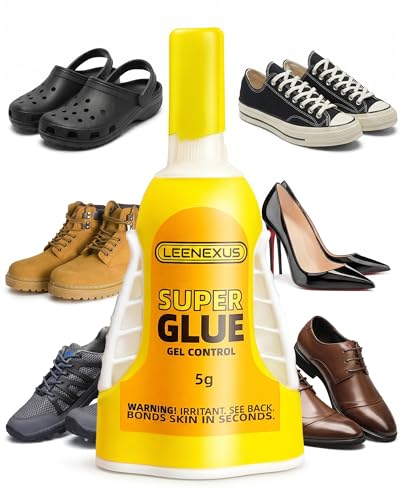
The precision-tip gel that keeps the glue exactly where you put it, even on a sloped cup rim.
Gel wins on a curved piece because it does not move. This one is a thick CA gel (cyanoacrylate — the fast-setting glue family most of us call super glue), and the side-squeeze bottle lets you place a small dot instead of a flood. On a china cup handle that means no run down the side and no glue pooling in the bottom of the cup while it sets. The dry, clear finish and low bloom keep the repair from showing a white haze around the joint.
Two practical details stand out for anyone who has fought a clogged super-glue tip. There is a built-in cleaning needle to clear the nozzle, and a dual-threaded cap that avoids the stuck, cross-threaded lid problem. The bottle also has a moisture-proof seal to keep humidity out — the maker claims this extends the working life. On speed, it sets for positioning in 30 to 45 seconds, with the full cure at 24 hours.
The honest limit is capacity and consistency. It is a 5g bottle, so a repair-heavy owner will go through it fast, and it is not the pick for a load-bearing structural break on a heavy piece — that is where the epoxy picks do better. It is also a gel, so it sits on the surface of a hairline seam rather than wicking in. For a quick chip on a decorative cup, though, the fingertip control is hard to argue with.
Where it shines: precision on a sloped or vertical surface — a gel dot that stays put instead of running into the wrong place.
Know before you buy: 5g goes quickly and it’s a position-and-hold product, not a gap filler.
Pick this one for: a quick, tidy chip on a decorative cup or a small porcelain ornament where control matters most.
Pass it over for: a heavy structural break or a gap that needs filling — the epoxy choices above suit that job better.
Know the Specs
Working time vs full cure time
Working time is the window to align the pieces before the glue grabs. Full cure time is when the bond reaches final strength. A five-minute epoxy gives you minutes of adjustment; a gel grabs in 30 to 45 seconds. If your break needs nudging, favour a slower working time even if the full cure runs to 24 hours. If it needs a firm, immediate hold, a fast grab is your friend.
Gel versus liquid viscosity
Viscosity is how thick a glue is — how much it resists flowing. Gel sits on a curved or vertical surface and stays put, which is why it suits a cup rim. A thin liquid wicks into a hairline crack by itself and gives a neater, more invisible result on a closed seam. Match the viscosity to the shape of the break, not the other way around.
Two-part epoxy and the 1:1 mix
A two-part epoxy is a resin plus a hardener that only sets when mixed. The ratio matters — a 1:1 mix means equal parts, which is why push rods and measuring cups appear in a good epoxy kit. Get the ratio wrong and the bond stays soft or cures cloudy. Mixed correctly, these are the strongest fill-and-rebuild glues for a chipped piece.
Clear drying, bloom and yellowing
On white porcelain, the joint color matters as much as the strength. Bloom is the chalky film some fast glues leave around a set joint, and yellowing is what a cheap formula does over months. Look for “no whitening,” “no yellowing” and “low bloom” in the description — these are the terms the makers use for a bond that stays invisible.
Common Questions
Can I use super glue on china and porcelain?
Will the repair survive washing after it cures?
How long before I can use the piece again?
Which glue is food-safe on a repaired plate or cup?
Why did my china repair come apart a few months later?
What’s the difference between a 5-minute epoxy and a super glue gel?
Can I paint over a repaired china joint?
Is a two-part epoxy better than a single-tube glue for china?
Can I glue china to metal or another material?
The Bottom Line
For most people fixing a chip on household china, the strongest all-round pick from this list is the Beacon 527 Multi-Use Glue. One tube covers ceramic, china, glass and metal, and it dries clear so the mend blends in. It also cures fully in 24 hours, so you can leave it overnight and use the piece the next day. If the repair has to be invisible on a fine porcelain piece, reach for the Araldite Clear Epoxy Adhesive. It is crisp, sets in five minutes, and reaches full strength in three hours. For a chip that took a chunk with it, the LET’S RESIN 5 Minute Epoxy Glue kit gives you an hour to cure before you sand and paint the restoration.
How we choose
We do not accept paid placement. Every pick is matched to a real buyer and a real use-case; we do not hands-on test units.
Sources
Specifications: manufacturer listings and product documentation. Review insights: verified customer reviews, as of November 2026. Pricing: not shown on this page (it changes often); check the current price via the retailer link.
As an Amazon Associate, My Heart Lives Here earns from qualifying purchases. This does not affect which products we feature.