Heads up: This post contains affiliate links. As an Amazon Associate I earn from qualifying purchases, at no extra cost to you. Learn more
Specs are compiled from manufacturer listings and verified buyer reviews and can change over time — please confirm the key details on the product page before buying.
If you have POTS, you already know the drill: blood pools in your legs when you stand, your heart races to compensate, and you feel dizzy or wiped out. Compression garments squeeze your legs to push that blood back up toward your heart. The catch is that most garments are built for post-surgery recovery or varicose veins, not for the specific daily reality of POTS. Some are too weak to do much. Some are so tight you need a second person to peel them off. The ones below are the best compression garments for POTS because they balance real graduated squeeze with a fit you can actually live in.
This guide is built by comparing the manufacturers’ published specifications and the patterns across verified customer reviews, so you get each pick’s real strengths and trade-offs instead of marketing spin.
You will see picks that range from open-toe thigh-highs to waist-high leggings, each with a different level of squeeze. This breakdown of the best compression garments for POTS focuses on what actually stays up, breathes, and helps you get through a standing day.
Top Picks
How To Choose The Best Compression Garments for POTS
Before you buy, measure your ankle, calf, and thigh and check the mmHg rating against the size chart. Compression garments for POTS are not one-size-fits-all, and the wrong squeeze or the wrong length will either do nothing or leave you fighting the fabric all day.
Get the mmHg right first
The mmHg (millimeters of mercury) figure is the amount of pressure the garment puts on your leg. A 15-20 mmHg stocking is light-to-moderate and easier to pull on. A 20-30 mmHg stocking is firmer and more supportive, and it is the range most often recommended for POTS because it moves more blood back up. Anything below 15 mmHg is usually more of a comfort sock than a real compression garment.
Graduated is the whole game
Good medical compression is graduated, meaning it is tightest at the ankle and gradually loosens as it climbs to the calf or thigh. That pressure gradient is what pushes fluid and blood upward toward your heart. A garment with even pressure all the way up can feel like a tourniquet and does not help circulation the same way.
Match the shape to your day
Thigh-highs and pantyhose cover more leg and give more total support, but they are harder to put on and can roll at the top. Shorts and leggings are much easier to manage, and they cover the hips and belly, which helps if your POTS also brings pooling in the pelvic area. If you are on your feet all day, choose a shape with a silicone grip band or a waistband that stays up.
Side-by-Side Comparison
| Model | Best For | Compression Level | Style | Toe / Coverage | Amazon |
|---|---|---|---|---|---|
| Amazon Basics Medical Compression Stockings★ Best Overall | Daily all-round support | 20-30 mmHg | Thigh-high, open toe | Open toe | Amazon |
| CzSalus Flat Knit K2 LeggingsPremium Pick | High-compression full-leg support | 25-30 mmHg (K2) | Waist-high leggings | Mid-foot length | Amazon |
| Bioflect Capri Compression Leggings | Sensitive legs and swelling comfort | Medium compression | Capri leggings | Capri cut | Amazon |
| Mojo Women Compression Shorts | Workouts and thigh support | 20-30 mmHg | Shorts | Mid-thigh | Amazon |
| Totexil Thigh High Compression Socks | Full-leg support with choice | 20-30 mmHg | Thigh-high, closed or open toe | Closed toe | Amazon |
| 20-30mmHg Compression Pantyhose for Women | Firmer squeeze on a budget | 20-30 mmHg | Pantyhose, high waist | Closed toe | Amazon |
| 15-20mmHg Compression Pantyhose (2 Pairs) | Light everyday squeeze | 15-20 mmHg | Pantyhose | Closed toe | Amazon |
Detailed Reviews
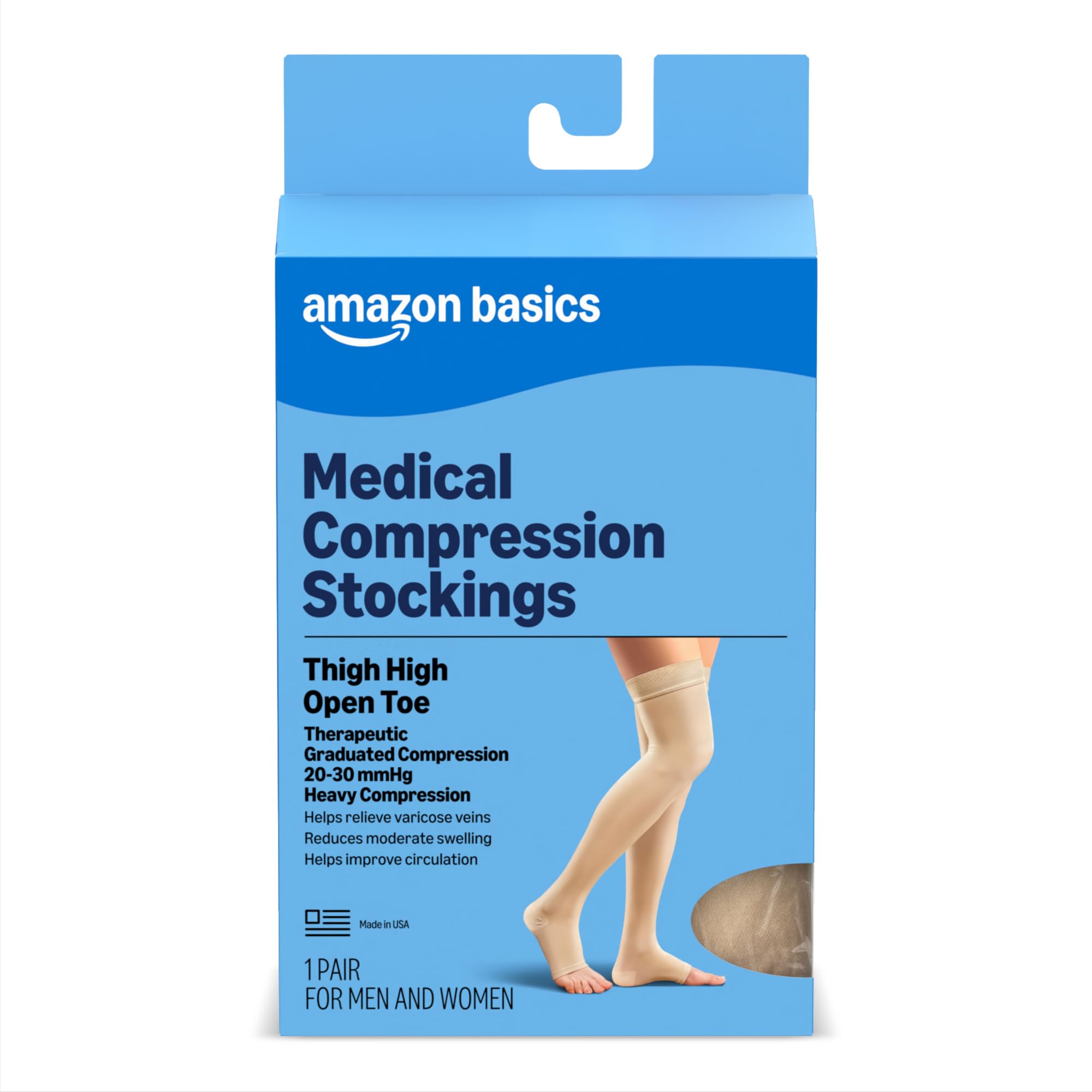
1. Amazon Basics Medical Compression Stockings, Beige, X-Large
Our pick — 4.0+★ from 6,000+ verified ratings; the strongest balance of quality and price.
The open-toe thigh-high that conceals while it squeezes, at a fraction of boutique prices.
If your POTS plan needs one reliable pair of thigh-highs you can wear under trousers without announcing itself, this is the pair that earns the top spot. The squeeze is a firm 20-30 mmHg — the real medical range that pushes blood back up toward your heart when you stand. The fabric is a unisex opaque blend of 83% nylon and 17% spandex, so it looks like a normal stocking, not a hospital garment. The open toe is the quiet win here: it lets you check circulation easily and stays cooler through a long day.
The stay-in-place design is why it leads this list. A silicone grip dot-top lining runs along the top edge to fight rolling, and a knit heel pocket anchors the garment so it does not creep down your leg. Both matter for POTS, because a stocking that rolls into a tight band at the thigh is worse than no compression at all. The compression itself is the second-most talked-about strength — smooth, graduated, and strong enough that you feel it working without it feeling punishing. It is made in the USA from hospital-grade yarns and comes in at 4.66 ounces, the lightest thigh-high on this list and about half the heft of the Totexil pair.
The honest catch is fit and staying power, the two things buyers mention most and the two that split opinion. Some legs stay perfectly put; others find the top slides, especially on a longer or thicker thigh. The sizing runs X-Large only on this listing, so if your thigh measurement is outside that window, look at the Totexil pair instead. Treat the top band gently when you pull it on and it will hold better. For a first serious compression garment, this is the pair to start with.
firm graduated squeeze
- Firm 20-30 mmHg graduated squeeze — real medical pressure, not a comfort sock
- Silicone grip dot-top and knit heel pocket work together to stop rolling and creeping
- Open toe makes circulation checks and warm days easier
- Opaque unisex fabric hides under clothes; 4.66 ounces is the lightest thigh-high here
sizing runs tricky
- Top band can slide on longer or thicker thighs — the most common gripe
- Getting the fit right is the make-or-break; measure before buying
- Some find the durability shorter than expected with heavy washing
everyday standby: It is the best starting point for POTS daily wear — firm graduated pressure, a top that mostly stays, and a price that lets you test the waters without regret.
check the chart: Your thigh sits outside the X-Large window, or you need full pantyhose coverage.
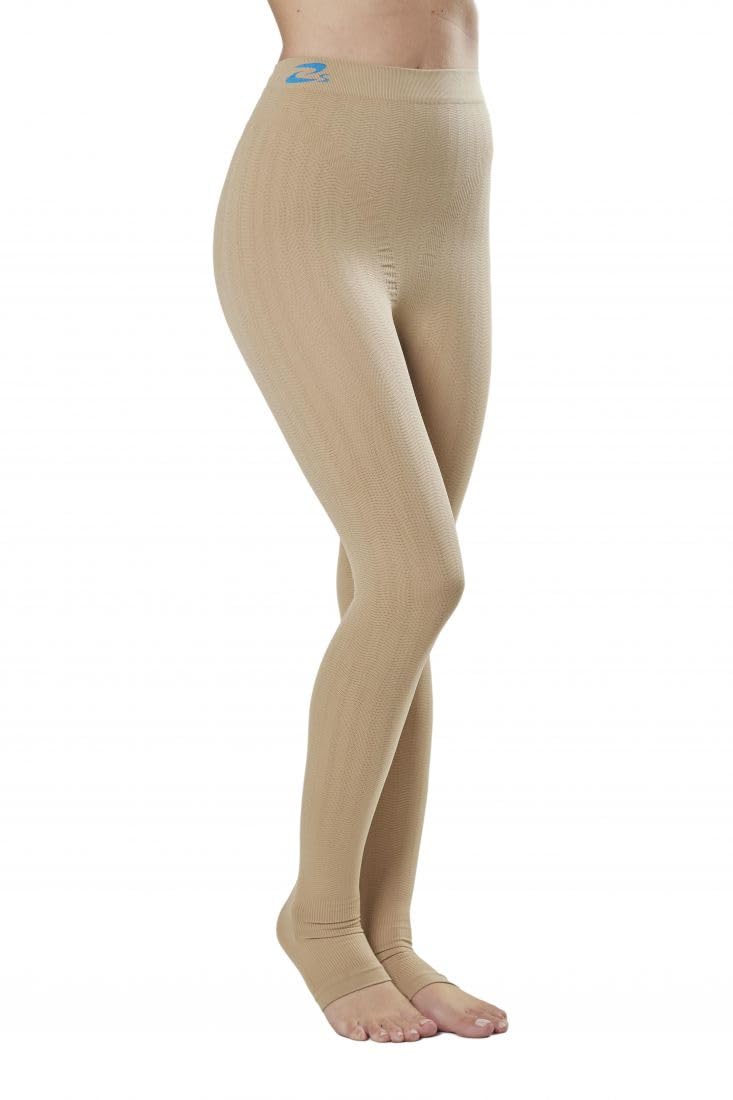
2. CzSalus Flat Knit K2 Leggings
A waist-high, mid-foot legging that hugs from belly to arch and treats POTS as the target, not an afterthought.
This is the pick that names POTS on the box. It is a K2 class compression legging — 25-30 mmHg, a firmer class than the 20-30 mmHg thigh-highs — built with a reinforced structure for higher-stage lipedema and lymphedema. The fabric is an Italian-made microfibre blend of 80% polyamide and 20% elastan that is breathable, soft, and elastic. It runs from a high waist all the way down to mid-foot, so it covers the whole leg in one piece instead of a separate stocking and a gripper band.
For POTS specifically, the waist-high cut is the argument. The lumbar compression gives your midsection the same gentle squeeze as your legs, which helps if blood pools in your pelvis as well as your calves. The knit’s raised texture is treated to cut sweat odor — a real comfort point for anyone wearing compression all day.
The trade-off is sizing and getting them on. This listing is the “Ls” short-leg version, and the sizing leans small — plenty of buyers end up a size up from the chart. Pulling a firm 25-30 mmHg legging over your foot takes patience, especially first thing in the morning when your legs are their fullest. Once they are up, they sit well and the compression feels supportive rather than restrictive. If you want a single piece of kit that covers hips, thighs, and calves in one honest squeeze, this is the premium pick worth the stretch.
flat knit support
- Firm K2 25-30 mmHg squeeze, a notch above the standard 20-30 mmHg thigh-highs
- High waist to mid-foot coverage covers pelvis and calves in one piece
- Breathable, soft Italian microfibre with odor-treated fabric
- Flat knit keeps seams off the back of the knee
pricier pick
- Sizing runs small versus the chart — size up if you are near a boundary
- Firm squeeze makes them a workout to get on, especially at the start of the day
- A small number report the knit wearing thin with heavy use
lymphedema choice: Anyone whose POTS symptoms live in the hips and belly as much as the calves, and who wants one garment to do the whole job.
budget matters: You need an easy-on, easy-off option for bad days — the firm class is a commitment.
3. Bioflect Capri Compression Leggings with Bioactive Fibers

A capri that skips the hospital look and uses a raised knit to mimic a gentle massage all day long.
The Bioflect is the pick for the POTS buyer whose legs are too sensitive for a stiff surgical stocking. It uses a medium compression level — noticeably lighter than the firm 20-30 mmHg pairs above — paired with a 3D raised knit that creates diversified pressure points along the skin. That 3D knit is the whole idea: it creates diversified pressure points that act like a continuous micro-massage while you go about your day. The capri cut stops below the knee, so it is a good choice if you already have a calf-only need or if thigh-highs have failed you on fit.
What wins people over is the comfort. The fabric is a mix of bio ceramic material and a soft knit, and the waist sits high enough to cover the belly without digging. For POTS, the lower squeeze is actually an advantage if you cannot tolerate the firmer classes — and the waist coverage helps with pelvic pooling. The swelling-reduction reports are the standout: users with lymphedema and lipedema describe real relief from the bioactive knit. It is soft enough to wear under jeans and breathable enough for a full day.
The flip side is durability. The knit is the star of this garment, but the same construction is fragile at the seams for some buyers, and the waistband can loosen over time. The capri length also means it does nothing for calf compression unless you add a sock. If your main need is belly and thigh support with a soft, massaging feel, this delivers. If you need maximum squeeze, go firmer.
bioactive fiber weave: The comfort gets the most love and the swelling relief is the standout use case — this is the pair people reach for when a firm stocking feels like too much. The fit splits opinion mainly around the waist: some find it snug and supportive, others say the waistband does not stay put.
capri length limits: It is the priciest pick here despite being a medium compression. You are paying for the bioactive knit and the soft feel, not for maximum mmHg. The seam durability is the recurring complaint, so wash it gently.
active wearer: You want compression that feels like comfort clothing and covers the belly and thighs. want full length: You need firm calf pressure or you are hard on seams.
4. Mojo Women Compression Shorts 20-30mmHg Graduated Support

The short that brings graduated 20-30 mmHg pressure to the thigh — built for the POTS days you still want to move.
Most compression garments for POTS stop at the knee or run to the foot. The Mojo takes a different route: it is a shorts version with a graduated 20-30 mmHg squeeze aimed at the thigh. Graduated means the pressure eases as it climbs, which is the same principle that makes a medical stocking work — it just targets the upper leg. If your pooling or heaviness is concentrated in the thighs, or if you want compression you can wear to the gym or under a skirt, this is the shape that makes sense.
The compression is the defining strength, and it is the thing owners talk about first — pressure on the thighs is firm and supportive during workouts, with relief from heaviness reported. The shorts are long enough to stay engaged at the top of the hamstring, and the fabric blend holds its shape. For POTS, the leg-focused squeeze is useful before a walk or a standing session when you want support but cannot face a full legging. It is also the easiest garment on this list to get on and off, which matters on a bad morning.
The honest limit is sizing. The shorts run small and the size chart is not reliable — the pattern across reviews is to go up a size or two, especially around the waist. The waist coverage is also on the short side, so if you want a high-waist hug, this will not give it. Seams on the leg can rub for a few buyers. Get past the sizing and you have a genuinely useful thigh-support short.
What you get
A firm graduated 20-30 mmHg thigh squeeze, easier on/off than a full legging, and a shape that works under workouts and casual wear.
What to watch
Sizing runs small with an unreliable chart, waist coverage is modest, and leg seams can rub on longer wear.
summer option: Choose these if your heaviness is thigh-focused and you want compression around activity. need thigh high: You need waist-high coverage or calf-to-foot squeeze.
5. Totexil Thigh High Compression Socks 20-30mmHg (2 Pairs)
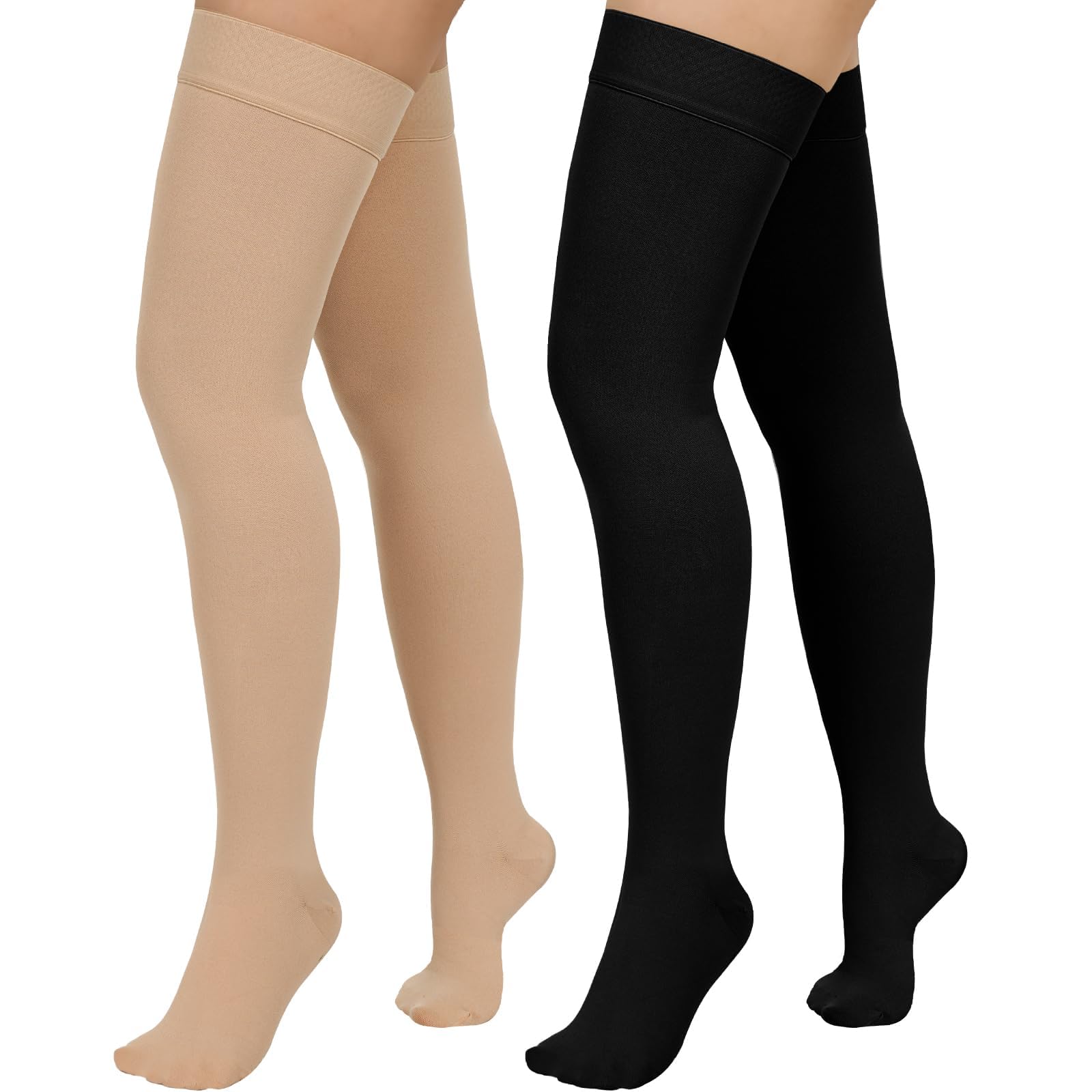
Two pairs, a silicone dot band, and a 20-30 mmHg squeeze that runs from toes to thigh.
If you want options in the box, the Totexil is the only pick here that gives you two pairs at once, in closed or open toe and in black, beige, or mixed outfits. The compression is a graded 20-30 mmHg running from the toes to the thigh — the same firm class as the Amazon Basics pair, but with a closed toe option for anyone who prefers full foot coverage. The air-covered spandex and nylon blend is designed to breathe, and the silicone dotted band is there to hold the top in place without cutting in.
The build quality earns the most praise here, and the band is the reason — many owners say the socks stay where you put them through a full shift. For POTS, that staying power matters as much as the pressure itself, because a thigh-high that rolls becomes a pressure band you have to remove. It comes in sizes from M to 2XL, which gives more fit range than the single-size Amazon Basics listing. A pair of these at 9.14 ounces feels substantial but still breathable.
The catch is length and fit. Plenty of buyers find the socks run long and the size chart runs large — if you are between sizes, order down, not up. The band also slides for some, particularly on a shorter thigh, and the foot seams can irritate. Get the size right and the two-pair value and the closed-toe option are hard to argue with.
two pair value: The silicone band and the 20-30 mmHg graduation are the plain-language reason these stay up when cheaper thigh-highs roll down. The two-pair pack means you can wear one while the other washes.
thigh band slip: Sizing is the most-discussed issue — the socks run large and long, so measure carefully and size down on the edge. Seams in the foot can rub on a long day.
stock up: You want a firm thigh-high with a band that mostly holds and a second pair in reserve. band grip issues: You have a short leg and need true-to-length fit without guesswork.
6. 20-30mmHg Compression Pantyhose for Women, High Waist Opaque
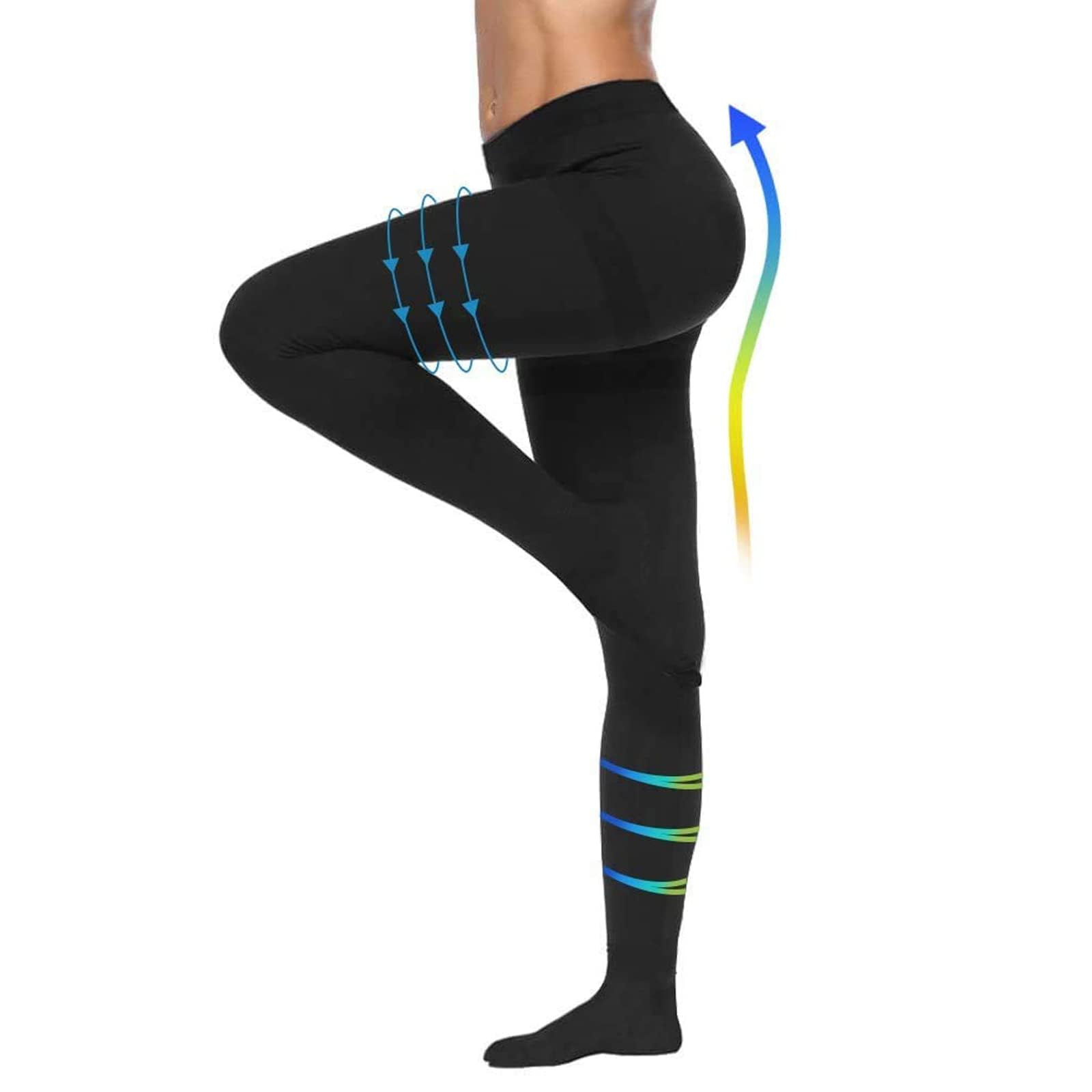
A high-waist opaque pantyhose that squeezes at 20-30 mmHg and hides the work under a dress.
This is the pair for the days you want full-leg support under a skirt or dress without a visible stocking line. The compression is a solid 20-30 mmHg — the same firm class as the top pick — in a high-waist opaque tights shape. That high waist is the practical difference: it covers the belly and pelvis, which helps if your POTS brings pooling higher up than just the calves. The opaque fabric means you can wear it as fashion, not just therapy.
The 20-30 mmHg compression is the consensus strength, described as effective for leg heaviness and swelling. The garment sits high and stays put for many wearers, and the fact that it is genuinely opaque means it earns its place in a work wardrobe. As a budget entry to firm full-leg compression, it does the job without a specialty price. It covers the full leg in one piece, which some find easier to manage than a separate thigh-high and sock.
The trade-off shows up in getting them on and in sizing. The tights are tricky to pull up, and the fit is unforgiving on thighs and belly if you pick the wrong size. The fabric can feel itchy to sensitive skin. Measure your ankle, knee, and thigh before you order and the picture improves a lot. For the light-duty full-leg day, it is a sensible budget buy.
full coverage: A good full-leg firm pair for dressing up or dressing smart, especially if you want one piece covering high-waist to foot. hate high waist: Putting them on takes effort and the size must be right, or the thighs and belly feel over-squeezed.
7. 15-20mmHg Compression Pantyhose Stockings (2 Pairs)

The gentlest squeeze on the list — a light 15-20 mmHg that is easier to live with on a low-symptom day.
Not every POTS day calls for firm pressure, and this two-pair pack is the choice for the days you want gentle support rather than a serious squeeze. At 15-20 mmHg it is the lightest garment here — noticeably lighter than the 20-30 mmHg class that runs through the top picks. The fabric is 80% nylon and 20% spandex for stretch and durability, in a flattering high-waist design that sits securely. If firm compression makes you claustrophobic or you are easing into compression therapy, start here.
The value is the point: two pairs at a light-duty level, in a high-waist shape that covers the belly as well as the legs. The sizing guidance is unusually clear — measure ankle, knee, and thigh and use the chart, with a note that larger body types should size down one to two sizes for the right squeeze. For POTS, the lighter class is a realistic everyday option if your symptoms are milder, and it is much easier to pull on than a 20-30 mmHg tight. The high waist helps with the pooling that creeps up to the pelvis.
The honest catch is that light compression is light — if you need real support, this will not move enough blood to notice. The durability is also the weak spot: the crotch and waist can fray or run within a short time. The thighs and belly can feel tight if the size is off. For a low-symptom day or a first step into compression, it is a fair budget pick.
travel days: Your symptoms are mild and you want an easy-on, easy-off full-leg option with two pairs in the pack. need firm hold: You need firm 20-30 mmHg pressure or long-term durability.
Know the Specs
mmHg — the pressure you feel
mmHg stands for millimeters of mercury, the unit that measures how hard a garment squeezes. A light stocking is 15-20 mmHg and easier to wear; a firm stocking is 20-30 mmHg and moves more blood back up toward your heart. For POTS daily wear, the 20-30 mmHg range is the one most often recommended, because it applies enough pressure to counter pooling without squeezing like a tourniquet. If you are new to compression or your symptoms are mild, start light and work up.
Graduated compression
A graduated garment is tightest at the ankle and loosens as it climbs the leg. That descending pressure is what pushes fluid and blood upward — the opposite of the pooling that causes POTS symptoms when you stand. A non-graduated tight with even squeeze all the way up can feel like a tourniquet and does not help circulation the same way. When you compare products, check that the description says “graduated” and that the pressure is expressed as a range, such as 20-30 mmHg.
Silicone grip vs plain band
A silicone dot band is a strip of small silicone bumps along the top edge of a thigh-high that grips the skin and stops the garment rolling down. A plain elastic band relies on tension alone and is more likely to slide, especially on a longer or thicker thigh. A rolled-down thigh-high is worse than no compression because it concentrates all the pressure in one tight ring. If you choose thigh-highs over leggings, the grip band is worth checking for.
Open toe vs closed toe
An open-toe stocking leaves the toes and the end of the foot free, which makes it easier to check circulation and keeps the foot cooler. A closed-toe stocking covers the whole foot and gives full-foot compression, which some prefer for all-day wear. The trade-off is that a closed toe can be hotter and the seams at the toes can rub. For POTS, either works — pick the toe that matches your climate and comfort.
Common Questions
What compression level is best for POTS?
Will thigh-highs stay up all day?
Are compression shorts enough for POTS or do I need full-leg coverage?
How do I measure for compression garments?
Can I wear compression garments all day with POTS?
Should I choose open toe or closed toe for POTS?
How do I put on tight compression leggings without help?
Do compression garments lose their squeeze over time?
Is 15-20 mmHg enough for POTS?
Can I wear compression garments under normal clothes?
The Bottom Line
For most people with POTS, the Amazon Basics Medical Compression Stockings is the pick that gets the core job done: firm 20-30 mmHg graduated pressure, a silicone grip band to stay up, and an open toe to keep cool. If you need full-leg coverage that treats POTS as the target, the CzSalus Flat Knit K2 Leggings is the premium choice for waist-high squeeze. And for the sensitive-leg days when firm stockings are too much, the Bioflect Capri Leggings brings comfort and belly coverage without the hospital feel — one honest, fact-anchored nudge is to start with the highest-rated firm pair and add a lighter option for low-symptom days.
How we choose
We do not accept paid placement. Every pick is matched to a real buyer and a real use-case; we do not hands-on test units.
Sources
Specifications: manufacturer listings and product documentation. Review insights: verified customer reviews, as of November 2026. Pricing: not shown on this page (it changes often); check the current price via the retailer link.
As an Amazon Associate, My Heart Lives Here earns from qualifying purchases. This does not affect which products we feature.