Heads up: This post contains affiliate links. As an Amazon Associate I earn from qualifying purchases, at no extra cost to you. Learn more
Specs are compiled from manufacturer listings and verified buyer reviews and can change over time — please confirm the key details on the product page before buying.
You want a small camera that takes better photos than your phone, and you do not want to spend a fortune on it. The good news is that a real point-and-shoot still beats a phone on optical zoom and a proper grip-and-shutter feel. The bad news is that cheap cameras pad their spec sheets with 80MP stills and 5K video claims that mean very little. This guide sorts the honest picks from the inflated spec sheets.
This guide is built by comparing the manufacturers’ published specifications and the patterns across verified customer reviews, so you get each pick’s real strengths and trade-offs instead of marketing spin.
What follows ranks eight compact cameras by what they actually do well, from a travel zoom that slips in a pocket to a superzoom that pulls the moon in close. best affordable point and shoot camera choices come down to one question, and that question is not megapixels.
Top Picks
How To Choose The Best Affordable Point and Shoot Camera
A compact camera earns its place in your bag with optical zoom your phone cannot match. Usually that something is reach: a lens that goes from a wide room shot to a tight close-up without walking closer. Read the next four points before you buy anything.
Optical zoom versus digital zoom
Optical zoom is the physical lens moving, and it keeps full detail all the way out. Digital zoom is the camera cropping and enlarging the middle of the frame, which softens the picture as you go. A camera listing 50x optical is doing real work at 50x. A camera listing 16x digital is only enlarging the centre of the frame. Look for the word “optical” and the millimetre range, like 24-720mm, to know what you are getting.
Sensor size beats megapixel count
An 80MP still from a tiny sensor does not beat a 16MP still from a larger one, because each pixel collects less light. A 1/2.3-inch sensor is a common compact size, and it handles daylight well and indoor light less well. If most of your shooting happens outdoors or in well-lit rooms, that trade-off is fine. If you shoot a lot at night, buy for the lens and the stabilization, not the megapixel number.
Video claims need a frame rate
4K video at 30p looks smooth and natural. 5K video at 15fps looks choppy the moment anything in the frame moves, because 15 frames per second is too few for motion. When a listing brags about resolution, find the frame rate right beside it and judge the pair together.
Count what ships in the box
A spare battery and a memory card cost real money on their own, so a bundle with both is worth more than the sticker suggests. Check the card size too, since 32GB and 64GB hold different amounts of photos and 4K clips. Cameras that include a case and a charger are ready to shoot the day they arrive.
Side-by-Side Comparison
| Model | Best For | Optical Zoom | Still Resolution | Video | Amazon |
|---|---|---|---|---|---|
| 5K Digital Camera (Gavonde)★ Best Overall | Budget vlogging starter | 12x | 80 mp | 5K at 15fps | Amazon |
| MND70 Retro Wi-Fi (Minolta)Retro Styling | Retro styling on a budget | 16x digital | 48MP | 5K | Amazon |
| KODAK PIXPRO FZ55 BundleValue Winner | Best value all-rounder | 5X | 16MP | 1080p Full HD | Amazon |
| Canon PowerShot SX530 HS (Renewed) | Long-range moon shots | 50x | 16.0 MP | 1080p Full HD | Amazon |
| Kodak PIXPRO AZ425 Bundle | Big-zoom gift bundle | 42x | 20MP | 720p at 30 fps | Amazon |
| Panasonic 4K Travel Camera | Bright-sun viewfinder | 60x | 8-megapixel from 4K Photo | 4K | Amazon |
| Canon PowerShot ELPH 360 HS A Bundle | Pocket-sized go-anywhere | 12x | 20.2MP | 1080p at 30 fps | Amazon |
| Panasonic LUMIX TZ/ZS99 | Travel and concerts | 30x | 4K PHOTO | 4K at 30p | Amazon |
Detailed Reviews
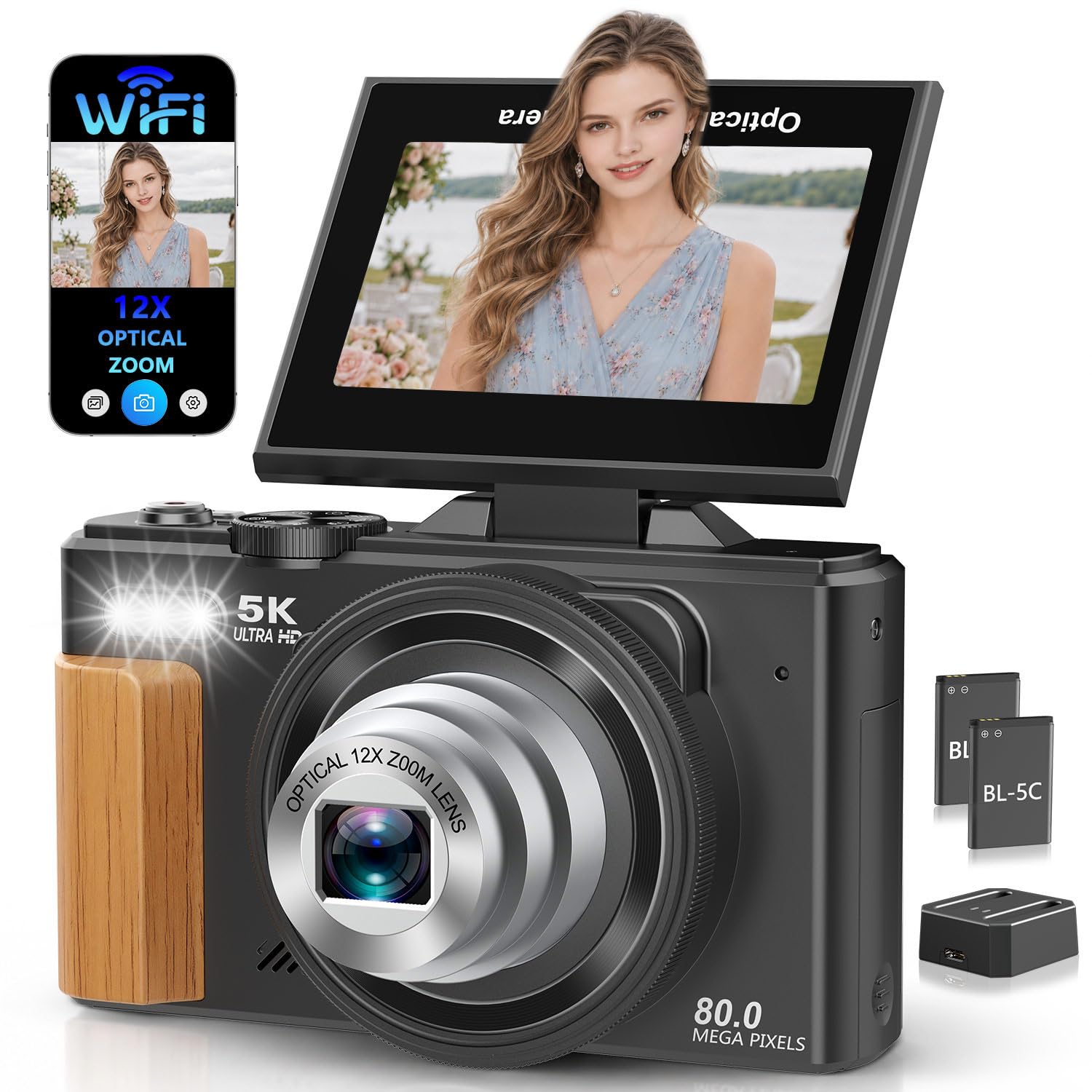
1. Gavonde 5K Digital Camera
A true optical zoom, a flip screen and two batteries make this the starter kit worth considering.
Here is the spec that matters: a real 12x optical zoom from a retractable lens, which physically extends to pull distant subjects closer without cropping. That lens also retracts to protect the glass from dust and scratches when the camera rides in a bag. Most cheap cameras in this space only offer digital zoom, so an optical 12x puts this one in a different class.
For selfies and on-the-go filming, the 3-inch 180° flip screen swings the frame around so you can see yourself while you shoot — genuinely useful if you are posting travel clips or keeping a video diary. Built-in Wi-Fi pushes shots to your phone for sharing. Two 1150mAh rechargeable batteries ship with the camera along with a 16GB card, so you are not shopping for accessories on day one.
Now the honest part. The 5K video mode runs at 15fps, and 15 frames per second is too sluggish for anything with movement in it, so treat 4K-style smoothness as out of reach here. The 80MP still claim is a big number on a tiny sensor and won’t rescue low light. This is a good first camera at a fair entry price — not a substitute for a larger-sensor build.
Where this camera earns its place
- Real 12x optical zoom with a retractable lens for protection
- Two 1150mAh batteries plus a 16GB card and charger in the box
- 3-inch 180° flip screen for selfies and vlog framing
- Built-in Wi-Fi for phone transfers
The catch to weigh
- 5K video runs at 15fps, so fast motion turns choppy
- The 80MP still number comes from a very small sensor
Take this one if: you want a real optical zoom and a flip screen for travel clips and selfies without stretching to a premium price.
Look past it if: smooth action footage is the goal — the 15fps 5K mode will not deliver it.
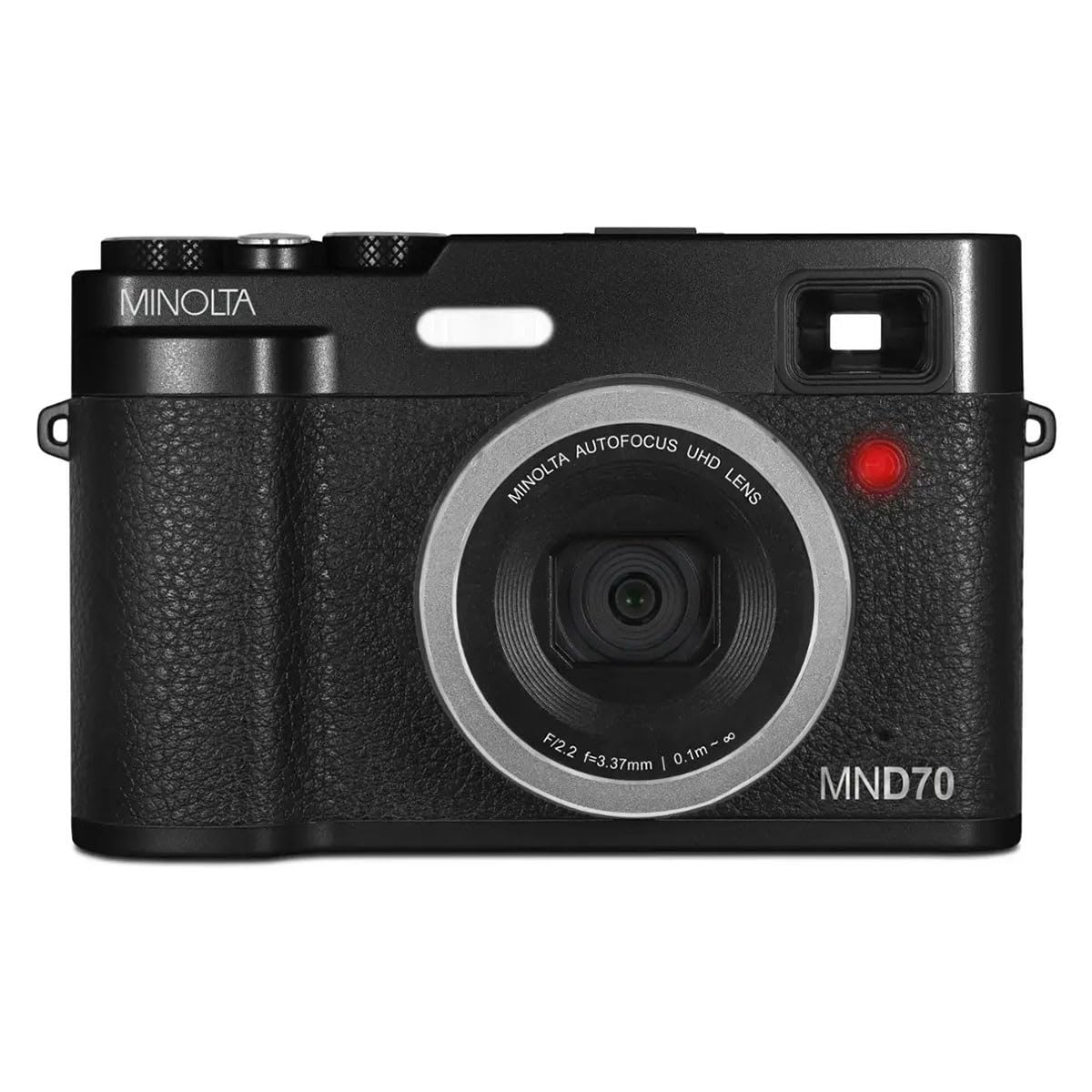
2. MND70 Retro Wi-Fi UHD Dual Lens Digital Camera, Black
A retro body with a 48MP sensor and a 5K video spec, wrapped in a case you either love or don’t.
This camera is trying to sell the film-era feel. The body wears a retro shell, and the shot list includes a 48MP sensor for high-resolution stills, 5K UHD video, and a 16x digital zoom. There is a dual-lens design, burst mode at up to 5 frames per second, and built-in Wi-Fi for phone transfers.
It is a hybrid autofocus camera with a single autofocus point. That single point is the honest dividing line — this is a camera that hunts for focus rather than the nearest subject. For portraits and stationary shots it works. For chasing a pet, a toddler, or anything moving quickly, one point is a narrow catch.
The picture quality and file quality complaints run heavy in this camera’s feedback, and the F22 aperture mode is a tight limit that makes low light a challenge. The 5K video spec is ambitious for a camera in this class, and the F22 cap and lack of a flash mean you will be choosing your scenes carefully. If the retro look is the whole point and the shooting is casual, it has charm. If you need reliability across conditions, look to the KODAK FZ55 above for a steadier all-rounder.
What you are paying for: the retro body and the headline 48MP and 5K specs, plus Wi-Fi sharing.
What you compromise: one autofocus point, no flash, and an F22 ceiling that closes off low light — a styling-first choice.
Reach for this if: the retro look is the reason you are buying and your photos are mostly daylight stills.
Pass it by if: a missing flash and a hold-steady autofocus will frustrate you — that’s the honest limit here.
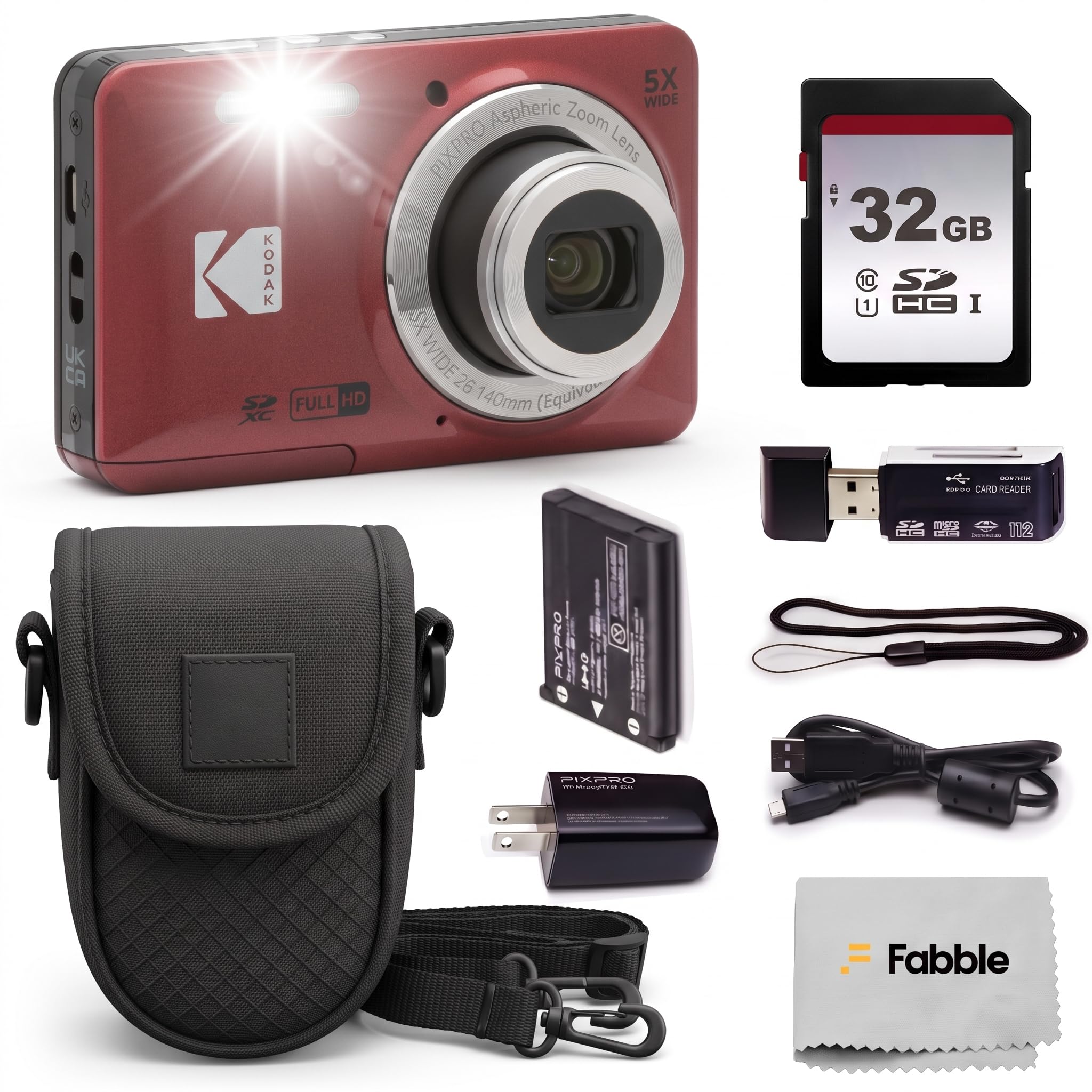
3. KODAK PIXPRO FZ55 Digital Camera
The camera that does the basics well and ships with everything you need.
A 5X optical zoom paired with a 28mm wide-angle lens is the honest spec here. Wide enough to get the whole scene into the frame, tight enough to pull a subject in from a distance. The bundle covers the kit gap too: a 32GB SD card, a protective case, a USB card reader, and cleaning cloth are all in the box.
At 16MP from the sensor, stills come out detailed and colour-rich, and 1080p Full HD video records the moment without fuss. The 2.7-inch LCD handles framing and review with no tricks. The compact size and ease of use are the reasons people keep this one in a travel bag or a jacket pocket.
This is the best-balanced pick in the group: 5X optical zoom, a 32GB card and a case in the box. Unlike the SX530 HS, its 5X optical zoom sits at a fraction of the long-range reach, and unlike the SX530’s much bulkier superzoom build, the FZ55 fits in a small bag without a dedicated case. Value for money and picture quality are what people highlight most, and the small size plus easy operation are the ones that keep it in rotation. If you want a first real camera for travel and family snapshots, this is where a sensible dollar lands.
What makes it a strong buy
- 5X optical zoom plus 28mm wide-angle lens
- 32GB card, case, card reader and cloth all in the bundle
- 16MP stills and 1080p Full HD video
- Compact, pocketable, easy to operate
Know before you buy
- 5X reach is modest — long-range subjects stay small
- 2.7-inch screen is on the smaller side for framing
Best for: a first real camera for travel, family outings, and everyday snapshots — the bundle covers the basics from day one.
Think again if: long-range zoom is a priority — the 5X optical tops out well short of the SX530 HS.
4. Canon PowerShot SX530 HS Digital Camera

A 50x optical lens that pulls the moon into the frame without losing detail.
The headline number is the 50x optical zoom running from 24mm to 1200mm, and that is real optical reach, not a crop. For the price of a compact, this is the kind of focal length that gets you close to distant birds, mountain ridges, and the moon. Put that against the FZ55’s 5X optical and the gap is enormous: 50x versus 5X. For a moon shot or a distant rooftop, there is no contest.
A 16.0MP CMOS sensor paired with the Canon DIGIC 4+ processor handles daylight scenes well, and the 3.0-inch LCD at 461,000 dots is easy to read from a wide angle. Built-in Wi-Fi and NFC move photos to a compatible phone without a cable. There is also 1.6 FPS continuous shooting, an ISO range from 100 to 3200, and 1080p Full HD video with a dedicated movie button.
The caveat is that this is a renewed unit, so it arrives inspected but previously owned. Reliability reports are the mixed part of the picture, with some copies working perfectly and others needing attention. Camera quality and picture quality are the standout strengths here. The long zoom and easy controls are why people like it for a first superzoom. On its telephoto reach, this camera delivers what cheaper pocket models simply cannot, and the moon-shot capability is a fair reason to pick it.
The reach is the whole story: 50x optical from 24mm to 1200mm is a jump the pocket cameras above cannot make.
Consider the source: a renewed unit means prior ownership, so check the return terms before you commit.
Choose it when: distance is the point — birds, mountains, moon shots — and renewed stock with a return window suits you.
Skip it when: you want a brand-new unit with no history, or you mainly shoot wide, close scenes.
5. Kodak PIXPRO AZ425 Digital Camera
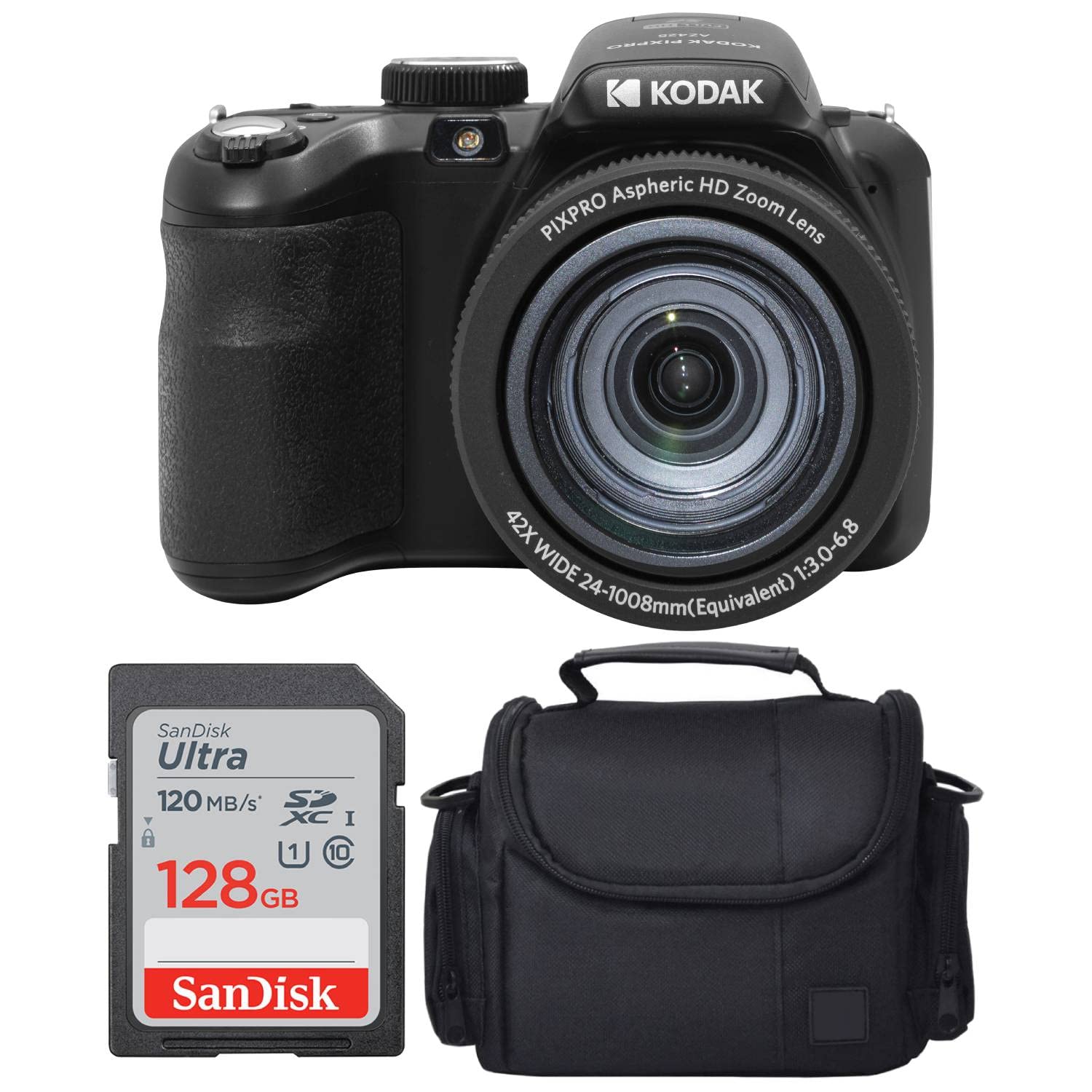
A 42x zoom and a 128GB card make this the gift that arrives ready to use.
Look at the card first: this bundle includes a 128 GB memory card, which is a huge step up from the 16 GB inside the Gavonde vlogging camera. That is a difference of 112 GB, and it means you are not worrying about storage on a long trip. The camera itself runs a 20MP 1/2.3-inch CCD sensor with a 42x optical zoom lens from 24-1008mm equivalent.
Extras round out the package. Optical image stabilization steadies handheld shots, 180° Panorama Mode stitches a wide scene into one frame, and Face, Smile, Blink and Pet Detection handle the subject tracking so you don’t have to. There is a 3.0-inch 460k-dot LCD, a pop-up flash, HD 720p video at 30 fps, and extended ISO from 80-3200. The included case protects the body between outings.
HD 720p video is the honest low note — it captures 720p at 30 fps, which is fine for memories but not sharp on a big screen. That said, the bundle value is hard to argue with: 42x optical zoom for the same money as the FZ55 bundle’s 32GB carries a lot more reach and storage. As a gift, the 42x zoom plus 128GB card and case means no extra shopping.
Reasons to pick the AZ425
- 42x optical zoom covering 24-1008mm equivalent
- 128 GB card, case and camera bundled together
- Optical image stabilization and 180° Panorama Mode
- Face, Smile, Blink and Pet Detection built in
The trade you make
- HD 720p video at 30 fps is the weakest output here
- CCD sensor favours daylight over indoors
Give it to: someone who wants long zoom and lots of storage without buying a bag and card separately.
Hold off if: video is the main job — the 720p at 30 fps output will look soft next to the 4K options.
6. Panasonic Point and Shoot Digital Camera

A bright viewfinder and 60x zoom for shooting in full midday sun.
Shooting at noon on a beach usually means squinting at a washed-out screen. This Panasonic answers that with a 2,360K-dot LVF at 0.74x magnification (35mm camera equivalent) — a true viewfinder you press to your eye, so glare stops being a problem. That plus 4K Video Mode, which records up to 4x the resolution of Full HD, makes it the most capable video camera on this list for daylight travel.
The lens runs 3.58 to 215mm, or 20 to 1200mm in 35mm terms, with POWER O.I.S. (Optical Image Stabilizer) suppressing handshake even at the telephoto end. Autofocus has 39 points. The 4K Photo feature lets you extract an 8-megapixel photo out of a 4K video clip and save it, and Post Focus lets you pick the area you want sharp after the shot. Those two features suit fast scenes you cannot repeat.
The honest side: image quality gets a mixed response, with complaints about softness at high zoom — which is a common trade for a 60x lens. Quality and zoom are the two aspects people praise the most. If you mostly shoot near the wide end it is sharp and fast; if you live at 60x, expect a softer edge and stabilise carefully.
Worth it if: you shoot outdoors in bright light and want a real viewfinder plus 4K video in one travel camera.
Think twice if: you want crisp shots at full telephoto — softness at high zoom is the documented trade.
7. Canon PowerShot ELPH 360 HS Digital Camera
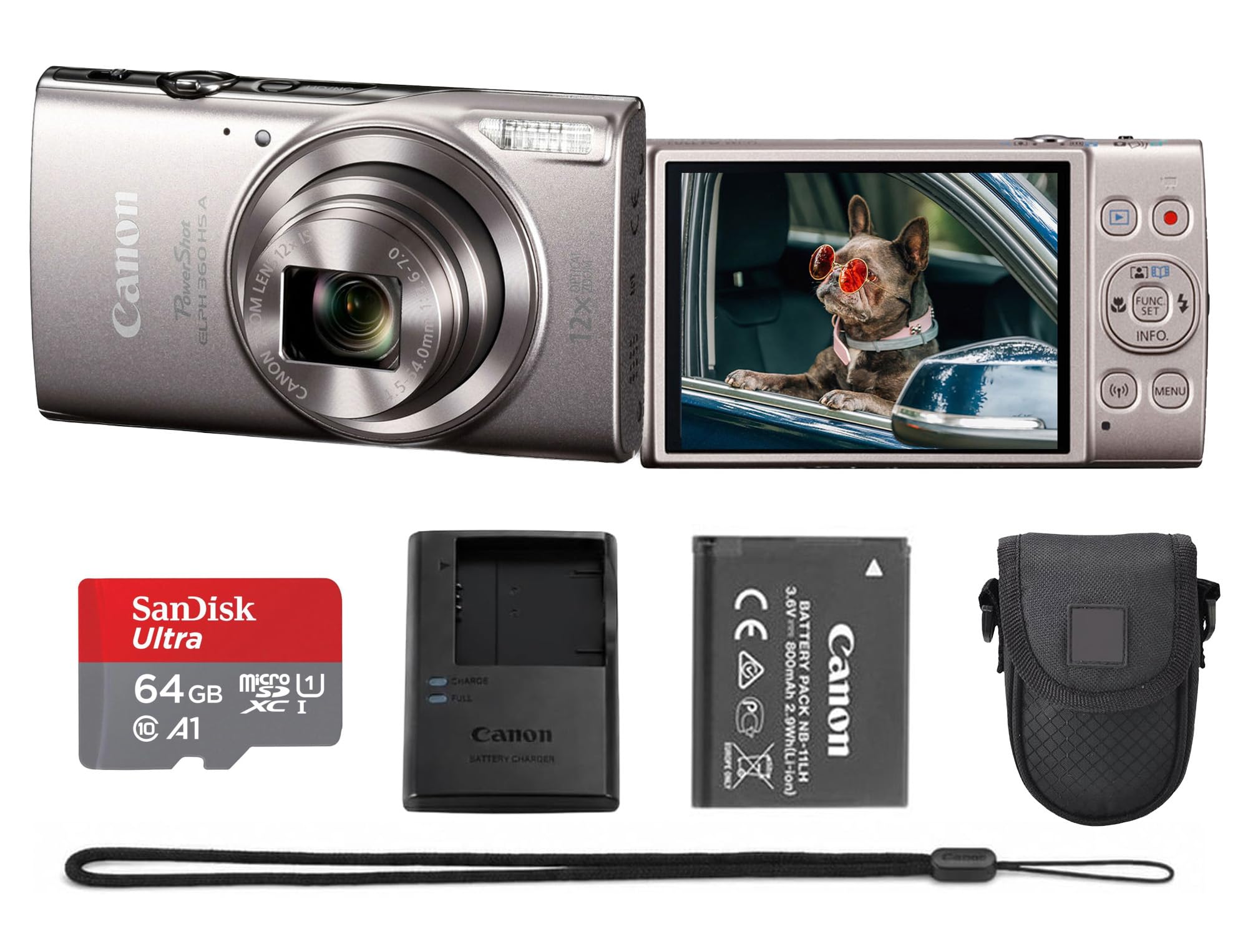
A shirt-pocket Canon that covers 25-300mm and still fits in your jeans.
A 12x optical zoom from 25-300mm equivalent is the useful middle ground here. Wide enough to capture a room or a street scene, long enough to pull in a face across a table. It slides into a pocket without a case, which is the whole reason this ELPH model exists. The Canon USA Authorized bundle adds a 64GB memory card, so you get four times the storage the Gavonde ships with.
Behind that, a 20.2MP CMOS sensor and DIGIC 4+ processor deliver the stills, with Full HD 1080p video at 30 fps and ISO up to 3200. Continuous shooting runs at 7.2 fps. The 3.0-inch 461k-dot LCD is easy to read, and Hybrid Auto, Creative Shot and Story Highlights let you build a short highlight reel right in the camera. Intelligent IS automatically shifts its stabilisation mode between stills and video so shake is handled without menu-diving.
The point worth weighing: picture quality lands in the mixed column. Daylight shots come out sharp and pleasing; low light and indoor scenes are where it slips. What earns it a spot is its size and the 25-300mm zoom in a genuinely pocketable frame.
Pick this if: a camera that disappears into a pocket matters more than a long zoom, and you shoot in decent light.
Weigh the alternative if: zoom reach and value dominate — the Kodak bundles above give more of both for less.
8. Panasonic LUMIX TZ/ZS99 Point and Shoot Camera

A Leica 30x zoom in a body small enough to forget, built for concerts and travel.
Start with the lens. A 24-720mm LEICA lens with 30x optical zoom (and 60x Intelligent Zoom) is a serious focal range in a body that slips into a pocket. Black-out concert venues are exactly the setting this camera is pitched for, and the 1,840k-dot tiltable touchscreen lets you frame a shot from over a crowd or down low without lying on the floor.
The video and connectivity are modern. 4K video at 30p is smooth and sharp, and 4K PHOTO at 30fps captures a burst of full-resolution stills from one press. HD high-speed video at 120fps gives you slow-motion clips. Universal USB Type-C charging keeps it topped up on the go, and Bluetooth v5.0 with a dedicated Send Image button moves shots wirelessly to your phone through the Panasonic Image App. The menu offers full PASM modes and a huge variety of settings.
Image quality is the honest split, and menus get flagged as a friction point. In good light and with a steady hand it produces good images; in poor light and at full zoom it can disappoint. A 30x lens makes that trade by design. For a travel and concert camera you carry every day, buyers highlight the size, functionality and interface, which keeps it clipped to a bag rather than left at home.
The pocket-to-telephoto advantage: a 24-720mm Leica lens plus 4K at 30p is a lot of capability in a body this small — the TZ/ZS99 is the most portable long-zoom here.
Fit note: image quality is inconsistent in low light and at full zoom, and the menu system takes time to learn.
This one fits: a traveler or concert-goer who wants long zoom, 4K video, and easy phone sharing in one compact body.
Look elsewhere if: you shoot a lot in dark venues — low-light image quality is the weak spot.
Know the Specs
Optical zoom (the mm range)
A 24-720mm lens means you can go from a wide scene (24mm) to a long telephoto (720mm) with real detail the whole way. When a listing says “50x optical,” that is the ratio between the two ends. The lens physically moves, which is why optical zoom keeps sharpness. Digital zoom, by contrast, just crops the frame and enlarges it. Where a listing only names a digital zoom number, like 16x digital, that number does not add reach — it only enlarges what is already there.
Sensor size and the megapixel trap
A sensor marked 1/2.3-inch is a standard compact size. It captures plenty of detail in daylight but struggles indoors. The megapixel number is the total light-sensitive points, and pushing 20MP or 80MP into that small space makes each point smaller and noisier in low light. An 80MP still on a tiny sensor will not beat a 16MP still from a larger one. Judge the sensor size first, then the megapixels.
Frame rate (fps) on video
Frames per second is how many still pictures the camera captures to build one second of video. At 30fps (30p) motion looks natural. At 15fps, fast movement looks jerky — good for a slow slide-show feel, poor for sport. A listing that says 5K at 15fps is honest but not smooth. A listing that says 4K at 30p is saying each second is built from 30 frames.
Battery capacity and in-box extras
Battery capacity is listed in mAh, or milli-amp-hours — a bigger number means a longer run. A dual-battery bundle like the 1150mAh pair in the Gavonde means one extra charge before you pack a charger. Memory card size, 16GB to 128GB, sets how many photos and clips you can carry. Bundles that include a card and a case save you a separate trip.
Common Questions
Is a 50x optical zoom better than a 30x zoom for everyday travel?
Do I need a real optical zoom, or is digital zoom enough?
Why does an 80MP camera sometimes look worse than a 16MP camera?
What does 5K video at 15fps actually look like?
Can I transfer photos from these cameras to my phone without a cable?
Is a renewed camera like the SX530 HS safe to buy?
Do I need a memory card, and how big should it be?
Which of these cameras is best for night or low-light photos?
Do any of these cameras have a viewfinder instead of just a screen?
Can any of these double as a webcam for video calls?
The Bottom Line
For most people looking for the affordable point and shoot camera that covers the most ground, the KODAK PIXPRO FZ55 is the safest buy: a 5X optical zoom, a 32GB card and a case in the box, and a size that actually travels. If long-range reach is the world you want — birds, moon, distant landmarks — the Canon PowerShot SX530 HS gives you 50x optical zoom where the pocket cameras stop at 5X. And if you want to carry as little as possible while still having a real zoom, the Panasonic LUMIX TZ/ZS99 packs 30x and 4K video into the smallest frame here.
How we choose
We do not accept paid placement. Every pick is matched to a real buyer and a real use-case; we do not hands-on test units.
Sources
Specifications: manufacturer listings and product documentation. Review insights: verified customer reviews, as of November 2026. Pricing: not shown on this page (it changes often); check the current price via the retailer link.
As an Amazon Associate, My Heart Lives Here earns from qualifying purchases. This does not affect which products we feature.