Heads up: This post contains affiliate links. As an Amazon Associate I earn from qualifying purchases, at no extra cost to you. Learn more
Specs are compiled from manufacturer listings and verified buyer reviews and can change over time — please confirm the key details on the product page before buying.
The 400m is the cruelest sprint on the oval: you leave the blocks at 100m speed and still have a full lap of turns ahead of you. So the right spike is not the lightest or the flashiest one — it is the pair that keeps your foot locked down through the bend while a stiff plate pushes you forward, not sideways. This guide breaks down seven sprint spikes by plate type, upper, spike count and fit, so you can pick the pair that matches how you actually run.
This guide is built by comparing the manufacturers’ published specifications and the patterns across verified customer reviews, so you get each pick’s real strengths and trade-offs instead of marketing spin.
You will see which plates suit a 400m runner versus a pure 100m dasher, where sizing runs tight, and which pairs arrive ready to race. Every pick here is a genuine sprint spike, and the goal is simple: match the shoe to your event, your foot, and your budget tier. The right pair of 400m spikes should feel planted through the bend and still snap you out of the blocks fast.
Top Picks


How To Choose The Best 400m Spikes
The 400m punishes a shoe that only does one thing well. You need a plate (the stiff layer under your forefoot) stiff enough to launch you out of the blocks. You need a lockdown upper that keeps your foot from sliding through the turn. And you need a fit with a little room so your toes do not jam on the final straight. Here is what actually matters when you compare pairs.
Match the plate to the distance
The plate is the stiff layer under your forefoot that stores energy and springs you forward. Pure sprinters who stay on their toes the whole race often pick a full-length or three-quarter-length plate with an aggressive, snappy feel. A Pebax plate outsole is a lightweight plastic plate that transfers force efficiently without adding bulk. Decide first if you want maximum snap or a touch more forgiveness for the longer sprint.
Spike pin count and traction on the bend
Replaceable pins are what dig into the rubber track surface and stop your feet slipping as you lean into a curve. A six-pin TPU spike plate digs aggressively and converts force into forward propulsion, which helps during explosive starts and curve transitions. Check whether the pair ships with a spike wrench and a spare set of pins, because a few listings ship the shoe without them.
Upper material and foot lockdown
A sprint web mesh or breathable synthetic upper wraps the foot and holds it in place, which matters most when you are fighting centrifugal pull through the bend. Look for a secure lace closure and a midfoot band if you want extra containment through the arch. Breathability keeps the shoe from getting heavy once you start sweating.
Sizing — the most common mistake
Sprint spikes are meant to fit snug, so many runners size up out of habit and end up sliding. At the same time, several of the pairs here run small and narrow, so a half size up is sometimes the honest answer. If you are between sizes and racing the 400m, lean toward the roomier fit rather than the tightest one.
Side-by-Side Comparison
Every pair below is a genuine sprint spike. Scan the plate type, pin count and listed weight to see which one matches your event and your foot, then read the full review.
| Model | Best For | Plate / Outsole | Spike Pins | Listed Weight | Amazon |
|---|---|---|---|---|---|
| adidas Performance Men’s sprintstar Track Shoe★ Best Overall | 400m specialists and technical sprinters | Pebax plate outsole | — | 4 ounces | Amazon |
| Nike Mens Rival Multi Track & Field Multi-Event SpikesMulti-Event Pick | Multi-event athletes racing several disciplines | Forefoot plate | — | — | Amazon |
| Adidas Unisex-Adult Adizero Sprintstar Track and Field | Record-chasing sprinters who want a stiff plate | 6-pin TPU spike plate | 6-pin | 2.43 pounds | Amazon |
| Nike Women’s Air Zoom Victory Athletics Shoes | 800m–5,000m racers wanting energy return | Carbon fiber plate with Zoom Air | — | 4 ounces | Amazon |
| ASICS Unisex Hypersprint 8 Track & Field Shoe | Short-distance sprinters chasing a personal best | Resin plate | — | 1.44 pounds | Amazon |
| Nike Rival Sprint Track & Field Sprinting Spikes | Pure sprinters who stay on their toes | 3/4-length plate | 6 replaceable | — | Amazon |
| Nike Air Zoom Maxfly 2 Track & Field Sprinting Spikes | Elite-level sprint racing | — | — | — | Amazon |
Detailed Reviews
1. adidas Performance Men’s sprintstar Track Shoe
Our pick — 4.5+★ from 500+ verified ratings; the strongest balance of quality and price.
A four-ounce sprint spike built specifically for events up to 400 meters.
The adidas Sprintstar was engineered from the start for the race this article is about. The maker states these men’s sprint spikes are designed for events up to 400 meters, so you are not adapting a pure 100m shoe to a longer race. A Pebax plate outsole — a lightweight plastic plate that springs your foot forward — handles the energy transfer, while the light, breathable sprint web mesh upper locks the foot in place through the bend. That combination is precisely what a 400m runner needs: planted on the curve, quick off the straight.
Owners agree on the track performance, particularly for 100 and 200m sprinting, and describe the shoe as good value with strong looks. The thing everyone notes is the spike hardware itself: while some consider these perfect for all-purpose track use, others report receiving them without spikes. So open the box and check the pins before race day rather than the morning of the meet. An occasional unit arrives without hardware, so order early enough to sort it out.
On the scale, the shoe is listed at 4 ounces, and the maker lists it as a men’s department model. Buyers report the setup works well for sprint training and racing alike, which is a lot of flexibility for a single pair of spikes. It is a purpose-built 400m spike, not a general-purpose trainer.
What earns it the top spot
- Built specifically for events up to 400 meters, matching the race exactly
- Pebax plate outsole transfers force into forward drive
- Listed at just 4 ounces, so it stays out of your way off the line
- Prices into the mid-range tier while still offering a purpose-built plate
Where buyers hit friction
- Some orders arrive without the spike pins installed or included
- Fit feedback is mixed, so check sizing before you commit
Best for: Sprinters racing the 400m or doubling back to the 100m and 200m who want one no-fuss pair.
Check first: Confirm the pins are in the box, because some owners mention receiving the shoe with none.
2. Nike Mens Rival Multi Track & Field Multi-Event Spikes
One spike to cover the whole multi-event slate.
One shoe covers a whole decathlon or multi-event slate, so you are not carrying five different spikes to a meet. The upper is described as sturdy and reinforced yet lightweight, giving you the containment to attack the turns and straightaways around the oval. The forefoot plate gives you drive when you get up on your toes toward the tape. One pair covers the sprint, hurdle and jump events on your slate.
The trade-off is real: a multi-event shoe has to be a generalist. It gives you the forefoot plate for sprint speed and the reinforced upper for containment, but nothing specifically tuned for a single event like the 400m. The listed department and sizing details are sparse here, so confirm your size carefully on the product page.
The reinforced upper and secure lace closure hold the foot through the turns of every event on the slate. Reviewers describe the shoe as a genuine multi-event option. The reinforced upper adds a little structure compared to the featherweight sprint-specific meshes.
The multi-event logic: The reinforced upper and forefoot plate are built to survive varied events rather than specialize in one, which is the whole point of a multi shoe.
Worth knowing: You trade the tune of a 400m-specific plate for the flexibility to race more than one discipline.
Reach for this if: You compete across multiple track events and want one pair of spikes to do it all season.
Look elsewhere if: You want the sharpest possible 400m-specific plate and nothing else.
3. Adidas Unisex-Adult Adizero Sprintstar Track and Field
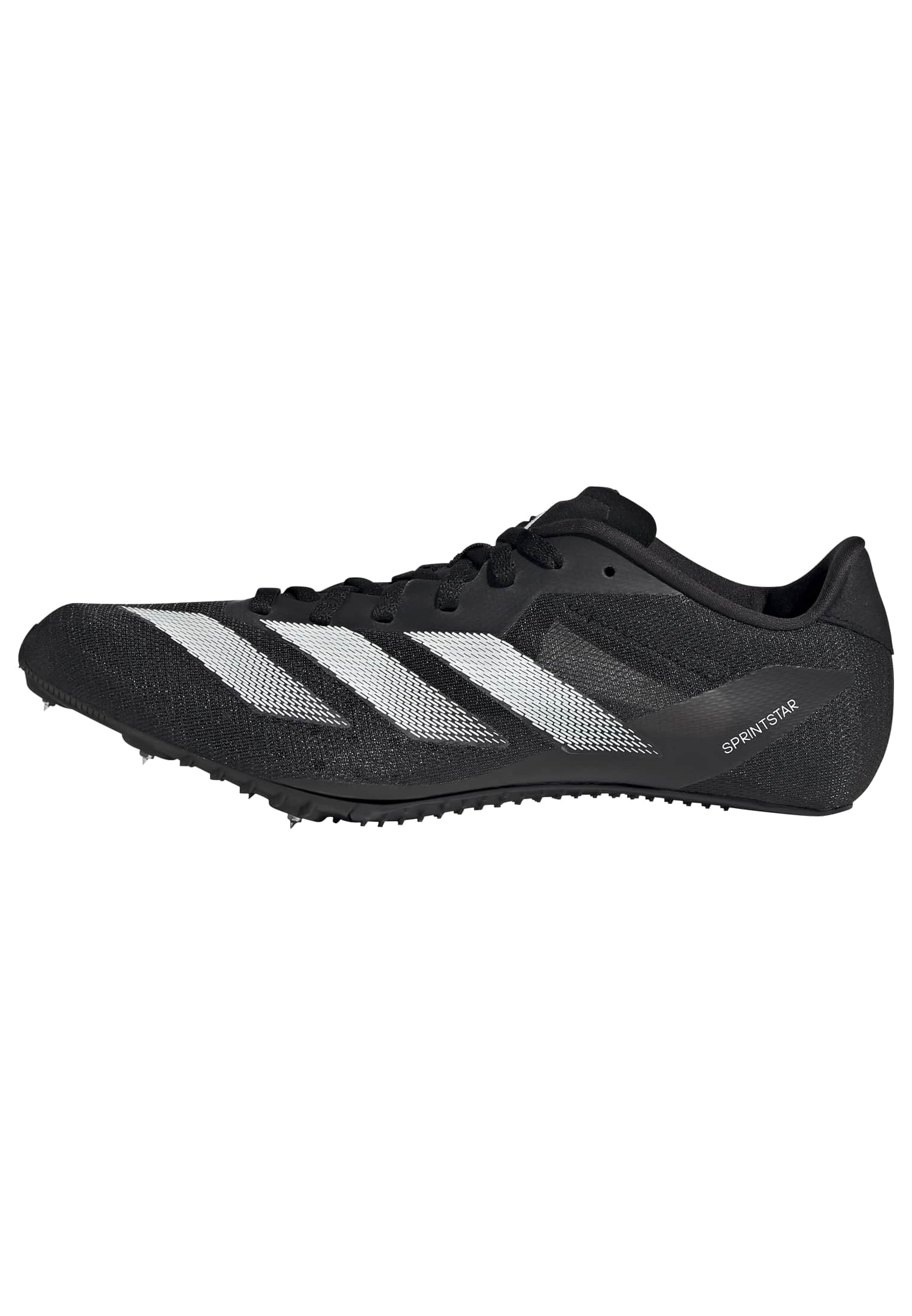
Six aggressive pins and a TPU plate that digs into the surface.
The Adizero Sprintstar leads with its updated 6-pin TPU spike plate — a stiff plastic plate (TPU stands for thermoplastic polyurethane) fitted with six metal pins. It digs aggressively into the track surface and converts force directly into forward propulsion, which is exactly the behavior you want out of the starting blocks and through the curve. A breathable synthetic mesh upper wraps the foot in lightweight support while keeping air moving through it.
You get a responsive ride from heel to toe from lightweight molded EVA cushioning (a firm foam that returns a little energy on each step). Rubberized outsole sections reinforce the high-wear zones so the shoe lasts longer. A secure lace closure adds customized lockdown that cuts down on slippage. The package dimensions are listed at 14.63 x 10.75 x 6 inches and 2.43 pounds, so this is a sturdier, more substantial build than the ASICS Hypersprint 8, which is listed at 1.44 pounds.
The fit is the honest caveat. Buyers describe the shoe as good quality, but several note it runs small and a touch narrow, so order a half size up if you have wide feet. The regular fit accommodates various foot shapes on average, but narrow-foot runners should double-check their size against the chart.
The plate’s whole job: A 6-pin TPU setup with rubberized wear zones is built to grip hard on starts and survive a season of them.
Where it gets tight: Sizing runs small and narrow for several buyers, so sizing up is the practical move.
Choose it when: You want an aggressive, stiff 6-pin plate and will size up to lock in the right fit.
Skip the gamble if: You are between sizes and prefer a roomier, more forgiving upper.
4. Nike Women’s Air Zoom Victory Athletics Shoes

A carbon plate and Zoom Air unit aimed at longer track races.
Read the distance spec before anything else: this shoe propels you through races from 800 to 5,000 meters, not the 400m. It is built around a full stack of energy-return technology — Nike ZoomX foam in the heel, a Zoom Air unit and a carbon fiber plate working together for responsive energy return and impact absorption. The package dimensions are listed at 11 x 3 x 3 inches and 4 ounces, so it is light enough to race in, and it will fit shorter-distance racers who like a plated shoe.
The AtomKnit upper is described as lightweight, contoured and breathable, with minimal water retention to keep you comfortable, and the notched shoelaces stay put through a race. Fit feedback is strongly positive; one buyer notes the shoe wraps the foot tightly.
The durability picture is the honest part of this review. Multiple customers note that the sole tore apart after just three races, so this is a fit-first shoe for the right distance rather than a workhorse for a full season.
What it brings to the start line: ZoomX foam, a Zoom Air unit and a carbon plate make this a plated energy-return shoe for longer track distances rather than a pure 400m weapon.
Be clear about the target: This one is aimed at 800m to 5,000m, so a 400m specialist should look at a dedicated sprint spike instead.
Best matched to: A women’s runner racing 800m to 5,000m who wants plated energy return and a snug wrap.
The honest limit: Several reviewers point out the sole tearing after just three races, so treat it as a race-day shoe.
5. ASICS Unisex Hypersprint 8 Track & Field Shoe
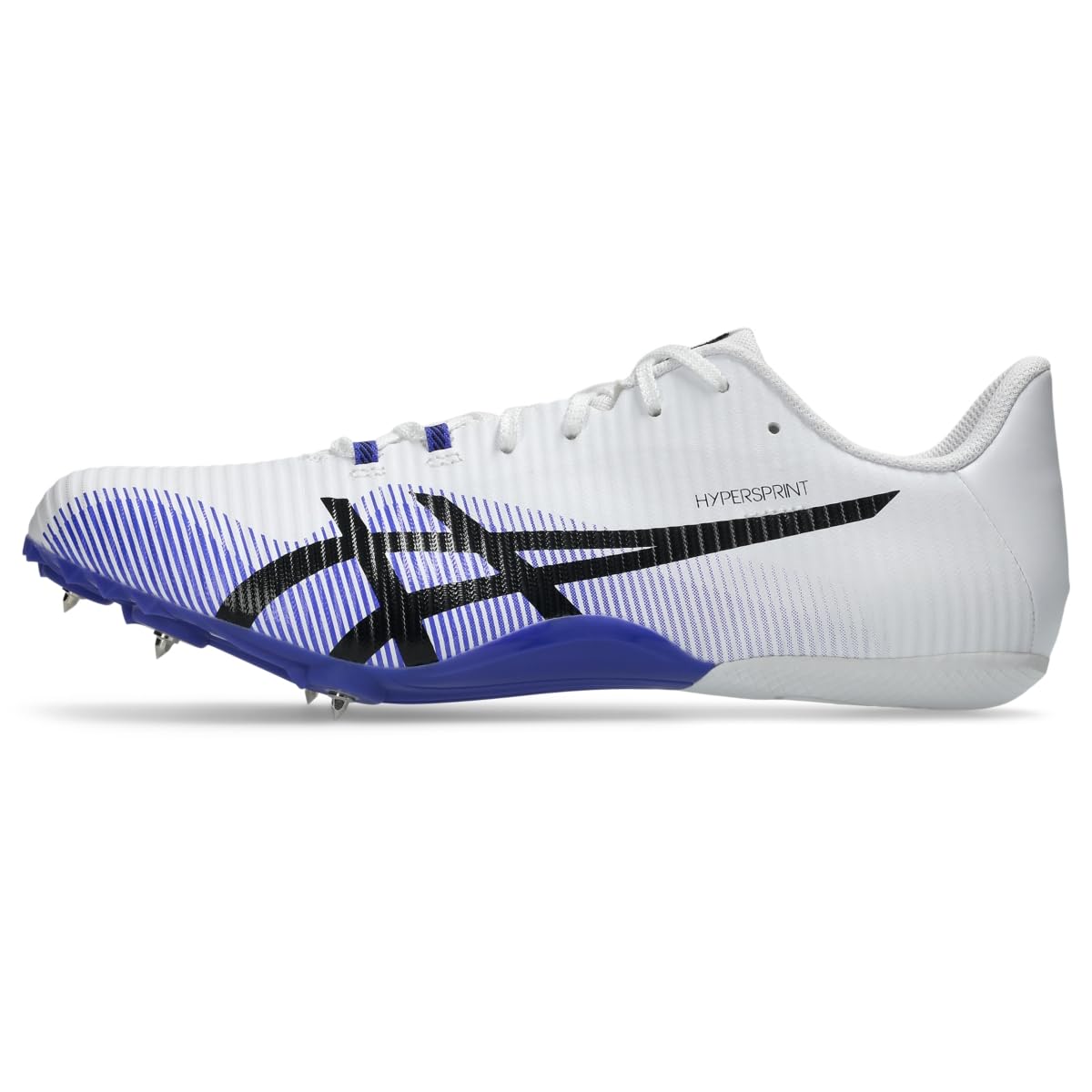
A resin plate that pushes hard and holds grip without slipping.
The Hypersprint 8 is built for short-distance sprinters hunting a new personal best, and its standout is the resin plate — a stiff outsole layer that improves propulsion and grip. That makes the shoe functional for high-velocity sprints without slipping, which is a real benefit on a wet or worn track. An E.V.A sockliner sits underfoot for a flexible fit and extra support where you need it.
Weight is where this pair stands out across the whole list. It is listed at 1.44 pounds, while the adidas Adizero Sprintstar is listed at 2.43 pounds. That difference matters over a full season of sprint work. The product dimensions come in at 12.44 x 6.3 x 4.75 inches, a more compact footprint than the adidas Performance Sprintstar at 14 x 9 x 5 inches.
The feedback on these is broadly warm — buyers describe them as good quality, comfortable and lightweight with a perfect fit and nice appearance. Sizing is the one recurring gripe; several buyers mention the shoe runs small, so a half-size bump is often the fix. Not everyone is sure the shoes come with spikes included, so check the box contents before your meet.
Where it shines: A resin plate built for propulsion and grip, in a notably lighter build than the Adizero Sprintstar.
Sizing note: Several buyers find this pair runs small, so go up a half size if you are unsure.
Pick it for: Short-distance sprinters who value a lighter build and a plate built for propulsion and grip.
Size up if: You are on the edge between sizes, since several shoppers say it runs small.
6. Nike Rival Sprint Track & Field Sprinting Spikes

Six replaceable spikes and a snappy three-quarter plate to keep you on your toes.
The Rival Sprint puts its money on the front of the shoe. An updated 3/4-length plate is lightweight, snappy and provides aggressive sturdiness to help keep you sprinting on your toes — exactly the posture a 400m runner wants through the turn. The upper is sturdy and reinforced yet lightweight, giving you the containment to attack the turns and straightaways around the oval.
Traction comes from six replaceable spikes made of lightweight ceramic aluminum material that adds durability, so you can swap fresh pins in for a meet without replacing the shoe. Rubber at the heel gives cushion and durability for your footstrike and traction for post-race braking, and a midfoot band adds dynamic lace-up fit and supportive containment through the arch. The midfoot band is a nice touch if you have dealt with a loose arch on other spikes.
Buyers consistently describe the shoe as good quality and comfortable, with the fit landing around true to size for several. The 3/4-length plate and six ceramic aluminum pins are tuned for pure sprint speed. The main note is that the specificity is not for everyone — it is a sprint-oriented build rather than a long-distance shoe.
The sprint formula: A 3/4-length plate, six ceramic aluminum spikes and a midfoot band make this a dedicated speed shoe.
What to weigh: That sprint-specific focus is exactly right for a 400m, but not a distance runner’s daily shoe.
Made for: Sprinters who race on their toes and want replaceable ceramic aluminum spikes.
Not the pick if: You are looking for a multi-event or distance shoe rather than a pure sprint spike.
7. Nike Air Zoom Maxfly 2 Track & Field Sprinting Spikes

The top-tier Air Zoom sprint spike, for racers chasing the sharpest edge.
This one sits at the top of the tree here, above the mid-range picks both in price tier and in name. It carries the Air Zoom badge that Nike reserves for its most performance-focused track shoes, aimed squarely at sprinting. The listing signals a drop model with a “One Per Customer” limit, which tells you Nike treats it as a premium, in-demand release. If your season hinges on the flagship Air Zoom sprint spike, start here.
The downside of buying at this tier is that the listing itself is thin on specs — you get the ASIN and department (Unisex Adults & Kids) but no plate, pin or weight details in the data. So you are paying for the badge and the release status more than for a spec you can verify on the page. Read the full product page carefully before you commit, and confirm your size, because premium sprint models tend to run snug.
For the sprinter who has outgrown the mid-range and wants the top-end Air Zoom package, this is the upgrade. For everyone else, the mid-range picks here deliver proven sprint performance for far less.
Who it is for: The competitive sprinter who wants the top-tier Air Zoom release and is willing to pay the premium tier for it.
The trade-off: The listing is light on published specs, so you are buying the name and the release more than a documented plate.
The top-shelf choice: For racers who want the flagship Air Zoom sprint spike and will pay the premium tier.
The honest caution: Thin published specs mean you should read the full product page and confirm sizing before buying.
Know the Specs
Four numbers decide whether a pair of 400m spikes works for you. Scroll the list above with these in mind, and the decision gets a lot simpler.
Plate material and length
The plate is the stiff layer under your forefoot that springs you forward. A Pebax plate outsole (used on the adidas Sprintstar) is a lightweight plastic plate. A TPU plate (on the Adizero Sprintstar) is a stiffer, more aggressive option. A carbon fiber plate (on the Air Zoom Victory) trades some direct feel for energy return over longer races. Longer, stiffer plates snap you forward harder; shorter plates let you stay on your toes more easily.
Spike pin count
Pins are the small threaded studs under your forefoot that bite into the track. A 6-pin plate (as on the Adizero Sprintstar and the Rival Sprint) digs aggressively into the surface and converts force into propulsion. Replaceable pins let you swap fresh studs in for a meet. Always check whether the pair ships with pins included, because some orders arrive without them.
Listed weight
Weight is given per pair here. The Sprintstar is listed at 4 ounces, the Hypersprint 8 at 1.44 pounds and the Adizero Sprintstar at 2.43 pounds. Lighter is generally easier to accelerate, but a heavier build often means more structure and durability in the wear zones. Weigh your event: a pure 100m dasher saves more from light weight than a 400m runner does.
Upper and lockdown
The upper is what holds your foot down through the turn. A sprint web mesh or breathable synthetic upper keeps the shoe light and locked; a reinforced upper (as on the multi-event Rival) adds structure; an AtomKnit upper (on the Air Zoom Victory) wraps close with minimal water retention. A midfoot band or secure lace closure adds arch support and cuts energy-wasting slippage.
Common Questions
How should 400m spikes fit compared to my training shoes?
Do 400m spikes come with the pins already installed?
What is the difference between a Pebax plate and a TPU plate?
Are sprint spikes fine for races beyond 400m?
How many spike pins do I need for the 400m?
Can I use a multi-event spike as a 400m spike?
How long should a pair of sprint spikes last?
Do I need replaceable spikes or fixed ones?
What is the upper material on these sprint spikes, and why does it matter?
The Bottom Line
Most sprinters should start with the adidas Performance Men’s Sprintstar. It is the one pair here built specifically for events up to 400 meters, with a Pebax plate outsole and a sprint web mesh upper that lock the foot down through the bend, and it carries a 4.5+ star buyer rating. If you want a stiffer, more aggressive 6-pin plate for the block start, grab the Adidas Adizero Sprintstar, but size up. For a lighter ride with a resin plate built for propulsion, reach for the ASICS Hypersprint 8. If you race more than one event a meet, the Nike Rival Multi covers the whole slate with a single shoe.
How we choose
We do not accept paid placement. Every pick is matched to a real buyer and a real use-case; we do not hands-on test units.
Sources
Specifications: manufacturer listings and product documentation. Review insights: verified customer reviews, as of November 2026. Pricing: not shown on this page (it changes often); check the current price via the retailer link.
As an Amazon Associate, My Heart Lives Here earns from qualifying purchases. This does not affect which products we feature.