Heads up: This post contains affiliate links. As an Amazon Associate I earn from qualifying purchases, at no extra cost to you. Learn more
Specs are compiled from manufacturer listings and verified buyer reviews and can change over time — please confirm the key details on the product page before buying.
Cacao powder can be genuinely good for you and still carry cadmium or lead — the two metals that show up most often in cocoa testing. So the real question is not which powder tastes best. It is which powder comes with a lab test you can actually see. That is the filter here: every pick below either states third-party heavy-metal testing or gives a specific cadmium figure.
This guide is built by comparing the manufacturers’ published specifications and the patterns across verified customer reviews, so you get each pick’s real strengths and trade-offs instead of marketing spin.
Flavanols, cadmium levels, and lab testing get explained in plain words below, along with the honest catch on each jar. Here is the shortlist for anyone searching for the best cacao powder without heavy metals.
Top Picks


How To Choose The Best Cacao Powder Without Heavy Metals
Heavy metals are not a sign of a bad brand. Cadmium is taken up by the cocoa plant from the soil itself, and lead can settle on beans during drying. That means almost every cocoa powder on a shelf has some trace of both. The difference between a clean jar and a questionable one is whether the company tests every batch and publishes the result.
So when you scan a label, you are really checking three things: the test claim, the processing method, and whether the powder is sweetened or cut with anything else.
Look for a testing claim with detail, not a vibe
A phrase like “third-party tested for heavy metals” is worth more than “pure and natural” because it names a test. Better still is a named list of metals — cadmium, lead, mercury, arsenic — and a specific number. One pick here publishes an ultra-low cadmium figure of 0.015 mg/kg, which is the kind of concrete detail you can actually weigh. If a label only says “premium quality” and never mentions testing, treat the purity question as unanswered.
Non-alkalized versus Dutch-processed
Alkalizing (also called Dutch processing) is a chemical step that darkens cocoa and mellows its acidity. It also strips out a chunk of the natural flavanols — the plant compounds most people are buying cacao for in the first place. A non-alkalized powder keeps more of those compounds, so you get more of the reason you bought it.
Flavanols are where the health story actually lives
Flavanols are the antioxidant compounds in cocoa, and epicatechin is the best-known one. A plain culinary powder rarely states a flavanol number. A concentrated cocoa supplement does, usually in milligrams per serving. If the wellness angle is why you are shopping, a stated milligram figure beats a front-label promise.
Side-by-Side Comparison
| Model | Best For | Purity Claim | Flavanol Figure | Format / Size | Amazon |
|---|---|---|---|---|---|
| NaturaleBio Cacao Powder Organic★ Best Overall | Everyday baking and smoothies | Tested for heavy metals; USDA Organic | — | 35 oz powder | Amazon |
| Aduna Super Cacao PowderCleanest Paper Trail | Clean daily drinking cacao | Third-party lab test, cadmium/lead/mercury/arsenic, EU limits | — | 9.63 oz powder | Amazon |
| Grevista 100% Pure Cocoa Powder | Flavor-first drinking chocolate | Lab-tested; cadmium 0.015 mg/kg | 235 mg polyphenols / 42 mg epicatechin per serving | 17.6 oz powder | Amazon |
| ORA Ceremonial Cacao | Whole-bean ceremonial brewing | — | 212 mg theobromine per serving | 8 oz block | Amazon |
| Black Forest High Flavanol Cocoa Powder | Concentrated flavanol dosing | Third-party tested for heavy metals, GMP facility | 1200 mg total (600 mg flavanols + 600 mg flavonoids) | 8.64 oz tub | Amazon |
| High Flavanol Cocoa Powder Supplement | Monthly flavanol habit | Third-party tested for heavy metals | 600 mg flavanols + 600 mg flavonoids | 30 servings | Amazon |
Detailed Reviews
1. NaturaleBio Cacao Powder Organic 35oz
Our pick — 4.5+★ from 8,000+ verified ratings; the strongest balance of quality and price.
The big-format jar that puts a testing claim on the label and a deep chocolate flavor in the mug.
Thirty-five ounces of unsweetened, non-alkalized powder — that is a working kitchen supply, not a sample. Non-alkalized means the beans skip the chemical Dutch-processing step, so more of the natural cocoa compounds survive into the powder. For a baker spooning it into banana bread or a smoothie every morning, a jar this size means you are not reordering every few weeks.
Whole Foods-style credentials are printed on the label: USDA Organic, non-GMO, gluten-free, and tested for heavy metals. It is grown without chemical fertilizers or pesticides, and the beans are dried at low temperatures to hold onto the plant’s natural nutrients. Compare that with the ORA ceremonial block at 8 ounces — a 4.4x gap in size — and this is clearly the bulk-buying option of the two for a cocoa habit that runs daily.
What wins people over is flavor: a deep, dark-chocolate taste with a noticeable aroma that turns plain oatmeal into something worth getting up for. The catch is blendability. This powder mixes cleanly in some kitchens and clumps in warm or hot milk in others, so whisk it into a little cool liquid first before adding heat. Worth knowing before you dump a spoonful into a steaming mug.
What earns the top spot
- Tested for heavy metals and USDA Organic, with a non-GMO, gluten-free label
- Non-alkalized processing keeps more natural cocoa compounds intact
- 35 ounces at a mid-range tier — the most powder per jar here
- Deep dark-chocolate flavor that holds up in baking and smoothies
The honest catch
- Clumps in warm or hot milk for some buyers — whisk into cool liquid first
- Unsweetened means it is genuinely bitter on its own; you add your own sweetener
Reach for this if: you want one big jar that covers baking, smoothies, and hot chocolate with a testing claim on the label.
Think twice if: you only drink it stirred straight into hot milk and hate the sound of a whisk.
2. Aduna Super Cacao Powder
The pick that names its metals out loud instead of hiding behind the word pure.
If heavy-metal confidence is your whole reason for shopping, this is the label to read twice. Every batch is tested by a third-party laboratory for cadmium, lead, mercury, and arsenic, and the results land well within EU food safety standards. That is four named metals and a stated standard — far more specific than a jar that just says “clean.”
The beans come from a single origin in Ghana, grown without chemical pesticides or fertilisers. It is 100% natural and unsweetened, with iron, fibre, and plant-based magnesium listed, plus a high flavanol content the brand links to heart health. For a morning mug stirred into hot milk or a smoothie, that is a lot of substance for a mid-range jar.
Taste is the thing that keeps people coming back — rich and velvety, not too bitter, and it dissolves well in hot water. The catch worth flagging is size. At 9.63 ounces this is a modest jar next to the 35-ounce NaturaleBio, so a daily drinker will be reordering sooner than they might expect.
The standout: four named heavy metals, third-party tested batch by batch — the most transparent purity statement in this lineup.
Where it thins out: small jar, big flavor. If you drink cacao every single day, budget for repeat orders.
The deciding line: buy it when a documented lab test matters more to you than jar size.
Pass if: you go through powder fast and want one big container to last.
3. Grevista 100% Pure Cocoa Powder
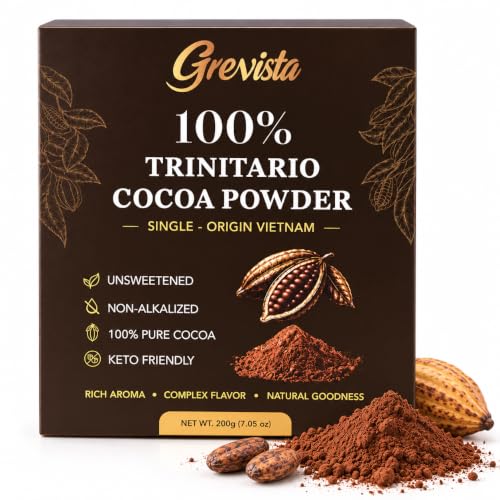
A cocoa for people who think dark chocolate should taste like something, not just be bitter.
Most clean-label cocoa powders win the purity argument and lose the flavor one. This one tries to do both. It is made from organic Trinitario beans — a cocoa variety known for a smoother, more complex cup — and delivers delicate floral and fruity notes with a light finish instead of the flat bitterness typical dark cocoa can carry.
The testing here is unusually specific: it is independently lab-tested for arsenic, lead, mercury, and aflatoxins, with an ultra-low cadmium level of 0.015 mg/kg. A number like that is a real data point you can hold onto, not a promise. Each serving also supplies 235 mg polyphenols and 42 mg epicatechin, the antioxidant compounds worth caring about.
The catch is that this is a newer listing with a smaller track record than the big jars. The award badges and the published cadmium figure carry the trust here, so if you want proof in numbers rather than volume, this is a strong fit — especially as a drinking chocolate or baking cocoa.
Go with this: for a drinking chocolate that tastes genuinely layered, with a cadmium figure you can quote.
Hold off if: you prefer a long-established listing with thousands of buyers behind it.
4. ORA Ceremonial Cacao, Thriving Tanzania

Not a powder at all — a whole-bean block for the slow morning brewers.
This is the one product here that deliberately steps outside the powder aisle. Ceremonial cacao is made from premium whole cacao beans with nothing added or removed, minimal processing, and the cocoa butter left in. The brand argues that standard cocoa powder is made from lower-grade beans and heavily processed to strip out the cocoa butter, losing the fat that carries the flavor. Whether or not you buy that argument, the format is different: an 8-ounce block you brew, not a powder you scoop.
Each serving carries 212 mg of theobromine — the main gentle stimulant in cacao — and it is sugar-free. It is grown in Tanzania’s Kilombero Valley by certified organic farmers, which gives it a clear single-origin story. Compare it to the 35-ounce NaturaleBio and the size gap is 4.4x: this is the small, slow, ceremonial end of the shelf, and the NaturaleBio is the bulk baking end.
The flavor is the through-line — it makes a rich, easy drinking cacao. The honest catch is that it is not a heavy-metal-tested statement in its own listing, so if documented cadmium numbers are your priority, look to Aduna or Grevista instead. This is a crafting choice, not a purity-verification choice.
The whole-bean difference: cocoa butter stays in, and the format rewards people who brew rather than spoon.
Choose it when: the ceremony of making a cacao drink is the point, and you want whole-bean quality.
Skip the section if: you need a printed heavy-metal test on the label above all else.
5. Black Forest High Flavanol Cocoa Powder
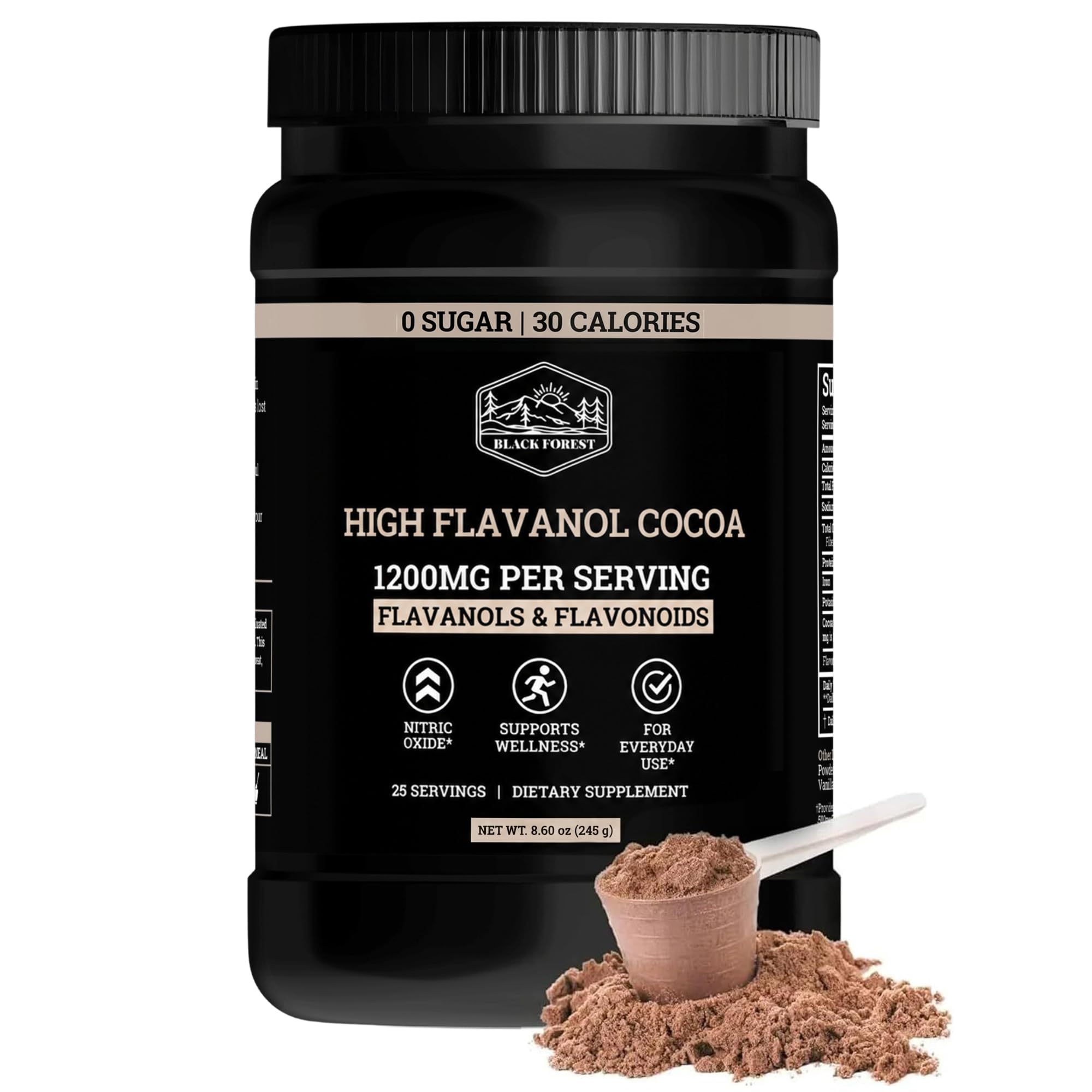
The concentrated option for anyone buying cocoa for the flavanols, not the baking.
If you are here for the plant compounds, this is the jar with the biggest number printed on it. Each serving delivers 1200 mg of total bioactive compounds — 600 mg flavanols plus 600 mg flavonoids — including 600 mg of epicatechin. That is labeled as 10X more concentrated than standard cocoa powder, which is exactly the kind of claim to read closely: the figure is a per-serving dose from a concentrated extract, not a scoop-for-scoop comparison with a plain baking cocoa.
It is minimally processed and non-alkalized to keep the flavanols intact, and made in a GMP-certified facility with third-party testing for heavy metals and purity. GMP is short for Good Manufacturing Practice, a set of production standards. It is non-GMO, gluten-free, vegan, and has 20 calories per serving with no added sugar. The brand suggests a scoop 30 to 60 minutes before exercise.
What most people praise is quality and a taste that is not too bitter, and the energy angle comes up repeatedly. The catch worth knowing: effectiveness and mixability split opinion — some find it dissolves smoothly and works, others find it gritty or not worth it. If you are buying for the milligrams, that is the trade-off to weigh.
The case for the concentration
- 1200 mg total bioactive compounds, including 600 mg epicatechin per serving
- Third-party tested for heavy metals in a GMP-certified facility
- Non-alkalized to preserve flavanols; non-GMO, gluten-free, vegan
- Only 20 calories per serving with no added sugar
Where the reviews split
- Mixability is mixed — some find it gritty, others smooth
- Effectiveness is divisive; several buyers report it did not deliver for them
Best suited to: someone specifically chasing a high, stated epicatechin dose per serving.
Less suited to: a casual baker who just wants a clean spoonful for brownies.
6. High Flavanol Cocoa Powder Supplement, 30 Servings
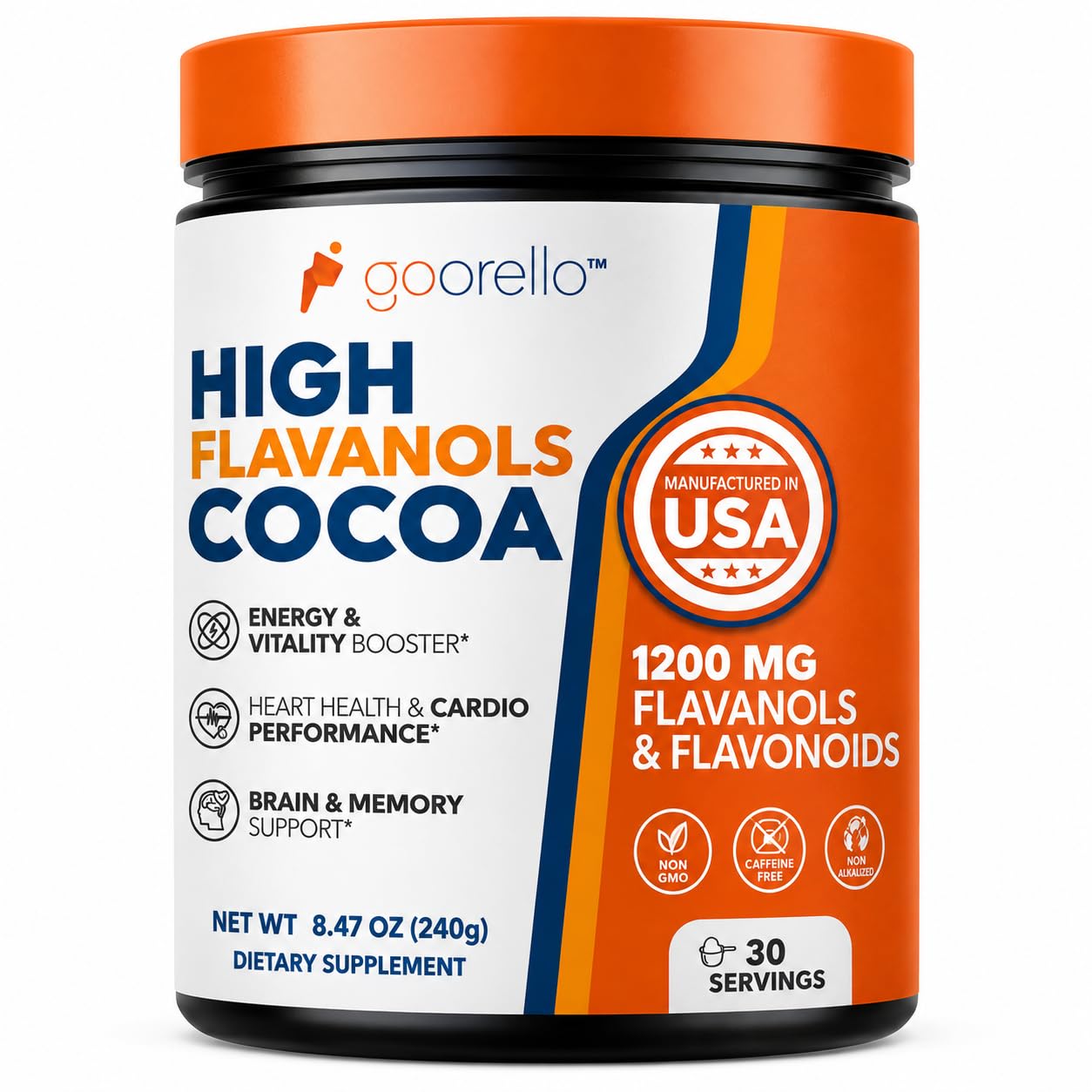
Paced for a month of daily doses rather than an open-ended baking supply.
This one is sold as a routine, not an ingredient. Each container gives 30 servings — one scoop a day for a month — and each serving carries 600 mg of cocoa flavanols as naturally occurring epicatechin plus 600 mg of flavonoids. That is a deliberately portioned amount, so you always know how much you are getting and how long a jar will last.
It is non-alkalized and minimally processed to hold onto flavanol potency, non-GMO, and third-party tested for purity, heavy metals, and contaminants. The format is what separates it from the Black Forest tub above — both are concentrated, but this one is built around a month-long habit instead of an open jar. It mixes well into smoothies and shakes, and the flavor reads as a rich dark chocolate.
The clean-ingredient list is part of the draw, with no fillers, and the caffeine-free energy angle appeals to buyers who want steady focus without a crash. Effectiveness is the one place opinion divides — a few owners mention it did not do much for them — so treat it as a routine to try rather than a guaranteed result.
The fit: you want a measured daily scoop with a flavanol number attached, and you like a container that tells you when it runs out.
The mismatch: you want a big jar for cooking and are not counting milligrams day to day.
Know the Specs
Heavy-metal testing (cadmium and lead)
Cadmium is a metal the cocoa plant pulls up from the soil as it grows, and lead can settle on beans during drying. Trace amounts can show up in nearly any cocoa. A credible label names the metals tested — cadmium, lead, mercury, arsenic — and, ideally, gives a number. One powder here publishes a cadmium level of 0.015 mg/kg, which means 0.015 milligrams of cadmium per kilogram of powder. A specific figure like that tells you the company actually measured, rather than simply claiming to care.
Flavanols and epicatechin
Flavanols are the plant antioxidant compounds in cocoa, and epicatechin is the most studied one. Plain culinary powders rarely state a figure; concentrated cocoa supplements do, usually in milligrams per serving. A jar listing 600 mg epicatechin is spelling out its dose, while a baking cocoa leaves you guessing. If the health angle is why you are buying, a stated milligram amount is the only way to compare two products fairly.
Non-alkalized vs Dutch-processed
Alkalizing, or Dutch processing, uses an alkali to darken the cocoa and soften its acidity. It also reduces the natural flavanols. A non-alkalized powder skips that step, so more of the cocoa’s natural compounds survive into your mug. Every concentrated pick here is non-alkalized for exactly that reason.
Theobromine
Theobromine is the main gentle stimulant naturally found in cacao — a cousin of caffeine that many people find smoother. The ceremonial pick lists 212 mg per serving. If you are sensitive to caffeine, theobromine is worth knowing about, because a strong cacao drink can still feel stimulating.
Common Questions
Do all cacao powders contain heavy metals?
What cadmium level should I look for in cacao powder?
What is the difference between cacao powder and cocoa powder?
Why does my cacao powder clump in hot milk?
How much epicatechin is in a high-flavanol cocoa powder?
Is ceremonial cacao better than cocoa powder?
Does non-alkalized cocoa taste more bitter?
Can I use a high-flavanol supplement powder for baking?
How long does an open jar of cacao powder stay fresh?
Does cacao powder contain caffeine?
The Bottom Line
For most people shopping for a cacao powder without heavy metals, the NaturaleBio Cacao Powder Organic 35oz is the sensible pick: it puts a heavy-metal testing claim and USDA Organic status on a big non-alkalized jar built for daily baking and smoothies. If a documented lab test is what calms your mind, the Aduna Super Cacao names all four metals it screens for. And if you are buying for the flavanols above all, the Black Forest High Flavanol Cocoa hands you a stated 600 mg of epicatechin per serving with third-party purity testing behind it. Pick the jar that matches how you actually use it, and read the testing line first.
How we choose
We do not accept paid placement. Every pick is matched to a real buyer and a real use-case; we do not hands-on test units.
Sources
Specifications: manufacturer listings and product documentation. Review insights: verified customer reviews, as of November 2026. Pricing: not shown on this page (it changes often); check the current price via the retailer link.
As an Amazon Associate, My Heart Lives Here earns from qualifying purchases. This does not affect which products we feature.