Heads up: This post contains affiliate links. As an Amazon Associate I earn from qualifying purchases, at no extra cost to you. Learn more
Specs are compiled from manufacturer listings and verified buyer reviews and can change over time — please confirm the key details on the product page before buying.
Most buyers hunting this category are really asking one thing: can I heat a space that small without a stove that cooks me out of the room in ten minutes? Yes — but only if you match the firebox size and the firing rate to the room, and accept that a few models here are pellet designs that a wood-only buyer will want to skip. Below you get the picks that handle small-footprint heating cleanly, with the real strengths and the real catches spelled out in plain words.
This guide is built by comparing the manufacturers’ published specifications and the patterns across verified customer reviews, so you get each pick’s real strengths and trade-offs instead of marketing spin.
Cold mornings get solved faster when the stove’s coverage range actually fits your room instead of overshooting it, so every pick below states its heating capacity and its honest downside before you commit. These are the models worth your time if you want a 500 sq ft wood burning stove comparison that respects both your room size and your fuel plan.
Top Picks


How To Choose The Best 500 Sq Ft Wood Burning Stove
Small-room heating punishes an oversized stove. A unit built for 900 square feet will push out heat faster than a 500-square-foot room can shed it, and you end up opening windows in January. The fix is to buy a stove whose coverage range brackets your room and whose lowest setting is genuinely low, not a fire-breathing unit turned nearly off.
Match the coverage number to your room, then look at the low end
A stove rated for 900 square feet can work in a 500-square-foot space if it has a real low setting and a thermostat to cycle it. A stove rated for 2,800 square feet is a different animal — it will run hot even at minimum. Read the coverage figure as the ceiling, not the target, and check whether the controls let you dial the fire down.
BTU output tells you how fast heat arrives
BTU (British thermal units) is the heat energy the stove produces per hour. A higher BTU number means faster heat-up on a cold morning, and it also means a bigger fuel appetite. In a small room, moderate output with steady control usually beats a big number you can’t tame.
Fuel type changes your whole routine
Wood requires dry, split logs and a place to stack them. Pellet stoves run on bagged pellets and an auger that feeds the fire, so you get auto ignition and thermostat cycling instead of loading splits by hand. Ventless gas needs no chimney but relies on an oxygen sensor for shut-off. Pick the fuel first, because it decides your daily chores.
Log length and flue size decide what fits
Each stove lists a maximum log length and a flue diameter. If your woodpile is cut to 18 inches and the firebox takes 11-inch logs, you are re-cutting every piece. Match the listed log length to your supply before you buy, and confirm the flue size so your chimney pipe and any adapter line up.
Side-by-Side Comparison
| Model | Best For | Heat Output | Coverage | Fuel | Amazon |
|---|---|---|---|---|---|
| Comfortbilt HP22 Pellet Stove★ Best Overall | Whole-home pellet heat with programmable control | 41,000 BTU | 2,800 sq ft | Pellet | Amazon |
| Cleveland Iron Works Single Burn Rate StoveBest Value | Traditional wood fire in a cast iron body | 27,000 BTU | 900 sq ft | Wood | Amazon |
| US Stove Company Cast Iron Wood StoveHighest Output | High-output cast iron for cabins | 54,000 BTU | 900 sq ft | Wood | Amazon |
| Duluth Forge Ventless Natural Gas Stove | No chimney, no wood hauling | 25,000 BTU | 1,100 sq ft | Natural gas | Amazon |
| Cleveland Iron Works Small Pellet Stove | Wi-Fi control in a compact body | 28,423 BTU | 800–1,200 sq ft | Pellet | Amazon |
| Comfortbilt HP22N Pellet Stove | Long unattended burn time | 41,000 BTU | 2,800 sq ft | Pellet | Amazon |
| Greenstovehori 5 Outdoor Pellet Stove | Hot tent and camp cooking | — | — | Pellet, wood | Amazon |
| US Stove TH-100 Tiny Home Stove | Tiny homes and off-grid outages | 26,000 BTU | 750 sq ft | Wood | Amazon |
| Castle 41278 Serenity Pellet Stove | Scheduled heat with four modes | 32,000 BTU | 1,500 sq ft | Pellet | Amazon |
| Canyon Lodge Large Pellet Stove | Big hopper, mobile home approved | 29,501 BTU | 2,000–3,000 sq ft | Pellet | Amazon |
| Bayfront Pellet Stove | Quiet Wi-Fi heating for larger rooms | 30,173 BTU | 1,800–2,500 sq ft | Pellet | Amazon |
Detailed Reviews
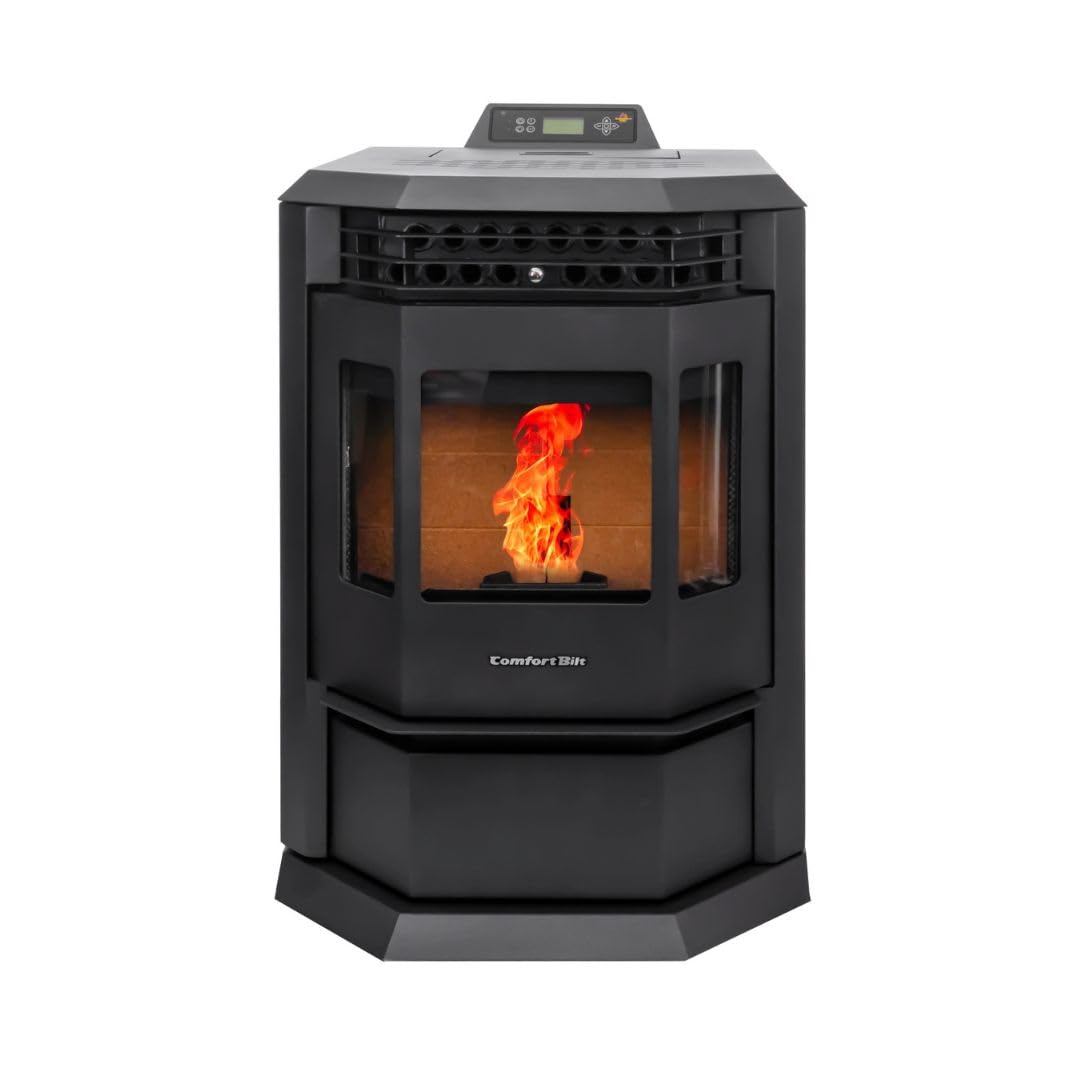
1. HP22 Pellet Stove, 2,800 sq. ft., 55 lb. Hopper, Black
Our pick — 4.0+★ from 250+ verified ratings; the strongest balance of quality and price.
The remote-controlled pellet heater that runs twenty hours on one fill and still answers to a thermostat.
For anyone who wants fire-like warmth without splitting and stacking splits, the HP22 is the pick that gets the routine right. It delivers up to 41,000 BTU per hour from a 55 lb. hopper, and that hopper carries it for up to 20 hours of burn time — so a single fill in the evening can still be giving heat the next afternoon. An included remote and auto ignition mean you are not crouching in front of a cold firebox with a lighter.
This pellet stove holds up over multiple heating seasons and puts out 41,000 BTU. Its 2,800-square-foot coverage figure is the ceiling under mild conditions. In a 500-square-foot room, that means you will spend most of your time on the lowest of the five power settings. The programmable thermostat (a built-in timer that turns the stove up or down to hold your set temperature) cycles the stove for you. That reserve capacity pays off on the coldest nights, when the stove still has headroom instead of running flat out.
The catch is noise. The room blower and the auger motor are not silent, and a persistent high-pitched whine shows up often enough in owner feedback that you should hear one before you commit if you plan to sleep beside it. Durability draws mixed notes as well, so budget for normal service parts over the years. It is also heavy — 273 pounds — which is a two-person, plan-the-route installation, not a solo lift.
Where it earns its keep
- Up to 20 hours of burn time from the 55 lb. hopper cuts refueling to once a day
- 41,000 BTU output plus five power settings gives you headroom on cold snaps
- Programmable thermostat and included remote handle comfort without touching the stove
- EPA and CSA certified, with a bay-view window and a removable ash pan for easier cleaning
- Auto ignition gets a fire going without manual lighting
What to weigh first
- Blower and auger noise, including a reported whine, is the recurring gripe
- At 273 pounds it needs two people and careful placement
- 2,800-square-foot rating is far larger than a small room — you are buying on the low settings
Reach for this if: you want set-and-hold pellet heat with remote control and don’t mind some blower hum in the background.
Look elsewhere if: the stove sits in a bedroom or a room where quiet is the whole point.
2. Single Burn Rate Stove
A no-frills cast iron wood stove that takes 18-inch logs and leaves the electronics out of the equation.
This one is for the buyer who actually wants to burn wood. It runs on logs up to 18 inches long and puts out 27,000 BTU (British thermal units, the standard measure of heat output). It is rated to heat up to 900 square feet, a sensible range for a small cabin, a workshop, or a large living room where you want the fire itself to be part of the evening. The cast iron body and door soak up and radiate heat, so the stove stays warm after the flames die down. The ceramic rope gasket (a heat-proof seal around the door edge) keeps air from leaking in.
Owners rate quality highest on this stove, and it earns that on cast iron and a cool-touch handle rather than electronics. The two-piece safety handle stays cool while the fire is going, which means you can open the door to add a log without a glove. The high-temperature matte black finish holds up to the heat cycling, and assembly is described as quick and easy once the unit is on site. It is EPA Listed and Approved and carries a 1-year warranty, and it needs a 6-inch flue exhaust — check that against your existing chimney before ordering.
The honest limit is control. Single burn rate means one firing level, so in a room much under the 900-square-foot rating you manage heat by how much wood you feed and how often you open the air, not by a dial. There is no auto ignition and no thermostat — you build and tend the fire yourself. For a wood-burning purist that is the appeal; for someone who wants push-button heat, it is the wrong tool.
Fit check: superb for a weekend cabin where the crackle of real logs is half the reason you are there, and where a 6-inch flue already exists.
Buying caution: the single firing rate asks for hands-on fire management, so plan on being present while it burns rather than setting it and walking away.
Suits the wood purist: 18-inch log capacity, cast iron construction, and a cool-touch handle with nothing electronic to fail.
Not for hands-off households: one burn rate and manual lighting mean you tend this fire yourself.
3. US Stove Company Cast Iron Wood Stove
The brute of the wood-burning group — the biggest BTU number here and a firebox that swallows 19-inch splits.
If you need a small-space wood stove that can still heat a whole cabin when the temperature drops hard, start with the output figure. This one reaches 54,000 BTU and is rated for up to 900 square feet. Against the Duluth Forge gas stove’s 25,000 BTU, that is more than double the rated heat output. That is why it suits cold-climate cabins rather than mild-winter rooms. The heavy cast iron body is meant to hold heat after the fire dies down. The 19-inch log capacity means fewer trips to the woodpile and a shorter saw session.
The practical details are strong. A two-piece safety handle stays cool to the touch while the stove is burning, so reloading does not require fire gloves every time. Assembly is straightforward and the look lands well — buyers describe a classic cast iron face that suits a cabin interior. It measures 33 inches deep by 18.5 inches wide by 23 inches high and weighs about 130 pounds, so two people and a clear path handle the install.
Before you fall for the output number, know the trade-off. Buyers report durability problems, including firebox cracks and legs that broke during assembly. A cast iron stove of this weight deserves careful handling during setup, so inspect it thoroughly on arrival. In a true 500-square-foot room, this much output will run you out unless you feed it sparingly. Also note the firebox takes logs up to 19 inches, no more, so do not test whether a split will fit.
The read: the strongest raw heat number in this lineup at 54,000 BTU, matched to a 19-inch firebox that fits a serious woodpile.
Worth knowing: some units arrive with a cracked firebox or a leg that breaks during assembly, so unbox and inspect before the delivery window closes.
The cabin heater: 54,000 BTU and cast iron make it the choice for hard winters and a room that needs real output.
Think twice for a small den: all that output overwhelms a tight room, and a cracked firebox on arrival is the risk to check for.
4. Duluth Forge Ventless Natural Gas Stove QSN250T
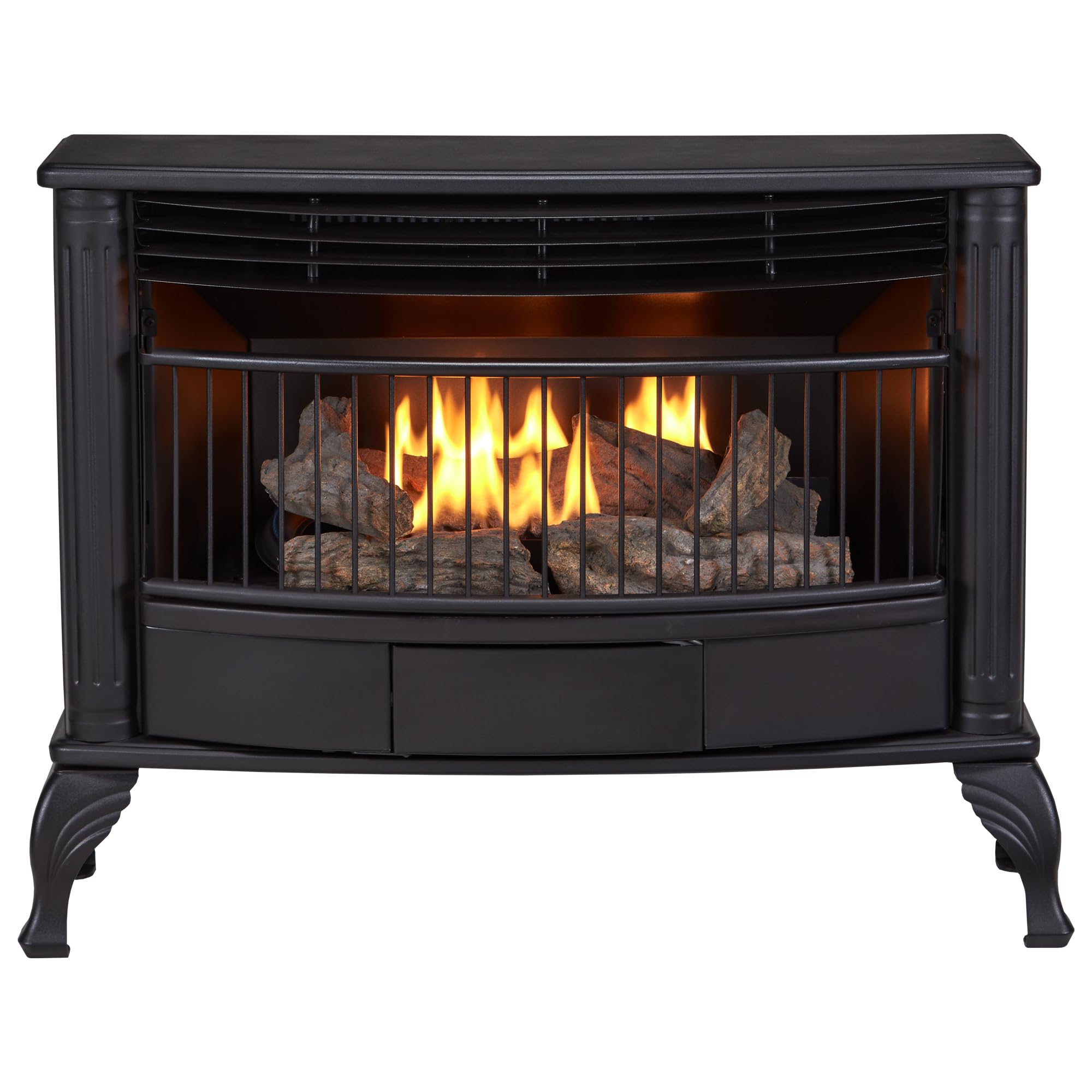
Real flames and hand-painted logs, with no chimney, no woodpile, and no ash pan to empty.
This is the option for someone who wants the look of a fire and the ease of a furnace. It burns natural gas at 25,000 BTU and is rated to warm up to 1,100 square feet, and it mounts freestanding with no outside duct or chimney — vent-free technology rated at 99.9% efficiency. The dual burner throws two rows of flame around five hand-painted ceramic fiber logs behind a large viewing area, so the fire is a feature you actually watch.
Where it beats the wood stoves here is daily effort: the variable thermostat cycles the stove on and off to hold your room temperature, and there is no splitting, stacking, or hauling. It carries an Oxygen Depletion Sensor with automatic shut-off plus battery-assisted Piezo ignition, and a 1-year limited warranty. Maximum pre-assembly keeps the install simpler — though a ventless gas appliance is a fuel-connection job, so plan on a licensed gas fitter rather than a Saturday DIY session.
Two things to square away before buying. First, it needs a natural gas line — no propane tank, no wood. Second, at 56 pounds and 25,000 BTU against the US Stove cast iron’s 130 pounds and 54,000 BTU, this is a gentler heater built for mild-to-moderate cold. If your winters go hard and your power does too, a gas stove’s reliance on a fuel supply plus the safety sensor is a different proposition than a wood box that needs no electricity.
For flame without labor: ventless natural gas, a thermostat that keeps the room steady, and ceramic logs you can watch from across the room.
The condition: you need a natural gas connection, and 25,000 BTU favors mild-to-moderate winters over deep cold.
5. Cleveland Iron Works Small Pellet Stove – 24lb Hopper
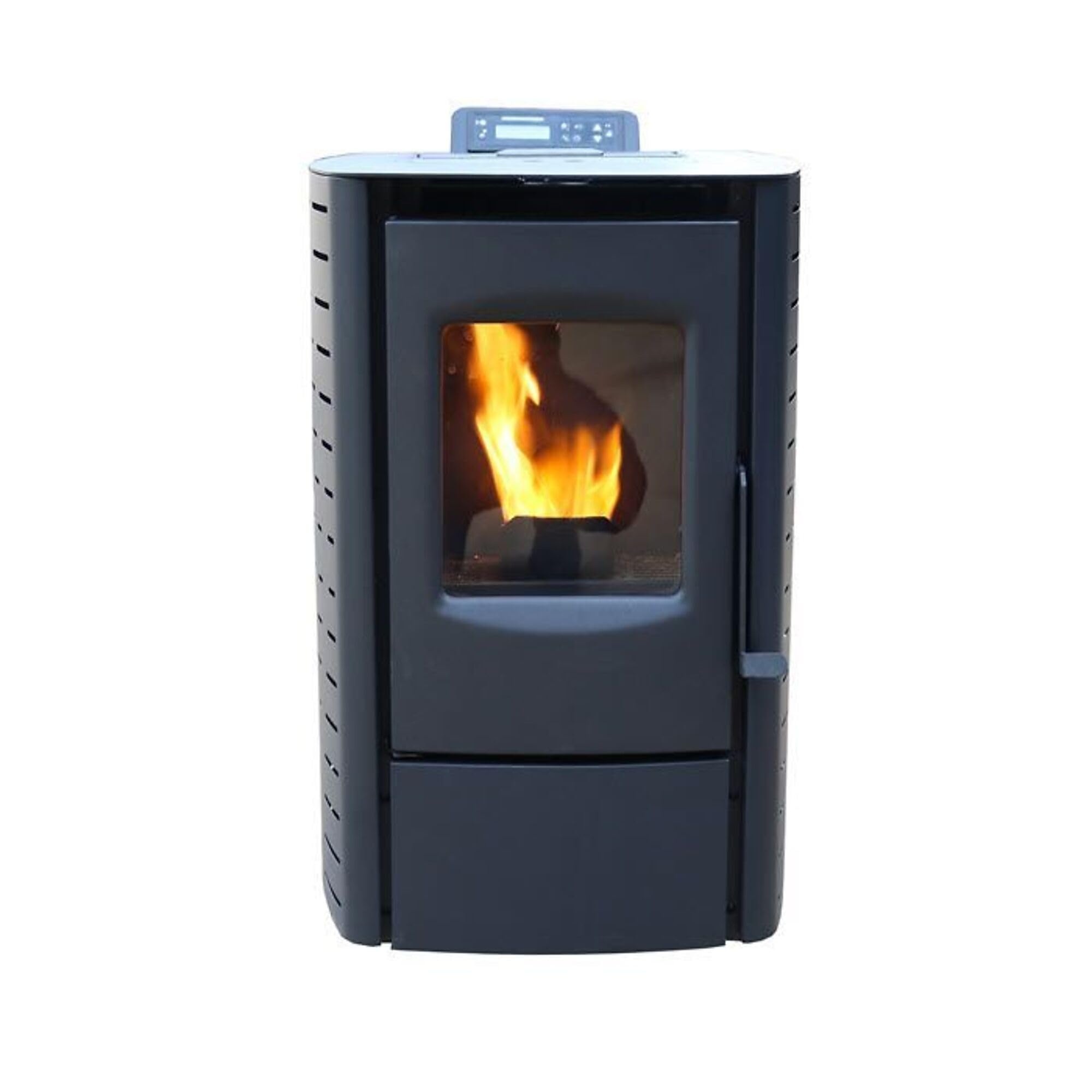
A compact cast iron pellet stove with Wi-Fi built in and a heat range that brackets a mid-size room.
Picture a spare room or a converted garage that needs steady heat without a chimney full of wood smoke. This model puts out 28,423 BTU and covers 800 to 1,200 square feet, so a 500-square-foot space sits comfortably inside its range rather than straining at the top end. The 24 lb. hopper feeds the fire and is smaller than the 80 lb. hopper on the Comfortbilt HP22N — roughly a third of the capacity — so expect more frequent fills if you run it hard.
What makes it interesting is the smarts. Built-in Wi-Fi ties the stove into a smart home setup, so you can manage it from an app instead of walking over in the cold. The cast iron body gives it a solid, classic look, and the floor-mount design keeps the install straightforward compared with a built-in firebox. The heat arrives fast once it is running, which matters on a morning when the room has gone cold overnight.
The honest side: reliability is the mixed signal here, with a share of owners reporting the stove stopped working after around six months. That doesn’t make it a bad unit — plenty run well — but it does mean the warranty and service path deserve a look before you buy. Value draws divided opinions too, and the small hopper means more refueling duty than the bigger pellet boxes in this article.
Smart pick: Wi-Fi control plus a 24 lb. hopper and 28,423 BTU make it a tidy fit for an 800-to-1,200-square-foot room.
Service check: some units quit around the six-month mark, so confirm the warranty and who services it near you before committing.
Best for the app-driven owner: a compact cast iron pellet stove whose Wi-Fi control lets you run the heat remotely.
Skip the gamble if: long-term reliability is your top priority — this is the pick where the service plan matters most.
6. HP22N Pellet Stove, 2,800 sq. ft., 80 lb. Hopper, Black
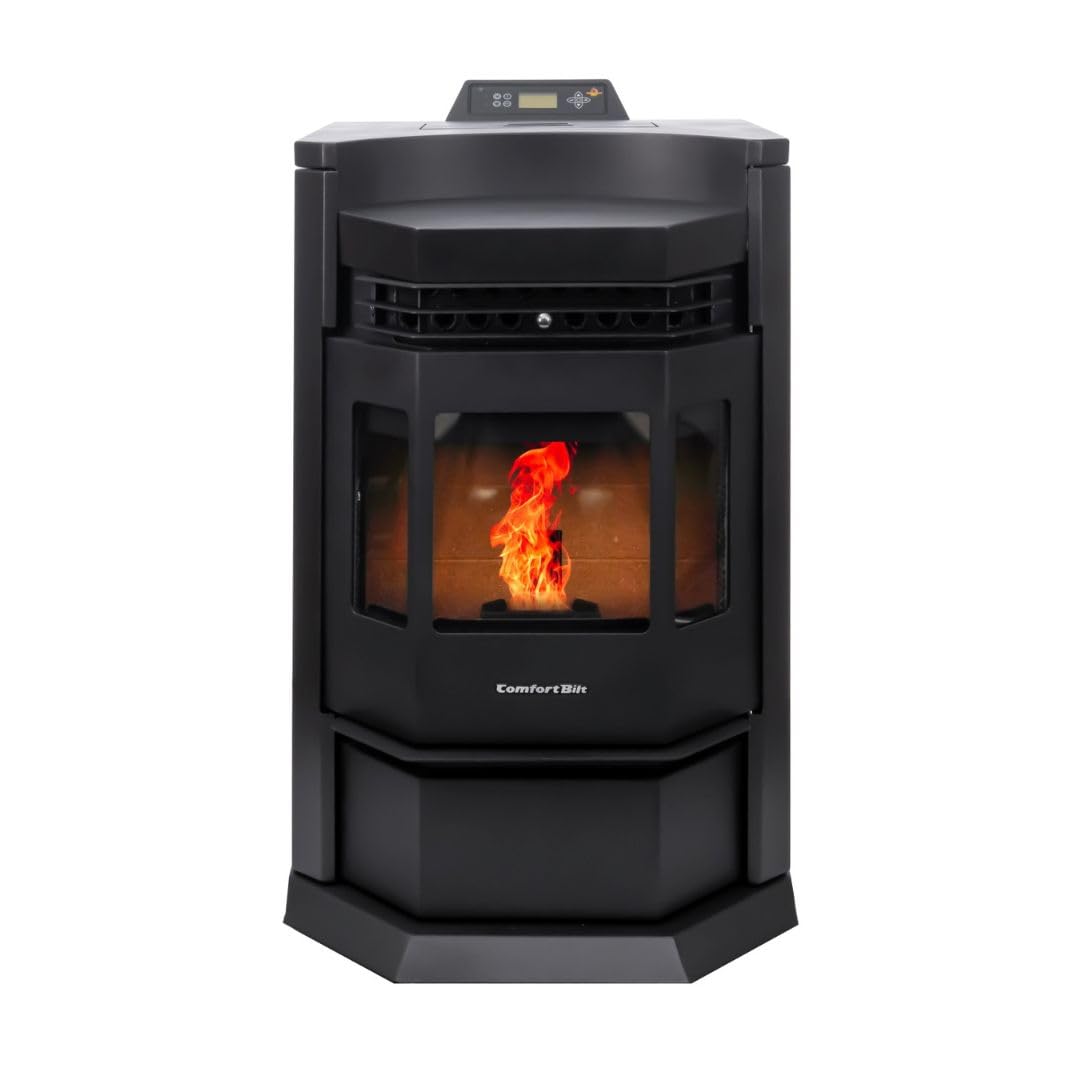
Fill it once and walk away — thirty-five hours of burn time from an 80-pound hopper.
If refueling frequency is your deciding factor, this is the answer. The 80 lb. hopper stretches up to 35 hours of burn time at 41,000 BTU per hour — against the 55 lb. HP22’s 20 hours, that is the longer of the two Comfortbilt fills, and it changes the rhythm of your week from daily scooping to occasional top-ups. Five power settings and a programmable thermostat let you dial the heat and let the stove handle the rest, and auto ignition with the included remote means no manual fire-starting.
It is the bigger-bodied sibling of the top pick, and 283 pounds tells you so — that is heavier than the 273-pound HP22, and it needs the same deliberate two-person install. The bay-view window and removable ash pan make checking and cleaning less of a chore, and it is EPA and CSA certified with a powerful room blower to push heat out into the space. Quality and heat output are what owners talk about most, and both land well.
Turn it over and the honest edges show. Functionality draws mixed feedback — most run flawlessly, some run into issues — and the noise from the blower and auger is the thing to hear for yourself if the room doubles as a bedroom. The 2,800-square-foot coverage rating is far beyond a compact room, so you will live on the low settings and treat the extra range as insurance for cold snaps.
Why the big hopper wins
- 35 hours of burn time from 80 lb. of pellets means fewer refills per week
- 41,000 BTU and five power settings cover both shoulder season and hard cold
- Programmable thermostat, auto ignition, and a remote for hands-off operation
- Bay-view window, room blower, and removable ash pan aid daily use
- EPA and CSA certified
The counterweight
- 283 pounds is a heavy, two-person placement job
- Blower and auger noise is the recurring complaint
- Functionality is mixed in owner reports — some units hit snags
- Rated well above a small room, so the output is mostly untapped
Best for the forget-about-it heater: an 80 lb. hopper and 35-hour burn time turn pellet duty into a weekly chore instead of a daily one.
Weigh the bulk: 283 pounds and blower noise mean it wants a dedicated spot and a room you don’t need silent.
7. Greenstovehori 5 Outdoor Pellet Stove
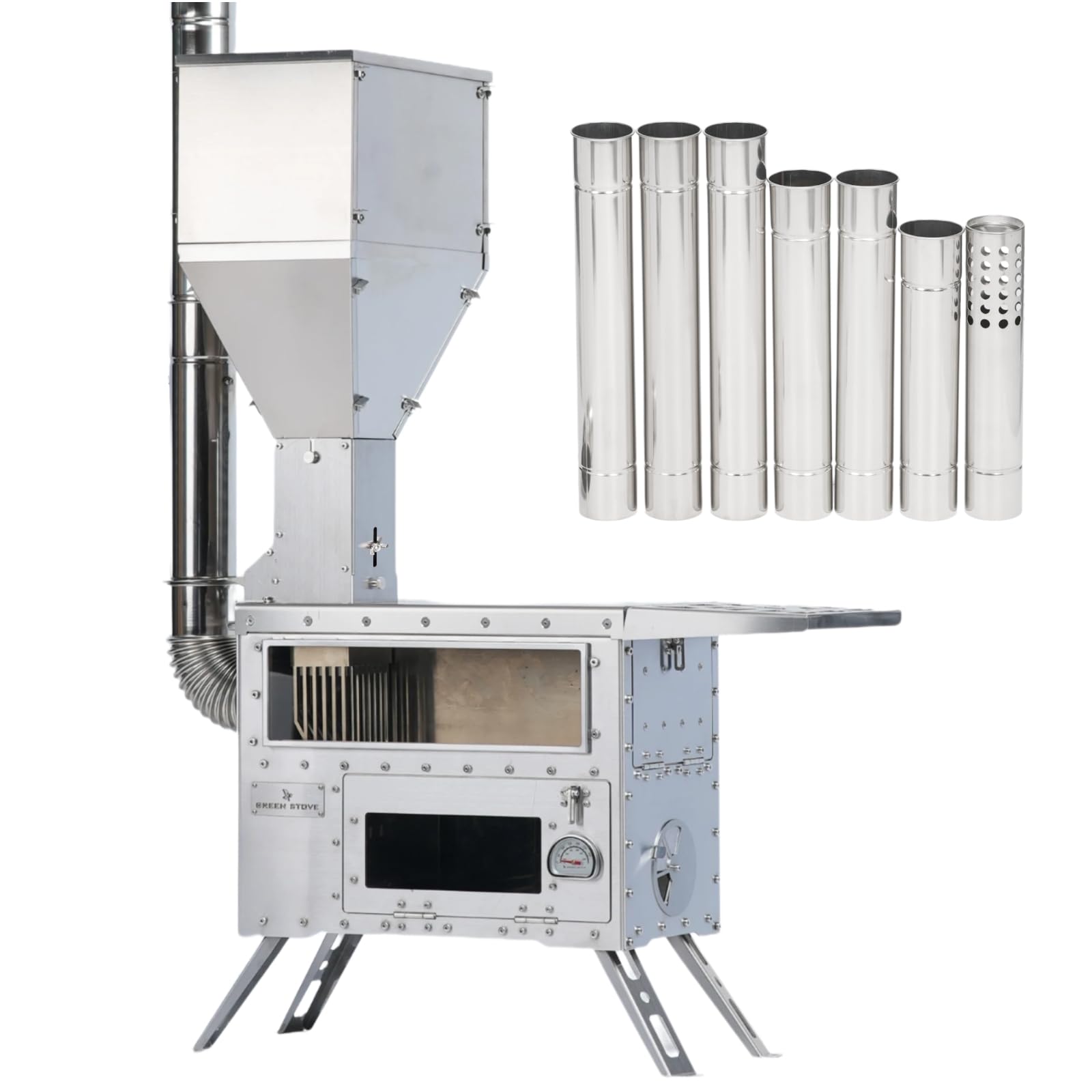
A 29.7-pound stainless steel tent stove that bakes dinner at the bottom while it warms the canvas.
This is not a living-room appliance — it is a portable outdoor stove for hot tent camping, and it earns its place by doing two jobs at once. The bottom holds an oven for cooking while the fire warms your shelter, and the stainless steel body with a U-shaped interior extends how long heat stays inside the stove rather than escaping up the chimney. It runs on pellets or wood, weighs 29.7 pounds, and includes an ash rake, carry bag, chimney pipes, a pellet burner, and six sections of 2.4-inch chimney pipe with a spark arrestor.
You manage power with the pellet control knob, which sets how fast fuel feeds in and therefore how hot it burns. The stove can be converted from the Easy Operation Version to a Classic Control Version with a 60 × 30 cm regulating tube. A full load of pellets with careful flame control gives 4 to 6 hours of burn. Owners say the warmth and the fire are what they love most. The heat it throws comes a close second.
Read the fine print on two counts. Setup is mixed: some find it quick and easy, others find the initial assembly complex, so allow time on the first build. And the pellet cage is a consumable — long, strong burns can melt it, and a replacement is bought separately. It is a camp stove at heart, so it is not sized to heat a 500-square-foot room through the night.
Made for the tent: stainless steel, 29.7 pounds, a cooking oven underneath, and 4 to 6 hours of burn from a full pellet load.
Know the wear item: the pellet cage can melt on long, hot burns and is sold separately, and first-time assembly takes patience.
8. US Stove TH-100 Tiny Home 750 sqft Wood Stove

A cordwood stove that needs no power at all — the one that keeps heating when the grid goes down.
Picture a winter storm knocking out the electricity, and this stove makes its case. It runs with no electricity required, delivering 26,000 BTU and rated for up to 750 square feet. It is built for tiny homes and small spaces, with a compact 0.59 cubic feet firebox that takes logs up to 11 inches and gives up to 8 hours of burn time. That small firebox and 11-inch log limit mean a short saw session and a small woodpile.
The engineering details are the draw: a secondary combustion system that boosts heat while cutting wood use and emissions without a catalyst, and a vermiculite-lined interior that improves combustion and long-term durability. A heavy cast iron door with air-washed ceramic glass keeps the view clear and the glass cleaner. It meets EPA guidelines while burning cordwood, and it can be installed in mobile or transportable homes in the US and Canada with a fresh air intake kit (model 4FAK, sold separately). It takes a standard 6-inch chimney connector and chimney system, which are not included.
Two practical notes before buying. First, this ships LTL freight (less-than-truckload, a freight service that calls ahead) and a valid phone number is required, so plan for a delivery call. Second, the size is the honest catch. The compactness that suits a tiny home feels limiting to anyone expecting a bigger firebox. The optional 100 CFM circulator blower (model CB36, sold separately; CFM means cubic feet per minute of airflow) needs electricity, so powered air movement costs you the off-grid advantage.
Off-grid champion: no electricity required, 26,000 BTU, and an 0.59 cubic feet firebox that handles 11-inch logs for up to 8 hours.
Size reality: buyers who wanted more firebox find the compact build limiting, and the optional blower trades away the no-power benefit.
Pick it for outage insurance: a cordwood stove with no electrical requirement, secondary combustion, and a glass door you can watch.
Plan around the footprint: a 0.59 cubic feet firebox and 11-inch log limit suit a tiny home, not a woodpile of long splits.
9. Castle 41278 Serenity Pellet Stove

Set a weekly schedule and let a 40-pound hopper and an Eco mode do the thinking.
For the buyer who wants heat on a timetable, the Serenity is built around that idea. It gives 32,000 BTU across 1,500 square feet from a 40 lb. hopper, and it runs in four modes — Manual, Thermostat, Weekly, and Eco — with all of them programmable through the included remote. Eco mode toggles the stove on and off to hold your target room temperature instead of burning steadily, which suits a room that sits empty for hours of the day.
Cleaning is deliberately simple: there are no tubes, corrugations, or hidden chambers to dig through, which shortens the weekly maintenance routine. Reliability and heat output are the strengths owners talk about — it makes a home genuinely warm and cozy — and installation is described as easy for this class of stove. It draws 77 watts at 120 volts, and it carries a 1-year-style truck-delivery requirement: you must provide a phone number to schedule the delivery appointment.
Where it gets complicated is cost-effectiveness, which owners disagree on, and functionality, where most units run phenomenally but the auger can misbehave — one report had it cycling only 3-4 times. That is a service-item risk, not a reason to write off the stove. Weigh the 32,000 BTU against the 40 lb. hopper and 1,500-square-foot rating and it fits a mid-size room with room to spare, which is exactly what you want from a 500-square-foot floor plan running on its lower end.
Best for the scheduler: four modes, a remote, and a 40 lb. hopper make it the pick when you want the stove to follow a weekly plan.
The follow-up question: auger behavior is the thing to watch, so keep the service contact handy and confirm delivery by phone before it ships.
10. Canyon Lodge Large Pellet Stove
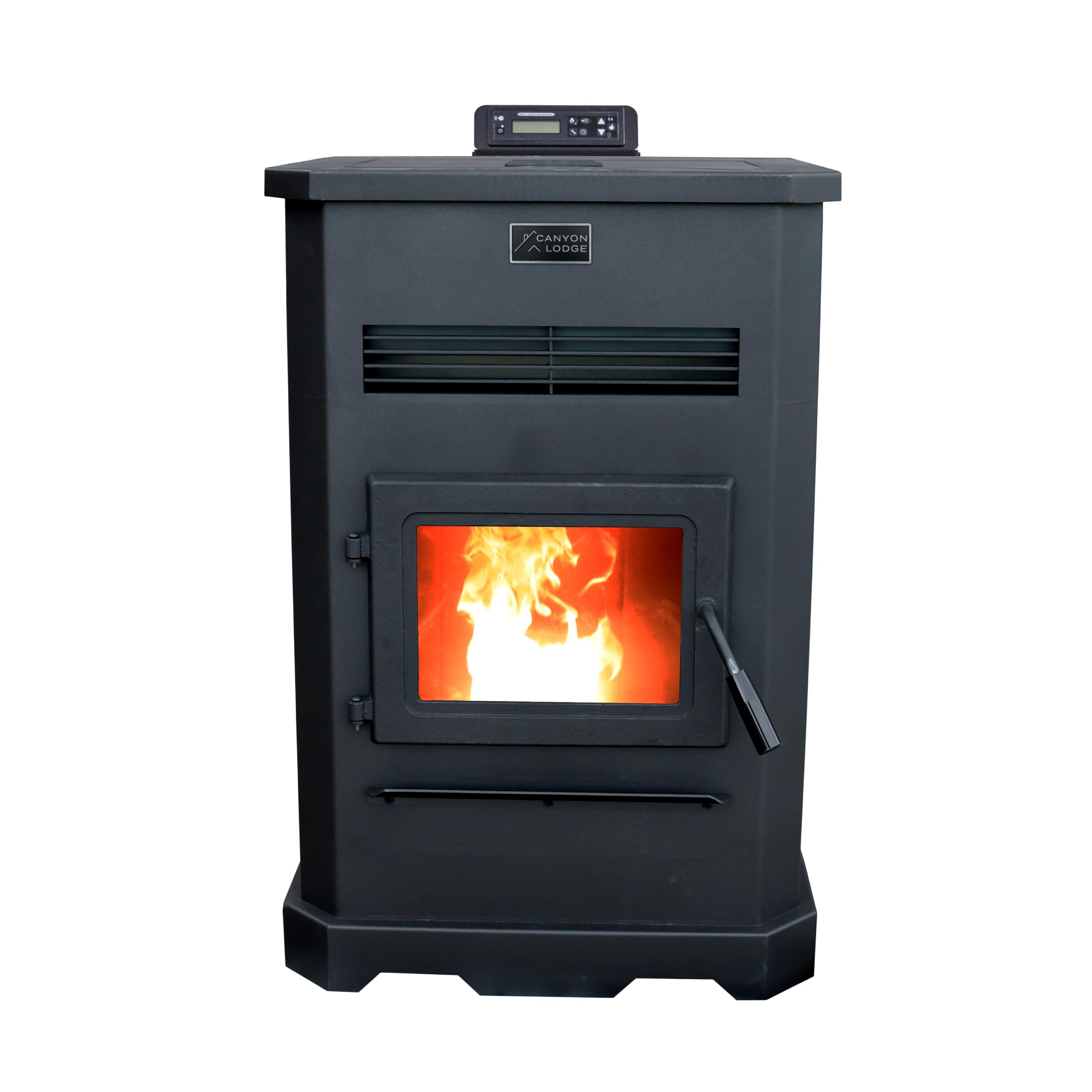
A 130-pound hopper and a whisper-quiet blower for buyers who hate refilling and hate noise.
Here is the number that defines this stove: a 130 lb. hopper, far bigger than the 40 lb. hopper on the Castle Serenity or the 66 lb. hopper on the Bayfront. That hopper pairs with 29,501 BTU and a coverage range of 2,000 to 3,000 square feet, so a smaller room runs well within its comfort zone on low. A steel fire pot, automatic ignition, and a large viewing glass with an air-wash system round out the daily-use side.
Two features stand out for specific buyers. Whisper Quiet Blower Technology targets the noise complaint that dogs so many pellet stoves, so the blower should be quieter in your living room. The stove is mobile home approved, and the fresh air kit is included. That kit plus the stove feet, power cord, and screen all ship in the box. Smart Home Technology is built in, and it is EPA Approved (meets federal emissions limits). Owners rate quality highest, with functionality close behind. One owner heats an entire house from the basement with it, which speaks to how far that output reaches.
It is also 209.4 pounds and rated far above a 500-square-foot room, which means you will spend its life on the low settings. For a mid-size home that wants a big pellet reserve and quieter running, that combination is still compelling.
For the refill-averse: a 130 lb. hopper, 29,501 BTU, and a whisper-quiet blower built for people who want less noise and fewer top-ups.
The honest gap: a smaller review history means less owner evidence than the better-established picks, so judge it on the mobile home approval and included fresh air kit.
Choose it for quiet volume: the 130 lb. hopper and whisper-quiet blower suit a mid-size home that wants long stretches between fills.
Check with your own eyes: a thin history of owner feedback means you rely on specs, so confirm mobile home approval and the included fresh air kit apply to your setup.
11. Bayfront Pellet Stove – 66lb Hopper

A quiet, Wi-Fi-connected pellet stove with 30,173 BTU and a 66-pound hopper for larger rooms.
If noise is what pushed you away from pellet heat, start here. This is one of the quieter stoves in this group, and it pairs that with strong performance and heat output that lands well — 30,173 BTU across 1,800 to 2,500 square feet from a 66 lb. hopper. Temperature control is a real strength: it cycles itself on when the room drops to a set point, so the room stays steady without you touching anything. Built-in Wi-Fi lets you manage it from your phone.
The cast iron body and floor placement give it a solid presence, and the 66 lb. hopper sits between the Castle’s 40 lb. and the Canyon Lodge’s 130 lb. — enough for long stretches, not so large that pellet storage becomes a project. Performance is the aspect buyers praise most, which tracks with a stove that simply cycles and heats without drama.
Balance the picture: value for money and ease of cleaning split opinion, and installation is mixed — some find it simple, others find the instructions could be better, and flame control draws a negative note. None of that undoes a quiet, well-performing stove, but it does mean you want a clear flue plan and a cleaning routine you can live with. Rated for 1,800 to 2,500 square feet, it is oversize for a 500-square-foot room and will run on its low end.
The quiet performer: a 66 lb. hopper, 30,173 BTU, and self-cycling temperature control make it an easygoing heater for a larger room.
Plan the install: instructions are mixed and cleaning splits opinion, so confirm your venting setup and set a cleaning schedule up front.
Best for a quiet, connected home: Wi-Fi, a 66 lb. hopper, and self-cycling temperature control in one of the quieter pellet options here.
Look at the manual: installation guidance and cleaning routines are the split points, so budget time for both.
Know the Specs
BTU output and coverage
BTU (British thermal units) is how much heat the stove produces each hour; the coverage number is the floor area the maker rates it for. A higher BTU figure heats faster and burns more fuel, so in a small room you want the coverage rating comfortably above your room and the controls able to run low. A stove rated for 900 square feet in a 500-square-foot room will not suffocate you — it will run on its smaller settings if it has variable control.
Hopper size and burn time
On pellet stoves, the hopper holds pellets the auger feeds into the fire. A bigger hopper means longer burn time between fills — the numbers in this article range from a 24 lb. hopper up to a 130 lb. one. Burn time is the practical measure, because that is how often you actually do the chore. Wood stoves skip the hopper entirely; their capacity is the firebox and the maximum log length.
Firebox size and log length
The firebox is the chamber where the fire burns, and its listed log length is the longest split it will take. A stove that accepts 19-inch logs saves you saw time compared with one limited to 11 inches. Firebox volume in cubic feet tells you how much wood it holds at once, which links straight to burn time and how often you reload.
Venting: flue, chimney, and ventless
Wood and pellet stoves need a flue or chimney to carry smoke outside — many take a 6-inch connector. Ventless gas stoves skip the chimney but need a fuel line and rely on an oxygen sensor to shut off if room oxygen drops. Venting is the part that most often surprises a buyer, so confirm the flue size and whether a chimney or fresh air kit is sold separately before you install.
Common Questions
Will a stove rated for 900 square feet be too much for a 500-square-foot room?
How long does a pellet stove burn on one hopper fill?
Do I need a chimney for a ventless gas stove?
What log length should I look for in a wood stove?
Can a wood stove heat my home during a power outage?
Is a pellet stove quieter than a wood stove?
How much maintenance does a pellet stove need compared with a wood stove?
What flue size do these stoves require?
Can I install a pellet stove in a mobile home?
Does a wood-burning stove need electricity to run its controls?
The Bottom Line
For most people, the best 500 sq ft wood burning stove is the Comfortbilt HP22 Pellet Stove. It gives you 41,000 BTU, a 55 lb. hopper, and up to 20 hours of burn time on a programmable thermostat. That means one hopper refill a day instead of constant tending. If your priority is burning real cordwood, the Cleveland Iron Works Single Burn Rate Stove takes 18-inch logs in a cast iron body with no electronics to fail. And when the power grid is what you worry about, the US Stove TH-100 Tiny Home Stove needs no electricity at all and still fits 11-inch logs into its 0.59 cubic feet firebox. That is the pick when outage heat matters most.
How we choose
We do not accept paid placement. Every pick is matched to a real buyer and a real use-case; we do not hands-on test units.
Sources
Specifications: manufacturer listings and product documentation. Review insights: verified customer reviews, as of November 2026. Pricing: not shown on this page (it changes often); check the current price via the retailer link.
As an Amazon Associate, My Heart Lives Here earns from qualifying purchases. This does not affect which products we feature.